Muhammad Imam Muttaqijn* | Yafid Effendi | Indah Kusumawati
© 2025 The authors. This article is published by IIETA and is licensed under the CC BY 4.0 license (http://creativecommons.org/licenses/by/4.0/).
OPEN ACCESS
This study aims to improve the management of Kampung Tematik (thematic village) through the application of evidence-based management (EBM) to optimize social, economic, and environmental outcomes in supporting the green economy. The methods used include semi-structured interviews with twenty-five Kampung Tematik leaders Focus Group Discussion (FGD) with nine Tangerang City Regional Development Planning Agency participants, and direct observations. Data were triangulated to strengthen the analysis. The data were analyzed using Grounded Theory through open, axial, and selective coding to develop a framework that integrates EBM and the green economy. The study's findings show that effective waste management and greening initiatives are crucial in reducing emissions and increasing economic value through community participation. Additionally, participatory decision-making plays a significant role in ensuring sustainable governance and equitable resource distribution. Other emerging themes include emission reduction, economic value, social equity, and EBM principles. In conclusion, EBM encourages collaboration, decision-making, and continuous improvement in organizational practices. This study underscores that the integration of EBM within Kampung Tematik governance fosters collaboration, data-driven decision-making, and continuous improvement in sustainability practices. These findings hold broader implications for policymakers and community leaders by demonstrating how local sustainability initiatives can contribute to achieving SDGs.
green economy, evidence-based management (EBM), Kampung Tematik, sustainability, community empowerment, environmental management
A green economy is defined as the development of less and less polluting technologies and products which are efficient in their use of resources relatively low in carbon emissions and other greenhouse gases, and also minimizes waste and pollution. More broadly, green or sustainable economies are those where technologies, products, and consumption are increasingly cleaner, conserving, and efficient; and, at the same time, protect and improve soci-economic and human development within and between generations. A restructured and clean economy is essential to meeting the major challenges that are felt at the planetary level, such as climate change, the depletion of natural resources, and social injustice [1, 2]. While the number of studies related to the green economy has increased, explicit evidence for its integration into evidence-based management (EBM) does not abound. EBM is the systematic approach to decision-making holding that the best available empirical evidence supports good governance and sustainability practices. Such integration would also prove very necessary for the likes of Kampung Tematik, where local decisions are central to sustainable development. However, existing literature does not fully establish the connection between these two concepts in the context of thematic villages. A series of studies rather agree partially the dimensions of the green economy on how applicable it is within the EBM framework of Kampung Tematik.
All, for example, cultural and strategic greens in business and industrial circles in the implementation of the circular economy, attaining relevance in the study at community-based governance [3]. Research that has been conducted on green economic development in Hubei Province explains best for regional sustainability attempts but does not discuss anything about the initiatives taken at the localized grassroots level [4]. The study of the societal green economy contribution to sustainable development is discussed at a higher macroeconomic level rather than the application at the community level [5].
While existing studies have appropriated individual-level influence in environmentally conscious household behavior towards sustainability [6], it has not made a direct discussion of governance strategies here village level intervention, that would help scale such efforts. To more precisely describe the gap, bibliographic data on SMEs and greening economy trends allow the general theme of sustainability, without practical decision-making frameworks of Kampung Tematik [7].
The concept of Kampung Tematik is a new breakthrough of the local government of Tangerang City which is intended for quality improvement of its residents. This activity supports the principle of a green economy where healthy living environments can be achieved through community empowerment [8]. In Semarang City, thematic villages have demonstrated positive impacts, particularly when local communities actively engage and recognize economic opportunities. This participation contributes to sustainable development [9]. Bappeda Tangerang stressed the importance of preserving local culture and wisdom while promoting sustainable practices in these villages.
Despite the potential of the Theme Villages, the evaluation showed that their performance is still suboptimal. The success rate of the focus clusters was only 44.5%, indicating that governance and decision-making processes need to be improved. The evaluation was influenced by multiple factors, including the effectiveness of the Theme Villages, the results achieved, and the level of institutional support available. While cities such as Semarang and Madura have conducted Theme Village studies, most of the studies focused on policy implementation rather than the mechanisms that drive sustainable outcomes.
The study conducted by Suroso et al. [10] identified the factors that influence village head participation in thematic village policies. The one in Semarang underlines the call for strong collaboration among government agencies, communities, and private sector actors, as explained by Ngabiyanto et al. [11].
Thematically, there are still persistent problems in differences plus the lower participation of communities that remain as gaps within governance and decision-making strategies. This study aims at a process of improvement of EBM applications merged with the modern approaches to sustainable development that have not been fully aligned with them. EBM and green economy relate closely in that they both put the use of fact at the center, efficiency, and practices that are centered on communities in good solutions that make life better in quality while being environmentally responsible [12, 13]. Although several studies have discussed EBM in connection with the green economy, the study of systematically integrating these concepts for improving the governance of theme villages is very rare. Recent research highlights the need for sustainable oriented decision-making and adaptive strategies [14] as well as the alignment of economic practices with the SDGs [15]. Recent studies on management control systems emphasize how evidence-based decision-making can improve sustainability outcomes [16]. As such, there is significant and substantial research yet to be done on how to icmbine evidence-based medicine principles with green economy in the ultimate improvement of the socioeconomic and environmental impacts of theme villages.
Connection of EBM with the green economy has only been applicable to how these two concepts can be merged to enhance governance in theme villages. Recent studies underlie the demand for making decisions toward sustainability and adaptive strategies as well as proper integration of economic practices with the SDGs. Simultaneously, the study on management control systems proves how much evidence-based decision making can bring sustainability outcomes. There is a large gap in the study of how to merge evidence-based medicine and green economy can be used to better socio-economic and environmental impacts of theme villages. This study tries to fill this particular gap by checking on how EBM would practically enhance the decision-making process of theme villages, hence increasing their contribution to the green economy in the end.
This study applied Grounded Theory in the collection of qualitative data through interviews with key players from various agencies in Tangerang City. The objective was to draw some best practices and decision-making frameworks leading to sustainable development and citizen involvement. Such findings are anticipated to increase the knowledge base, inform the policy and community representative decision making process, and provide strategic guidance and support to integrate evidence-based medicine into green economy initiatives.
2.1 Research design
This study employs a qualitative research design grounded in Grounded Theory, which is particularly suitable for exploring complex social phenomena and developing theories based on empirical data. Through Grounded Theory, researchers can generate insights and frameworks that are closely aligned with the realities of the studied context [17].
2.2 Data collection
In the study conducted to find the relationship between EBM and Green Economy: A Study in Kampung Tematik" semi-structured interviewing, Focus Group Discussion (FGD), and direct observation were applied as methods of data collection.
2.2.1 Sampling strategy
The leader of 25 from each thematic village was selected for the interview, and it was made sure that these people have experience in leading green initiatives at the community level. Consequently, this will give an enriched perspective that will be representative of thematic villages that adopt different practices on sustainability. Meanwhile, the FGD was joined by nine purposively selected key informants affirmed by the Regional Development Planning Agency (Bappeda) from among the active members involved in the green economy initiatives.
2.2.2 Semi-structured interviews
Interviews Kampung Tematik leaders for their experience, perceptions, and the decision-making processes related to EBM and green economy initiatives. We conducted a total of 25 in-depth interviews that ranged from 45 to 60 minutes each. Recordings were made following the consent and then transcribed subsequently for thematic analysis.
2.2.3 FGDs
The FGDs were used as a platform for inter-party discussions among the main stakeholders in Tangerang City about the perspective on the implementation of EBM and how it has impacted the green economy. In particular, the FGDs sought to unfold in-depth local community shared experiences, challenges, and possible suggestions toward improving the management of Kampung Tematik. Nine persons made up the participants. The process was mediated by the response to broad open-ended questions intended to goad discussions about how EBM principles are applied in that community, what is the effectiveness of the current green economy initiative, and how it can be made better. The FGDs were moderated to create a balance in the discussions by the research team. Audio recordings were made during the sessions and subsequently transcribed for analysis.
2.2.4 Direct observations
Direct observations were carried out to get firsthand insights into daily activities, practices, and interaction in Kampung Tematik, hence to see EBM principles and green economy practices manifest through environment, infrastructure, and social interaction of the community. The researchers were in these villages for several days to witness the activities involved in managing waste, running the local market, and holding communal meetings. Field notes were taken on the behaviors observed and the practices and environmental conditions during the time of the observation. These may be taken as contextual details for better understanding, when accompanied by information coming from interviews and FGD, about how the villages work.
2.3 Data analysis using Grounded Theory
Data analysis was done using the Grounded Theory technique which put emphasis on the following steps [18]:
(1) Open Coding: The initial phase was dependent on the systematic identification and categorization of the primary concepts from the data. Key themes came under two major domains: greening the economy and EBM. Nine themes were identified with four relating to the green economy and five to EBM. For instance, while discussing one of the emerging themes under the green economy, the discussion centered around low emissions and carbon dioxide reduction. This, in reality, involved waste bank management strategies like composting and tree planting. On the other hand, a theme under EBM is fact-based decision making, meaning structured data is ensured sustainability practice.
(2) Axial Coding: This phase involved identifying relationships between the categories. For instance, the theme low emissions and carbon dioxide reduction was linked to waste management and greening initiatives, which mutually support carbon emission reduction efforts. Similarly, commitment to fact based decision making in EBM was connected to organizational governance, emphasizing the role of structured leadership in sustainability. Example: The practice of waste separation in Kampung Tematik not only contributes to reducing emissions but also enhances community based recycling programs, which, in turn, strengthen local economies.
(3) Selective Coding: The final stage synthesized insights from axial coding to develop a theoretical framework that integrates EBM with green economy objectives. The overarching theme of Sustainability emerged as a core principle linking both frameworks. Example: Findings showed that collaborative governance plays a critical role in integrating EBM and green economy principles, where local leaders rely on both empirical data and community engagement to drive sustainable initiatives.
By employing these three data collection methods interviews, FGD, and direct observations we were able to triangulate data, ensuring a robust analysis of the relationship between EBM and the green economy in Kampung Tematik. These methodological refinements enhance the transparency, trustworthiness, and rigor of the study.
3.1 Informant participation
The study involved the most primary informants in in-depth interviews, with the count being at 25, and nine key informants in FGDs, thus opening up a wide ranging input of perspectives necessary for the Grounded Theory approach. Such diverse participation has put up a rich spectrum of experiences and insights on the same issue, which is engaging the EBM and green economy within Kampung Tematik. The analysis yielded nine themes (four related to the green economy and 5 to EBM) as well as 20 categories, where 11 were assigned to the green economy and 9 to EBM, respectively. Such a variation in the participation of informants builds a holistic understanding of complex dynamics.
3.2 Data analysis using Grounded Theory
The analysis followed the Grounded Theory approach, consisting of three main coding stages:
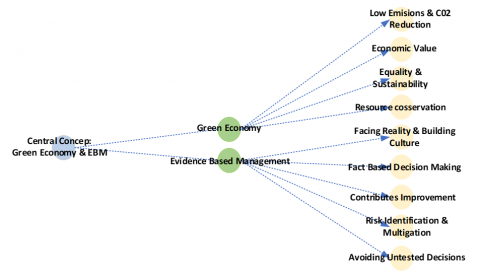
(1) Open Coding: In this initial stage, we systematically identified and categorized significant concepts emerging from the data, focusing on two primary themes: green economy and EBM. A total of 9 themes were recognized 4 related to the green economy and 5 to EBM (see Figure 1).
The analysis presents four pillars of the green economy directly striving toward sustainability. The first of the pillars low emissions and CO2 reduction is practically achievable through waste management and greening. Initiatives such as a waste bank, composting, and improving waste utilization would greatly help in abating carbon emissions as the resources will be ensured of being recycled and reused correctly. Air quality and safeguarding the environment improve with greening efforts— tree planting— and growing some traditional medicinal plants.
The second theme of economic value underscores not only the critical role of resource utilization but also the need for human resource empowerment, to deliver sustainable economic development. Efficient resource utilization ensures that the materials are efficiently used to be economically effective as to cause the least environmental degradation. Additionally, the empowering of human resources strengthens community participation with equal access to such economic opportunities, which eventually leads to the enhancement of socio-economic resilience.
Equity and sustainability disparities in the implementation of green economy practices constitute the third theme. The category fair & unfair concerns the social equity of green economy programs which ensure that every other community group can access and benefit from sustainability initiatives. On the other hand, the sustainable & unsustainable category shall take long term perspective in analyzing the sustainability of sustainability initiatives and still point to areas of improvement in maintaining an ecological and economic balance.
Figure 1. Open coding framework for green economy, (a) themes; and (b) categories
The fourth and final theme in the green economy is therefore called resource conservation: it speaks to the all too urgent need for a drastic reduction in the level of wasteful use of resources through both eco-friendly technology and efficiency of resource use. While eco-friendly technology involves innovative solutions to minimize environmental impacts, resource optimization is seen as channeling every available resource toward long-term sustainability.
On this note, five salient dimensions spring up from the EBM framework as an assurance for effective decisions on sustainability practices. The first theme facing reality & building culture is mutual cooperation and solidarity in fostering collective community engagement in the implementation of sustainability initiatives. This feat, therefore, enhances the bonds within the community, which in the long term proves beneficial to environmental and economic sustainability.
The fourth and last subject within the green economy, asset preservation, emphasizes the significance of decreasing intemperate asset utilization through eco-friendly innovation and productive asset utilize. eco-friendly technology integrates innovative arrangements to play down natural affect, whereas effective asset utilize centers on optimizing available assets to back long-term maintainability endeavors.
Within the evidence-based administration (EBM) system, five key subjects risen as fundamental for guaranteeing successful decision-making in supportability hones. The primary topic, confronting reality & building culture, underscores the significance of common participation and solidarity in cultivating collective community engagement in supportability activities. Fortifying these communal bonds plays a crucial part in keeping up long-term natural and financial maintainability.
The moment topic, commitment to fact-based choice making, spins around the guideline of shared commitment, emphasizing the need of utilizing observational information to drive supportability approaches and administration. Guaranteeing that choices are grounded in information improves their adequacy and validity.
The third theme, treating organizations as models, advances nonstop advancement, guaranteeing that maintainability endeavors experience normal appraisal and refinement to attain ideal results. Versatile administration procedures are vital for reacting to natural and socio-economic changes viably.
The fourth topic, recognizing chance & shortcoming, centers on key assessment and relief procedures to identify potential challenges and weaknesses in green economy and supportability programs. Tending to these issues through organized moderation measures improves the versatility of supportability hones.
The ultimate theme, maintaining a strategic distance from choices based on untested convictions, highlights the noteworthiness of prove based administration and partner incorporation. Observational research and information play a pivotal part in forming supportability approaches, guaranteeing that all important performing artists, counting policymakers and community members, are effectively locked in in the choice making handle.
(2) Axial Coding: In the axial coding phase, we identified the relationships between themes and categories within the green economy and EBM frameworks (see Figure 2). This stage allowed for a more structured analysis of how different concepts interact to support sustainability. Within the green economy, key themes such as low emissions and CO2 reduction are closely associated with waste management and greening initiatives. These components work together to lower carbon emissions through recycling, composting, and reforestation efforts. Similarly, the theme economic value emphasizes the significance of resource utilization and human resource empowerment, both of which drive local economic growth by promoting sustainable business practices and workforce engagement. In the context of EBM, the theme facing reality and building culture highlights core community values such as mutual cooperation and solidarity, which play a pivotal role in fostering inclusive and sustainable green initiatives. Additionally, the theme commitment to fact based decision Making ensures that policies and actions are data-driven, transparent, and aligned with sustainability principles, reinforcing fair and effective governance in thematic villages.
(3) Selective Coding: In this phase, we synthesized insights from axial coding, emphasizing the central theme of sustainability (see Figure 3).
Figure 2. Axial coding diagram: relationships between themes and categories in green economy and EBM
Figure 3. Detailed interconnections between green economy and EBM in promoting sustainability
This theme emerged as a crucial element linking various categories within both the green economy and EBM frameworks. The revised framework clarifies how specific elements within each category interact to promote sustainability. In the green economy, the category low emissions and carbon dioxide reduction plays a vital role in promoting sustainability through its direct connection with waste management and greening initiatives. These initiatives aim not only to reduce carbon emissions but also to enhance economic value through better land utilization and efficient resource management. The activities in tree planting and composting are executed as dual activities that contribute to environmental health and create economic opportunities in the community. Also, the theme Equity and Sustainability reflects the urgency of ensuring fair and inclusive implementation of green initiatives so that the benefits that accrue to the environment are shared across the community members in an EBM perspective. Fact based decision making and continuous improvement also support the sustainability agenda through guidance on policies based on data on waste reduction, resource efficiency, and economic development. It would also further strengthen the decision making process in long-term environmental and economic sustainability by integrating strategic evaluation and mitigation strategies within the identifying risk & weakness category.
Adaptive management and stakeholder inclusion will help to bring in place a governance structure that is responsive, achieves participation, and has the capacity to evolve based on real-time environmental and economic data. Figure 3 is not just a static matrix on how green economy and EBM relate; it should be read as a combination that becomes more than the sum of its parts over time- reinforcing sustainability.
There, this confluence between thematic village development long-term sustainability strikes a balance towards ecological preservation plus economic resilience as well as social equity.
This study provides a comprehensive view of the green economy relationship with EBM through the Kampung Tematik practice context. Themes that have come up from open coding, axial coding, and selective coding processes have been married to present one single phenomenon, very complex, getting all these interfaces among players to underscore the call for an integrative approach towards sustainability. It locates the discussion by reflective comparison with what has already been written on the subject of place and how, in what ways, local practices express a departure or mesh with broader strategies of sustainability.
4.1 Green economy and low emissions
The theme of low emissions and carbon dioxide reduction highlights the crucial role of waste management and greening initiatives in mitigating environmental impacts. This aligns with Cairns Jr [19], who emphasize that effective waste management systems significantly lower urban emissions. However, whereas their findings primarily focus on large-scale urban systems, our study illustrates specific local practices such as the establishment of waste banks and composting initiatives. These grassroots efforts not only reduce waste but also enhance community participation in sustainability initiatives.
Additionally, our findings regarding tree planting initiatives align with Agyeman et al. [20], who argue for the inclusion of economic benefits in green strategies. However, while their work primarily discusses corporate sustainability strategies, our focus on community-driven efforts reveals a more inclusive and participatory approach to sustainability. For example, community gardens in Kampung Tematik enhance biodiversity while simultaneously generating income opportunities for local residents. The ecological modernization theory further contextualizes these findings, as elaborated by Gendron [21], which posits that economic development and environmental protection can be harmonized through technological innovation and improved management practices. Our study aligns with this perspective by showing that local initiatives not only mitigate emissions but also foster economic benefits, illustrating how sustainable development can be achieved at the grassroots level.
Moreover, our findings align with SDGs, particularly Goal 11, which advocates for sustainable urbanization [22]. By integrating SDGs into the analysis, we highlight how localized waste management and greening strategies contribute to broader sustainability objectives, reinforcing the role of community engagement in achieving environmental stewardship.
4.2 Economic value and resource utilization
The emphasis on economic value within the green economy theme underscores the significance of resource utilization and human resource empowerment. This aligns with the sustainable livelihoods framework [23], which posits that empowering communities is essential for achieving long-term sustainability. Our study extends this framework by providing empirical evidence from local contexts, demonstrating how community driven resource utilization fosters economic resilience and a sense of ownership among participants.
Ngoc and Anh [1] argue that the transition to a green economy in Vietnam is primarily driven by enterprises through technology renovation and external support. In contrast, our findings suggest that community-driven efforts play an equally vital role in fostering sustainable economic growth. This comparison reveals that while enterprises contribute through innovation, local initiatives offer complementary strategies that emphasize grassroots participation and social equity.
Besides, our discoveries adjust with Amartya Sen's Capability Approach, which emphasizes upgrading individuals' capabilities to realize their wanted results [24]. By empowering communities to oversee assets viably, our consider outlines how this strengthening deciphers into unmistakable financial benefits, adjusting with Sen's declaration that genuine advancement is around upgrading person flexibilities and capabilities.
Rahayu et al. [25] highlight the significance of neighborhood government bolster in executing social ranger service, however their ponder demonstrates that such bolster remains limited and is concentrated inside a number of offices. Social ranger service has not however ended up a completely coordinates methodology for upgrading community well being, financial advancement, or natural security. Our discoveries propose that localized, community-driven methodologies can be more compelling in fortifying strength and maintainability, tending to holes cleared out by restricted government mediation. This adjusts with the Community-Based Asset Administration (CBRM) approach, as examined by Berkes [26], which advocates for nearby association in asset administration to guarantee that hones are custom fitted to community needs and settings. Berkes [26] advance contends that compelling asset administration requires cross-scale linkages and the capacity to adjust to outside drivers of alter, strengthening the significance of grassroots cooperation in financial and natural supportability.
By centering on nearby activities, our investigation highlights the potential of grassroots developments to drive economic and social advancement, challenging the winning idea that centralized approaches are continuously predominant. The prove proposes that supportability endeavors are most compelling when communities are engaged to require proprietorship of their assets, backed by both regulation systems and bottom-up techniques.
4.3 Equity and sustainability
Our findings on equity in green initiatives provide critical insights into the social justice dimensions of sustainability. The disparities noted in green economy implementation resonate with Agyeman et al. [20], who emphasize the importance of integrating social equity into environmental strategies. This study builds on their work by highlighting how community values such as mutual cooperation and solidarity, as identified in EBM, enhance the equitable implementation of green economy initiatives.
Additionally, the concept of Environmental Justice, as discussed by Robinson [27], underscores the need to address the disproportionate impact of environmental degradation on marginalized communities. Our study suggests that integrating local cultural values into decision making processes improves environmental equity, ensuring broader participation in sustainability initiatives.
These findings also align with the Just Transition Framework, which advocates for the fair distribution of benefits and burdens in transitioning to a green economy. While prior studies, such as those by Kauffman and Hill [28], have largely focused on urban contexts, our research illustrates that rural and community-based approaches also face challenges related to equity and sustainability.
The versatile comanagement hypothesis [29] encourage underpins this viewpoint by emphasizing the significance of participatory administration in natural administration. Bown et al. [30] expand this dialog within the setting of marine ensured zones, where they illustrate how co-management and Adaptive Co-Management (ACM) progress administration structures and upgrade community support in natural preservation. Their ponder outlines the significance of partner collaboration and adaptable decision-making, which are pivotal in exploring the complexities of social value and natural supportability.
By grasping versatile administration hones, communities can way better explore natural equity challenges, guaranteeing that all stakeholders have a voice within the decision-making handle. This strengthens the part of comprehensive administration systems in accomplishing maintainable and impartial natural results.
4.4 EBM
The results concerning EBM matter emphasize the central role of data-driven decisions that are made in the promotion of sustainable practices. The thematic finding, 'Facing Reality and Building Culture,' speaks of community values such as solidarity and cooperation that give the green initiative life. This is in line with the framework of participatory governance since it prescribes very inclusive decisions that include a wide variety of stakeholders [31]. Stakeholder engagement and governance collaboration, according to Emerson et al. [32], serve as channels for integrating varied dimensions, respectively increasing the sponsorship of sustainability initiatives.
This, too, more or less falls within adaptive governance principles, which, to put it briefly, mobilizes flexibility and collective management practices. On the same note, Schultz et al. [33] explain in what way adaptive governance, as a contributor to the ecosystem's functioning and natural capital, strengthens the imperative need of cross-sectoral collaboration in the face of complex environmental challenges. Evidence from the study indicates that promoting a culture of shared commitment and consensus enhances the sustainability of initiatives; this is a clear shift from hierarchical decision-making to inclusive governance models [34].
Besides, our discoveries bolster the prove based approach making approach, which advocates for choice making grounded in experimental prove and community engagement. This approach upgrades the authenticity and viability of maintainability arrangements, guaranteeing that neighborhood needs and values are coordinates into decision-making forms [35]. Head [36] expands this point of view by emphasizing that evidence-based administration makes strides the victory rate of maintainability activities, especially when nearby information is joined nearby observational information.
By establishing maintainability activities in collaborative administration, versatile administration, and evidence-based policy-making, communities can create more flexible, comprehensive, and viable natural administration structures. These systems collectively fortify the need of participatory, adaptable, and data-driven decision-making forms in accomplishing long-term supportability objectives.
4.5 Continuous improvement and organizational learning
Treating organizations as prototypes emphasizes the need for continuous improvement. Indeed, learning from experience is what Sange [37] means by learning organizations. This is what we have found, meaning evaluation practices and external collaborations were surfacing the very ideas that were considered essential for organizational growth in the work of Argyris and Schon [38] in distinguishing between single and double-loop learning.
Whereas Sange’s principles [37] are commonly applied within the corporate domain, we extend their application into community-driven sustainability efforts. In doing so, our paper sheds some light on learning organizations localized at the place of implementation. This adaptation stresses the active involvement of the community in sustainable development and acclimatizes it to the emerging challenges on the environmental and social fronts.
Moreover, the concept of Participatory Activity Inquire about (Standard) bolsters our discoveries, because it emphasizes the involvement of partners within the learning prepare, guaranteeing that enhancements are important and custom-made to the community's needs. Stoecker and Falcón [39] talk about how Standard upgrades community support and reinforces possession in maintainability endeavors, strengthening the part of collaborative learning in organizational adjustment and capacity building. By joining community-driven learning forms, this approach not as it were improves the adequacy of sustainability activities but moreover engages neighborhood partners to require possession of long-term changes.
By establishing persistent enhancement endeavors in organizational learning, participatory activity investigate, and versatile administration, supportability activities can gotten to be more strong, comprehensive, and responsive to neighborhood needs. This fortifies the significance of progressing knowledge-sharing and collaborative learning in accomplishing long-term supportability objectives.
4.6 Implications for future research
This study will, therefore, facilitate not only a newer understanding at the junctures of green economy and EBM but will enhance the scope to identify the gaps for future research. More longitudinal research is needed to access the long-term implications of local sustainability undertakings, such mainly regarding community resilience and economic development. Even more research could be undertaken to find out more about the urban-rural sustainability linkage while comparing localized green economy initiatives with broader policy frameworks.
This study acknowledges its limitations, particularly in its localized focus, which may restrict generalizability to other contexts. Future research should involve larger and more diverse samples to enhance the validity of findings. Expanding the study scope to examine policy integration and institutional support would provide a more comprehensive understanding of sustainable governance.
This research has successfully identified and analyzed critical themes related to green economy and EBM at the community level. The findings indicate that green initiatives heavily depend on waste management, community participation, and the integration of equity values. Additionally, EBM plays a crucial role in ensuring fair, data-driven, and sustainable decision-making. By linking these findings with relevant literature, this study significantly contributes to the understanding of sustainability practices within local communities and highlights the importance of evidence-based policies in promoting environmental resilience.
Based on the above findings, several major recommendations can be made. It is that policymakers should mainstream local cultural values and community participation in green initiative planning and implementation. This can be achieved by involving local leaders, community-driven decision-making, and the inclusion of traditional ecological knowledge in sustainability programs. There is also a need for more future research to evaluate how effective different community-based resource management models are and which approaches will yield the most sustainable environmental and economic outcomes. More research should be directed on participatory waste management, decentralized governance structures, and adaptive management strategies as a way of enhancing long term sustainability.
Moreover, cooperation among community organizations, government agencies, and international organizations should be significantly improved. Linkages with universities, environmental NGO, and private enterprises could precede the setup of training programs, technology transfer activities, and financial mechanisms to support green economy programs. Additionally, further research needs to investigate the long-run effects of green interventions and EBM on maintaining the environmental capacity and social welfare, particularly passing emission reductions, economic benefits, and community resilience in longitudinal terms of reference.
Finally, it is crucial to develop policy frameworks that support scalable and replicable community-led sustainability initiatives. Future research should explore policy mechanisms that incentivize sustainable practices, such as carbon credit programs, local green certifications, and microfinance opportunities for sustainability driven businesses. By implementing these recommendations, stakeholders can enhance the effectiveness of sustainability efforts, foster long term community engagement, and develop more resilient environmental governance structures. Moving forward, continued research should refine and expand these approaches to ensure the ongoing success of green economy and EBM initiatives at the community level.
We thank BAPPEDA Tangerang City, Kampung Tematik, and the Institute for Research and Community Service (LPPM) University of Muhammadiyah Tangerang University for funding approval for the 2024 DRPTM Grant.
[1] Ngoc, H.T., Anh, N.T. (2016). Green economy development in Vietnam and the involvement of enterprises. Low Carbon Economy, 7(1): 36-46. http://doi.org/10.4236/lce.2016.71004
[2] Hopwood, B., Mellor, M., O'Brien, G. (2005). Sustainable development: Mapping different approaches. Sustainable Development, 13(1): 38-52. https://doi.org/10.1002/sd.244
[3] Muafi. (2021). The influence of green culture and green strategy on the circular economy implementation: The moderating role of green intellectual capital. International Journal of Sustainable Development and Planning, 16(6): 1101-1108. https://doi.org/10.18280/ijsdp.160611
[4] Zhang, T., Chi, Y.Y. (2020). Evaluation of green economic development abilities of Hubei Province in 2008-2018. International Journal of Sustainable Development and Planning, 15(6): 841-847. https://doi.org/10.18280/ijsdp.150607
[5] Ali, A.H.S. (2021). Societal green economy and its impact on sustainable development. International Journal of Sustainable Development and Planning, 16(1): 105-114. https://doi.org/10.18280/ijsdp.160111
[6] Setyari, N.P.W., Sisdyani, E.A., Bendesa, I.K.G., Anandari, I.G.A.A.A., Suasih, N.N.R., Lestari, G.A.P.S.D., Suwitanty, A.P.P. (2024). “Pro Environment” behavior towards a green economy: An analysis of household energy consumption. International Journal of Sustainable Development and Planning, 19(7): 2745-2752. https://doi.org/10.18280/ijsdp.190731
[7] Maesaroh, S.S, Rahayu, A., Ahman, E., Wibowo, L.A., Swardana, A. (2024). Green economy research trends and mapping in SMEs: A bibliometric analysis. International Journal of Sustainable Development and Planning, 19(3): 1003-1014. https://doi.org/10.18280/ijsdp.190318
[8] Mayor of Tangerang. (2020). Regulation of the Mayor of Tangerang Number 92 of 2020 concerning Guidelines for the Implementation of Thematic Villages.
[9] Yuliastuti, N., Esariti, L., Pressilia, A.P., Syaeful, H.H. (2024). Thematic villages assessment in its consistency towards sustainability. International Review for Spatial Planning and Sustainable Development, 12(1): 242-258. https://doi.org/10.14246/IRSPSD.12.1_242
[10] Suroso, R.K., Sukristyanto, A., Kusbandrijo, B. (2020). Head of village participation in thematic village policy in Pamekasan District. Journal of Public Policy and Administration, 4(4): 85-94. https://doi.org/10.11648/j.jppa.20200404.14
[11] Ngabiyanto, M., Susanti, M.H., Setiajid, M. (2019). Empowering and developing the local potency through thematic village in Semarang. In Proceedings of the International Conference on Rural Studies in Asia (ICoRSIA 2018), Semarang, Indonesia, pp. 5-7. https://doi.org/10.2991/icorsia-18.2019.2
[12] Barends, E., Rousseau, D.M., Briner, R.B. (2014). Evidence-based management: The basic principles. In: In Search of Evidence. Amsterdam: Centre for Evidence-Based Management.
[13] Rousseau, D.M. (2006). Is there such a thing as “evidence-based management”? Academy of Management Review, 31(2): 256-269. https://doi.org/10.5465/amr.2006.20208679
[14] Quesado, P., Silva, R., Oliveira, H.C. (2024). Management control systems and sustainability: A bibliometric analysis. Sustainability, 16(12): 5067. https://doi.org/10.3390/su16125067
[15] Barbier, E. (2011). The policy challenges for green economy and sustainable economic development. In Natural Resources Forum. Oxford, UK: Blackwell Publishing Ltd, pp. 233-245. https://doi.org/10.1111/j.1477-8947.2011.01397.x
[16] Tu Le, O.T., Hong Le, A.T., Thanh Vu, T.T., Cam Tran, T.T., Van Nguyen, C. (2024). Management control systems for sustainable development: A bibliographic study. Cogent Business & Management, 11(1): 2296699. https://doi.org/10.1080/23311975.2023.2296699
[17] Merriam S., Tisdell E.J. (2016). Qualitative Research: A Guide to Design and Implementation (4th ed.). Jossey-Bass.
[18] Saldaña, J. (2015). The Coding Manual for Qualitative Researchers (2nd ed). London: SAGE.
[19] Cairns Jr, J. (2001). A survey of sustainable development: Social and economic dimensions. In Environmental Management and Health. Island Press, pp. 529-531. https://doi.org/10.1108/emh.2001.12.5.529.1
[20] Agyeman, J., Bullard, R.D., Evans, B. (2003). Just Sustainabilities: Development in an Unequal World. MIT Press. https://doi.org/10.4324/9781849771771
[21] Gendron, C. (2013). Regulation Theory and Sustainable Development: Business Leaders and Ecological Modernisation. Routledge.
[22] United Nations. (2015). Transforming our world: The 2030 agenda for sustainable development. https://sdgs.un.org/2030agenda.
[23] Chambers, R., Conway, G. (1992). Sustainable rural livelihoods: Practical concepts for the 21st century. IDS Discussion Paper 296, Brighton: IDS
[24] Kuklys, W. (2005). Amartya Sen's Capability Approach: Theoretical Insights and Empirical Applications. Berlin, Heidelberg: Springer Berlin Heidelberg. https://doi.org/10.1007/3-540-28083-9
[25] Rahayu, S., Sakuntaladewi, N., Sumirat, B.K., Widyaningsih, T.S., Yusnikusumah, T.R., Muin, N., Bisjoe, A.R.H. (2024). The role of local governments in supporting social forestry implementation in Indonesia: A social network analysis and evidence from Eastern Indonesia. Forest and Society, 8(1): 154-178. https://doi.org/10.24259/fs.v8i1.28524
[26] Berkes, F. (2012). Sacred Ecology. Routledge: New York.
[27] Robinson, R.C. (2018). Environmental justice: A review of the literature. Choice, 55(8).
[28] Kauffman, N., Hill, K. (2021). Climate change, adaptation planning and institutional integration: A literature review and framework. Sustainability, 13(19): 10708. https://doi.org/10.3390/su131910708
[29] Fabricius, C., Currie, B. (2015). Adaptive co-management. In Adaptive Management of Social-Ecological Systems. Springer, Dordrecht, pp. 147-179. https://doi.org/10.1007/978-94-017-9682-8_9
[30] Bown, N., Gray, T.S., Stead, S.M. (2013). Contested Forms of Governance in Marine Protected Areas: A Study of Co-management and Adaptive Co-management. Routledge.
[31] Fung, A. (2006). Varieties of participation in complex governance. Public Administration Review, 66: 66-75. https://doi.org/10.1111/j.1540-6210.2006.00667.x
[32] Emerson, K., Nabatchi, T., Balogh, S. (2012). An integrative framework for collaborative governance. Journal of Public Administration Research and Theory, 22(1): 1-29. https://doi.org/10.1093/jopart/mur011
[33] Schultz, L., Folke, C., Österblom, H., Olsson, P. (2015). Adaptive governance, ecosystem management, and natural capital. Proceedings of the National Academy of Sciences, 112(24): 7369-7374. https://doi.org/10.1073/pnas.1406493112
[34] Folke, C., Hahn, T., Olsson, P., Norberg, J. (2005). Adaptive governance of social-ecological systems. Annual Review of Environment and Resources, 30: 441-473. https://doi.org/10.1146/annurev.energy.30.050504.144511
[35] Nutley, S.M., Walter, I., Davies, H.T. (2007). Using Evidence: How Research Can Inform Public Services. The Policy Press.
[36] Head, B.W. (2016). Toward more “evidence‐informed” policy making? Public Administration Review, 76(3): 472-484. https://doi.org/10.1111/puar.12475
[37] Sange, P.M. (2010). The Fifth Discipline: The Art and Practice of the Learning Organization. Random House.
[38] Argyris, C., Schon, D.A. (1978). Organizational Learning Theory. Addison-Wesley Publishing Company. Inc. Philippines.
[39] Stoecker, R., Falcón, A. (2022). Handbook on Participatory Action Research and Community Development. Edward Elgar Publishing.