Febri Yuliani* | Zulkarnaini | Hafzana Bedasari
© 2025 The authors. This article is published by IIETA and is licensed under the CC BY 4.0 license (http://creativecommons.org/licenses/by/4.0/).
OPEN ACCESS
This study aims to analyze the synergy between the government and the private sector in sustainable peatland management in Riau Province. Peatlands in Riau have a strategic role in climate change mitigation, environmental conservation, and economic development. However, the main challenges faced are forest and land fires (karhutla), land degradation due to conversion, and lack of coordination between stakeholders. The results of the study indicate that synergy between the government and the private sector is the main key to effective peatland management. The government has a role as a regulator in setting protection and restoration policies, while the private sector is expected to implement sustainable business practices and support rehabilitation programs through corporate social responsibility (CSR) initiatives. Several collaborations that have been carried out include the peatland restoration program by the Peat and Mangrove Restoration Agency (BRGM), the implementation of an agroforestry system, and the use of IoT-based fire monitoring technology. This study concludes that a public-private partnership approach can be a solution to overcome peatland problems by integrating environmental and economic interests. The sustainability of peat ecosystems can be achieved through firm policies, active community participation, and the use of technology in land monitoring and restoration.
peatland, public-private synergy, sustainability, environmental policy, peat restoration
Riau Province is one of the regions in Indonesia that has a large and significant peatland ecosystem. Peatlands in Riau, which cover around 3.89 million hectares, play an important role in carbon absorption, water cycle regulation, and the sustainability of tropical forest ecosystems. However, peatland management in this area is often faced with serious challenges, such as forest and land fires (karhutla), conversion to agricultural or plantation land, and land drainage for industrial projects [1]. The sustainability of peatlands in Riau is not only important for local environmental sustainability, but also in efforts to mitigate global climate change [2]. For this reason, the analysis of interests and synergies between the government and the private sector in sustainable peatland management in Riau Province is very important to achieve environmental and economic sustainability goals. In addition, peatlands in Riau, which cover 56.1% of the total peatland on Sumatra Island, have great potential for agricultural development and environmental conservation [3]. Collaboration between the government and the private sector is needed to implement sustainable peatland management practices [4].
The government has an important role as a regulator in peatland management. Firm and fair policies are needed to address the problem of forest and land fires, as well as to encourage environmentally friendly agricultural practices [5]. In addition, the government must also open up space for innovation in peatland management, such as the development of agroforestry systems that can increase the diversity of agricultural products and improve soil quality [6]. This synergy can create an environment that supports local economic growth while maintaining the sustainability of peat ecosystems. On the other hand, the private sector also has a responsibility in peatland management. Companies engaged in agriculture and plantations, such as oil palm, must implement sustainable management practices to reduce negative impacts on the environment [7]. In addition, companies can play a role in community empowerment programs, which aim to increase awareness and skills of local communities in managing peatlands sustainably [8]. By involving the community, the private sector can help create more effective and sustainable solutions.
The importance of this collaboration is also seen in peatland restoration efforts. The proposed social forestry program can increase community participation in peatland management, thereby accelerating the recovery of ecosystem functions [9]. In addition, modern technology, such as IoT-based fire monitoring systems, can be adopted to improve the response to forest and land fires [10]. By utilizing technology and involving all stakeholders, peatland management in Riau can be carried out more effectively and sustainably. Overall, synergy between the government and the private sector in sustainable peatland management in Riau Province is key to achieving a balance between economic development and environmental conservation. Through supportive policies, innovations in agricultural practices, and community empowerment, both parties can work together to address the challenges faced by peatlands and ensure the sustainability of this vital ecosystem.
The Riau Government's main interest in peatland management is controlling forest and land fires (karhutla). Forest and land fires, especially in peatlands, are a serious threat to the environment and human health. The government has a major interest in controlling karhutla in Riau because of its widespread impacts, both economically and socially. The haze disaster resulting from peatland fires not only damages the ecosystem, but also disrupts economic activities, education, and public health [11]. Therefore, good peatland management can prevent seasonal forest fires.
Forest and land fires are one of the serious problems faced by Riau Province [12]. Forest and land fires not only threaten the environment, but also have an impact on various aspects of life, from health, economy, to diplomatic relations with neighboring countries [13]. Forest and land fires can cause severe damage to forest and peatland ecosystems. These fires can destroy flora and fauna, disrupt the balance of the ecosystem, and cause loss of biodiversity. Burning peatlands result in the release of large amounts of carbon, which contributes to global warming [14]. This is where the role of the government as a guardian of the environment and preservation of natural resources is important, namely to protect the ecosystem from damage due to fires.
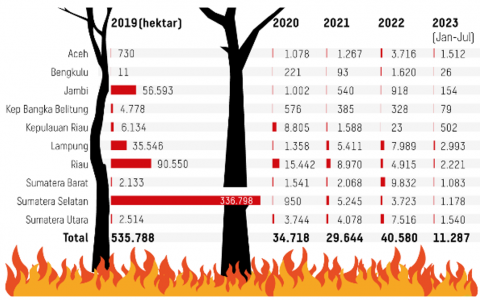
Figures 1 and 2 show the provinces that contributed the largest areas of forest and land fires from January to June 2024 in Indonesia, namely East Kalimantan, NTT, Riau, Aceh, and NTB. From the figure, it can be seen that the forest and land fire cases in Riau Province are the third largest after East Kalimantan with a burned area of 4,771 hectares. Next, Figure 2 shows the area of forest and land fires in Sumatra in 2019-2023. This figure indirectly places Riau as the largest contributor to forest and land fire cases every year (except 2019).
Figure 1. Distribution of forest and land fires Jan-June 2024 (5 largest provinces in hectares)
Figure 2. Area of forest and land fires in Sumatra 2019-2023
Source: Satellite image analysis by KLHK and BRIN
The impact of forest and land fires in Riau not only damages the ecosystem, but also public health. The haze produced by forest and land fires can cause various health problems, such as respiratory problems, eye irritation, and acute respiratory diseases [15]. Every year, millions of people in Riau are affected by the haze, especially in areas affected by fires. In addition, smoke that crosses national borders can also affect international relations. The government certainly has a responsibility to protect the health of its citizens, so controlling forest and land fires is an important priority. The solution to this problem is to create strict and fair regulations to overcome forest and land fires. The government as a regulator in implementing peat ecosystem policies needs to open up wider space for policy improvements to balance aspects of sustainable development, namely environmental sustainability, social and economic sustainability [16]. The government must provide innovation in peatland management without burning, which can have an impact on increasing land productivity and preventing peatland fires [8].
In addition to the interest in forest and land fires, peatland management for the Riau Government is also based on a commitment to reduce carbon emissions as part of global efforts to combat climate change. Peatlands are very large carbon stores, so their sustainable management is key to achieving the target of reducing greenhouse gas emissions [17]. Sustainable peatland management is an important part of climate change mitigation efforts, especially in Indonesia which has the largest peatland area in the world [18]. Peatlands are believed to be important ecosystems that store large amounts of carbon, so damage or fires on this land can result in the release of significant greenhouse gas (GHG) emissions [19]. Therefore, local governments, especially in areas with large peatlands such as Riau, have a crucial role in managing and protecting peatlands as part of their commitment to climate change.
This study examines how government-private sector collaboration can enhance sustainable peatland management in Riau Province, balancing economic development and environmental conservation. By fostering supportive policies, agricultural innovation, and community empowerment, this synergy aims to address key challenges and ensure long-term peatland sustainability.
2.1 Peatland management policy
Peatland management is a strategic issue in the context of sustainable development, especially in Indonesia, which has the largest peat ecosystem in the world [20]. Previous studies have highlighted the importance of synergy between the government, private sector, and communities in maintaining peatland sustainability. This study reviews relevant key concepts, including peatland management policies, the role of the private sector in sustainable business practices, and the public-private partnership approach in environmental conservation. Government policies often face challenges in implementation in the field, especially due to the lack of coordination between related agencies and minimal participation of local communities in conservation programs [21, 22]. Therefore, a more inclusive and collaborative approach is needed in peatland management policies.
The government has an important role in regulating peatland management to prevent ecosystem degradation and forest fires. Policies based on good environmental governance can increase the effectiveness of peatland restoration and reduce the risk of fires and carbon emissions [23]. The Indonesian government has implemented various policies, such as a moratorium on clearing peatlands, the establishment of the Peat and Mangrove Restoration Agency (BRGM), and regulations regarding the zero-burning policy to prevent the practice of clearing land by burning.
The use of technology in peatland management has grown rapidly in recent years. Internet of Things (IoT)-based fire monitoring systems can improve rapid response to forest and land fires, thereby reducing environmental and economic impacts [24]. Other technologies such as land monitoring drones and sensor-based water management systems have also been applied to improve the effectiveness of peatland restoration. This technology will only be effective if supported by strong policies and training for local communities in its use. Therefore, collaboration between the government, academics, and the private sector is needed to ensure that this technology can be widely and sustainably adopted. Sustainable peatland management requires a holistic and collaborative approach. Strict government policies must be balanced with the commitment of the private sector in implementing responsible business practices. Public-private partnerships have proven to be an effective strategy in peatland restoration, although they still face challenges in implementation [25]. In addition, technological innovation can be a major supporting factor in improving the effectiveness of peatland management.
2.2 Public-private partnership private partnership in peatland management
Partnerships between the government and the private sector or Public-Private Partnership (PPP) have been widely studied as a solution in peatland management. The PPP approach can increase efficiency in peatland restoration because it combines government regulations with resources and innovation from the private sector [21]. This approach has been applied in several restoration projects in Riau, such as the collaboration between the BRGM and forestry companies in the "3R"-based restoration program (Rewetting, Revegetation, and Revitalization). A study highlighted that a successful PPP model in peatland management requires strong commitment from both parties, economic incentives for companies, and active participation from local communities [25]. Despite its great potential, the implementation of PPP in peatland management still faces challenges, such as differences in interests between the government and the private sector, and weak program monitoring and evaluation mechanisms. Therefore, this study emphasizes the importance of building a partnership model based on transparency, economic incentives, and community empowerment as part of a peat ecosystem sustainability strategy.
PPP is a promising approach in sustainable peatland management. With the partnership between the government and the private sector, peatland restoration can be carried out more efficiently and effectively. However, the implementation of this model still faces various challenges, such as differences in interests, weak regulations, and lack of community participation [26]. Therefore, there is a need for strengthening policies, incentives for the private sector, as well as technology-based approaches and community participation to ensure the sustainability of peatland ecosystems in Indonesia. In Indonesia, PPP has become one of the main strategies in peatland management, especially through cooperation between the BRGM and private companies engaged in the forestry and plantation sectors. Several large companies, such as PT Riau Andalan Pulp & Paper (RAPP) and PT Sinar Mas, have implemented a No Deforestation, No Peat, No Exploitation (NDPE) policy as a commitment to maintaining the sustainability of peatlands. In addition, several companies also contribute to corporate social responsibility (CSR) programs that focus on land rehabilitation and empowering local communities in sustainable agricultural practices.
Despite its great potential, the implementation of PPP in peatland management still faces various challenges. One of the main obstacles is the difference in interests between the government and the private sector. The government focuses on environmental conservation and climate change mitigation, while the private sector is often more oriented towards short-term economic benefits. In addition, weak regulations and monitoring mechanisms often make the implementation of restoration programs less effective, especially in ensuring company compliance with sustainability standards.
Another obstacle is the lack of community involvement in PPP programs. Many initiatives that are carried out only involve government and private actors without considering the active role of local communities, even though they have direct knowledge and interests in the sustainability of peat ecosystems. Therefore, a more inclusive approach is needed so that restoration programs are not only technocratic, but also reflect the needs and aspirations of local communities. To increase the effectiveness of PPP in peatland management, several strategic steps are needed. The government needs to strengthen regulations and ensure a transparent monitoring system so that the private sector truly carries out their commitment to environmental sustainability [27]. In addition, providing economic incentives, such as tax breaks or access to green credit, can be an encouragement for companies to be more active in peatland restoration projects.
This study uses a descriptive qualitative approach to understand the dynamics of synergy between the government and the private sector in sustainable peatland management in Riau Province. This approach was chosen because it allows for in-depth exploration of the various factors that influence policies, management practices, and collaborations that occur between stakeholders. Research data were collected through in-depth interviews with various parties, including local government officials from Riau Bappedalitbang, Bengkalis Bappeda, Siak DLH, and Bengkalis DLH, as well as private sector representatives such as CSR PT Pertamina RU II Sei Pakning and plantation and forestry companies operating in the area. In addition, interviews also involved environmental organizations such as WALHI and local communities involved in peatland management and utilization.
These interviews, conducted with 11 key stakeholders, including government officials, private sector representatives, environmental organizations, and local community leaders, aim to explore perspectives, interests, and challenges in maintaining peatland sustainability. Participants were selected based on their expertise, direct involvement in peatland management, and representation of diverse interests to ensure a comprehensive understanding of the issue. In addition to interviews, this study conducted three Focus Group Discussions (FGDs) with a total of 18 participants to identify potential collaborations and joint solutions. FGDs facilitated the exchange of ideas among policymakers, business actors, and community representatives, fostering discussions on strategies to enhance peatland management effectiveness.
Direct observations were carried out in three peatland restoration sites to assess actual field conditions and the implementation of various management practices. Secondary data, including government policy documents, company reports, academic publications, and spatial data on degraded and restored peatlands, were analyzed to support the findings. To ensure data validity, this study employed triangulation by cross-verifying interview responses with FGD insights, observational findings, and secondary data. This multi-source validation approach strengthened the reliability of the study’s conclusions on sustainable peatland management strategies.
In the analysis process, this study employs thematic analysis following a structured approach. First, all qualitative data from interviews, FGDs, and observations were transcribed and systematically coded using open coding to identify recurring concepts and patterns. These initial codes were then categorized into broader themes based on their relevance to the research objectives. The main themes—government policies, the role of the private sector, management challenges, and opportunities for synergy—were derived through an iterative process, where coded data were continuously refined and compared across different data sources. To ensure consistency, multiple researchers independently reviewed and validated the coding framework before finalizing the themes.
Once themes were established, the relationships between them were analyzed using pattern recognition techniques to uncover underlying connections between stakeholder interests, policy impacts, and implementation challenges. Thematic mapping was also applied to illustrate how different factors interact in peatland management. By systematically categorizing and cross-referencing data, this approach ensures a comprehensive and reliable understanding of the key factors influencing sustainable peatland management. The findings provide evidence-based insights for policymakers, private sector actors, and communities to formulate more effective and collaborative peatland sustainability strategies.
4.1 Interests private in peatland management
Riau Province is one of the priority areas in the national peatland restoration program implemented by the BRGM. This restoration program aims to restore the function of peat ecosystems damaged by fires, land clearing, and other activities. Restoration is carried out through various efforts, such as rewetting peatlands, planting native vegetation, and building canal barriers to prevent peat drying. The Riau Government together with BRGM seems to have shown a strong commitment to this restoration effort as part of its contribution to reducing carbon emissions. In 2022, for example, BRGM has set a target of restoring more than 300 thousand hectares of peatland in Riau, although not all of it has been achieved. Peatlands in Riau Province can be utilized and managed in the agricultural sector by implementing an agroforestry system [28]. A supporting factor for implementing an agroforestry system is that the agroforestry system in the form of a variety of products produced. The development of this agroforestry is influenced by community responses or perceptions. Community perceptions of agroforestry on peatlands in Riau Province can be seen from the planting patterns and selection of types of agroforestry plants that are suitable for peatlands. The community also believes that agroforestry on peatlands has contributed both in terms of socio-economic and ecological aspects. The community responded well to the sustainability of agroforestry and hoped that agroforestry could be implemented in the future.
Appropriate agricultural innovations are recommendations in the strategy for empowering farmers in peatland areas. Agricultural innovations on peatlands without damaging the environment include water management that can reduce the decline in environmental function, such as one-way water management, conservation dams, surjan and tukungan, shallow drainage systems, to innovations in providing lime (amelioration), N and P fertilization and the selection of adaptive plant varieties for food crops, horticulture, and plantations [8]. However, various efforts and policies made by the government to maintain the peatland ecosystem have not yielded optimal results because they have not received support from the local community, therefore it is necessary to empower farmers in peatland areas to be more concerned about the sustainability of the ecosystem. Strengthening farmer institutions plays a role in solving farming problems, disseminating information, implementing technology according to the agro-ecosystem, and building mutually beneficial cooperation and partnerships.
The government is interested in preserving the peat ecosystem which is rich in biodiversity. One of the main reasons is to prevent frequent forest and land fires, which not only damage the environment but also have a negative impact on public health and the local economy [29]. Peatland fires can produce high greenhouse gas emissions, which contribute to global climate change [1]. Therefore, the government needs to implement firm and fair policies to regulate the use of peatlands, as well as encourage sustainable management practices [30]. Empowering local communities is also an important part of the government's strategy in maintaining peat ecosystems. Local community support is essential for the success of the policies implemented. Strengthening farmer institutions and disseminating information on the importance of preserving peat ecosystems can increase public awareness and encourage active participation in sustainable peatland management [8]. In addition, social forestry programs that involve communities in peatland restoration can accelerate the recovery of ecosystem functions and improve community welfare [5].
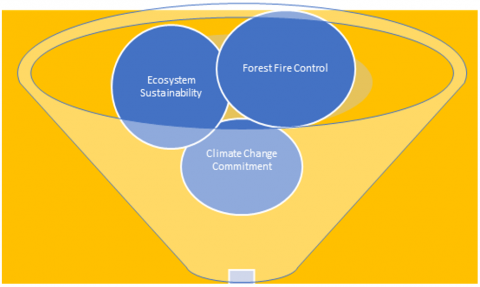
Figure 3 shows the other hand, the private sector, especially plantation and forestry companies, have large economic interests in peatlands, especially in the palm oil, pulp and paper industries. Peatlands are often used for large-scale plantations, thus making an important contribution to regional and national economic growth [3]. Peatlands have offered significant economic benefits to palm oil, pulp and paper plantation companies, and the forestry industry [31]. However, unsustainable use of peatlands can be detrimental to companies in the long term, because it risks increasing land degradation and fires that can stop their business operations.
Figure 3. Interests private in peatland management
The government also needs to pay attention to technological aspects in peatland management. The application of modern technology, such as IoT-based fire monitoring systems, can help detect and prevent fires before they spread [32]. By utilizing technology, the government can increase the effectiveness of peatland management and reduce the risk of detrimental fires. Overall, the government's interests in preserving the peat ecosystem in Riau Province include fire prevention, community empowerment, and technology application. The synergy between appropriate policies, community participation, and technological innovation will be the key to success in sustainable peatland management in this region.
In Riau Province, many companies see peatlands as fertile areas for agricultural expansion, especially because the initial cost of clearing land is considered lower compared to non-peat areas. Drained and cultivated peatlands can produce high commodity production, making them economically attractive [33]. Although the potential for these short-term benefits is large, companies are increasingly aware that peatland damage, such as degradation or fire, can cause huge economic losses. In some cases, companies face high fines, reputational damage, and significant environmental recovery costs due to unsustainable practices.
Companies are increasingly aware of the long-term economic risks of unsustainable peatland management. Peatland degradation, particularly caused by land drainage and fires, can lead to reduced land productivity. In addition, carbon emissions from degraded peatlands can trigger stricter environmental regulations and international fines for companies involved. Companies operating on degraded peatlands face higher costs in terms of water restoration and management, as well as reduced crop productivity [34]. This is why more and more companies are choosing to adopt more sustainable peatland management practices. The instability of improperly managed land also causes companies to incur additional costs to mitigate damage such as deeper drainage, which actually accelerates land degradation [34].
Companies are expected to not only seek profit, but also play a role in preserving the environment through corporate social responsibility (CSR) programs. Good peatland management is part of this responsibility, and companies have an important role in supporting government programs for peatland rehabilitation and conservation. In Riau Province, which has a large peatland area and is vulnerable to damage from economic activities such as oil palm plantations, CSR programs have become one of the efforts to integrate environmental interests with responsible business practices. Corporate CSR initiatives, especially from the plantation and forestry sectors, play a crucial role in the restoration and conservation of peat ecosystems [35]. Companies such as PT Sinar Mas and PT Riau Andalan Pulp & Paper (RAPP), through their CSR programs, have taken steps to protect peatlands from unsustainable clearing. This includes rewetting efforts or rewetting degraded peatlands to prevent land fires, which are often a problem in Riau during the dry season. These CSR programs are often carried out in collaboration with local governments and local communities, which ensures a more holistic approach to maintaining the sustainability of peatlands and reducing the risk of fires that have a major impact on health and the economy.
Asia Pulp & Paper (APP) CSR program focuses on rehabilitating peat ecosystems in their concession areas in the form of developing Eucalyptus Pelita and Acacia Carsikarva plants. Through this program, the company collaborates with the BRGM and non-governmental organizations (NGOs) to revegetate degraded peatlands by replanting native plant species such as jelutung and ramin, which not only function in ecosystem restoration but also support biodiversity. This program also includes the construction of canal blocks designed to regulate water flow and maintain peat soil moisture, making the land more resistant to future fires. As a result, around 10,000 hectares of peatland in Riau have been successfully restored through this CSR initiative.
In addition to its success in rehabilitating peatlands, the program also provides social and economic benefits to the surrounding community. Through the social forestry scheme, APP and its strategic partners involve local communities in the process of planting, caring for plants, and monitoring restored land. This not only creates jobs for the community but also increases their awareness of the importance of peatland conservation. In addition, the program also integrates technological innovations in peatland monitoring and management. By using satellite and drone-based monitoring systems, APP is able to track land conditions in real time, detect potential fires, and assess the effectiveness of revegetation. The use of this technology allows for a rapid response to environmental threats and ensures the sustainability of the program in the long term. The success of the program is also supported by the company's commitment to adopting broader sustainability practices.
With this policy, APP is committed to not opening new land in peat areas, and implementing more environmentally friendly forest management practices. This step is in line with global efforts to mitigate climate change and reduce greenhouse gas emissions from peatland degradation. Although it has shown positive impacts, the program still faces challenges, especially in terms of long-term sustainability and broader community involvement. Therefore, a more comprehensive strategy is needed, including increasing the capacity of communities to manage peatlands independently and strengthening partnerships with various stakeholders, both from the government, academics, and environmental organizations. With strong synergy, it is hoped that peatland rehabilitation can continue and become a model for similar conservation initiatives in other areas.
4.2 Sinergy government-private in peatland management
The international market is increasingly paying attention to sustainability aspects in the supply chain, leading to global pressure on sustainable practices. Products derived from peatlands, such as palm oil, face pressure from consumers and investors to ensure that they are produced sustainably. Companies operating on peatlands need to implement environmentally friendly practices to maintain access to global markets and maintain their corporate image. Peatlands in this region store large amounts of carbon, so their destruction, such as through drainage or fire, can result in significant greenhouse gas emissions. As a result, global pressure on Indonesia, and Riau in particular, to adopt sustainable practices in peatland management continues to grow. This pressure comes from a variety of international stakeholders, such as environmental organizations, foreign governments, global consumers, and international investors.
International environmental organizations such as Greenpeace, WWF, and Rainforest Alliance have played a significant role in raising global awareness of the importance of protecting peatlands in Riau. Through international media campaigns, reports, and direct pressure on multinational companies operating on peatlands, these groups highlight the devastating impacts of deforestation and peatland degradation on the global climate. Pressure from these organizations has led several large companies in Riau, especially in the palm oil and pulp & paper sectors, to begin adopting No Deforestation, No Peat, No Exploitation (NDPE) policies. These policies encourage companies not to open new land in peat areas and to reduce practices that damage peat ecosystems. For example, APP and Wilmar International have updated their environmental policies in response to global pressure, committing to protecting remaining peatlands.
Pressure from global consumers has also played a significant role in encouraging companies operating on peatlands to practice sustainability [36]. Companies that wish to continue exporting their products, especially palm oil and pulp, must comply with increasingly stringent sustainability standards from consumer countries in Europe, North America, and East Asia. Certifications such as the Roundtable on Sustainable Palm Oil (RSPO) and the Forest Stewardship Council (FSC) have become requirements for accessing global markets, placing additional pressure on companies to ensure that they are managing peatlands sustainably. Companies that do not meet these standards often face consumer boycotts, trade sanctions, or a decline in their reputation in international markets [16]. In Riau Province, several large companies are starting to invest in sustainability technologies and practices, including peatland monitoring and land rewetting, to meet these standards.
Global investors are also putting significant pressure on companies to manage peatlands sustainably. International financial institutions, such as the World Bank and the International Finance Corporation (IFC), have developed environmental standards that companies receiving their financing must meet. In Riau, some companies that rely on foreign investment are now facing greater demands from investors to ensure that their operations do not cause ecosystem damage. The Norwegian Government Pension Fund, for example, has withdrawn its investments from several companies that failed to meet sustainability standards related to peatland management.
This pressure is motivating companies to adopt stricter policies on peat conservation and carbon emissions monitoring. Global pressure on the sustainability of peatland management comes through various international financial incentive mechanisms, such as the REDD+ (Reducing Emissions from Deforestation and Forest Degradation) scheme. This scheme offers financial incentives to developing countries, including Indonesia, to reduce emissions from deforestation and land degradation. In Riau, the REDD+ scheme has encouraged the government and companies to increase peatland restoration efforts as a means of obtaining international funding. Several REDD+ projects have been initiated in the province, focusing on peatland conservation and restoration. This scheme provides additional incentives for companies and the government to maintain the sustainability of peatlands while seeking ways to monetize their conservation efforts.
Synergy between the government and the private sector is essential to achieve sustainable peatland management in Riau. Some efforts that can be made through this collaboration include collaboration in peatland rehabilitation and restoration. The government and the private sector can work together in peatland restoration programs that have been damaged, either due to land conversion or fires [17]. Companies that have utilized peatlands for plantations can contribute to this effort by supporting rehabilitation activities, such as replanting native peat vegetation and creating canal blocks to prevent land drying [37].
Figure 4. Sinergy government-private in peatland management
Figure 4 shows that collaboration between the government and the private sector has provided significant results in accelerating peatland restoration efforts. Programs involving the private sector, especially large companies engaged in plantations and forestry, have made real contributions through involvement in restoration projects facilitated by the government. Such as the project managed by the BRGM in collaboration with several companies in Riau. Figure 4 below shows the peatland restoration strategy carried out by BRGM in partnership with forestry companies by carrying the "3 R Concept", namely rewetting, revegetation, and revitalization.
The implementation of the 3R concept in peatland restoration has shown positive impacts, especially in reducing the risk of fire and improving the function of natural ecosystems. Rewetting is carried out by building canal blocks and drilling wells to maintain the moisture of the peat soil, preventing drying that can trigger fires. Revegetation is focused on native plant species such as jelutung, ramin, and meranti which not only play a role in ecosystem recovery but also support biodiversity. Meanwhile, revitalization is carried out by involving local communities in social forestry programs, natural resource-based economic empowerment, and sustainable land management training.
This collaboration is also supported by the implementation of IoT-based monitoring technology and satellite-based fire detection systems, which enable more accurate and real-time monitoring of peatlands. Several forestry and plantation companies involved have integrated this system into their operations to ensure more sustainable land management. In addition, incentives from the government, such as access to green funding schemes and environmental certification, further encourage the private sector to contribute more to peatland restoration.
Although the program has produced significant results, challenges remain, especially in terms of coordination between the government, private sector, and communities. One of the main obstacles is how to ensure the sustainability of restoration projects in the long term, considering that peat ecosystem recovery takes years. Therefore, stronger policies and long-term commitments from all stakeholders are needed to ensure that restoration efforts are not only temporary, but also become part of a sustainable development strategy in peat areas.
4.3 Integration interest government-private for sustainable peatland management
In Riau Province, several palm oil and forestry companies are actively involved in restoration through the practice of “No Deforestation, No Peat, No Exploitation (NDPE)”, where they are committed to not opening new peatlands and rehabilitating damaged peatlands. This collaboration involves building canal blocks, rewetting the land, and replanting native vegetation (revegetation) on damaged land. In the period 2017-2021 in the Riau and Central Kalimantan regions, around 25 thousand hectares of peatland were successfully restored through this collaboration. Large companies work with the government to support restoration projects, not only by providing funds, but also by providing experts and technical equipment for land rehabilitation. One of the advantages of this collaboration is the ability of the private sector to fund large-scale restoration projects. Central and regional governments often experience budget constraints to restore peatlands completely [4]. In this case, the involvement of private companies, especially companies operating in the palm oil, forestry, and energy sectors, is a very helpful solution.
Many large companies in Riau have allocated part of their corporate social responsibility (CSR) funds for peatland rehabilitation programs. Some companies have even adopted new restoration technologies, such as water management systems to maintain peatland moisture, which contribute to fire prevention efforts. There are even forestry companies involved in peatland restoration that have implemented drone-based monitoring technology to monitor changes in the peat ecosystem after the rewetting process. This technology helps optimize the restoration process and makes it easier to monitor land conditions over time. The government and private sector also need to work together in implementing peatland protection policies. The government has a role in establishing strict policies to protect peatlands, such as a moratorium on new land clearing in peat areas and land use regulations [38]. On the other hand, the private sector must comply with these policies and support their implementation by implementing environmentally friendly land management practices, such as zero burning cultivation and the use of environmentally friendly technologies.
Next is cooperation in increasing capacity in peatland management through training and technology improvement. In addition, there needs to be joint supervision in ensuring that peatland management practices are carried out in accordance with sustainability standards. Transparent and participatory monitoring mechanisms can ensure that there are no violations, such as land clearing without permission or burning activities [39]. One important effort in this synergy is the development of a green economy in peat areas. The government can provide incentives for green investment, while the private sector can innovate in the development of environmentally friendly and sustainable products from peatlands, such as ecotourism and non-timber derivative products. This will create economic value for local communities without damaging the peat ecosystem.
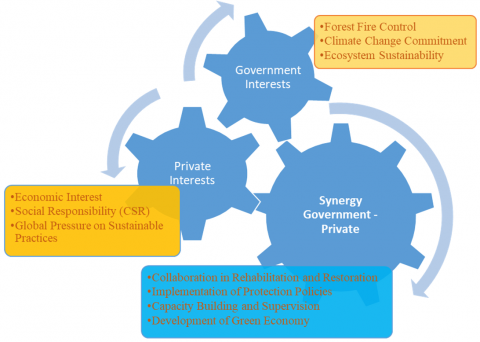
Figure 5 shows that sustainable peatland management in Riau Province requires synergy between the government and the private sector. Sustainable peatland management in Riau Province relies on strong collaboration between the government and the private sector through a Public-Private Partnership (PPP) model. This partnership is crucial in balancing environmental conservation, fire prevention, and economic sustainability. One of the key initiatives in Riau is the collaboration between the BRGM and private plantation companies to implement the 3R approach—Rewetting, Revegetation, and Revitalization. This model focuses on restoring peatland hydrology through canal blocking, replanting native vegetation, and promoting community-based livelihood programs that encourage local participation in sustainable peatland management.
Figure 5. Integration of government-private interests in sustainable peatland management
A comparison with similar initiatives in other peatland regions, such as Kalimantan and Malaysia, highlights important lessons that can further enhance the effectiveness of PPP in Riau. In Kalimantan, the government has implemented stricter regulatory enforcement, including a moratorium on new peatland concessions, ensuring that private companies adhere to sustainability commitments. Meanwhile, Malaysia’s approach integrates structured certification systems, such as the Malaysian Sustainable Palm Oil (MSPO) certification, which mandates sustainable practices for businesses operating on peatlands. Additionally, Malaysia provides tax incentives and green financing to encourage private-sector investment in peatland restoration.
Riau can strengthen its PPP model by adopting key strategies from these regions. First, regulatory mechanisms must be reinforced to ensure private-sector accountability in sustainable peatland management, as seen in Kalimantan. Second, economic incentives, such as tax benefits and access to green credit, could encourage more companies to actively participate in restoration efforts, following Malaysia’s example. Lastly, the integration of modern technology, such as IoT-based fire detection systems, drones for peatland monitoring, and GIS mapping, could provide real-time data to support early intervention strategies, similar to Malaysia’s technological advancements.
By learning from these successful models, Riau’s PPP approach can be further refined to create a more effective and sustainable framework for peatland management. Strengthening collaboration, enhancing regulations, and leveraging technology will be key to ensuring that peatlands in Riau continue to serve as essential carbon storage areas, biodiversity-rich habitats, and sources of economic benefits without compromising environmental sustainability.
This study confirms that sustainable peatland management in Riau Province is highly dependent on strong synergy between the government and the private sector. Peatlands in this region play an important role in climate change mitigation, environmental conservation, and supporting the local economy through the plantation and forestry sectors. However, major challenges such as forest and land fires (karhutla), ecosystem degradation, and lack of coordination between stakeholders hamper the effectiveness of peatland management. The government has a role as a regulator in setting strict policies for peatland protection, including through a moratorium on new land clearing and the implementation of community-based restoration. Meanwhile, the private sector, especially plantation and forestry companies, must implement more sustainable business practices by adopting a NDPE policy and contributing to land rehabilitation and restoration programs.
This study concludes that the public-private partnership model is the most effective approach to sustainable peatland management. With closer collaboration between the government, private sector, and communities, it is hoped that a balance can be created between economic interests and environmental protection. The use of IoT-based monitoring technology, agroforestry programs, and increasing community capacity are important factors in maintaining the sustainability of peat ecosystems in Riau. In the future, further commitment is needed from all parties to increase the effectiveness of regulations, strengthen institutions, and technological innovation in peatland management to ensure that this ecosystem remains sustainable and provides long-term benefits for the environment and society.
The author would like to thank the Ministry of Education, Culture, Research and Technology, Directorate General Republic of Higher Education, Research and Technology Indonesia, for its support through Regular Fundamental Research Scheme for Fiscal Year 2024 (Grant No.: 083/E5/PG.02.00.PL/2024).
[1] Zulkarnaini, Z., Sujianto, S., Wawan, W. (2022). Sustainability of ecological dimension in peatland management in The Giam Siak Kecil Bukit Batu Landscape, Riau, Indonesia. Biodiversitas Journal of Biological Diversity, 23(4): 14. https://doi.org/10.13057/biodiv/d230414
[2] Fatkhullah, M., Mulyani, I., Imawan, B. (2021). Strategi pengembangan masyarakat petani lahan gambut melalui program tanggung jawab sosial perusahaan: Analisis pendekatan penghidupan berkelanjutan. Journal of Social Development Studies, 2(2): 15-29. https://doi.org/10.22146/jsds.2186
[3] Irawan, A., Sari, D.P., Rahman, A. (2022). Sistem real time monitoring pendeteksi kebakaran hutan dan lahan di Provinsi Riau. Intecoms Journal of Information Technology and Computer Science, 5(2): 4567. https://doi.org/10.31539/intecoms.v5i2.4567
[4] Zulkamaini, Z., Nasution, M.S., Rinto, R., Meiwanda, G., Bedasari, H. (2024). Public private partnerships in peatland management: A design for sustainable practices. In E3S Web of Conferences, 506: 08001. https://doi.org/10.1051/e3sconf/202450608001
[5] Gunawan, A., Afriyanti, R. (2019). Potensi perhutanan sosial dalam meningkatkan partisipasi masyarakat dalam restorasi gambut. Jurnal Ilmu Kehutanan, 15(2): 123-135. https://doi.org/10.22146/jik.52442
[6] Mardhiansyah, M., Sari, N.R., Rachmawati, D. (2022). Persepsi masyarakat terhadap agroforestri pada lahan gambut di Provinsi Riau. Journal of Forest Science Avicennia, 5(1): 22124. https://doi.org/10.22219/avicennia.v5i1.22124
[7] Saragih, E., Hariyadi, S. (2016). Pengelolaan lahan gambut di perkebunan kelapa sawit di riau. Buletin Agrohorti, 4(3): 312-320. https://doi.org/10.29244/agrob.4.3.312-320
[8] Rachmawati, D., Tarigan, R. (2020). Inovasi pertanian dan pemberdayaan masyarakat petani di lahan gambut. Forum Penelitian Agro Ekonomi, 37(1): 77-94. https://doi.org/10.21082/fae.v37n1.2019.77-94
[9] Gunawan, A., Mardhiansyah, M. (2020). Pengelolaan lahan gambut tanpa bakar: Upaya alternatif restorasi pada lahan gambut basah. Jurnal Pengelolaan Sumberdaya Alam Dan Lingkungan, 10(4): 668-678. https://doi.org/10.29244/jpsl.10.4.668-678.
[10] Mendhe, D., Padole, M., Jodhe, M., Badole, S., Iqbal, R., Samarth, U. (2023). Forest fire detection system based on IoT. Journal of Network & Information Security, 11(2). http://www.publishingindia.com/jnis/69/forest-fire-detection-system-based-on-iot/32085/87206/.
[11] Anhar, I.P., Mardiana, R., Sita, R. (2022). Dampak kebakaran hutan dan lahan gambut terhadap manusia dan lingkungan hidup (Studi Kasus: Desa Bunsur, Kecamatan Sungai Apit, Kabupaten Siak, Provinsi Riau). Jurnal Sains Komunikasi Dan Pengembangan Masyarakat, 6(1): 75-85.
[12] Zulkarnaini, Z., Sujianto, S., Wawan, W., Mashur, D (2022). Institutional synergy in sustainable peatland management. Jurnal Kebijakan Publik, 13(4): 420-424. http://doi.org/10.31258/jkp.v13i4.8128
[13] Bilqis, N. (2020). Analisis dampak kasus kebakaran hutan di Indonesia terhadap hubungan diplomatik Indonesia dengan malaysia dan singapura. Gorontalo Journal of Government and Political Studies, 3(2): 055-069.
[14] Rahmayanti, M., Si, M. (2007). Kontribusi kebakaran lahan gambut terhadap pemanasan global. Kaunia Jurnal Sains dan Teknologi, 3(2).
[15] Mulia, P., Nofrizal, N., Dewi, W.N. (2021). Analisis dampak kabut asap karhutla terhadap gangguan kesehatan fisik. Jurnal Ners Indonesia, 12(1): 51-66.
[16] Ulum, M.C., Ngindana, R. (2017). Environmental Governance: Isu Kebijakan dan tata Kelola Lingkungan Hidup. Universitas Brawijaya Press.
[17] Zulkarnaini, Z., Nasution, M.S., Meiwanda, G., Istihat, Y., Bedasari, H. (2024). Peatland management policy: How to build a good public-private partnership? Jurnal Ilmiah Peuradeun, 12(1): 315-332.
[18] Zulkarnaini, Z., Sujianto, S., Wawan, W. (2023). Strengthening community social capital in peatland management. Sosiohumaniora, 25(1): 36963. https://doi.org/10.24198/sosiohumaniora.v25i1.36963
[19] Zulkarnaini, Z., Meiwanda, G., Elysa Lubis, E., Sundari Nasution, M., Kusuma Habibie, D. (2020) Peatland management based on education for sustainable development (ESD). In Journal of Physics Conference Series, 1655(1): 012142. https://doi.org/10.1088/1742-6596/1655/1/012142
[20] Syahza, A., Bakce, D., Nasrul, B., Irianti, M. (2020). Peatland policy and management strategy to support sustainable development in Indonesia. Journal of Physics: Conference Series, 1655(1): 012151. https://doi.org/10.1088/1742-6596/1655/1/012151
[21] Zulkarnaini, Z., Rusli, Z., Nasution, M.S., Rinto, R., Mayarni, M., Mashur, D. (2024). Policy design for peatland management based on public-private partnership. Sosiohumaniora, 26(1): 97-105. https://doi.org/10.24198/sosiohumaniora.v26i1.50609
[22] Zulkarnaini, Z., Ikhsan, M., Rinto, R. (2025). Accelerating public-private partnerships for overcoming community vulnerabilities in coastal peatlands riau. In E3S Web of Conferences, 611: 01003. https://doi.org/10.1051/e3sconf/202561101003
[23] Tan, Z.D., Carrasco, L.R., Sutikno, S., Taylor, D. (2022). Peatland restoration as an affordable nature-based climate solution with fire reduction and conservation co-benefits in Indonesia. Environmental Research Letters, 17(6): 064028. https://doi.org/10.1088/1748-9326/ac6f6e
[24] Giannakidou, S., Radoglou-Grammatikis, P., Lagkas, T., Argyriou, V., Goudos, S., Markakis, E.K., Sarigiannidis, P. (2024). Leveraging the power of Internet of Things and artificial intelligence in forest fire prevention, detection, and restoration: A comprehensive survey. Internet of Things, 26: 101171. https://doi.org/10.1016/j.iot.2024.101171
[25] Nordbeck, R., Hogl, K. (2024). National peatland strategies in Europe: Current status, key themes, and challenges. Regional Environmental Change, 24(1): 5. https://doi.org/10.1007/s10113-023-02166-4
[26] Tosun, C. (2000). Limits to community participation in the tourism development process in developing countries. Tourism Management, 21(6): 613-633. https://doi.org/10.1016/S0261-5177(00)00009-1
[27] Abbott, K.W., Snidal, D. (2021). The governance triangle: Regulatory standards institutions and the shadow of the state. In The Spectrum of International Institutions, pp. 52-91.
[28] Yuliani, F. (2024). Land and forest fire control strategy through inter-organizational network in efforts to implement disaster management in Riau Province, Indonesia. IOP Conference Series: Earth and Environmental Science, 1419(1): 012072. https://doi.org/10.1088/1755-1315/1419/1/012072
[29] Husin, Z. (2022). Dampak negatif praktek tebang bakar hutan untuk membuka lahan pertanian baru. Jurnal Thengkyang, 7(1): 13-25.
[30] Zulkarnaini, Z., Gevisioner, G. (2021) Differences perception and interest in peatland management policy. Jurnal Kebijakan Publik, 12(2): 65-72. http://doi.org/10.31258/jkp.v12i2.7950
[31] Zulkarnaini, Z., Sadad, A., Meiwanda, G. (2022). Kapasitas kelembagaan dalam pengelolaan arboretum gambut. Prosiding Ilmu Sosial dan Ilmu Politik (PISIP), 2(1): 321-325.
[32] Rahman, A., Yuliani, F. (2018). Mitigasi bencana kebakaran lahan gambut dan pemberdayaan masyarakat melalui metode restorasi. Sosio Informa, 4(2): 1460. https://doi.org/10.33007/inf.v4i2.1460
[33] Utomo, M.R., Qurbani, I.D., Hakim, M.L., Kamal, M.A., Margaretha, F., Syaharini, D.M. (2023). Optimalisasi pemanfaatan lahan gambut melalui usaha pertanian produktif untuk menciptakan ekonomi desa yang berkelanjutan. Jurnal Cahaya Mandalika, 4: 119-129. https://doi.org/10.36312/jcm.v4i1.1303
[34] Utomo, M.N., Rita, M.R., Pratiwi, S.R., Puspitasari, I. (2022). Green Business: Strategi Membangun Kewirausahaan Berdaya Saing dan berkelanjutan. Syiah Kuala University Press.
[35] Suyanto, S.E. (2023). Mengenal Bursa Karbon di Indonesia. CV. AA. Rizky.
[36] Anggraini, S., Sinaga, E., Loso, S., Heirina, A., Vajri, I.Y. (2024). Z-FARM WISDOM: Menyatukan tradisi dan inovasi pertanian ramah lingkungan untuk generasi Z. Insight Mediatama.
[37] Purnomo, H., Puspitaloka, D., Junandi, B., Juniyanti, L., Dharmawan, I.W.S. (2023). Pembelajaran dari Aksi Restorasi Gambut Berbasis Masyarakat di Indonesia dan Asia Tenggara. CIFOR.
[38] Zulkamaini, Z., Nasution, M.S., Rinto, R., Meiwanda, Azhari, Y., Abduh, M. (2022). Analisis pestles pencegahan kebakaran hutan dan lahan gambut di provinsi Riau, Indonesia. Jurnal Pengabdian Mandiri, 1(2): 249-264. https://bajangjournal.com/index.php/JPM/article/view/1562.
[39] Nugroho, W., Syahruddin, E. (2021). Politik hukum rancangan undang-undang cipta kerja di sektor lingkungan hidup dan kehutanan (Suatu Telaah Kritis). Jurnal Hukum & Pembangunan, 51(3): 637-658.