Trio Saputra* | Sulaiman Zuhdi | Irza Setiawan
© 2025 The authors. This article is published by IIETA and is licensed under the CC BY 4.0 license (http://creativecommons.org/licenses/by/4.0/).
OPEN ACCESS
The centralized policy of local government governance in waste management by applying strict laws and regulations has led to failure. This is evidenced by the increasing trend in landfill waste from year to year. There is a need for improvements and changes to local government policies in governance through the involvement of the private sector and the community. The purpose of this study is to explore the changes in the early stages of two collaboration initiatives: one relying on the traditional collaboration model centered on local government, and the other using a collaboration model involving the private sector and the community in the city of Pekanbaru. This study employs qualitative methods, including 15 in-depth interviews with local government officials, private sector representatives, and community leaders, along with an analysis of policy documents and waste management reports from Pekanbaru City. This multi-source approach aims to explore the early-stage shifts from traditional, centralized governance to collaborative waste management involving multiple stakeholders. Key findings suggest that local governments have shifted their role to facilitators, encouraging collaboration with the private sector and community through platforms such as waste banks. The study proposes a new model for collaborative governance in sustainable waste management.
waste, governance, local government, policies, sustainable waste management
Rapid urbanization, increasing industrialization, elevated public incomes, and the evolution of consumerism are culminating in a surge in waste volume and toxicity across major Asian cities [1], including Indonesia. This problem can impact social, economic, health, and environmental aspects [2, 3]. Waste needs to be appropriately managed to ensure sustainability [4]. Sustainable waste management is an effort to manage waste in urban areas that utilizes the principle waste to help meet community needs in terms of consumption and preserving the environment through effective waste collection, processing, resource conservation, and recycling [5].
Pekanbaru City was selected due to its unique challenges in waste management, including limited landfill capacity and the increasing resistance to landfill expansion. The city's strategic position in Riau Province, its rapid urbanization, and the availability of comprehensive local data made it an ideal setting to explore the shift towards collaborative governance in waste management.
Central to the achievement of successful waste management is the pivotal role of the local government. Post-regional autonomy, local governments wield authority for innovation and stand at the forefront of public service provision, executing policies and programs [6]. Historically, local governments have been instrumental in initiating waste management, channeling funding into infrastructure development, including Transfer Stations (TPS) and Final Disposal Sites (TPA). as well as forming a technical Regional Working Unit (SKPD) for the Pekanbaru City Environment and Sanitation Service (DLHK) Additionally, technical Regional Working Units (SKPD) within Pekanbaru City's Environment and Sanitation Service (DLHK) oversee cleanliness and environmental matters. As a primary agent in municipal waste management, DLHK levies fees, manages waste flow from sources to TPS, and facilitates transportation to TPA. However, insular management practices devoid of external involvement have proven ineffective [7], evidenced by the persistent rise in annual landfill counts within Final Disposal Sites (TPA).
At present, almost all waste management ends up in landfills, causing the burden on landfills to become even heavier due to limited land and increasing public resistance to landfills:
The city government's efforts in waste management experience several weaknesses, including misconceptions held by society regarding waste, insufficient resources and recycling technologies, inventory challenges, inefficiencies in regulatory enforcement, hesitancy of the private sector to engage and governance models for waste management [8]. This confluence of factors manifests in the accumulation of waste across the urban landscape, thereby posing substantial environmental and public health challenges [9-11].
To address these pressing issues, a paradigm shift towards collaborative governance involving diverse stakeholders is imperative. Collaborative governance can be understood as a form of cooperation among various stakeholders, including local governments, the private sector, and the community, to collectively address complex societal challenges. According to Ansell and Gash [12], collaborative governance refers to institutional arrangements where one or more public agencies actively engage non-state stakeholders in formal, consensus-oriented, and deliberative decision-making processes. These processes are designed to formulate and implement public policies, as well as to manage public programs or assets effectively.
At its core, collaborative governance emphasizes interaction, negotiation, and compromise among the multiple actors involved, including individuals, communities, and private sector entities, all of whom are directly affected by the outcomes both the consequences and benefits of these collaborative efforts. By fostering inclusive and participatory decision-making, collaborative governance ensures that diverse perspectives are considered, leading to more sustainable and equitable solutions.
The present study seeks to investigate the application of collaborative governance in the context of waste management within the city of Pekanbaru. Specifically, the study aims to address two key research questions: (1) How have local government policies evolved in the transition towards collaborative governance in waste management? (2) What roles and interactions have been observed between the local government, private sector, and community within the framework of collaborative governance in Pekanbaru's waste management?
Through this investigation, the study aims to contribute to a deeper understanding of how collaborative governance can be operationalized to achieve sustainable waste management in urban settings, particularly in regions facing unique socio-economic and environmental challenges.
Urban waste management has emerged as one of the most pressing challenges in sustainable development, particularly in an era marked by rapid urbanization and significant population growth. As waste volumes continue to rise, the environmental, social, and economic impacts of poorly managed waste disposal have become increasingly urgent to address. In this context, the concept of collaborative governance has gained traction as a promising approach to tackling the complexities of waste management by engaging multiple stakeholders, including governments, the private sector, and local communities. According to Ansell and Gash [12], collaborative governance is defined as a framework in which one or more public institutions actively involve non-state stakeholders in formal, consensus-oriented, and deliberative decision-making processes. This approach not only underscores the importance of active participation from all parties but also fosters an environment for interaction, negotiation, and compromise, ultimately paving the way for sustainable and inclusive solutions.
However, the implementation of collaborative governance in waste management continues to encounter numerous challenges, including a lack of coordination among stakeholders, limited resources, and resistance to change [13]. Furthermore, existing research has predominantly focused on developed countries, leaving a significant knowledge gap regarding how this approach can be adapted and implemented in developing nations, such as Indonesia. Against this backdrop, this literature review aims to examine recent advancements in the study of collaborative governance in waste management, with a specific focus on the evolution of policies, the roles of stakeholders, and the challenges of implementation in urban contexts.
The study of governance in public management is mainly related to a policy perspective. Current government policy emphasizes sustainability through joint efforts that require interaction among various stakeholders. Given the current environmental and social challenges, innovation-related policies must involve public, private, and community actors by anticipating consequences and generating inclusive ideas within communities and civil society [14].
Governance can be thought of as coordination and coherence among various actors with different interests and goals [15]. A fundamental facet of governance is its propensity for informality, extending beyond the confines of formal governmental institutions to encompass individual citizens and spontaneous collectives [15]. This informality, coupled with the non-mandatory nature of governance, underscores the capacity for governmental initiatives to transpire devoid of explicit state authorization and guarantees of state power [15].
To effectively address the exigencies of environmental sustainability on a global scale, the imperative of multi-level governance becomes evident, necessitating active engagement of non-governmental organizations (NGOs), communities, and consumers [14]. The attainment of success in waste management policies hinges upon the adaptability of community and infrastructure management [16], coupled with the reinforcement of the roles assumed by stakeholders, extending beyond governmental agencies to encompass actors capable of contributing to community empowerment [17].
As posited by Jänicke et al. [18], a multi-level governance approach involving a coalition of government, private and civil society entities, emerges as a mechanism to facilitate environmental innovation [14]. A central tenet of model lies in the implementation of locally-driven programs and development solutions, responsive to the aspirations of citizens, local governments, and organized interests [19]. This approach amalgamates rigorous scientific principles with community participation, culminating in enduring and sustainable environmental and social outcomes for the community [20].
The application of polycentric governance theory is not confined solely to the public sector; rather, it extends to the private sector where shared responsibilities necessitate precise delineation, concurrent with the enhancement of the efficiency of public goods and services [21]. Furthermore, Emerson et al. [13] have proffered a comprehensive framework for collaborative governance, encompassing aspects such as system context, collaborative regimes, and the dynamics of collaboration. These include principles of engagement, shared motivation, the capacity for joint action, collaborative action outputs, impact assessment, and adaptation.
The study of joint governance in Indonesia still needs to be advanced. Collaborative governance can be achieved through equal participation, consultation, or dialogue and mutually beneficial cooperation [22]. Both theoretical and empirical research underscore the pivotal role of stakeholder collaboration and participation in decision-making, particularly by local residents, in effectively formulating plans and executing projects [23, 24]. Furthermore, this collaborative endeavor must place the public interest at its core, supported by a comprehensive and effective social governance framework rooted in legal and ethical principles. The elements of joint-up governance can be identified as subjects, objects, forms, and collaborative environments [22]. Governance theory also evolves with the policy role of government, which changes at different stages of the innovation system. Relatively little work has focused on the role of government in initiating and supporting collaborative groups [25-28]. A comprehensive case study of the innovation ecosystem in Changzhou, China, highlights the substantial role government policies can play in the nascent stages, particularly when knowledge resources from academia and businesses are constrained [29]. However, as the innovation ecosystem matures, the government's role as a facilitator and coordinator may diminish [29].
The conceptual framework of collaborative governance defines the dimensions of anticipation, reflectivity, inclusiveness, and responsiveness [30]. Anticipatory development involves researching risks while seeking innovation opportunities; it often employs methods such as technological assessment and horizon scanning [30]. Reflectivity means self-governance from the bottom up, which can be realized through ethical technological judgments, modulation of the middle ground and institutions that reflect value systems [30]. The inclusiveness dimension correlates with stakeholder engagement and public participation.
Moreover, responsiveness can be quantified through the capacity to adapt and the promptness of response to emerging knowledge [30]. From a governance standpoint, achieving sustainable waste management relies more on self-regulation and proactive measures than on complex regulations [31]. These trends coincide with the transformation of innovation systems from national to global governance and the shift from private investment to collective innovation [31].
This study employs a qualitative approach characterized by an exploratory, descriptive design aimed at elucidating and explicating the research questions. The qualitative methods employed encompass in-depth case studies, enabling a comprehensive exploration of the intricacies of ongoing activities [32]. The research scope encompasses governance activities across government, private sector, and community domains. Data were collected through 15 semi-structured interviews with government officials from the Pekanbaru City Environment and Sanitation Service (DLHK), representatives from waste management companies, and community members involved in waste management initiatives. Additionally, documents such as government regulations and reports on waste management policies were reviewed, and website content was analyzed to assess stakeholder engagement (details provided in Table 1).
Table 1. Data source and purpose
|
Data Source |
Purpose |
|
Government documents |
Analyze local waste management policies |
|
Interviews (15) |
Gather insights from government, private sector, and community representatives |
|
Websites |
Assess private sector and community engagement in waste management |
The process of data analysis unfolded in two primary stages. Initially, all governmental policies and activities were amassed, documented, and categorized. These categorizations encompassed traditional governance mechanisms such as direct funding, public sector procurement, regulatory measures, rules and constraints, standardization, and other forms of centralized control. Simultaneously, collaborative approaches were identified, which encompassed stakeholder engagement, community involvement, private sector collaboration, and communication platforms. These collaborative strategies were facilitated and supported by local government initiatives. Subsequently, a content analysis was conducted to establish linkages between diverse forms of sustainable governance, encompassing attributes like anticipation, reflectivity, inclusiveness, and responsiveness.
Figure 1. Increase in Pekanbaru City garbage piles
Content analysis was used to categorize data into themes such as "anticipation," "inclusivity," and "responsiveness." "Anticipation" was defined as the proactive identification of waste management challenges and opportunities for innovation, while "inclusivity" referred to the extent to which stakeholders were involved in decision-making. A flowchart (see Figure 1) was created to visualize the two-stage analysis process: initial categorization of governance model→ content analysis to identify collaborative governance dimensions.
Thus, this study focuses on the concept of governance in the pursuit of sustainable waste management through collaborative engagement among stakeholders. Each dimension of governance's role is meticulously analyzed, delineating the contributions of government, private sector, and the community. The ensuing discourse not only synthesizes the findings but also underscores the evolving role of government in the context of achieving sustainable waste management.
4.1 Government, as the leading actor
Governance in waste management is centralized, with the local government playing a pivotal role. Pekanbaru Mayor Regulation No. 60 of 2015 has been issued by the local government to establish policies and strategies for waste management. This regulation serves as a comprehensive guide for the regulation, implementation, and development of an environmentally friendly waste management system. In practice, the regional government delegates the responsibilities and duties to the Pekanbaru City Environment and Sanitation Service (DLHK). The waste management sector comprises various sections, including waste reduction and utilization, waste handling and final processing, facilities and infrastructure, and environmental law enforcement, such as the law enforcement task force (Satgas-Gakkum). Additionally, other regional work units (SKPD) contribute to waste management. The Department of Industry and Trade, for instance, manages market waste and collects fees for waste services. Moreover, the Civil Service Police Unit (Satpol-PP) assists in enforcing regional waste management regulations. Each work unit has specific duties and responsibilities to ensure effective and efficient waste management. The local government also actively promotes proper waste management behavior to the community through guidelines and standards. These proactive measures lay a solid foundation for the establishment of sustainable waste management practices in Pekanbaru.
However, although local governments play an important role in waste management, there are challenges in terms of community participation and private sector involvement. Given the current environmental and social challenges, innovation policies need to involve public actors, the private sector, and communities by anticipating consequences and generating inclusive ideas with communities and civil society [14]. Local governments actively socialize correct behavior in managing waste to the community, provide direction and standardization. However, the level of community participation is still not optimal. The community is invited to monitor and report inappropriate behavior, but direct community involvement in waste management activities such as waste sorting at source, recycling, and waste reduction is still low.
The lack of community participation is caused by various factors, including lack of environmental awareness and education, lack of incentives for the community to be actively involved, and the lack of habits in terms of good waste management. In addition, communication between the government and the community also needs to be improved so that messages about waste management can be conveyed properly. The involvement of more parties is needed to resolve various problems that hinder the community in achieving common goals or expectations [17]. Therefore, creating a forum to discuss problems and jointly design programs and activities to overcome these problems is the right step. On the other hand, the private sector also has great potential to contribute to waste management. However, the involvement of the private sector is currently still limited. Public-private cooperation can bring innovation and efficiency to waste management, such as investment in waste management technology, recycling programs, and the development of waste-based industries. Local governments need to create policies that support and encourage private sector involvement in waste management, including fiscal incentives, ease of licensing, and collaboration in the form of public-private partnerships.
4.2 Private partnership with local government
Cooperation between local governments and the private sector in waste management provides a great opportunity to create a more effective and sustainable system. In today's modern world, the challenges of waste management are increasingly complex with the increasing volume of waste and various types of waste produced by the community and the industrial sector. Therefore, the conventional approach that only relies on the role of local governments is no longer adequate. Active involvement of the private sector is needed, which has the resources, technology, and expertise to address this problem. The public-private partnership (PPP) model is the most comprehensive form of cooperation, where local governments and private companies share risks, responsibilities, and benefits in waste management projects. In this scheme, local governments provide regulatory support, while the private sector provides capital and technology investment. Partnership is a cooperative relationship based on trust, independence, and equality to achieve common goals [16].
Private cooperation is facilitated through auctions for waste transportation services, specifically from temporary waste bins (TPS) to final disposal sites (TPA), which are divided into three service zones. Zone PT is managed by PT Godang Tua Jaya (GTJ) from March 18 to December 23, 2021. The potential for waste transportation to the TPA in this zone is 355.29 tons per day, covering the areas of Bina Widya District, Tuah Madani District, Payung Sekaki District, and Marpoyan Damai District. Zone II is managed by PT Samhana Indah (SHI) during the same period, with a potential waste transportation capacity of 314.03 tons per day. This zone covers Bukit Raya District, Lima Puluh District, Sail, Pekanbaru City, Tenayan Raya, Kulim, Sukajadi, and Senapelan Districts. Zone III, on the other hand, is self-managed by the DLHK Waste Management Sector and serves Rumbai District, West Rumbai District, and East Rumbai District.
The selection of these two companies was based on their ability to meet the requirements and maintain high standards. With the successful implementation of the waste transportation system, these companies are granted the responsibility of managing waste, under the assessment and support of the local government. Through public procurement, the local government ensures its dominant control over the projects. Furthermore, for commercial establishments, hospitals, and offices, the local government imposes various fees, which not only contribute to regional income but also serve as deterrents against irresponsible consumer behavior through assessments, punishments, or sanctions.
The private sector also contributes through corporate social responsibility (CSR) programs. CSR programs include initiatives that support waste management, such as recycling campaigns, environmental education, and the development of supporting infrastructure. For example, the oil company PT. Chevron Indonesia, which operates in Pekanbaru City, helps the plastic recycling program by providing facilities in the form of plastic recycling processing machines and funding for activities carried out by the community. This CSR program not only helps with waste management, but also improves the company's image as an entity that cares about the environment. Trust between the government and the private sector is a key factor in this collaboration. Lack of transparency in fund management and project implementation can reduce the level of trust. The solution is to build trust through transparent contracts, clear reporting, and open communication. Local governments must ensure that the process of selecting private partners is carried out fairly and transparently. Having a contract with the private sector can improve the quality of waste management services [33]. More scheduled services, more professional handling, and quick responses to public complaints are some of the benefits that can be felt directly by residents.
4.3 Community participation with local government
Before implementing waste management policies, the regional government actively seeks suggestions and opinions from its citizens, ensuring a foundation of legitimacy and public support. Throughout the implementation process, the community is actively engaged and involved. For instance, individuals who come across trash piles can report them by contacting the call center at 0821-7191-9992. This not only aids local governments in promptly detecting and resolving problems but also contributes to future improvement stages.
Community participation can also be seen from the increasing number of waste banks initiated by community groups. The concept of a waste bank emphasizes efforts to reuse waste into products of economic value by prioritizing the active involvement of local communities in waste management. The involvement of civil society in waste management has given birth to various programs and activities packaged as a partnership or collaborative management approach [17]. This collaborative effort shows that effective waste management requires synergy between the government and the community to achieve optimal and sustainable results. One of the Non-Governmental Organizations (NGOs) that has succeeded in establishing a pilot village for a waste bank is the Dalang Collection waste bank, chaired by Mrs. Soffia Seffen. The Dalang Collection waste bank is a forum for developing creative potential and working in an organized and participatory manner in implementing sustainable community and student empowerment towards awareness and independence [34]. In its activities, this NGO carries out various activities, including waste management training which includes waste bank management, composting, recycling crafts, implementing biopore infiltration holes around the yard, and training on how to market and utilize environmentally friendly products. This NGO has also received several awards from the President of the Republic of Indonesia for its efforts in saving the environment and several works on recycling marketable plastic waste.
Community participation in the Waste Bank Mastermind program is very important and plays a major role in the success of this initiative. Local communities are actively involved in various activities organized by NGOs, from waste collection, sorting, to the recycling process. With the waste bank, residents can exchange sorted waste for various daily needs or get rewards in the form of money. This not only increases environmental awareness but also provides economic incentives for the community. Community involvement can also be seen in their support for the development of environmental infrastructure, such as the installation of biopore infiltration holes in their yards. Biopore infiltration holes help reduce waterlogging and increase soil fertility by utilizing organic waste as natural compost. The waste bank is real evidence that community participation can create significant positive changes [35]. Through collaboration and active involvement, the community not only becomes a beneficiary but also an agent of change in creating a cleaner and healthier environment. The success of this NGO can empower the community and build environmental awareness. Community participation is the main benchmark in encouraging Collaborative Governance [17].
4.4 Analysis of local government policies in waste management
In the early stages, the local government implemented a centralized policy to effectively manage waste in Pekanbaru. This was achieved through the strict enforcement of regulations and laws, including the imposition of fines on individuals who improperly dispose of waste. The primary objective of this approach was to ensure the provision of high-quality services and discourage irresponsible behavior. Subsequently, the focus shifted towards sustainable waste management, which involved enhancing public and private sector knowledge and perceptions, as well as fostering joint governance guided by the standardized protocols set by the local government. The public actively engaged in this process by providing feedback, monitoring ongoing issues, and reporting them to the local government. Additionally, advancements in transportation technology have facilitated improved performance within the private sector. A noticeable trend has emerged, highlighting the growing collaboration between the government, private sector, and the community. Table 2 presents a comparative analysis of government policies and practices within the framework of centralized governance and collaborative governance.
Table 2. Local government policies in the context of governance centralized and collaborative governance
|
Centralized Governance |
Collaborative Governance |
|
|
4.5 Towards dynamic collaborative governance in waste management
The role of local government, private sector, and community can be associated with collaborative governance through the dimensions of anticipation, reflexivity, inclusiveness, and responsiveness [30]. Local government planning, technology development, and information sharing between the private sector and government by collecting public opinion, education, and guidance to the public before launching a program can achieve better performance than expected. By involving various stakeholders, the government can identify potential risks and opportunities early on, thereby minimizing negative impacts and maximizing program benefits.
Reflectivity demands ongoing supervision, continuous evolution from the local government, and monitoring facilitated through joint governance involving the private sector and the community. Inclusivity can be enhanced by fostering collaborative governance among local governments, the private sector, and the community through the implementation of pilot programs that actively engage community members. Responsiveness can be attained through advancements in transportation and communication technology, enabling seamless collaboration between local governments, the private sector, and the community [16]. These dynamics are further illustrated in Table 3.
Table 3. Collaborative governance for sustainable waste management
|
Collaborative Governance |
Local Government |
Private |
Public |
|
Anticipation |
|
|
|
|
Reflectivity |
|
|
|
|
Inclusivity |
|
|
|
|
Responsiveness |
|
|
|
From the analysis above, it appears that within the framework of collaborative governance policies, local government policies can influence behavioral change, adoption of new technologies, and development of products and services. This can be seen in the early stages of waste management in Pekanbaru City, where the local government played a major role by launching waste management programs, selecting and appointing companies, and controlling and ensuring the quality of services. As company performance improved, the local government granted some autonomy to waste collection companies, as long as they followed the established standards and regulations. This autonomy allows companies to be more flexible and innovative in managing their operations, which in turn can improve the efficiency and effectiveness of waste management services in Pekanbaru City. This creates an environment that supports collaboration between the public and private sectors which is essential for the sustainability and success of waste management programs in the long term.
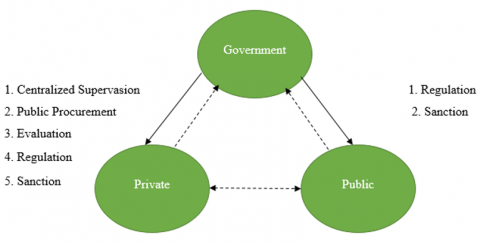
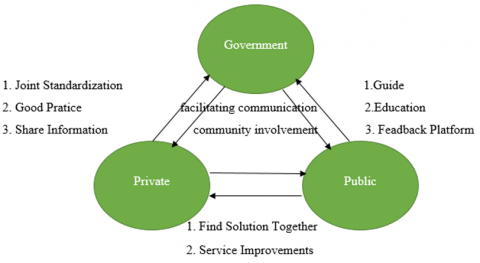
In the next stage of development, there is evidence of collaborative governance among stakeholders. This shows the features of innovation and sustainability policies (See Figure 2). With direction and guidance from local governments to companies and communities, two-way interactions and dynamic engagements gradually take shape, targeting anticipation, reflectivity, inclusiveness and responsiveness. Summarizes the dynamic role of local governments (Table 3). Collaborative relationships are characterized by strong interactions between all types of actors involved in the process with trust and honesty. When they are characterized by accountability and transparency, they contribute to building knowledge, resolving conflicts, developing trust among actors, and connecting different types of actors and sectors that previously worked separately to identify common solutions [36]. Concrete collaboration occurs through the creation of partnerships. Partnerships emerge when different actors share their resources to achieve common goals.
Figure 2. The centralized role of local government
Figure 3. Collaborative governance model
In Figure 2, local governments assume a centralized role encompassing planning, control, public procurement, and the establishment of regulations, including penalties for rule violations and misconduct. Conversely, Figure 3 illustrates a model of collaborative governance where local governments adopt a more limited intervention approach. This model proposes that local governments serve as facilitators, providing a platform for fostering alliances between the private sector and the community. The objective is to achieve sustainable waste management through collaborative efforts. In line with research [37], the government must encourage sustainable waste management by providing supportive policy conditions such as waste collection sites and positively strengthening waste reduction, reuse and recycling behavior.
Within this framework, the private sector primarily focuses on delivering high-quality products and services while sharing information with local governments and continuously enhancing their offerings and technological capabilities. Through this collaboration, the community can develop a sense of responsibility and actively contribute to system improvement. Consequently, the centralized control traditionally exerted by the local government diminishes, and best practices and joint decision-making can be pursued among the local government, private sector, and community. Improving the policy framework related to waste management to meet higher inclusiveness for all stakeholders and also include the topic of sustainable waste management into the formal education curriculum [38].
Problems with public misunderstandings regarding waste, lack of recycling resources and technologies, inventory challenges, inefficiencies in regulatory enforcement, reluctance of the private sector to get involved [39]. In the context of Integrated Sustainable and Solid Waste Management (ISSWM), this burden should be shared equally between waste-producing polluters (households, institutions), government, regional administrators, the private sector and the community. It is impossible for the complexity of this waste to be resolved by just one party; then a collaborative governance model solution becomes a much more effective alternative.
The findings align with the collaborative governance frameworks proposed by Ansell and Gash [12] and Emerson et al. [13]. Specifically, the local government in Pekanbaru has transitioned from a centralized approach to a more inclusive, stakeholder-driven model, fostering engagement through mechanisms such as waste banks and PPPs.
To generalize the research findings, it can be concluded that the Pekanbaru city government has implemented two distinct governance approaches in waste management. This transition reflects a significant shift from a rule-based governance model, which relies heavily on strict regulations and laws, to a more inclusive and collaborative governance approach. This evolution aligns with the broader transformation in the public sector, moving from traditional local government governance to a more participatory shared governance model.
The adoption of collaborative governance has led to the emergence of an innovative waste management policy in Pekanbaru, known as the Collect-Sort-Process-Dispose (CSPD) system. This policy framework emphasizes a structured and sustainable approach to waste management, where waste is first collected, then sorted into organic and inorganic categories. The sorted waste is subsequently processed through the 3R principles (Reduce, Reuse, Recycle), and the remaining residue that cannot be processed is disposed of in landfills.
Unlike the conventional Waste Collection and Transport system, where the government assumes full responsibility, the CSPD system introduces a clear division of roles among stakeholders. In this model: (1) "Collect" and "Dispose" remain under the government's responsibility, ensuring the systematic gathering and final disposal of waste. (2) "Sort" is designated as the responsibility of waste producers (polluters), encouraging accountability and awareness at the source. (3) "Process" represents a role expansion that actively involves the community and society. This is facilitated through initiatives such as waste banks and 3R Waste Processing Sites (TPS3R), which empower local communities to participate in waste reduction and recycling efforts.
This collaborative approach not only enhances the efficiency of waste management but also fosters a sense of shared responsibility among the government, private sector, and the community. By integrating the principles of sustainability and inclusivity, the CSPD system serves as a model for other cities aiming to achieve effective and environmentally conscious waste management.
Compared to other Indonesian cities like Surabaya and Bandung, Pekanbaru’s collaborative governance model is unique in its early-stage integration of community-driven waste initiatives. This contrasts with more centralized approaches in these cities, where local governments retain more control over waste management processes [16].
This study explores the role of local government policies in achieving sustainable waste management. The findings indicate a shift in the approach of local governments, moving away from rigid regulations and adopting a facilitative role. They now focus on coordinating stakeholders, including the private sector and the community, through collaborative governance. This approach has the potential to enhance inclusivity and responsiveness in waste management through technological innovation, feedback platforms, standardization, and public engagement. The study contributes to the theory of innovation policy by establishing connections between models of collaborative governance and stakeholder involvement. It proposes a dynamic model that highlights changes in local government policies, ultimately leading to sustainable waste management. The model emphasizes three key points. Firstly, local governments engage in partnerships with the private sector and the community to clarify responsibilities and establish an effective information-sharing system. This collaboration ensures the optimal functioning of the waste management system. Secondly, local governments play a significant role in coordinating resources, such as data analysis and monitoring, to ensure effective waste management practices. Their involvement streamlines processes and improves overall efficiency. Lastly, local governments prioritize enhancing waste infrastructure, including the establishment of waste collection points and disposal sites. This infrastructure development is crucial for efficient waste collection and disposal processes. To achieve effective governance, coordination and collaboration among stakeholders are essential. The transition from centralized policies to collaborative governance aligns with the evolving nature of the public sector, emphasizing shared governance. This research underscores the significance of local government policies in driving sustainable waste management practices and emphasizes the need for collaborative efforts among various stakeholders.
The CSPD model can be scaled to other cities by adapting policy frameworks to local contexts, offering stakeholder training on the collaborative process, and providing fiscal incentives to encourage private sector participation. Additionally, local governments should promote public awareness campaigns to educate communities on the importance of waste reduction and recycling.
The limitation of this research is using a qualitative approach. The use of a mixed methods approach can provide deeper insight into the role and interaction of sustainable waste management practices in pekanbaru city. Due to the qualitative nature of this research, sustainable waste management is based on interviews, observations and documentation. Future research should focus on longitudinal studies measuring variables such as waste reduction rates, community satisfaction with waste management programs, and the environmental impact of the CSPD model. These variables will help assess the long-term effectiveness of collaborative governance in waste management. Finally, this research does not cover all constructs proposed by governance theory that include actor involvement in the penta helix. This is because the main aim of this research is to analyze policies and the role and interaction of local government, the private sector and the community in engaging in sustainable waste management practices.
[1] Un-Habitat. (2010). Solid waste management in the world’s cities. UN-Habitat.
[2] Sahar, Ahmad, I. (2019). Waste management analysis from economic-environment sustainability perspective. International Journal of Scientific and Technology Research, 8(12): 1540-1543.
[3] Singh, A. (2019). Solid waste management through the applications of mathematical models. Resources, Conservation and Recycling, 151: 104503. https://doi.org/10.1016/j.resconrec.2019.104503
[4] Sohag, M.U., Podder, A.K. (2020). Smart garbage management system for a sustainable urban life: An IoT based application. Internet of Things, 11: 100255. https://doi.org/10.1016/j.iot.2020.100255
[5] Chang, N.B., Pires, A. (2015). Sustainable Solid Waste Management: A Systems Engineering Approach. John Wiley & Sons.
[6] Sulila, I. (2019). Implementasi Dimensi Layanan Publik.
[7] Muthmainnah, L. (2007). Menggugah Partisipasi & Membangun Sinergi: Upaya Bergerak dari Stagnasi Ekologis Pengelolaan Sambah. Jurnal Ilmu Sosial Dan Ilmu Politik, 11: 267-286.
[8] Anyango Tocho, J., Mwololo Waema, T. (2013). Towards an e-waste management framework in Kenya. Info, 15(5): 99-113. https://doi.org/10.1108/info-05-2013-0028
[9] Makarenko, N., Budak, O. (2017). Waste management in Ukraine: Municipal solid waste landfills and their impact on rural areas. Annals of Agrarian Science, 15(1): 80-87. https://doi.org/10.1016/j.aasci.2017.02.009
[10] Ochieng, A., Onyango, M.S., Thokozani, M., Esmail, S., Leswifi, T., Sophia, R., John, K. (2015). Water and wastewater management in local government: Skills needs and development. Final Report Part II To The Local Government Sector Education and Training (LGSETA).
[11] Aryampa, S., Maheshwari, B., Sabiiti, E.N., Zamorano, M. (2021). A framework for assessing the Ecological Sustainability of Waste Disposal Sites (EcoSWaD). Waste Management, 126: 11-20. https://doi.org/10.1016/j.wasman.2021.02.044
[12] Ansell, C., Gash, A. (2008). Collaborative governance in theory and practice. Journal of Public Administration Research and Theory, 18(4): 543-571. https://doi.org/10.1093/jopart/mum032
[13] Emerson, K., Nabatchi, T., Balogh, S. (2012). An integrative framework for collaborative governance. Journal of Public Administration Research and Theory, 22(1): 1-29. https://doi.org/10.1093/jopart/mur011
[14] Schot, J., Steinmueller, W.E. (2018). Three frames for innovation policy: RD, systems of innovation and transformative change. Research Policy, 47(9): 1554-1567. https://doi.org/10.1016/j.respol.2018.08.011
[15] Rosenau, J.N., Czempiel, E.O. (1992). Governance Without Government: Order and Change in World Politics (No. 20). Cambridge University Press.
[16] Zuhdi, S., Saputra, T., Dailiati, S. (2024). Public private people partnership ( 4ps ) in waste management services: A review of efficiency and effectiveness. Jurnal Manajemen Pelayanan Publik, 8(3): 957-971. http://doi.org/10.24198/jmpp.v8i3.58061
[17] Saputra, T., Zuhdi, S., Affrian, R., Amri, K., Putri, R.A. (2023). Civil Society Participation in Natural Resource Management in Conservation Areas: An Empirical Study of Tesso Nilo National Park, Riau Province, Indonesia. Public Administration Issues, 5: 48-68. https://doi.org/10.17323/1999-5431-2023-0-5-48-68
[18] Jänicke, M., Schreurs, M., Töpfer, K. (2015). The Potential of Multi-Level Global Climate Governance © NASA Goddard Space Flight Center/CC BY 2.0. IASS PolIcy BrIef 2/2015, September. https://www.iass-potsdam.de/sites/default/files/files/potential_of_multi_level_governance.pdf.
[19] Morris, M.H. (2008). When it works and where it fails: Spatial, temporal, and budgetary constraints to civic environmentalism*. Social Science Quarterly, 89(5): 1252-1276. https://doi.org/10.1111/j.1540-6237.2008.00577.x
[20] Shutkin, W.A. (2001). The Land that Could Be: Environmentalism and Democracy in the Twenty-First Century. MIT Press.
[21] Ostrom, E. (2020). Beyond markets and states: Polycentric governance of complex economic systems. Shaping Entrepreneurship Research: Made, as Well as Found, 100: 353-392.
[22] Hu, H. (2015). The collaborative governance of the government: Connotation, pattern and value consideration. Journal of Tangshan Normal University, 37: 138-141.
[23] Brody, S.D. (2003). Measuring the effects of stakeholder participation on the quality of local plans based on the principles of collaborative ecosystem management. Journal of Planning Education and Research, 22(4): 407-419. https://doi.org/10.1177/0739456X03022004007
[24] Portney, K. (2005). Civic engagement and sustainable cities in the United States. Public Administration Review, 65(5): 579-591. https://doi.org/10.1111/j.1540-6210.2005.00485.x
[25] Huxham, C., Vangen, S. (2013). Managing to Collaborate. Routledge. https://doi.org/10.4324/9780203010167
[26] Koontz, T.M., Steelman, T.A., Carmin, J., Korfmacher, K.S., Moseley, C., Thomas, C.W. (2010). Collaborative Environmental Management. Routledge. https://doi.org/10.4324/9781936331185
[27] Mandell, M.P. (2001). Collaboration through network structures for community building efforts. National Civic Review, 90(3): 279-288. https://doi.org/10.1002/ncr.90308
[28] Schneider, M., Scholz, J., Lubell, M., Mindruta, D., Edwardsen, M. (2003). Building consensual institutions: Networks and the national estuary program. American Journal of Political Science, 47(1): 143-158. https://doi.org/10.1111/1540-5907.00010
[29] Ma, L., Liu, Z., Huang, X., Li, T. (2019). The impact of local government policy on innovation ecosystem in knowledge resource scarce region: Case study of Changzhou, China. Science, Technology and Society, 24(1): 29-52. https://doi.org/10.1177/0971721818806096
[30] Stilgoe, J., Owen, R., Macnaghten, P. (2013). Developing a framework for responsible innovation. Research Policy, 42(9): 1568-1580. https://doi.org/10.1016/j.respol.2013.05.008
[31] Voegtlin, C., Scherer, A.G. (2017). Responsible innovation and the innovation of responsibility: Governing sustainable development in a globalized world. Journal of Business Ethics, 143(2): 227-243. https://doi.org/10.1007/s10551-015-2769-z
[32] Yin, R.K. (2003). Case Study Research--Design and Methods. Sage.
[33] Asnani, P.U., Zurbrugg, C. (2007). Improving Municipal Solid Waste Management in India: A Sourcebook for Policymakers and Practitioners. World Bank Publications.
[34] Doyle, E.E.H., Becker, J.S., Neely, D.P., Johnston, D.M., Pepperell, B. (2015). Knowledge transfer between communities, practitioners, and researchers: A case study for community resilience in Wellington, New Zealand. Australasian Journal of Disaster and Trauma Studies, 19(2): 55-66.
[35] Saputra, T., Astuti, W., Nasution, S.R., Zuhdi, S. (2022). Partisipasi Masyarakat Dalam Community Participation in. Jurnal Kebijakan Publik, 13(3): 246-251.
[36] Bodin, Ö., Mancilla García, M., Robins, G. (2020). Reconciling conflict and cooperation in environmental governance: A social network perspective. Annual Review of Environment and Resources, 45(1): 471-495. https://doi.org/10.1146/annurev-environ-011020-064352
[37] Ofori, D., Opoku Mensah, A. (2022). Sustainable electronic waste management among households: A circular economy perspective from a developing economy. Management of Environmental Quality: An International Journal, 33(1): 64-85. https://doi.org/10.1108/MEQ-04-2021-0089
[38] Amode, N.S., Deenapanray, P.N.K., Jeetah, P. (2023). A case study of the inter-stakeholder participatory structure in the solid waste governance of the small island developing state of Mauritius. In Achieving Net Zero (Developments in Corporate Governance and Responsibility, Vol. 20). Emerald Publishing Limited, Leeds, pp. 109-150. https://doi.org/10.1108/S2043-052320230000020006
[39] Tsai, F.M., Bui, T.D., Tseng, M.L., Wu, K.J., Chiu, A.S. (2020). A performance assessment approach for integrated solid waste management using a sustainable balanced scorecard approach. Journal of Cleaner Production, 251: 119740. https://doi.org/10.1016/j.jclepro.2019.119740