Suhaib Abbas Ali* | Kadhim Faris Dhumad
© 2025 The authors. This article is published by IIETA and is licensed under the CC BY 4.0 license (http://creativecommons.org/licenses/by/4.0/).
OPEN ACCESS
Historic buildings that represent the cultural heritage of countries face many problems due to natural and unnatural deterioration factors, and their conservation requires multi-level interventions. Scientific and technological progress has enhanced the sustainability of these buildings by providing modern techniques and materials used in all stages of conservation, starting from documentation and architectural survey, determining the causes of damage, and ending with choosing the appropriate technique and material for implementation by international conservation principles. The research problem is the lack of local studies that address retrofitting mechanisms and the role of modern techniques in preserving historical buildings in Iraq. The research aims to identify appropriate techniques, considering specialized technical conditions such as safety, structural compatibility and efficiency to preserve buildings from deterioration. The research focuses on studying the shrine of Al-Kifl in Babylon Governorate as a model. The study introduces the application of a proposed retrofitting mechanisms using modern materials and techniques to strengthen and support the shrine within the comprehensive conservation processes. The study concluded that the mechanisms of retrofitting to preserve heritage buildings used in the study are effective, do not damage details, preserve the authenticity of the building, and predict future damage.
conservation, historic buildings, modern techniques, retrofitting, the Al-Kifl shrine
The research concerns the concepts related to restoration and conservation, as well as its theories and methods. It focuses on preserving historical buildings, knowing the associated concepts, and determining the methods and degrees of intervention to reach an ideal conservation work that achieves the continuity of the architectural and structural value of the historic building.
Some of the historic buildings are exposed to ineffective restoration work in previous restorations, such as the lack of accurate documentation of the structural and decorative condition of buildings. This has made assessing the quality of these works more difficult and may contradict the recommendations of the Venice Charter, paragraph 16 [1]. Also, ineffective restoration sometimes included the removal or covering of many original inscriptions and decorations in a manner that contravenes international conservation principles [2].
There is a need to adopt modern technologies within sustainable retrofit mechanisms. These mechanisms include advanced technologies, documentation, cleaning, and reinforcement techniques, without compromising the building's historical appearance, while preserving the authenticity of the historic building [3, 4].
2.1 Theoretical framework
This research aims to clarify the concept of retrofitting historic buildings, focusing on the role of modern technologies in preserving and rehabilitating these buildings. The flow chart illustrated in Figure 1 represents the retrofitting processes of historical buildings. Three main topics in the process can be explained as follows:
Figure 1. Flow chart of retrofitting process in heritage buildings
(1) Heritage Building Analysis: Understanding the nature of heritage buildings, their classification, the causes of their deterioration, and determining the required intervention levels, using previous literature and documentation and inspection techniques that continue before, during, and after restoration work.
(2) Retrofitting mechanisms and modern techniques: Reviewing the different restoration methods with a focus on modern techniques in: Documentation and Accurate Diagnosis:
(3) Implementation of retrofitting mechanisms:
2.2 Practical study
Case Study (Al-Kifl Shrine): Practical application of the concepts and techniques mentioned on Al-Kifl Shrine and evaluation of the proposed retrofit mechanisms, including:
The research studies the mechanisms of retrofitting historical buildings theoretically and practically, focusing on modern technologies. It presents the Kifl Shrine as a case study for applying these technologies and evaluating their effectiveness.
3.1 The concept of retrofitting
Retrofitting is the installation of new or modified parts or equipment in an existing object or its adaptation for a new purpose [5, 6]. In heritage building conservation, retrofitting is a conscious intervention that balances preserving original values with meeting modern needs using modern technologies [7]. It aims to improve the structural performance of the building using modern technologies. It may include updating the function of the building to adapt it to a modern function without conflicting with its historical and architectural values. The retrofitting process relies on the integration of modern technologies in various stages: surveying and documentation (photography, 3D scanning), inspection and diagnosis), reinforcement and consolidation works, cleaning and treatment (physical, chemical, biological), and insulation works [8]. Retrofitting contributes to preserving the authenticity of the building using compatible materials and techniques [7].
3.2 Retrofitting and conservation
Retrofitting represents an advanced level of conservation, going beyond maintenance and restoration to include targeted intervention to improve the condition and function of the building, and requires a comprehensive strategy that takes into account the building’s location, value, condition, and proposed function, to preserve and enhance the building’s value [9].
Conservation interventions are limited and reversible, meaning that any future restoration or repair can be removed or replaced. International conventions refer to the concept of reversibility. The Venice Charter of 1964 states in paragraph (12): "All additions intended to replace missing parts must be recognizable from the original and must be designed and implemented in such a way that they can be removed without damaging the original structure of the building" [10].
The Burra Charter of 1979 also emphasized the principle of reversibility in paragraph (15.2): "New changes or additions must be capable of being removed or retracted without affecting the original materials or causing damage to the original elements" [11].
The ICOMOS Charter guidelines stated: "Interventions in historic structures must be as reversible as possible and must be carried out in a manner that does not damage the original historic fabric" [12].
The aim is to maintain the continuity of the building over time through appropriate use and modifications [13].
Several levels of conservation are determined according to the nature of the level of intervention required to preserve the historic building, noting that any conservation work can include a wide range of these levels and concepts and according to the problems that the building is exposed to. Each conservation method has its own limits and proportions of intervention, and interventions can be carried out using modern or traditional materials and techniques. They can be:
Retrofitting, regeneration, maintenance, restoration, reshaping, rehabilitation, transfer of the monument, reconstruction, reproduction, adaptation and reuse [14]. Table 1 shows the levels of conservation.
Table 1. The levels of conservation
|
Level |
Type of Intervention |
Definition |
|
1 |
Maintenance |
Routine upkeep to preserve current condition and prevent deterioration |
|
2 |
Reuse |
Reassigning a new function to a building without significant alterations |
|
3 |
Adaptation |
Minor modifications to accommodate new use while retaining key features |
|
4 |
Retrofitting |
Structural or functional improvements without altering visual character |
|
5 |
Rehabilitation |
Functional and structural upgrades to meet current standards while preserving value |
|
6 |
Reshaping |
Altering some elements to accommodate new needs, potentially changing appearance |
|
7 |
Regeneration |
Revitalization of the building and surrounding urban context |
|
8 |
Restoration |
Returning a building to its original condition using documented evidence |
|
9 |
Reconstruction |
Rebuilding lost or damaged parts based on historical documentation |
|
10 |
Reproduction |
Creating a full-scale replica of a structure for educational or display purposes |
|
11 |
Transfer of the Monument |
Relocating the entire structure to protect it from threats |
Damage factors cause problems and deterioration of historic buildings and are divided into two main factors: Natural factors: (climatic, geological, biological, forces of nature) and non-natural factors: (human, urban, technological, cultural, political, economic, and structural defects). These factors cause multiple effects on the historical building, such as organic damage to building materials, cracks, deviation of architectural elements, separation of walls, subsidence of soil, and demolition of some buildings. Technology plays a role in monitoring and identifying these defects to choose the appropriate intervention for conservation [8].
The factors can be divided into natural and unnatural. The study proposes a summarized table for factors of damage and corresponding causes according to various related literature as shown in Table 2 [15-17].
Table 2. Factors, causes and manifestations of damage
|
Factors |
Cause |
Manifestations of Damage |
|
Natural environment (climatic, geological, biological, forces of nature) |
Climatic factors (rain, temperature, humidity, wind, seismic) |
|
|
Biological factors (plant and fungal growth, insects, rodents) |
|
|
|
Animals |
|
|
|
Unnatural |
Inaccurate restoration and additions |
|
|
Negligence and lack of regular maintenance |
|
|
|
Bombing and deliberate sabotage |
|
|
|
Nearby construction and development activities |
|
The study focused on retrofitting mechanisms through modern technologies, starting with virtual and non-virtual scanning and documentation techniques and moving on to reinforcement and cleaning techniques, as follows:
5.1 Technologies for virtual scanning and documentation processes
The use of the digital revolution can contribute to documenting historical buildings better than traditional methods in the architectural documentation processes of historical buildings, whether separate buildings or in groups, and studying their potential in the process of exchanging experiences between the various parties interested in the conservation process, which enables them to make sound decisions in this field [18].
For example, laser scanning can be used to obtain the shape and texture of existing landmarks, while three-dimensional modelling can be used to restore damaged or incomplete cultural heritage assets. The process includes 3D digitization, digital data processing and storage, archiving and management, representation, and reproduction [19]. Each device has its own use depending on the available space, required accuracy, and output method.
The benefits of these techniques include the accurate identification of the locations and causes of damage, which helps in choosing the most appropriate methods of treatment and intervention and reducing unnecessary interventions by:
They can be classified into:
5.1.1 Visual documentation, measurement and exploration
With the development of science and technology, many exploratory and documentation programs and devices have emerged that document the visual parts of these devices such as [20-23]:
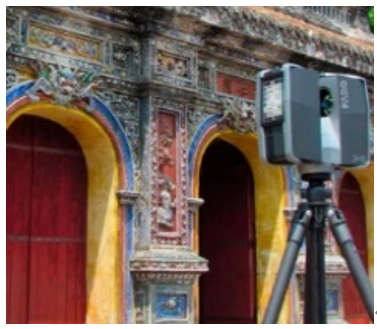
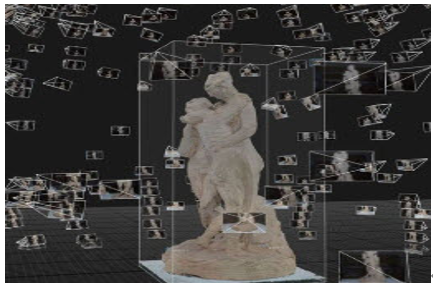
Figure 2 demonstrates Laser Scanning and photogrammetry as most techniques used in visual documentation of heritage buildings.
Laser Scanning [24]
Photogrammetry [25]
Figure 2. Most techniques used in visual documentation of heritage buildings
5.1.2 Invisible documentation, measurement and exploration
Many exploratory and documentary programs and devices have emerged that document and explore the invisible parts of the historical building’s parts and elements such as [26-29]:
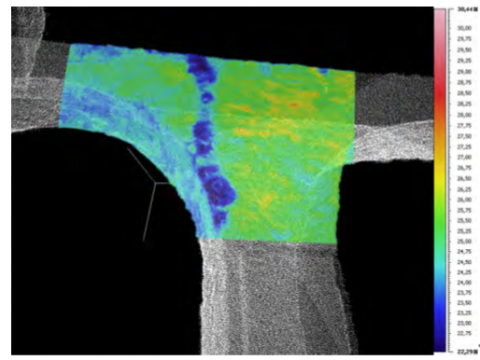
Figure 3 shows two techniques mostly used in invisible documentation of heritage buildings.
Inside don church (Valencia, Spain) [29]
Detecting water leakage by IR [30]
Figure 3. Two techniques mostly used in invisible documentation of heritage buildings
5.2 Cleaning techniques in retrofitting
Historic building cleaning is an essential step in the retrofitting process, following the survey and documentation processes, and aims to remove dirt and harmful materials accumulated on the building surfaces while preserving the integrity of the original materials. Choosing the appropriate cleaning method requires an understanding of the nature of the dirt and materials that make up the building [31]. Cleaning techniques used in historic buildings are classified into three main categories:
(1) Physical techniques: They depend on mechanical force to remove dirt and include:
Figure 4. A portable steam cleaner used to clean decorative marble pieces [29]
(2) Chemical techniques: These rely on chemical reactions to remove dirt, and include the use of acids, alkalis, solvents, detergents, and biocides. These techniques require extreme caution in use, and neutralization or rinsing with water after application. Figure 5 introduces cleaning technique using ammonium carbonate in a fibre and paper poultice. Examples of materials used include acidic detergents (such as hydrofluoric acid), alkalis (such as caustic soda), alkaline gels, and enzymes [35, 36].
Figure 5. Cleaning of cement plaster façade details using ammonium carbonate in a fibre and paper poultice [35]
(1) Special techniques including poultices technique, ultrasonic technology, laser cleaning technology, and biological cleaning technology [37, 38]. Figure 6 demonstrates laser cleaning of Greek marble.
Figure 6. Greek marble head after laser cleaning without damage [36]
From the above, there are important considerations for choosing the appropriate technique:
5.3 Modern techniques for treating the infrastructure
Foundation Reinforcement: Micropiles are used to fix foundations without leaving any trace of their use. Micropiles are driven into the soil to support the foundation to prevent soil degradation and provide a new, permanent foundation for the building and maintain its integrity without disturbing the surrounding soil. Problems with this technique include narrow spaces, service conflicts near exterior walls, exposure of some archaeological features during excavation, and changes in the structural behavior of the monument when exposed to earthquakes [39].
5.4 Modern techniques for structural treatment
They are used for structural reinforcement such as wall reinforcement, arches, bars, minarets, cracks and internal fillings. They include:
5.4.1 Reinforcing the structural frame using an anchors system
It works to improve the structural performance of the building by resisting horizontal loads and resisting cracks that have been treated. It is also used to reconnect walls separated from each other and the ceiling [40].
5.4.2 Pressure wall injections strengthen walls
They add a liquid binding material to the building to fill gaps in the thickness of the walls, especially in the walls (Double Skin Construction with Core), where moisture dissolves the internal mortar of the wall, which leads to cracks and separation between the two walls. They are characterized by their speed of implementation, and their disadvantages include the possibility of swelling in the wall when injected in a large, uncalculated quantity [41].
5.4.3 Structural elements reinforcement techniques using carbon fibers (FRP)
It strengthens structural elements that need to increase their load-bearing capacity without compromising the original material. It is implemented using a group of solid fibers assembled from carbon or glass, which are fixed to the surface to be strengthened by coating them with epoxy materials. It is characterized by ease and speed of implementation, and the fibers are made of a material that does not rust, corrode, or rot and is invisible to the eye [42]. Its disadvantages include its vulnerability to heat and combustion and its sensitivity to ultraviolet rays. This technique cannot be used if there are engravings or decorations on the element to be strengthened [43, 44].
Therefore, using glass fiber-reinforced plastic in heritage buildings must be done according to precise standards that balance achieving structural safety and preserving architectural and historical values. This is confirmed by international conservation charters, such as the Charter of the International Council on Monuments and Sites (ICOMOS, 2003) [12].
5.5 Modern techniques in horizontal insulation works
The rise in the groundwater level in historical areas due to leaks from nearby sewage networks has led to an increase in the percentage of salts and the deterioration of the walls. Therefore, it is necessary to isolate the roofs to stop the sources of salts. There are two methods:
6.1 Case study selection criteria
In order to demonstrate a sample of retrofitting process of heritage building, Al-Kifl shrine is selected as a case study site. Criteria of selection of Al-Kifl shrine can be summarized in the following:
6.2 Site characteristics of Al-Kifl shrine
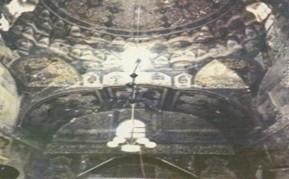
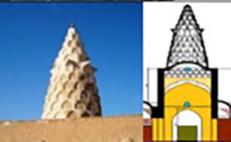
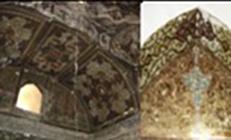
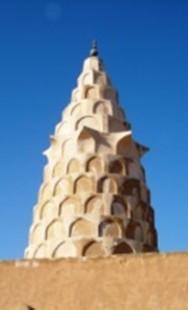
Al-Kifl district is located halfway between Hillah and Najaf, about 30 km southwest of Hillah, and is part of Babylon Governorate. Among its most important archaeological and heritage landmarks are the shrine of the Prophet Dhu Al-Kifl and the conical dome of the shrine. The study area is the shrine room and the dome of the stalactites. The shrine building and its dome are characterized by unique elements and details dating back to various historical periods, as shown in Table 3 [45].
Table 3. Architectural element, type and historical period of the shrine room and the double conical Dom
|
Architectural Element |
Type |
Historical Period |
Figure |
|
The contracts |
Tri-sector |
The Ilkhanate |
|
|
The domes |
Conical |
Seljuk |
|
|
Inscriptions and decorations |
Geometric |
Old |
|
|
Muqarnas |
Botanical |
The Ilkhanate |
6.3 Proposed solutions through retrofit mechanisms
The research suggested a mechanism for retrofitting using modern techniques in surveying, documentation, cleaning, and reinforcement and adding new services (that have the ability to reflect), such as lighting and air conditioning. These techniques and additions do not harm the originality of the building and its value. Based on field observations and technical reports, the impact of deterioration factors on the Al-Kifl shrine. Various factors affect architectural and structural elements and can be summarized as follows:
(1) Natural Factors
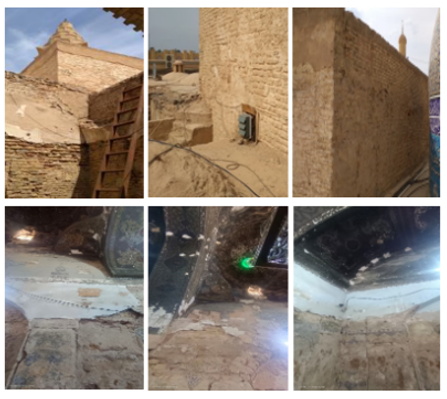
Environmental and climatic conditions have contributed to the deterioration of the Al-Kifl shrine. The most prominent manifestations of this deterioration include: erosion and cracking of the foundations due to rising groundwater levels and salts, and damage to the original floors due to humidity and soil disintegration. Humidity has also caused cracks and swelling in the walls, separation of stone cladding, and fading of plant motifs. Hairline cracks have appeared in the arches, muqarnas, and double dome due to earthquakes, and the external surfaces have deteriorated due to erosion and a lack of drainage systems.
(2) Unnatural Factors
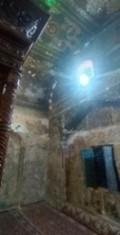
Human interventions and neglect have exacerbated the deterioration of the Al-Kifl shrine, including the stability of the foundations has been affected by demolition, expansion, and neglect, and the replacement of the historical floors with modern mosaic tiles, which are incompatible with the building's authenticity. Non-specialized restoration work also caused the covering and removal of some original inscriptions and decorations, the accumulation of carbon resulting from burning candles, and the distortion of the walls with random electrical installations.
In addition, incorrect maintenance led to the loss of the outer layer and the deterioration of the outer cover. Furthermore, the use of incompatible materials, such as the distortion of the exterior portico with modern marble, resulted in the loss of parts of the building's historical identity, as shown in Figure 7.
Figure 7. Natural and unnatural deterioration factors (neglect, humidity, and the effect of candles)
Based on what was studied in the research on deterioration factors, in addition to what the research addressed on modern modification mechanisms through modern techniques and materials, the basic steps required after monitoring deterioration factors are:
(1) Conducting surveying work using modern surveying and architectural documentation techniques: using (Total station and Lider scanning techniques), as this technology is available and specialists are present.
(2) Conducting monitoring work for hidden damage in the foundations, walls and dome using ultrasonic techniques to detect damage to materials (wood, decorative ceramics) to determine the location of the damage, and infrared technology (Detector IR) for walls, arches and ceilings to determine the extent of the damage to choose the most appropriate technique for treatment. And using ground-penetrating radar technology to detect defects, cracks or any changes in the foundations and soil.
(3) Carrying out cleaning work using modern cleaning techniques and according to the parts as in Table 4.
Table 4. Cleaning methods using modern cleaning techniques or each part
|
The Element |
Cleaning Technology |
Notes |
|||
|
Interior elements |
The walls |
The part without inscriptions |
Physical cleaning |
Micro-Blasting |
Helps eliminate harmful chemicals |
|
Water Mists |
It does not require much labour. It is used for large areas |
||||
|
Steam Jet cleaning with DOFF Cleaning sys |
Used for curved surfaces and not for use on weak or coloured stones |
||||
|
Ice jet cleaning |
Preferred for iron surfaces |
||||
|
Justice Cleaning System |
It removes colours in the stone and is not recommended for use on coloured surfaces |
||||
|
The part containing the inscriptions and mirrors |
Mechanical cleaning to remove dust, mud and greasy substances using a soft brush and in more solid colour areas |
Cleaning process in which water is an element poses a risk to the decorative element |
|||
|
Chemical cleaning technique (compress cleaning) |
|||||
|
Laser cleaning technology for small areas and is not used for mirrors |
|||||
|
Vaults |
Contracts engraved with plant motifs |
Chemical cleaning technique (compress cleaning) |
Cleaning process in which water is an element poses a risk to the decorative element |
||
|
Mechanical cleaning to remove dust and grease using a soft brush and in harder coloured areas |
|||||
|
The Dome |
Engraved with floral motifs |
Chemical cleaning technique (compress cleaning) |
|||
|
Mechanical cleaning to remove dust and grease using a soft brush and in harder coloured areas |
|||||
|
Stalactites |
Engraved with floral motifs |
Ultrasonic Cleaning is used to clean small and delicate items |
|||
|
The floor |
Cleaning is not recommended because the existing flooring is an intrusive element (tile). It should be removed and replaced with units that match the historic building |
||||
|
Wooden elements |
|
Chemical cleaning of decorated and non-decorated items, organic solvents or compresses method |
|||
|
External elements |
The outer shell |
Water Mists |
|
||
|
Steam cleaning |
|||||
|
Double conical dome |
Mechanical cleaning to remove dust and grease using a soft brush and in harder coloured areas |
||||
|
Steam cleaning |
|||||
|
Hidden items |
Foundations |
|
Hidden elements that cannot be cleaned but are strengthened and protected from deterioration |
||
(4) Strengthening: The process of restoring the bonding and cohesion of the stone material by linking the healthy parts to the damaged parts of the stone and improving the stone's ability to resist various environmental factors. This is done by:
(5) Protection: After the strengthening process, a system is applied to protect the materials from the effects of weather factors or human factors by using surface membranes with (Micro Crystalline Wax).
(6) Structural restoration: Table 5 demonstrates various restoration works proposed for the Al Kefil shrine. This task should be assigned to specialized companies, workers and technicians specialized in this field.
Table 5. Structural restoration works
|
Soil Treatment |
Foundation Restoration |
Restoration of Walls, Domes and Vaults |
Wall and Ceiling Insulation |
|
Soil injection |
Piles and strip foundations |
Replace damaged items with new ones. |
Natural insulation |
|
Reducing groundwater levels |
Micro piling |
Wall injection |
Physical isolation |
|
Carbon fibre for wall reinforcement |
Chemical insulation |
||
|
Cintec system for bonding two layers of wall |
Mechanical insulation |
6.4 Precision conservation works
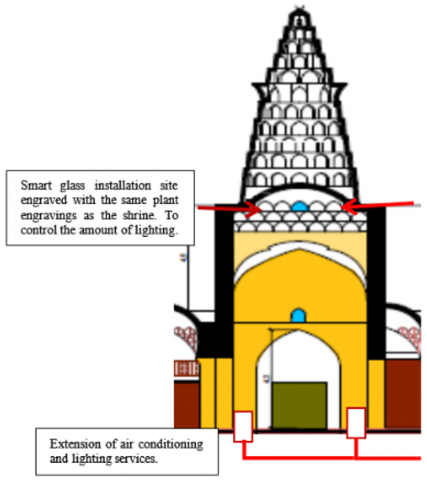
The decorative elements and drawings were damaged and decayed, and some of the inscriptions fell. After the initial documentation work, continuous documentation of the decorations and inscriptions during the cleaning stages, and structural reinforcement of the main elements of the building. The restoration operations of the inscriptions explained in Figure 8 can be stated as follows:
Figure 8. Proposal to add smart services (ventilation and lighting)
Lifting and removing electrical wires completely because they distort the building and walls. And compensating for sustainable lighting using fiber optic technologies.
7.1 Conclusions
7.2 Recommendations
Mechanisms of retrofitting through modern technologies are an effective tool when restoring heritage buildings, provided that they meet several conditions, the most important of which are:
[1] International Council on Monuments and Sites (ICOMOS). (1964). The Venice Charter 1964. https://www.icomos.org/charters/venice_e.pdf.
[2] Kathem, M., Robson, E., Tahan, L.G. (2022). Cultural heritage predation in Iraq: The sectarian appropriation of Iraq's past. https://doi.org/10.55317/9781784135119
[3] Al-Majidi, A.R. (2010). Controversy between Iraqi Shiites and Jews over the shrine of the Prophet Dhu Al-Kifl. Elaph. https://elaph.com/Web/news/2010/4/550463.html.
[4] Andrews, S. (2020). Iraqi jews and heritage under threat: Negotiating and managing an identity from Afar. Diaspora, 20(3): 327-353. https://doi.org/10.3138/diaspora.20.3.004
[5] Suleiman, N., Szeflinski, P. (2021). Controls retrofit boosts printing production for packaging manufacturer. Control Engineering. https://www.controleng.com/controls-retrofit-boosts-printing-production-for-packaging-manufacturer/.
[6] Khodeir, L.M., Aly, D., Tarek, S. (2016). Integrating HBIM (Heritage Building Information Modeling) tools in the application of sustainable retrofitting of heritage buildings in Egypt. Procedia Environmental Sciences, 34: 258-270. https://doi.org/10.1016/J.PROENV.2016.04.024
[7] Grimmer, A.E. (2017). The Secretary of the Interior's Standards for the Treatment of Historic Properties: With Guidelines for Preserving, Rehabilitating, Restoring & Reconstructing Historic Buildings. Government Printing Office.
[8] Wise, F., Moncaster, A., Jones, D. (2021). Rethinking retrofit of residential heritage buildings. Buildings and Cities, 2(1): 495-517. https://doi.org/10.5334/bc.94
[9] Team Research, The University of HONK KONG, Faculty of Architecture. (2012). Conservation & Revitalization of Historic Buildings. Hong Kong Today. https://www.scribd.com/document/367480447/LS08-Conservation-and-Revitalization-of-Historic-Buildings-Teaching-notes-pdf.
[10] International Council on Monuments and Sites (ICOMOS). (1964). The Venice Charter 1964. https://www.icomos.org/charters/venice_e.pdf.
[11] Charter, B. (1999). The Burra Charter: The Australia ICOMOS Charter for Places of Cultural Significance. https://doi.org/10.1007/978-3-030-30018-0_1046
[12] Charter, I.C.O.M.O.S. (2003). Principles for the analysis, conservation and structural restoration of architectural heritage. In Proceedings of the ICOMOS 14th General Assembly in Victoria Falls, Victoria Falls, Zimbabwe, pp. 27-31. https://www.icomos.org/en/about-the-centre/179-articles-en-francais/ressources/charters-and-standards/165-icomos.
[13] Taraszkiewicz, A. (2021). Revitalization of residential buildings dating back to the late 19th and early 20th century on the example of “Willa Halina” in Sopot (Poland). Buildings, 11(7): 279. https://doi.org/10.3390/buildings11070279
[14] Al-Ghalib, A., Sadiq Al-Assadi, L. (2018). Preserving the heritage values of traditional Iraqi houses. Journal of Engineering and Sustainable Development, 2018(5): 130-146. https://doi.org/10.31272/jeasd.2018.5.10
[15] Huang, B., Liu, X., Liu, L., Li, Z., Wu, Z., Huang, B., Jia, Z. (2025). Unveiling the influencing factors of the residual life of historical buildings: A study of the Wuhan Lutheran missions home and agency building. Buildings, 15(2): 246. https://doi.org/10.3390/buildings15020246
[16] Chen, S., Wei, J., Tang, R., Wang, J., et al. (2024). Impact of environmental parameters on moisture damage in plastered heritage buildings: A case study of Anchang historical town, Shaoxing, Zhejiang, China. Journal of Chinese Architecture and Urbanism, 4606. https://doi.org/10.36922/jcau.4606
[17] Khan, M.T. (2023). Experimental investigations on deterioration of historic bricks from selected Mughal monuments of Khyber Pakhtunkhwa, Pakistan. Journal of Social Research, 5(2): 1155-1173. https://doi.org/10.52567/pjsr.v5i02.1337
[18] De Fino, M., Galantucci, R.A., Fatiguso, F. (2023). Condition assessment of heritage buildings via photogrammetry: A scoping review from the perspective of decision makers. Heritage, 6(11): 7031-7066. https://doi.org/10.3390/heritage6110367
[19] Barabanova, T. (2024). Non-destructive methods of inspection control for cultural heritage objects. In E3S Web of Conferences, 533: 02031. https://doi.org/10.1051/e3sconf/202453302031
[20] Conti, A., Pagliaricci, G., Bonora, V., Tucci, G. (2024). Comparison of ground laser scanning and handheld scanning for documenting architectural heritage. The International Archives of the Photogrammetry, Remote Sensing and Spatial Information Sciences, XLVIII-2/W: 141-147. https://doi.org/10.5194/isprs-archives-XLVIII-2-W4-2024-141-2024
[21] Turk, Ž. (2025). Reflections on three decades of building information modeling. Buildings, 15(2): 231. https://doi.org/10.3390/buildings15020231
[22] Dionizio, R.F., Dezen-Kempter, E. (2024). HBIM-GIS integration: From blueprints to metadata for managing contemporary architectural heritage in a multiscale 3D GIS. In Contemporary Heritage Lexicon, 2: 71-90. https://doi.org/10.1007/978-3-031-61245-9_4
[23] Abbas, S., Abed, F.M. (2023). The adequacy of the iPhone mobile lidar scanning for 3D preservation of historical sites -Case study Ewan Al-Saray in Baghdad.
[24] Wang, Y., Chen, Q., Zhu, Q., Liu, L., Li, C., Zheng, D. (2019). A survey of mobile laser scanning applications and key techniques over urban areas. Remote Sensing, 11(13): 1540. https://doi.org/10.3390/rs11131540
[25] Themistocleous, K., Ioannides, M., Agapiou, A., Hadjimitsis, D.G. (2015). The methodology of documenting cultural heritage sites using photogrammetry, UAV, and 3D printing techniques: The case study of Asinou Church in Cyprus. In Third International Conference on Remote Sensing and Geoinformation of the Environment, 9535: 312-318. https://doi.org/10.1117/12.2195626
[26] Bisegna, F., Ambrosini, D., Paoletti, D., Sfarra, S., Gugliermetti, F. (2014). A qualitative method for combining thermal imprints to emerging weak points of ancient wall structures by passive infrared thermography–A case study. Journal of Cultural Heritage, 15(2): 199-202. https://doi.org/10.1016/j.culher.2013.03.006
[27] Occhipinti, R., Stroscio, A., Belfiore, C.M., Barone, G., Mazzoleni, P. (2021). Chemical and colorimetric analysis for the characterization of degradation forms and surface colour modification of building stone materials. Construction and Building Materials, 302: 124356. https://doi.org/10.1016/j.conbuildmat.2021.124356
[28] Grazzini, A. (2019). Sonic and impact test for structural assessment of historical masonry. Applied Sciences, 9(23): 5148. https://doi.org/10.3390/app9235148
[29] Padín, J., Martín, A., Anquela, A.B. (2012). Archaeological microgravimetric prospection inside don church (Valencia, Spain). Journal of Archaeological Science, 39(2): 547-554. https://doi.org/10.1016/j.jas.2011.10.012
[30] Garmendia, L., San-José, J.T., García, D., Larrinaga, P. (2011). Rehabilitation of masonry arches with compatible advanced composite material. Construction and Building Materials, 25(12): 4374-4385. https://doi.org/10.1016/j.conbuildmat.2011.03.06
[31] Ortega-Morales, B.O., Gaylarde, C.C. (2021). Bioconservation of historic stone buildings—An updated review. Applied Sciences, 11(12): 5695. https://doi.org/10.3390/app11125695
[32] Patel, R.P., Patel, M.P., Suthar, A.M. (2009). Spray drying technology: An overview. Indian Journal of Science and Technology, 2(10): 44-47. https://doi.org/10.17485/ijst/2009/v2i10/30719
[33] hsu, N., Vardosanidze, G. (2024). Cultural heritage buildings in the structure of a modern city. Global Journal of Researches in Engineering, 1-12. https://doi.org/10.34257/GJREJVOL24IS2PG1
[34] Hsu, F.C., Chen, L.J., Liu, Z.R., Tsai, H.A., et al. (2023). The process parameters of micro particle bombarding (MPB) for surface integrity enhancement of cermet material and tool steel. Micromachines, 14(3): 643. https://doi.org/10.3390/Mi14030643
[35] Woolfitt, C., Abrey, G. (2000). Poultices: The true or plain poultice and the cleaning and desalination of historic masonry and sculpture. The Building Conservation Directory, 2(10): 44-47. https://doi.org/10.17485/ijst/2009/v2i10.3
[36] Lawrence, A. (2014). Cleaning Marble Monuments. https://www.buildingconservation.com/articles/cleaning-marble-monuments/cleaning-marble-monuments.htm .
[37] Desmond, D.J., Pozo-Antonio, J.S. (2024). Evaluation of different gels and poultices to chemically remove graffiti from a Lioz limestone (Lisbon, Portugal). Cadernos do Laboratorio Xeolóxico de Laxe. Revista de Xeoloxía Galega e do Hercínico Peninsular, 46: 51-67. https://doi.org/10.17979/cadlaxe.2024.46.11443
[38] Pozo Antonio, J.S., Rivas Brea, T., Ramil, A., López, A. (2023). La investigación gallega en la aplicación de la tecnología láser para la limpieza de patrimonio cultural material: Estrategias del pasado y del futuro. Cadernos do Laboratorio Xeolóxico de Laxe. Revista de Xeoloxía Galega e do Hercínico Peninsular, 45: 17-31. https://doi.org/10.17979/cadlaxe.2023.45.0.9457
[39] Bruce Stroyer. (2019). Micropiles and historic buildings. IDEAL. https://www.idealfoundationsystems.com.
[40] Pizzigatti, C., Franzoni, E. (2021). The problem of conservation of XX century architectural heritage: The fibreglass dome of the woodpecker dance club in Milano Marittima (Italy). Journal of Building Engineering, 42: 102476. https://doi.org/10.1016/j.jobe.2021.102476
[41] Dimes, F.G., Ashurst, J. (2007). Conservation of Building and Decorative Stone. Routledge. https://doi.org/10.4324/9780080502908
[42] Garavaglia, E., Anzani, A., Binda, L., Cardani, G. (2008). Fragility curve probabilistic model applied to durability and long term mechanical damage of masonry. Materials and Structures, 41: 733-749. https://doi.org/10.1617/s11527-007-9277-2
[43] Sivaraja, S.S., Thandavamoorthy, T.S., Vijayakumar, S., Aranganathan, S.M., Dasarathy, A.K. (2013). Preservation of historical monumental structures using fibre reinforced polymer (FRP)-case studies. Procedia Engineering, 54: 472-479. https://doi.org/10.1016/j.proeng.2013.03.043
[44] Kissi, B., Riyad, Y., Mrani, I., Ghoulbzouri, B.E., Parron, M.A. (2016). Reinforcement of RC structure by carbon fibers. MATEC Web of Conferences, 83: 09009. https://doi.org/10.1051/matecconf/20168309009
[45] Atallah, Shaima, H. (2016). Architectural elements in the shrine of Dhu al-Kifl. Journal of the Kufa Studies Center, 1(42): 4933. https://doi.org/10.36322/jksc.v1i42.4933