Adel H. Jassim | Shatha A. Hasan* | Ammar Khalil Ebraheem | Mustafa Abduljalil Ebraheem | Moheb Kamel AL-Rawe | Amer Shakir Alkinani | Falah Almosawi
© 2025 The authors. This article is published by IIETA and is licensed under the CC BY 4.0 license (http://creativecommons.org/licenses/by/4.0/).
OPEN ACCESS
This study investigates the complex challenges of managing heritage sites in Iraq, focusing on the Prophet Tho Al-Kifl Shrine in Babylon due to its religious, historical, and architectural significance. The site exemplifies critical management issues, including institutional fragmentation, limited technical and financial resources, and insufficient legislative frameworks. Left unaddressed, these challenges threaten the site's material integrity and symbolic identity through uncoordinated interventions and neglect. The research aims to propose a context-sensitive framework for sustainable heritage management by combining theoretical perspectives with practical analysis. Using a case study methodology, the study draws on field observations, historical documentation, and spatial analysis to identify the key threats affecting the shrine. It further assesses their impacts on the site's physical structure and cultural relevance. Findings reveal that the lack of centralized governance and the absence of qualified conservation professionals have led to ineffective restoration practices and the alteration of original site features. The study emphasizes the urgency of legal reform, institutional coordination, and the application of advanced technologies such as GIS and BIM for monitoring and planning. It also highlights the role of community engagement and public-private partnerships in ensuring long-term preservation. The research contributes to bridging the gap between heritage policy and local practice, offering a replicable model for other heritage sites in Iraq and similar post-conflict contexts. Future research is encouraged to test the proposed strategies in diverse cultural and geographical settings to enhance their generalizability and impact.
heritage management, sustainability, cultural preservation, institutional fragmentation, advanced technologies
Heritage sites are concrete representations of cultural, historical, and architectural value that link current generations to their ancestry. The work of this committee strives to reflect the diversity of sites in the different categories (including but not limited to ancient monuments, historic buildings, cultural landscapes, and intangible traditions linked to a specific place) designated for inclusion. Like the tickling of reddish-brown trinkets pressing against the dandy glass facade, they are a key carrier of knowledge, an avatar coiled with the identity, traditions and values of a community. In essence, heritage sites act as an irreplaceable component of societal cohesive material by cultivating cultural pride and continuity; wherein the cultural heritage enables the society as a whole to develop and carry from generation to generation the collective memory of the nation. Additionally, tourism and global cultural exchange encourage economic development, and conserving heritage sites is also important for sustainability for the next generation.
1.1 Importance of historical heritage management
The management of historical heritage has become a critical global concern, particularly in regions experiencing rapid urbanization, political instability, and environmental threats. Heritage sites are not only physical remnants of the past but also active agents in shaping cultural identity, social cohesion, and sustainable economic development [1, 2]. As highlighted by UNESCO and ICOMOS, the degradation of heritage resources due to mismanagement undermines the collective memory of communities and jeopardizes intergenerational knowledge transfer. In post-conflict contexts like Iraq, where tangible and intangible heritage are under constant threat, the imperative for coherent and sustainable heritage management frameworks becomes particularly urgent.
1.2 Comparative context: The shrine of Prophet Tho Al-Kifl in Iran and beyond
The Prophet Tho Al-Kifl Shrine has parallels in both Iraq and Iran, with various attributions and architectural interpretations present across the region. In Iran, similar shrines—often attributed to prophetic or religious figures—are maintained under centralized religious endowments, though they also face challenges related to authenticity, urban encroachment, and inconsistent restoration practices [3]. Comparative studies on shrines in countries like Jordan and Turkey reveal that integrating community participation with digital documentation tools significantly improves preservation outcomes [4, 5]. These comparative insights reinforce the need to evaluate the Al-Kifl site not in isolation, but within a broader regional context of shared heritage vulnerabilities and management models.
1.3 Challenges facing the Prophet Tho Al-Kifl Shrine in Babylon
The Prophet Tho Al-Kifl Shrine in Babylon faces multidimensional challenges that compromise its historical integrity. Chief among these are overlapping institutional jurisdictions, absence of a unified conservation policy, and limited technical expertise. These issues have resulted in uncoordinated restoration activities, including the use of inappropriate materials and unauthorized architectural modifications, which have altered the site’s skyline and disrupted its symbolic coherence. Additionally, deteriorating conditions in surrounding elements such as the Khans and Suq Danyal signal systemic neglect and a lack of strategic vision in heritage governance.
1.4 Research contribution: A contextual and applied perspective
This study offers a unique perspective by bridging theoretical heritage management frameworks with field-based diagnostics at a specific, yet representative, site in Iraq. Unlike broader heritage inventories or policy reviews, this research provides a grounded analysis of the actual practices and failures at the Prophet Tho Al-Kifl Shrine. It also integrates emerging tools such as GIS and BIM within a participatory and multi-stakeholder framework, proposing a hybrid management model that is both locally applicable and internationally informed. This approach allows for actionable recommendations that respond directly to structural, legislative, and sociocultural constraints.
1.5 Research aim
Accordingly, the primary aim of this study is to assess the heritage management challenges facing the Prophet Tho Al-Kifl Shrine in Babylon and to formulate an integrated and sustainable framework that aligns with international heritage conservation standards while responding to Iraq’s institutional and cultural context.
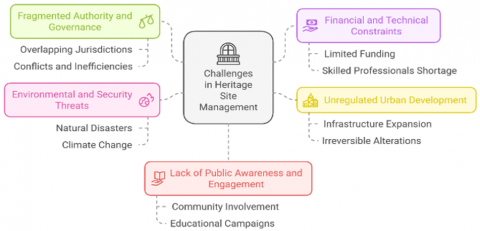
1.6 Overview of challenges in heritage site management with a focus on Iraq
Figure 1. Challenges in heritage site management
By addressing these problems, the study calls for integrated management frameworks that harmonize preservation and development imperatives. The case in Iraq is an instructive one, showing how the possession of heritage sites can be a matter of national pride but also a fragile target that demands coordinated conservation efforts. This research seeks to push forward sustainable heritage management practices around the world by integrating analysis and context-relevant insights.
2.1 Definition and significance of heritage sites
The heritage location occurs by saving data for social memory, identity, culture, and urban continuity, containing a wide range from physical and nonphysical heritage, including historical landmark, religious locations, and cultural natural site; according to Vecco [1], the definition of heritage it developed to unphysical heritage instead of only physical heritage, so the presenting dynamic norms for communities [1, 6].
In addition to their symbolic and cultural dimensions, heritage sites hold increasing value for tourism and local economic development. Historically, these sites act as living testaments to human creativity and technological achievement [7, 8], while culturally they promote national pride and continuity [9]. Economically, they are powerful engines for tourism, job creation, and cultural investment [10]. Figure 2, titled “Integrated Value of Heritage Sites,” illustrates the multidimensional role these sites play—linking historical narratives, cultural pride, and economic sustainability.
Figure 2. Integrated value of heritage sites
2.2 Sustainable management of heritage sites
Sustainable heritage site management requires balancing the preservation of historical and cultural values with the needs of contemporary urban, economic, and social development. This includes respecting the authenticity and integrity of sites while enabling adaptive reuse and educational access. The Historic Urban Landscape (HUL) approach, as defined by UNESCO, supports the integration of heritage into broader urban planning systems [11]. This values-centered methodology encourages inclusive planning, respects historical authenticity, and aligns conservation with sustainability principles [12].
2.3 Role of international organizations in heritage protection
International organizations, especially UNESCO, ICCROM, and ICOMOS, provide essential frameworks and support mechanisms for heritage preservation. Through instruments like the World Heritage Convention, these institutions help states identify, protect, and promote heritage sites of “Outstanding Universal Value.” Their role includes capacity-building, legislative guidance, and promoting community engagement in heritage governance. Furthermore, UNESCO emphasizes the involvement of local communities in decision-making processes, leading to a sense of ownership and responsibility [3, 13].
2.4 International experiences in heritage site management
The literature review and many international studies discussed models to administrate and manage heritage locations, these models combine between conservation of these sites and make it accessible to public, by this way, these locations be developed locally. From these examples, the Pyramids of Giza in Egypt, in this location applied zoning standard to make location zones, every zone has different criteria to develop it reaching location to sustained tourism site [2]. Other sites, Petra in Jordan, depending on comprehensive governance model, that made all local communities be part of the development, beside national authorities and international agenesis [4, 14]. The location of Göreme National Park in Turkey how could from environmental tourism lighting pressure on the environment, and at the same time encroaching public responsivities [5]. All these examples are supported visually by location management model, which ensure conserving unity and locality (Figure 3).
Figure 3. Heritage site management
2.5 Local applications and adaptive strategies
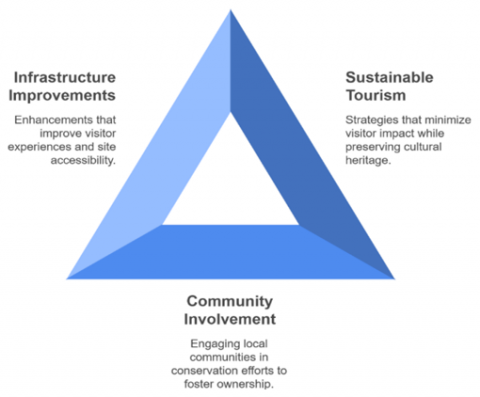
International experiences underline the importance of applying multi-stakeholder approaches at the local level. In Sweden, individual participation and local ownership were found essential for long-term preservation [14, 15]. In Italy, heritage education programs successfully engaged youth in protection activities, contributing to socio-economic revitalization [16]. Advanced technologies such as 3D modeling and Geographic Information Systems (GIS) have enhanced conservation techniques, offering detailed mapping of vulnerabilities and guiding restoration efforts. These strategies are illustrated in Figure 4, which emphasizes the role of education, technology, and local engagement in preservation.
Figure 4. Heritage site management
2.6 Integrated heritage management model
The Integrated Heritage Management (IHM) model presents a holistic governance framework incorporating institutional, community, and private sector perspectives. This model emphasizes site-specific planning indicators that consider ecological, cultural, and economic aspects simultaneously. By promoting responsible consumption and production, IHM aligns with Sustainable Development Goals, particularly SDG 11.4 and SDG 12 [17]. Figure 4 also supports this model by showing how layered management levels can enhance preservation outcomes.
2.7 Role of technology in heritage site management
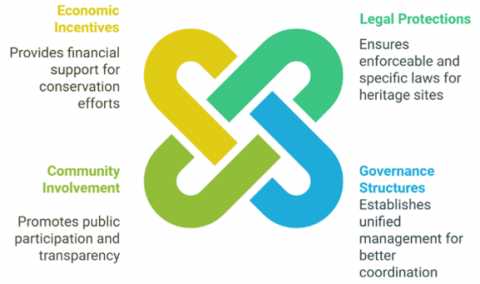
Technological innovation plays a transformative role in contemporary heritage management. Tools such as Building Information Modeling (BIM), GIS, and 3D scanning provide advanced capabilities for documentation, risk assessment, and preventive conservation. The Heritage Care project and related studies illustrate the effectiveness of digital workflows in enhancing site resilience and supporting data-driven decision-making [18, 19]. In particular, the use of fuzzy inference systems to identify vulnerabilities in the Royal Alcázar of Seville [18, 19]. These developments are captured in Figure 5, which shows the strategic application of digital tools in planning and decision-making processes.
Figure 5. Enhancing heritage site management
This study adopts a qualitative, case-based approach to investigate the challenges of heritage site management in Iraq, focusing on the Prophet Tho Al-Kifl Shrine in Babylon. The research aims to identify key structural and institutional obstacles and propose practical strategies for sustainable preservation.
3.1 Data collection
Data were collected through two main sources:
No surveys or interviews were conducted with stakeholders, which is acknowledged as a limitation and discussed in the findings.
3.2 Analysis process
The analytical process involved:
3.3 Summary of findings and recommendations
To clarify the link between the challenges and proposed interventions, Table 1 outlines the core management issues, their impacts, and recommended strategies:
Table 1. Challenges, impacts, and strategic responses
|
Challenge |
Impact |
Strategy |
|
Institutional fragmentation |
Overlapping responsibilities, weak coordination |
Centralized management authority |
|
Inadequate legislation |
Legal gaps, poor enforcement |
Heritage-specific legal reforms |
|
Limited funding & expertise |
Incomplete restorations, poor maintenance |
New funding schemes, training programs |
|
Community disengagement |
Site misuse, weak cultural connection |
Awareness campaigns, local participation |
3.4 Case selection justification
The Prophet Tho Al-Kifl Shrine was chosen for its architectural complexity, historical depth, and symbolic religious importance, offering a representative model of broader heritage management challenges in Iraq.
3.5 Study limitation
The study did not involve key informants or stakeholder participation. While the analysis relied on observation and document review, future research should incorporate interviews and participatory tools to enrich the findings.
4.1 Analysis of heritage site management issues and their impacts
Heritage and historical sites in Iraq face significant challenges due to the multiplicity of responsible authorities. These challenges have adversely impacted the preservation and continuity of these sites, leading to structural damage, loss of symbolic features, and inconsistency in their historical narratives (Figure 6).
Figure 6. Location of Tho Al-Kifil due to Iraq and Babylon governorate
4.2 Case study: Shrine of Prophet Tho Al-Kifl in Babylon
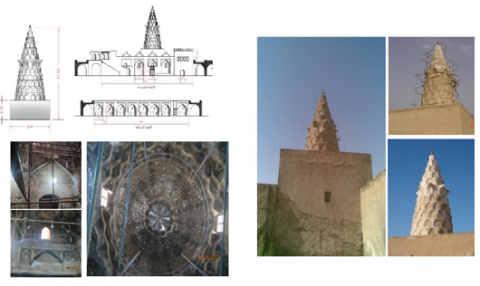
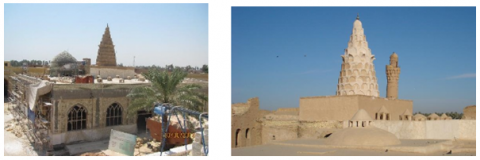
The Prophet Tho Al-Kifl Shrine, located in Kifl City, Babylon Governorate, represents a vital cultural and historical site. This site includes several key architectural elements (Figure 7).
Figure 7. Tho Al-Kifil shrine conic dome (inside and outside view)
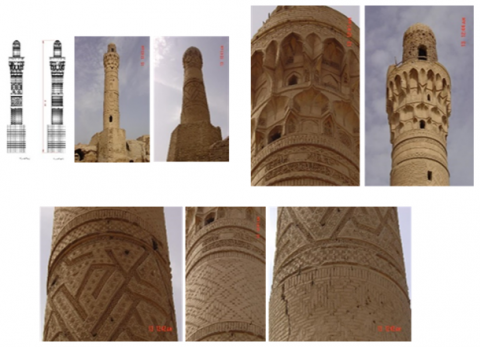
Figure 8. The Ilkhanid Minaret in Alnukhella Mosque
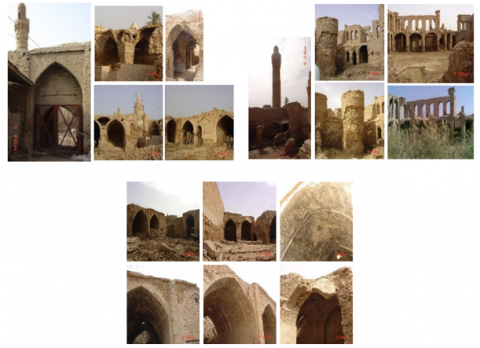
Figure 9. Khans around Tho Al-Kifil site
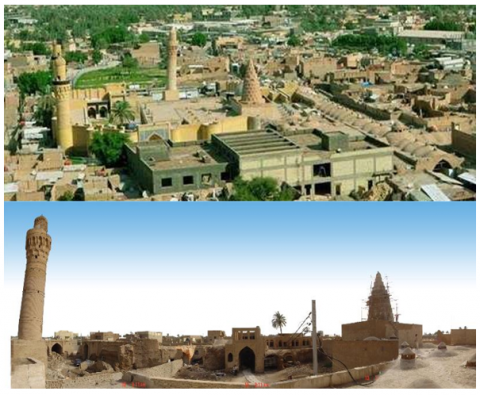
Figure 10. Location and elevation (front and side) of Daniyal Suq (Pazar)
Challenges in Management
The multiplicity of authorities has introduced significant obstacles, including:
4.3 Impact of mismanagement
4.3.1 Architectural alterations
Addition of non-historical elements, such as extra domes and minarets, disrupted the skyline and diminished the symbolic dominance of the original structures (Figure 11).
Figure 11. Irregular and untheorized modification in Tho Al-Kifil site
The use of incompatible materials (e.g., marble and granite) altered the aesthetic and structural integrity of key elements.
4.3.2 Destruction of historical features
Demolition of the khans and repurposing their sites for non-heritage uses compromised the historical and cultural significance of the area.
Relocation of symbolic graves disrupted the site’s spiritual and cultural connections (Figure 12).
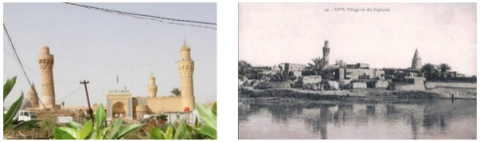
Figure 12. Contrast between old and recent site landscape
4.3.3 Neglect and decay
Lack of maintenance, particularly for Suq Danyal and the minaret, accelerated deterioration. No substantial efforts have been made to restore these elements in line with their historical contexts (Figure 13).
Figure 13. The distortion in the dome view
4.4 Current management practices
This case study revealed that the Prophet Tho Al-Kifl Shrine is managed by overlapping authorities, including religious endowments, local governments, and antiquities departments, each applying their own policies without coordination. No unified management plan exists. Restoration decisions are often ad hoc, lacking technical supervision and heritage-specific guidance. In several instances, renovations were carried out by non-specialized contractors with limited knowledge of historical conservation standards.
4.5 Detailed management challenges
The misalignment of institutional responsibilities has resulted in inconsistent interventions across different site components. For example, while the minaret received partial attention, the khans were subjected to demolition or commercial repurposing. Furthermore, the absence of conservation protocols has led to the application of inappropriate materials (e.g., marble, aluminum) that visually and structurally contradict the site’s original character.
4.6 Strategic preservation responses
In response to these challenges, the study proposes a series of corrective strategies:
This study emphasizes the persistent and interconnected challenges in managing heritage sites in Iraq, with special reference to the Prophet Tho Al-Kifl Shrine in Babylon. The case study revealed that the sustainability of cultural heritage is hindered by fragmented institutional structures, inadequate legislation, limited resources, and the lack of specialized expertise. These challenges compromise both the physical conservation and the cultural continuity of heritage assets.
4.7 Structural and governance challenges in the Iraqi heritage sector
One of the most critical barriers identified is institutional fragmentation, whereby multiple authorities operate with overlapping and often conflicting mandates. The absence of an integrated management framework leads to misaligned priorities, duplication of efforts, and lack of accountability. As Zelli and Van Asselt [20] argue, such fragmentation mirrors global inefficiencies observed in environmental governance and is particularly detrimental in post-conflict heritage contexts like Iraq.
The matter of unfordable legalization frame and missing comprehensive frameworks is very important to deal with complicated heritage sites; the absents of legalization make disorder to all authorities dealing with these sites; the segregate authorities dealing with heritage site in Iraq responsible on random developed project in these site with any coordination, so it is necessary to found new frame of legalization be clear enough to draw boundaries of all authorities in how dealing with this sites, and must accommodate with UNESCO and ICOMOS [3, 21].
The study also identified limited financial and technical resources as a major impediment to sustainable site management. Conservation projects often suffer from insufficient funding, poor maintenance cycles, and dependence on outdated methods. This is further exacerbated by the scarcity of qualified professionals capable of applying context-sensitive conservation techniques or managing technological tools such as GIS and BIM. As Sesana et al. [2] and Darlow et al. [22] point out, the lack of adaptive preservation capacity leaves heritage sites increasingly vulnerable to both environmental and anthropogenic pressures.
Moreover, a pronounced shortage of specialized expertise remains a structural weakness in Iraq’s heritage sector. The absence of trained conservators, architects, and planners has led to unsupervised and inappropriate interventions, such as the use of incompatible materials and additions of non-historical elements. In the case of the Prophet Tho Al-Kifl Shrine, these interventions have disrupted the skyline, obscured the symbolic narrative, and weakened the visual coherence of the site. The situation calls for sustained capacity-building programs and academic training tailored to the needs of heritage management in Iraq.
4.8 Toward a sustainable and inclusive management model
Findings further reveal that restoration practices driven solely by aesthetic or political considerations often risk compromising authenticity. The Prophet Tho Al-Kifl Shrine exemplifies this, as modern alterations have undermined its original architectural language and spiritual symbolism. Without clear technical standards and continuous oversight, heritage interventions are prone to distortion.
The analysis also highlights the in-operativeness of legislative frameworks, which remain outdated and fragmented. In the absence of robust policies, institutional performance becomes inconsistent, vulnerable to manipulation, and detached from internationally recognized standards. Effective governance requires the establishment of a centralized heritage authority that can coordinate interventions, allocate resources, and enforce compliance based on best practices.
Finally, community-based initiatives have emerged as a promising dimension of sustainable heritage management. Empowering local stakeholders, increasing public awareness, and fostering a shared sense of ownership contribute to long-term preservation. Community inclusion not only enriches the social value of heritage but also ensures that conservation strategies are context-sensitive and culturally resonant.
4.9 Synthesis
In sum, this study illustrates the multi-layered challenges confronting heritage management in Iraq. Overcoming these obstacles necessitates a comprehensive approach that combines centralized governance, legal reform, technological innovation, financial investment, and community participation. Only through such an integrated model can the continuity, authenticity, and sustainability of heritage sites—such as the Prophet Tho Al-Kifl Shrine—be ensured for future generations.
This study highlighted the significance of preserving heritage sites as cultural, historical, and architectural assets vital to national identity and community continuity. The Prophet Tho Al-Kifl Shrine in Babylon served as a representative case study reflecting the broader challenges that face heritage management across Iraq. The research identified key obstacles including institutional fragmentation, lack of coordinated governance, limited financial and technical resources, inadequate legislation, and the absence of specialized expertise. These challenges have not only compromised the physical integrity of the site but also diminished its symbolic and functional roles within the urban and cultural landscape.
In response to these findings, the study proposed a set of sustainable management strategies. These include the establishment of a centralized governance model, legislative reform aligned with international standards, capacity-building programs for heritage professionals, integration of digital technologies such as GIS and BIM, and community engagement initiatives that foster local stewardship. Key stakeholders—including heritage authorities, municipal planners, religious endowments, and academic institutions—must collaboratively implement these strategies to ensure long-term preservation and relevance of the site.
The implications of this study extend beyond a single location. They point to systemic gaps in Iraq’s heritage governance and the urgent need to adopt integrated, interdisciplinary, and participatory approaches to site management. The research contributes to the field by presenting a context-specific diagnostic framework that links physical site assessment with institutional analysis and strategic planning.
A notable limitation of the study is the absence of direct stakeholder involvement. Future research should address this gap by incorporating interviews, focus groups, and participatory mapping to capture diverse perspectives and validate the proposed strategies. Further comparative studies across multiple heritage sites in Iraq and the region are also recommended to refine and generalize the model presented.
Ultimately, safeguarding Iraq’s cultural heritage requires not only technical solutions but also a political and social commitment to recognizing heritage as a living and evolving resource. Sustainable management must therefore be grounded in interdisciplinary knowledge, inclusive governance, and respect for both the tangible and intangible dimensions of the past.
[1] Vecco, M. (2010). A definition of cultural heritage: From the tangible to the intangible. Journal of Cultural Heritage, 11(3): 321-324. https://doi.org/10.1016/j.culher.2010.01.006
[2] Sesana, E., Gagnon, A.S., Bonazza, A., Hughes, J.J. (2020). An integrated approach for assessing the vulnerability of World Heritage Sites to climate change impacts. Journal of Cultural Heritage, 41: 211-224. https://doi.org/10.1016/j.culher.2019.06.013
[3] Frey, B.S., Steiner, L. (2011). World heritage list: Does it make sense? International Journal of Cultural Policy, 17(5): 555-573. https://doi.org/10.1080/10286632.2010.541906
[4] Ashrafi, B., Kloos, M., Neugebauer, C. (2021). Heritage impact assessment, beyond an assessment tool: A comparative analysis of urban development impact on visual integrity in four UNESCO World Heritage Properties. Journal of Cultural Heritage, 47: 199-207. https://doi.org/10.1016/j.culher.2020.08.002
[5] Koren-Lawrence, N., Collins-Kreiner, N., Israeli, Y.H. (2020). The future of the past: Sustainable management of archaeological tourist sites—The case study of Israel. Tourism Management Perspectives, 35: 100700. https://doi.org/10.1016/j.tmp.2020.100700
[6] Saikia, M. (2010). Heritage—The story of everyone and everything. International Journal of Tourism and Travel, 3(1): 51-54.
[7] Kalla, R. (2022). The need for conservation of archeological heritage, current challenges and forthcoming approaches. ECS Transactions, 107(1): 5647. https://doi.org/10.1149/10701.5647ecst
[8] Hassan, H.M.M., Alkinani, A.S. (2022). Challenges facing the transition of traditional cities to smart: Studying the challenges faced by the transition of a traditional area such as Al-Kadhimiya city center to the smart style. AIP Conference Proceedings, 2437(1): 020193. https://doi.org/10.1063/5.0093103
[9] Ahmed, M.M.N. (2023). Cultural heritage as a policy for competitive cities. AIP Conference Proceedings, 2651(1): 020070. https://doi.org/10.1063/5.0107627
[10] Alexandrakis, G., Manasakis, C., Kampanis, N.A. (2019). Economic and societal impacts on cultural heritage sites, resulting from natural effects and climate change. Heritage, 2(1): 279-305. https://doi.org/10.3390/heritage2010019
[11] Ahmadreza, S.D., De Luca, G. (2018). Specifying the significance of historic sites in heritage planning. Conservation Science in Cultural Heritage, 1: 29-39. https://doi.org/10.6092/ISSN.1973-9494/9225
[12] Abid, E.H., Alkinani, A.S., Abudlmunim, S.A. (2020). The compact city and urban image of the traditional city center. IOP Conference Series: Materials Science and Engineering, 737(1): 012236. https://doi.org/10.1088/1757-899X/737/1/012236
[13] Hochberg, G. (2020). From heritage to refugee heritage: Notes on temporality, memory, and space. Comparative Studies of South Asia, Africa and the Middle East, 40(1): 43-50. https://doi.org/10.1215/1089201X-8186027
[14] Wey, W.M., Huang, Y.C. (2013). A study of priority evaluation and resource allocation for revitalization of cultural heritages in the urban development. International Journal of Humanities and Social Sciences, 7: 2708-2714.
[15] Hamzah, M.J., Ebraheem, M.A. (2020). Analyzing urban attraction nodes by using GIS and Space Syntax (case study-Al-Adhamiya). IOP Conference Series: Materials Science and Engineering, 737(1): 012181. https://doi.org/10.1088/1757-899X/737/1/012181
[16] Del Baldo, M. (2021). Cultural capital and cultural heritage education in UNESCO sites ‘The right way’: Insights in challenging times. Almatourism-Journal of Tourism, Culture and Territorial Development, 12(23): 221-242. https://doi.org/10.6092/issn.2036-5195/12366
[17] Vinodan, A., Meera, S. (2024). Integrated management of heritage sites: Scale development and validation. Journal of Cultural Heritage Management and Sustainable Development, 14(3): 312-336. https://doi.org/10.1108/JCHMSD-09-2021-0158
[18] Masciotta, M.G., Morais, M.J., Ramos, L.F., Oliveira, D.V., Sanchez-Aparicio, L.J., González-Aguilera, D. (2021). A digital-based integrated methodology for the preventive conservation of cultural heritage: The experience of HeritageCare project. International Journal of Architectural Heritage, 15(6): 844-863. https://doi.org/10.1080/15583058.2019.1668985
[19] Clemenson, G.D., Maselli, A., Fiannaca, A.J., Miller, A., Gonzalez-Franco, M. (2021). Rethinking GPS navigation: Creating cognitive maps through auditory clues. Scientific Reports, 11(1): 7764. https://doi.org/10.1038/s41598-021-87148-4
[20] Zelli, F., Van Asselt, H. (2013). Introduction: The institutional fragmentation of global environmental governance: Causes, consequences, and responses. Global Environmental Politics, 13(3): 1-13. https://doi.org/10.1162/GLEP_a_00180
[21] Degrigny, C., Lobovikov-Katz, A., Lu, S.L., Tavares, A. (2019). Integration of heritage buildings and sites within their surroundings. University of Zagreb - International Research Center for Late Antiquity and the Middle Ages, Motovun, Croatia, pp. 54-67. https://centaur.reading.ac.uk/84487/.
[22] Darlow, S., Essex, S., Brayshay, M. (2012). Sustainable heritage management practices at visited heritage sites in Devon and Cornwall. Journal of Heritage Tourism, 7(3): 219-237. https://doi.org/10.1080/1743873X.2012.684798