Ammar Khalil Ebraheem | Sabeeh Lafta Farhan | Mufeed Ehsan Shok | Shatha A. Hasan | Zahraa Imad Hussain Al-Hussaini | Mustafa Abduljalil Ebraheem | Amer Shakir Alkinani* | Moheb Kamel Al-Rawe
© 2025 The authors. This article is published by IIETA and is licensed under the CC BY 4.0 license (http://creativecommons.org/licenses/by/4.0/).
OPEN ACCESS
This mixed method research analyses urban heritage and identity management concerning Karbala, and important spiritual and historical center. Homing in on particular spatial issues germane to Muharram’s rites, this study explores spiritual activities for the remembrance of the martyrdoms of Imam Hussein (A) and his brother Abbas (A), and their followers (RA), and identifies the way in which such activities construct urban identity in Karbala. Furthermore, this study contemplates the deployment of contemporary AR and VR technologies for urban identity. After reviewing extensive studies on religious, cultural, and urban heritage, a field survey of the Muharram pilgrimage in Karbala was conducted, spatially analyzing pilgrims’ movements in public areas. Virtual reconstructions of Karbala using immersive technologies are explored to increase visitor engagement to determine physical-virtual spatial interactions’ shaping of preservation and experiences. The results indicate that Muharram rites, especially Hussaini processionals, inherently embody urban, cultural, and religious identifications with Karbala, literally shaping the city’s physical form and promoting social engagement in temporary congregation areas. Furthermore, the virtual technological immersive experiences, including the Day of Ashura, promote ancillary and even remote comprehension of cultural importance and knowledge transmission. Additionally, the integration of VR and AR in cultural heritage preservation not only enhances historical documentation but also creates immersive educational experiences. These technologies bridge the gap between physical and virtual engagement, ensuring that visitors—both present and remote—can interact with Karbala’s cultural legacy in a meaningful way. This approach fosters a stronger emotional and cognitive connection to the city's rich spiritual and historical narratives. This study is original in its multipronged analysis, encompassing virtual technology and spatial analysis for complementary heritage and culture conservation and reconstruction in Karbala. It offers urban planning, cultural preservation, and technological development insights, and charts the course for sensitive modernization in Karbala.
augmented reality (AR), cultural identity, immersive experiences, Islamic cities, Muharram rituals, religious commemoration, urban heritage
The sacred site of Karbala is one of the most profoundly meaningful pilgrimage hubs for Muslims worldwide, due to its historical, cultural, and religious significance concerning the martyrdom of Imam Hussein (A), his brother Abbas (A), and their followers (RA) in the eponymous battle. The tragedy of Karbala presents the epitome of faith and self-sacrifice for truth and justice, and such associations comprise the nucleus of Karbala’s urban cultural and sacred significance. For over a thousand years, Karbala has been a magnet for remembrance and devotion, particularly in the Islamic lunar month of Muharram, during which millions of pilgrims throng to the city to take part in commemorative rituals for Imam Hussein (A). Such activities, while primarily spiritual rites, encompass diverse socio-cultural and urban considerations.
Processions commemorating Imam Hussain (A) clearly entail spatial organization and management, literally shaping Karbala’s physical structure as well as its urban identity, as the city’s public areas and roads become social zones for pilgrims to congregate and foster ties of spiritual love, while simultaneously engendering Karbala’s particular cultural identity (CUL-IDY) and energizing the fabric of its urban structure. Modern technological solutions can add further layers of use, preservation, and conservation to Karbala, including its religious and cultural heritage. VR and AR can offer tools to enable pilgrims and cultural tourists to visualize and empathize with the pathos of the tragic events for which Karbala is renowned, especially the martyrdom of the holy ones. Using immersive and interactive technologies, pilgrims can attain a deeper comprehension of the cultural and religious significance of Karbala and enable novel engagements with Karbala’s sacred historical meanings and urban fabric, improving visitor enjoyment and awareness of cultural significance, even for remote visitors who cannot attend the physical site. This posits a profound revolution in the way in which cultural and religious identity can be curated and passed on to others without traditional geographical and temporal barriers, galvanizing the vital legacy of Karbala using modern technologies.
The current paper undertakes to investigate the use of spaces in Karbala with a view to energizing Karbala’s urban identity and heritage using novel VR and AR technological solutions for the retelling of spiritual narratives and commemoration of sacred history. It analyzes spatial use in connection to religious rites and their effects in the urban sphere of Karbala. The research seeks to identify ways in which innovative technological tools can undergo integration with ancient religious activities and culture to preserve and continue Karbala’s unique CUL-IDY.
A multidimensional methodology is used in this research, integrating descriptive, analytical, and field-based analyses to explore spatial activities and virtual technological solutions for Karbala’s urban heritage (URB-HER) preservation and CUL-IDY enhancement. The methods used are described below.
2.1 Literature review
A comprehensive literature search and review was undertaken in this study with regard to URB-HTG and issues of identity in pilgrimage sites, especially Karbala, with regard to collective consciousness and meaning. Related studies centered on religious devotional activities by communal groups and the effects of such activities on CUL-IDY, and the role of VR and AR in preserving urban heritage.
2.2 Field study
A field analysis was undertaken in Karbala to record and investigate Muharram pilgrims’ spatial activities, encompassing rites and gatherings, especially Hussaini processions based around shrines. Pilgrim motions and pathways through sacred sites and public areas were modelled, with investigation of associated religious and cultural associations attached by users to such activities.
2.3 Virtual technologies
To investigate VR and AR roles for heritage preservation in Karbala we analyzed virtual tools seeking to reproduce content concerning the Karbala martyrdoms, and investigated the utility of such tools in improving visitor experiences and collective heritage and memory transmission.
2.4 Observations
Karbala’s urban space usage during Muharram was directly observed, including pilgrims’ movement patterns and spatial distribution around shrines and public areas, especially during processions commemorating holy martyrdoms, to analyze the impacts of such rites on Karbala’s urban environment and how people engage with it.
2.4.1 Mixed method and inductive data analysis
Subsequent to gathering data using the methods described above, qualitative and quantitative data was analyzed to study (1) socio-cultural and spiritual dimensions, and (2) patterns of movement and population density in public spaces (respectively). The resultant conclusions were then situated in relation to previous studies, and inductive analysis generated practical insights in order to energize URB-HTG and CUL-IDY for Karbala and other Islamic cities.
2.5 Data validation and reliability measures
To ensure the accuracy of GPS tracking data, movement patterns were cross-checked with field observations and local event logs. Outlier detection techniques were applied to filter out inconsistencies, such as sudden jumps in location or unrealistic variations in speed. Future studies could enhance validation through multi-source tracking and real-time monitoring.
2.6 Rationale for survey design and category selection
The survey categories were selected based on theoretical and practical considerations. Demographic variables (age, gender, and visitor type) allow for a comparative analysis of cultural identity and technological engagement. The Religious Activity and Virtual Technology section assesses traditional and digital engagement. A pilot study was conducted to improve clarity and reliability.
2.7 Ensuring accuracy and consistency of survey data
Reliability of the survey was assessed using Cronbach's Alpha for internal consistency, and response validation checks were applied to detect incomplete or inconsistent responses. Standardized instructions reduced bias, ensuring accurate representation of Muharram rituals and the impact of virtual technologies on Karbala's heritage.
This review yielded some diverse literature concerning spiritual sites’ URB-HTG and CUL-IDY, as described below:
URB-HTG and CUL-IDY: CUL-IDY is intertwined with URB-HTG itself, and spiritual and communal associations profoundly influence both in religious centers like Karbala, in addition to recording and passing on traditional cultures [1].
Communal Spiritual Rites: The Muharram pilgrimage is essential to Karbala’s identity as an Islamic city. Abdelmonem et al. [2] noted that it galvanizes pilgrims’ sense of social affiliation and togetherness, especially the preservation of ancient rites like processions.
Spiritual Activities and CUL-IDY: Spiritual activities’ impacts on CUL-IDY are closely linked to fostering a sense of being part of a collective community, as described above, iterating the cultural and religious beliefs and aspirations of believers. Karbala’s rites, while rooted in religious observances, exude a transcendent cultural impact that intersects with nationalist and even political ideations [3].
Virtual Technologies and the Preservation of Urban Heritage: VR and AR can recreate historical icons such as the Battle of Karbala, using interactivity to enhance visitor experience and preserve CUL-IDY, which Singh et al. [4] reported can increase empathetic feelings and significance for visitors.
Muharram Pilgrimage and Collective Identity: Muharram pilgrimages to Karbala are ancient and integral in visitors’ collective consciousness. Sultan and Al-Thahab [5] noted that besides religious observances, Muharram activities in Karbala cement social connections between visitors, and their common CUL-IDY, which they pass on to succeeding generations.
Karbala-Specific Studies: URB-HTG and CUL-IDY issues in Karbala have been studied by recent analysts, Khorasand et al. [6], who concluded that the city’s urban identity is formed by pilgrims’ interactions within public areas, and with the city itself and its shrines, noted the central value of pilgrims in the preservation of cultural activities, offering a good exemplar for modernity and heritage in synergy.
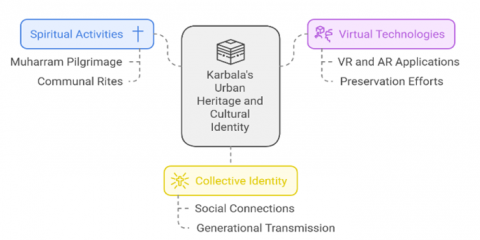
Previous studies indicate that URB-HTG and CUL-IDY in the context of Karbala are rooted in pilgrims’ collectivist spiritual observances and cultural associations, augmented by virtual technologies to preserve and pass on the city’s heritage. Empirical literature offers a robust fundament to comprehend the way in which such factors contribute to buttressing CUL-IDY, opening the scope for inquiries on ways in which to embed novel technological solutions in the observance of traditional religious rites for the conservation of URB-HTG, Figure 1.
Figure 1. Karbala’s urban heritage and identity
While previous studies provide valuable insights into URB-HTG and CUL-IDY, some limitations remain. Many focus primarily on the tangible aspects of urban heritage, overlooking the dynamic and evolving nature of cultural identity in pilgrimage cities like Karbala. Furthermore, while Singh et al. [4] highlight the role of VR/AR in enhancing visitor engagement, its applicability to deeply spiritual and religious settings remains unexplored. Unlike traditional heritage tourism, pilgrimage sites involve profound emotional and communal dimensions that immersive technologies must carefully integrate.
Furthermore, although previous research has examined the impact of Muharram rituals on urban identity [2, 5], a deeper analysis is needed of how these rituals continually reshape spatial and cultural dynamics in Karbala after the Hajj season. The role of virtual technologies in this transformation also warrants further exploration, particularly in balancing technological advancements with the preservation of religious authenticity. Addressing these gaps will help bridge theoretical perspectives with practical approaches to sustaining URB-HTG and CUL-IDY in Hajj cities.
4.1 Defining cultural and urban identity
Cultural and urban identity provide the foundation for connecting the social, historical and spatial aspects of a city. Such engagement in handicraft cities such as Karbala derives from architectural heritage, urban design and religious rituals. Karbala is now known for its unique character, a blend of urban sprawl interlaced with a series of religious rituals, creating a microcosm of collective memory, and social and cultural diversity (reinforcing each other) [7].
4.2 The role of Ashura rituals in shaping urban identity
During Ashura, the martyrdom of Imam Hussein brings into tumultuous commotion the plazas and streets to better channel the passion of urban spaces into symbols of spirituality. These rituals become increasingly enmeshed in the quotidian life of the city, forging, inseparable bonds of brotherhood and sisterhood, and a hugely popular sense of everything falling into place. Processions of Ashura flow through the city, binding different parts of it in a way that marks them as sanctuaries of memory and solidarity [8].
4.3 Spatial and social interactions during rituals
The mere rituals of Ashura signify a deep bond between the physicality of spaces of Karbala and that with the everyday life of the fabric of the city. An indissoluble link is forged between the urban fabric and collective identity as participants weave their way through the city’s sacred sites with the aid of these rituals. This relationship enriches cultural heritage through the coexistence of history and the contemporary needs of the city, and brings infrastructure enhancement to spaces in the urban fabric [9].
4.4 Impact on social cohesion and cultural resilience
Rituals including Ashura, embody an important role in strengthening social cohesion. They are collective rituals that express solidarity and honor the memory of lost loved ones, building participants’ bonds and common goals and providing greater meaning in their lives. This concept of collective responsibility further illustrates the difference in social well being created by ritual with respect to other (often relatively individualistic) traditions, not least its Sikh analogue, that of seva [10].
4.5 Interplay between urban space and ritual performance
In the context of Karbala, urban spaces were not simply physical spaces, but were dynamic sites of cultural and spiritual performance. Whatever connotation of the city the performances of Ashura held, they took place in the corporeal city that participated with participants in the presence of faith and history. These rituals, in turn, make the city turn into a space of fluidity and a veritable host that reflects not only its residents material needs but also their imaginations and dreams [11].
4.6 Implications for urban development and heritage preservation
Karbala is distinguished by its efforts to achieve a balance between its religious heritage and modern urban development. This balance between the ritual significance of Ashura and modernization efforts ensures the preservation of the historical and spiritual spirit of the city. Hence the need for political frameworks that respect cultural identity and support urban growth [12].
4.7 The role of AR and VR in preserving cultural heritage
Ways of managing and experiencing cultural heritage have been transformed by augmented and virtual reality (VR) technologies. The potential of these tools lies in their ability to allow the study of historical artifacts and the examination of spatial environments, thus opening fantastic opportunities for analysis, education and exploration of history in an interactive way. This technology allows them to "visit" places of heritage in VR, even when access is limited or controlled so as not to damage these priceless legacies for generations to come. This cutting-edge approach, rooted in sophisticated 3D modeling and graphic rendering techniques, aligns seamlessly with contemporary strategies aimed at preserving cultural heritage [13].
4.8 Practical applications in religious and cultural sites
The use of augmented and VR in places of worship allows users to explore the mysteries of these places in a way that is different from the traditional experience of interacting with these places. It gives us the ability to recreate this place as well as remove the spatial and temporal boundaries in this communication process [14]. Much research on the city of Jerusalem, for example, shows that virtual and AR experiences deepen the emotional and intellectual engagement of users with these sites, leading to a new perspective of appreciation and importance for their spiritual and cultural status [15]. Similarly, AR applications along the Silk Road have transformed its cultural legacy into an interactive experience, boosting cultural tourism while preserving its intangible heritage [16, 17].
4.9 Enhancing cultural and spiritual understanding through immersive experiences
VR and AR technologies are effective tools for documenting the spiritual and cultural values of religious sites through stories and events associated with them within a virtual interactive environment that simulates real experiences. On the other hand, these technologies stimulate and increase participation and physical interaction in the virtual space. On the other hand, these technologies allow for the virtual reconstruction of missing parts of the physical structure that are sometimes difficult to reconstruct in reality [18]. For example, there are many archaeological sites submerged under water, but these technologies allow users to interact with them within their original context, thus enhancing the culture of public education and scientific research [19]. Additionally, these applications reduce the physical strain on cultural heritage sites, offering sustainable ways to enhance visitor education and interpretation [20].
4.10 Immersive storytelling and gamification as tools for cultural learning
One of the most important advantages of AR and VR is their ability to transform cultural stories within the collective memory of the city into interactive family experiences. By integrating these stories into specific programs [21], these technologies make learning more attractive and connected, adding new emotional and cultural dimensions. For example, these technologies have enabled museum visitors to excavate archaeological and heritage sites. This experience enhances the personal connection to these sites being explored [22]. On the other hand, some virtual and AR platforms have enabled users to communicate virtually with holy religious sites and participate virtually in rituals of worship that enrich the spiritual and communicative experience with these sites [4].
These technologies are far more than mere tools; they serve as gateways to preserving and experiencing cultural heritage in ways that were once unimaginable. By blending immersive storytelling, interactive engagement, and advanced modeling, they ensure that cultural and spiritual narratives not only endure but also remain meaningful and relevant. From sacred religious sites to ancient trade routes long forgotten, augmented and VR are forging invaluable pathways toward a deeper appreciation and understanding of cultural heritage, safeguarding it for future generations.
4.11 Management of public spaces and cultural activities
Religious events such as Ashura, unfolding in the streets and public squares of cities like Karbala, transform the meaning and function of urban spaces. These events reimagine the cityscape as a canvas of collective memory, embedding the significance of spiritual rituals into the fabric of the urban environment. For instance, Ashura processions play a vital role in reinforcing the sacred identity of Karbala while fostering a deep sense of belonging among participants. The spatial management during such events addresses not only spiritual needs but also broader socio-political dimensions, presenting critical considerations for urban planning [8].
4.12 Managing urban spaces for religious and cultural needs
Religious mass events demand meticulous public space management that balances logistical efficiency with the preservation of cultural identity. This necessitates the implementation of tailored urban strategies to accommodate millions of pilgrims while safeguarding the cultural sanctity of these occasions. For example, during the Ashura processions in Karbala, strategic infrastructure is essential to address challenges such as solid waste management, crowd control, and security. Research highlights a growing demand for systems that minimize environmental impact and enhance the experience of attendees, as evidenced by innovative waste management solutions employed during Ashura in Karbala [23].
4.13 Strengthening social and cultural identity through public events
Religious festivals transform cities into dynamic arenas where communities unite to express and reinforce their shared identities. By integrating cultural rituals into the rhythm of urban life, these events significantly contribute to fostering social bonds and celebrating cultural heritage. For instance, the Ashura ceremonies in Iran exemplify how public rituals serve as potent instruments for sustaining a community’s identity and safeguarding its cultural legacy [12]. Similarly, large-scale religious gatherings worldwide demonstrate that well-coordinated public space management can amplify the social, cultural, and spiritual experiences of participants [24].
4.14 Balancing sacred preservation and accessibility in urban spaces
The preservation of the sanctity of sacred urban spaces while ensuring accessibility during large religious events requires a model of collaborative governance. In Indian pilgrimage cities, for example, partnerships between religious authorities and administrative stakeholders have resulted in innovative management frameworks. These frameworks encompass systems for efficient waste disposal, crowd control, and environmental sustainability, providing valuable models for maintaining both the functionality and spiritual integrity of sacred urban spaces [25].
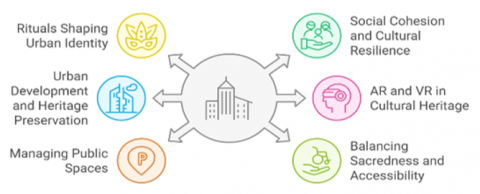
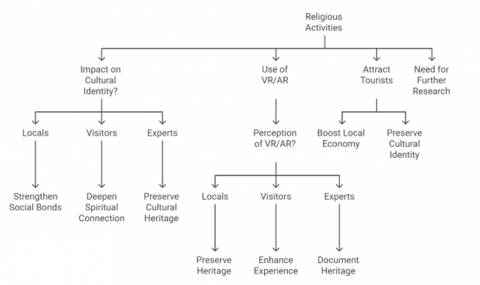
The management of public spaces during religious events such as Ashura highlights the complex interplay between urban planning, cultural heritage, and spiritual practices. By navigating logistical challenges and fostering community involvement, these events reshape urban spaces into vibrant expressions of cultural and social identity. This dynamic process emphasizes the need for culturally attuned urban strategies that harmonize modern demands with the preservation of tradition, enhancing both the spiritual significance and communal engagement of participants (Figure 2).
Figure 2. Cultural and urban dynamics in Karbala
In the Muharram season (1-10 Muharram, 1445 AH), when over 10 million pilgrims attend Karbala, 500 remembrance processions and 3,000 public meals are held, visitors’ motions were tracked using GPS, focusing on the core routes to the two holiest shrines, encompassing 10 key roads with concentrated user density.
5.1 Survey results
The outcomes indicated that Karbala’s physical sites were commodified for pilgrims’ use, including public shading, tents, and other facilities. Pilgrimage activities reinforced CUL-IDY and social sense of belonging according to the majority of questionnaire respondents (85% and 75% respectively), underscoring how remembrance of the martyrdom of Imam Hussein (ع) are central to CUL-IDY and social cohesion among pilgrims. Spatial analysis revealed how cultural and social needs are served in Karbala in addition to pilgrimage rites.
5.2 Virtual technologies
VR and AR solutions for historical heritage preservation at Karbala seek to visualize the Battle of Karbala with interactivity via AR smartphone apps or VR headsets, presenting content on sites and simulated interactions with figures from history, for a more in-depth appreciation of the religious and historical context of Karbala. Analysis of the impacts of these virtual experiences revealed that the majority of questionnaire respondents thought that they improved their comprehension of the history of the site (80%), enhancing their social cohesion and memory, and that it made such awareness and heritage more accessible and appealing to younger people (70%). These outcomes indicate the important pedagogical role VR and AR can play, in addition to preserving the heritage of such potentially vulnerable sites for future generations, and improving remote accessibility, thereby contributing to the preservation of religious and cultural identity.
5.3 Questionnaire on pilgrimage and virtual technologies
The study questionnaire concerning visitors’ own opinions and experiences as pilgrims to Karbala asked about the effects of VR and AR on their cultural and religious ideations. The questionnaire form is shown below in Table 1. The results are discussed below, highlighting differences between the responses of the different types of visitors.
Table 1. Questionnaire form
|
Part |
Category |
Options |
|
Part 1: General Information |
User type |
• Visitor • Expert • Local Resident |
|
Age (years) |
• >18 • 18-30 • 31-45 • 46-60 • >60 |
|
|
Gender |
• Male • Female • Other |
|
|
Part 2: Religious Activities and Cultural Identity |
Have you taken part in rites during the holy month of Muharram? |
• Yes • No |
|
What activities did you take part in? (Select all that apply) |
• Hussainiya processions • Religious rituals • Public gatherings • Other (please specify): ________ |
|
|
How do you evaluate the effects of such activities on your own sense of religious and cultural belonging? |
• Excellent • Good • Average • Weak • None |
|
|
Part 3: Virtual Technologies |
Have you had experiences using VR or AR in your Karbala pilgrimage? |
• Yes • No |
|
If yes, how do you evaluate using them? |
• Excellent • good • average • weak • none |
|
|
Do you think they enhance cultural identity and collective memory, and if so, how? |
[Free response area] |
|
|
Part 4: Impacts of Religious Events on Identity |
Do you think pilgrimage events contribute to conserving religious and cultural identity in Karbala? |
• Strongly yes • yes • not sure • no • definitely no |
|
What level of importance do you ascribe to religious activities in terms of tourists being attracted to Karbala? |
• Very important • important • average • not important • none |
|
|
Part 5: Additional Comments |
Any additional comments or suggestions concerning pilgrimage or virtual technology issues in Karbala? |
[Free response area] |
5.4 Part 1: User types
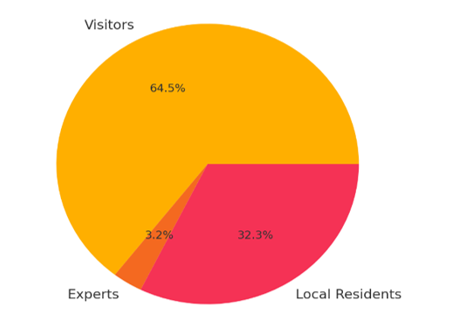
As shown in Table 2 and Figure 1, most of the users of Karbala who took part in the questionnaire were visitors (64.5%), while almost a third were residents of the city (32.3%) and a small proportion were experts. This reflects the preeminent importance of religious observances in Karbala, attracting many visitors who actively participate in rites concerning the Battle. However, the input from residents of the city and experts also offers important insights when considering the holistic users of the city.
Table 2. Karbala users
|
Part |
Question |
Response |
Count |
Percentage |
|
Part 1: General Information |
Users (Type of Respondent) |
Visitors |
400 |
64.5% |
|
Experts |
20 |
3.2% |
||
|
Local Residents |
200 |
32.3% |
5.5 Part 2: Religious activities and cultural identity
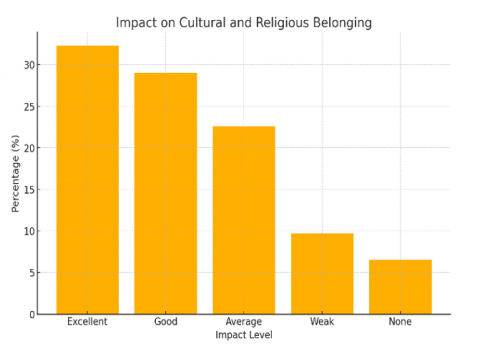
Table 3 shows that the majority of participants (77.4%) engaged in religious rites, including local residents as well as visitors; the former typically have an ongoing relationship with spiritual activities in the city, while peak season pilgrims exhibit intensive but temporary engagement during extraordinary events, such as Arba’een. While numerically fewer, experts may consider such activities with regard to impacts on cultural and social identity over the long term.
Table 3. Culture and religious identity
|
Part 2: Religious Activities and Cultural Identity |
Participated in Religious Activities |
Yes |
480 |
77.4% |
|
No |
140 |
22.6% |
||
|
Types of Activities Participated in |
Hussainiya Processions |
350 |
58.1% |
|
|
Religious Rituals |
300 |
48.4% |
||
|
Public Gatherings |
250 |
40.3% |
||
|
Other |
50 |
8.1% |
||
|
Impact on Cultural and Religious Belonging |
Excellent |
200 |
32.3% |
|
|
Good |
180 |
29% |
||
|
Average |
140 |
22.6% |
||
|
Weak |
60 |
9.7% |
||
|
None |
40 |
6.5% |
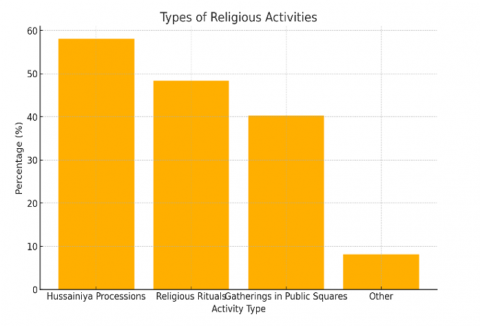
Figure 2 shows that the most common activities participants took part in were Hussainiya processions (58.1%), orthodox religious activities (e.g., praying) (48.4%), and gatherings in public spaces (40.3%). Local residents incorporate such activities in their daily lives, while pilgrims visiting from elsewhere are engaged in particularly intense and immersive cultural and spiritual activities in the city. The experts are more likely to consider such activities in terms of sociocultural issues, and their effects for identity and cultural continuity.
Figure 3 shows the effects of religious activities on users’ sense of cultural belonging, concerning which most respondents (61.3%) indicated tangible effects. Residents are more prone to see them as reiterating their inherent interconnection with Karbala and its religious activities, while pilgrims are more acutely and intensely aware of religious significance, and experts see them in relation to community and cultural cohesion.
Figure 3. Karbala users
5.6 Part 3: Virtual technologies
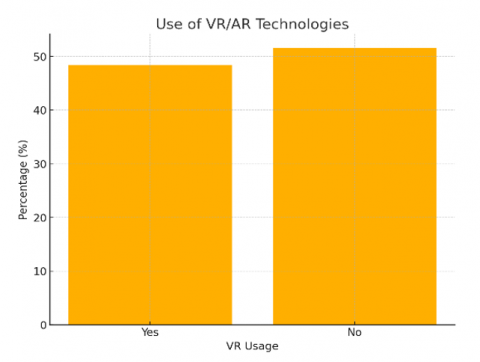
Table 4 and Figure 4 show that almost half of respondents (48.4%) had actually experienced the use of VR or AR. Visitors are more prone to use them as part of the novelty of their experience of the pilgrimage, while local residents may be less likely to use them, and experts could regard them as pedagogical and cultural preservation tools. The fact that over half (51.6%) have not used them signals a growth opportunity for more integration of such features in cultural and religious experiences.
Table 4. Virtual technologies
|
Part 3: Virtual Technologies |
Use of VR or AR Technologies |
Yes |
300 |
48.4% |
|
No |
320 |
51.6% |
||
|
Experience with Technologies |
Excellent |
100 |
16.1% |
|
|
Good |
120 |
19.4% |
||
|
Average |
80 |
12.9% |
||
|
Weak |
40 |
6.5% |
||
|
None |
200 |
32.3% |
||
|
Impact on Collective Memory and CUL-IDY |
Very Important |
220 |
35.5% |
|
|
Important |
180 |
29% |
||
|
Average |
120 |
19.4% |
||
|
Not Important |
40 |
6.5% |
||
|
None |
60 |
9.7% |
Figure 4. Culture and religious identity
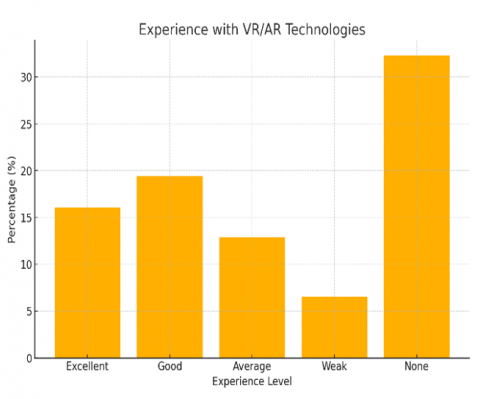
Figure 5 shows that of the 48.4% who had actually used VR or AR, only 16.1% rated it as excellent, while over a third (35.5%) cited that they are important for collective memory enhancement (Figure 6). Visitors are more likely to consider these tools beneficial in intensifying their engagement with Karbala's religious and CUL-IDY. Local residents could also gain more historical consciousness using them, while experts may consider them as critical for conveying narratives of cultural importance for continuity among future generations, or enabling remote “visitors” to access Karbala.
Figure 5. Religious observances performed
Figure 6. Use of VR/ AR technologies
Figure 6 illustrates the distribution of responses regarding the use of VR and AR technologies across different user groups. The results indicate that although nearly half of respondents have tried immersive technologies, a significant proportion (51.6%) have not yet used these tools. This suggests an opportunity for further technology integration, particularly through improved accessibility and educational initiatives. The figure also highlights the disparity in technology adoption across different demographic groups, reinforcing the need for targeted implementation strategies.
5.7 Part 4: Impacts of religious events on identity
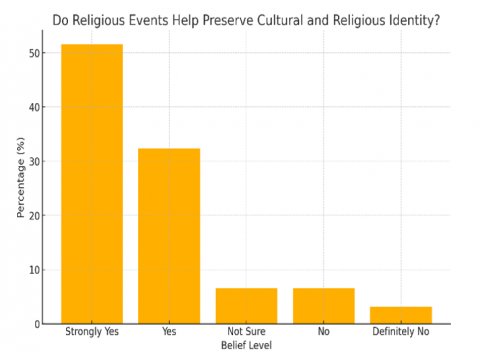
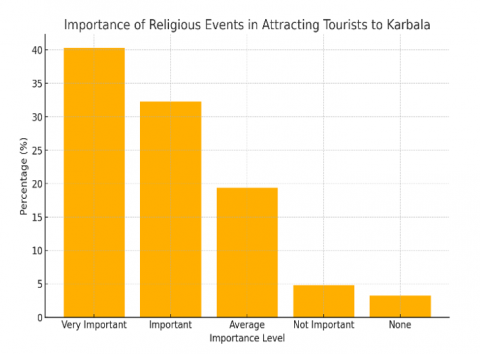
Table 5 and Figure 7 dictate the results concerning the impacts of religious events on identity. As shown in Figure 8, the vast majority (83.9%) of respondents consider that these events conserve religious and cultural identity. Local residents may perceive them to be inherent in their own local community and identity, while visitors consider their engagement as part of integrating with a broader Muslim community. Experts may consider sociological and historical cultural outcomes of religious activities, locally and internationally. In terms of attracting tourists to the city, Figure 9 and Figure 10 show that the majority (72.6%) of respondents consider religious events to be important. This can be expected from visitors themselves, who ipso facto consider religious events to be important in attracting them to the city, while local residents enjoy tourism revenue associated with these activities, and experts may consider the role of visitors in infrastructure development and cultural conservation.
Table 5. Impacts of religious events on identity
|
Part 4: Impacts of Religious Events on Identity |
Religious Events’ Contribution to Cultural and Religious Identity |
Strongly Yes |
320 |
51.6% |
|
Yes |
200 |
32.3% |
||
|
Not Sure |
40 |
6.5% |
||
|
No |
40 |
6.5% |
||
|
Definitely No |
20 |
3.2% |
||
|
Importance in Attracting Tourists to Karbala |
Very Important |
250 |
40.3% |
|
|
Important |
200 |
32.3% |
||
|
Average |
120 |
19.4% |
||
|
Not Important |
30 |
4.8% |
||
|
None |
20 |
3.2% |
Figure 7. Religious events preserving cultural and religious identity
Figure 8. Evaluation of VR/AR use
Figure 9. VR/ AR importance for cultural heritage and collective memory
Figure 10. Religious events attracting tourists to Karbala
The results of the current survey confirm the essential role of religious rituals in Karbala in enhancing the religious and cultural identity of residents, visitors and experts alike. From the perspective of local residents, these activities embody an extension of their established local heritage, while visitors appreciate them as profound spiritual occasions that contain religious and cultural meanings. As for experts, they point to the great importance of preserving these phenomena as an integral part of the collective and cultural identity.
Regarding the use of VR and AR technologies, despite their rare use among local residents, they have great potential to improve the visitor experience and preserve collective memory, especially in the context of heritage preservation according to the experts’ view. The iconic religious status of the city of Karbala is highlighted by its spiritual connection to the people and its being an important cultural landmark that attracts a wide segment of tourists, paving the way for a more effective integration of VR and AR technologies with the aim of preserving and enhancing heritage.
Discussion of the results according to the perspectives of locals, experts and visitors:
Figure 11. Perspectives of locals, experts and visitors
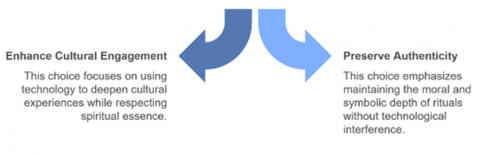
The results of this study indicate the central importance of religious activity and VR technologies in the cultural and religious identity of the city of Karbala. The talk that has been achieved by combining this unique technology with the adoption of unique elements, including what contributes to the achievement of heritage and the enrichment of cultural heritage, confirms. Rituals rooted in collective memory strengthen social bonds and support a sense of belonging across generations and borders, as they do in protecting intangible heritage from the challenges of modernization. In this context, Karbala has the opportunity to diversify the options of reality and AR, to increase cultural interaction and increase adventurous experiences that respect the spiritual depth of the city. However, these recordings must be carefully recorded on the authenticity of the rituals and take into account the special symbolism, and the visual technology must be loaded interactively and complement the moral and heritage depth of Karbala rather than highlighting it (Figure 12).
Figure 12. How to integrate modern technologies in Karbala’s
Figure 12 illustrates the strategic integration of modern technologies in Karbala, focusing on virtual and AR applications, smart mobility solutions, and digital heritage documentation. These innovations aim to enhance cultural interaction while preserving the identity of the holy city. The figure highlights key implementation areas, such as immersive storytelling for Muharram rituals and the use of real-time spatial analysis to manage pilgrim movement. By aligning technological developments with Karbala's unique social and religious fabric, this approach ensures that modernization efforts complement rather than disrupt traditional experiences. The survey results reinforce the growing acceptance of these technologies among pilgrims and local stakeholders.
The study of urban heritage and cultural identity in Karbala concluded that there is a link between religious rituals and the spatial organization of the city. The rituals of Muharram, especially the Husseini processions, play a part beyond mere historical denunciation; they contribute to the crystallization of the social fabric and the perception of collective identity, in addition to integrating historical narratives into the urban landscape. Therefore, due to dynamic interactions between residents and urban spaces, defining cultural spiritual ties and reflecting the specificity of Karbala's urban heritage.
Agreement on the use of digital effects, the use of VR (VR) and AR represents a promising opportunity on this heritage and the experience of its contribution. With the traditional pilgrimage relying on physical presence, you can use electronic platforms to expand access to the sites of the holy city's maps, allowing for broad participation and contributing to the benefit of diverse use among different segments of society. However, the effectiveness of these details is conditional on taking into account the cultural specificity and context of the serious, so that the digital experience remains complementary to the creative originality rather than abandoning it or suffering its lost symbolism.
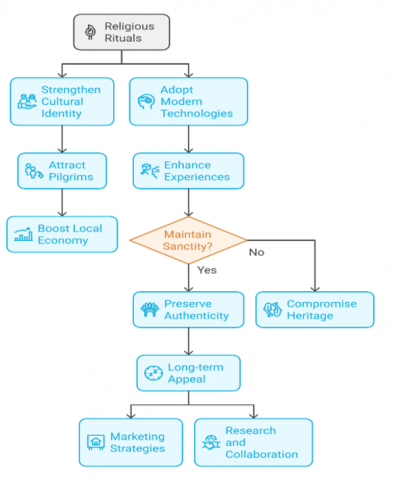
However, the current situation prevails, Karbala faces the challenge of balancing development between urbanism and its historical and spiritual value. As a result, the search for the necessity of adopting a diverse urbanism for several reasons, to accommodate the increasing number of visitors while preserving the urban heritage and my father in that. This requires integration in the management of public spaces, the development of various infrastructures, and the digitization of heritage, in a way that takes into account the spiritual status of the city and preserves its authenticity. In its conference, the importance of planning for Karbala is not determined in its social landmark, but rather is tested in achieving progress for its people and visitors. The religious rituals and multi-technological systemic dimensions discussed in this study emphasize the complex overlap between esotericism and the requirements of development. In this context, ways for the holy cities to adapt to the challenges of the contemporary era while preserving their historical identity and unique spirit become clear (Figure 13).
Figure 13. Urban heritage and cultural identity in Karbala
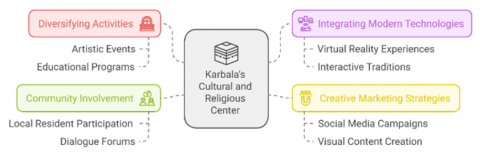
In light of the findings of this study, a set of pivotal recommendations emerge that aim to sustainably preserve the urban heritage and enhance the cultural identity of Karbala. The delicate balancing act between preserving traditions and openness to modernity requires a comprehensive approach that integrates religious, social and technological considerations within a framework that preserves the authenticity of holy sites and their symbolic status. The most prominent of these recommendations are:
Figure 14. Karbala’s cultural and religious
In the long term, the adoption of advanced technologies such as intelligence artificial, learning automatic and media immersive could offer experiences personalized and in-depth studies on the historical and spiritual significance of Karbala. However, these advances will have to be guided by policies ensuring a balance between increasing tourism and protecting authenticity cultural. For example, the study of events majors like the pilgrimage from Arbain could provide information on how these gatherings strengthen social ties, transmit knowledge cultural and influence identity Karbala evolution.
For those who cannot visit in person, platforms virtual could offer meaningful alternatives, fostering connections global with the traditions of Karbala. Efforts to document and digitize the rituals, oral histories, architecture and artifacts of Karbala can preserve its heritage for future generations, whatever their location geographic. Involve local communities in urban planning and preservation efforts cultural will ensure that developments reflect the aspirations and values of the people of Karbala.
As the media global and digital tourism win in influence, it will be increasingly important to study how these forces interact with religious practices and identity. Karbala Cultural Center. Well-designed policies can serve as a model for managing large religious gatherings while honoring tradition and remaining accessible to visitors international. Ultimately, integrating the advances technologies with a focus on sustainable wealth management can maintain the essence cultural and spiritual life of Karbala alive. By promoting collaboration between local authorities, residents and organizations international, the city will be able to meet the challenges linked to the preservation of its heritage in a changing world fast evolution. With strategies innovative, respectful management and an objective common, Karbala will continue to inspire and resonate on a global scale world.
[1] Chalmers, A., Mudge, M., Santos, L.P. (2012). Computers & graphics journal special section on cultural heritage. Computers & Graphics, 36(1): 4. https://doi.org/10.1016/j.cag.2011.11.006
[2] Abdelmonem, M.G., Farhan, S.L., Nasar, Z.A. (2018). The urban transformation of traditional city centres: Holy Karbala as a case study. ArchNet-IJAR: International Journal of Architectural Research, 12(3): 53-67. https://doi.org/10.26687/archnet-ijar.v12i3.1625
[3] Parkes, A. (2021). The Ashura assemblage: Karbala’s religious urban fabric and reproduction of collective Shiʿi identity. Religions, 12(10): 904. https://doi.org/10.3390/rel12100904
[4] Singh, P., Pahuja, N., Kansal, M., Gurung, S., Shukla, U., Gupta, S. (2024). Enhancing tourism experiences and preserving cultural heritage with AR and VR. In 2024 2nd International Conference on Disruptive Technologies (ICDT), Greater Noida, India, pp. 225-231. https://doi.org/10.1109/ICDT61202.2024.10489490
[5] Sultan, A.R., Al-Thahab, A.A. (2023). Maintaining identity of the built environments of religious cities: Impact of expansions at the Historic Karbala, Iraq. ISVS e-Journal, 10(8): 265-288. https://doi.org/10.61275/ISVSej-2023-10-08-19
[6] Khorsand, R., Alalhesabi, M., Kheyroddin, R. (2020). Redefining the concept of the 24-hour city and city nightlife for holy cities, with the use of Islamic instructions: A case study of the holy city of Karbala. In IOP Conference Series: Materials Science and Engineering, Kerbala, Iraq, p. 012116. https://doi.org/10.1088/1757-899X/671/1/012116
[7] Yin, J., Jia, M. (2024). Historical traceability, diverse development, and spatial construction of religious culture in Macau. Religions, 15(6): 656. https://doi.org/10.3390/rel15060656
[8] Tabar, P. (2002). 'Ashura in Sydney: A transformation of a religious ceremony in the context of a migrant society. Journal of Intercultural Studies, 23(3): 285-305. https://doi.org/10.1080/07256860216385
[9] Ghafourian, M., Hesari, E., PeySokhan, M. (2015). Recognition of the impacts of consecration culture on the social-physical frame of urban neighborhoods (Case study: Neighborhoods of district 12 of Tehran). Iran University of Science & Technology, 3(2): 114-130. https://consensus.app/papers/recognition-of-the-impacts-of-consecration-culture-on-the-ghafourian-hesari/c1ae1153a7735c6b892f64c6d3c5021b/.
[10] Sohi, K.K., Singh, P., Bopanna, K. (2018). Ritual participation, sense of community, and social well-being: A study of seva in the Sikh community. Journal of Religion and Health, 57: 2066-2078. https://doi.org/10.1007/s10943-017-0424-y
[11] Martinez, M. (2018). Urban performativity. An approach to urban spaces through performative events. Congress Proceedings, Escuela Politécnica Superior Alicante University, pp. 320-324. https://doi.org/10.14198/EURAU18alicante
[12] Khavarian, A.R., Zare, M., Mostofiolmamaleki Dr, R. (2014). The ceremony of Tasua and Ashura as a tourism attraction in Iran (Case study: Taft City). International Journal of Religious Tourism and Pilgrimage, 2(2): 8. https://doi.org/10.21427/D71Q61
[13] Zhao, G., Thienmongkol, R., Nimnoi, R. (2024). Cultural relics restoration technology in virtual reality: Application of 3D modeling and rendering algorithms in cultural relics digitization. International Journal of Religion, 5(10): 1701-1718. https://doi.org/10.61707/j205b632
[14] Salman, M.D., Alkinani, A.S. (2023). Preserving the past and building the future: A sustainable urban plan for Mosul, Iraq. ISVS e-Journal, 10(6): 332-350.
[15] Hwang, K., tom Dieck, M.C., Jung, T., Kwon, O. (2023). The influence of virtual reality on the experience of religious cultural heritage content. Internet Research, 34(4): 1198-1218. https://doi.org/10.1108/INTR-08-2022-0669
[16] Zandi, S. (2023). Revival of the Silk Road using the applications of AR/VR and its role on cultural tourism. arXiv preprint arXiv:2304.10545. https://doi.org/10.48550/arXiv.2304.10545
[17] Hassan, H.M.M., Alkinani, A.S. (2022). The possibility of implementing smart mobility in the traditional city: Studying the possibility of establishing an intelligent transportation system in the city center of Kadhimiya. In AIP Conference Proceedings, Athens, Greece, p. 020185. https://doi.org/10.1063/5.0093101
[18] Farhan, S.L., Alshamari, H.A. (2021). The threshold of urban sustainability within the traditional cities: Traditional Alnajaf City as a case study. In IOP Conference Series: Materials Science and Engineering, Erbil, Iraq, p. 012055. https://doi.org/10.1088/1757-899X/1058/1/012055
[19] Haydar, M., Roussel, D., Maïdi, M., Otmane, S., Mallem, M. (2011). Virtual and augmented reality for cultural computing and heritage: A case study of virtual exploration of underwater archaeological sites (preprint). Virtual Reality, 15: 311-327. https://doi.org/10.1007/s10055-010-0176-4
[20] Aziz, K.A., Siang, T.G. (2014). Virtual reality and augmented reality combination as a holistic application for heritage preservation in the Unesco World Heritage Site of Melaka. International Journal of Social Science and Humanity, 4(5): 333-338. https://doi.org/10.7763/IJSSH.2014.V4.374
[21] Farhan, S.L., Alyasari, H.I., Samir, H.H., Zubaidi, S.L., Hashim, K.S. (2021). Conservation approach as an architectural instrument to reviving historical cities; technical analysis for multi international cases. In IOP Conference Series: Materials Science and Engineering, Erbil, Iraq, p. 012071. https://doi.org/10.1088/1757-899X/1058/1/012071
[22] Vlizos, S., Kotsopoulos, K., Christodoulou, D. (2024). Enhancing cultural sustainability: Making rescue excavations accessible through educational applications and virtual reality. Sustainability, 16(4): 1439. https://doi.org/10.3390/su16041439
[23] Abdulredha, M., Abdulridha, A., Shubbar, A.A., Alkhaddar, R., Kot, P., Jordan, D. (2020). Estimating municipal solid waste generation from service processions during the Ashura religious event. In IOP Conference Series: Materials Science and Engineering, Kerbala, Iraq, p. 012075. https://doi.org/10.1088/1757-899X/671/1/012075
[24] Tewari, S., Khan, S., Hopkins, N., Srinivasan, N., Reicher, S. (2012). Participation in mass gatherings can benefit well-being: Longitudinal and control data from a North Indian Hindu pilgrimage event. PLoS ONE, 7(10): e47291. https://doi.org/10.1371/journal.pone.0047291
[25] Elkin, C., Rattan, S., Devy, S., Thyagarajan, G. (2018). Managing religious pilgrimage to sacred sites in Indian protected areas. In Cultural and Spiritual Significance of Nature in Protected Areas, London, pp. 208-221. https://doi.org/10.4324/9781315108186-14