Umaporn Muneenam* | Pongbaworn Suwannattachote
© 2025 The authors. This article is published by IIETA and is licensed under the CC BY 4.0 license (http://creativecommons.org/licenses/by/4.0/).
OPEN ACCESS
Plastics, microplastics, and prohibited chemical ingredients in sunscreen are issues of concern in marine pollution, because they can affect marine ecology as well as human health. This research addresses three objectives: 1) studying Thai tourists’ behavior in context of environmentally marine friendly products; 2) developing and producing communications to raise environmental awareness via TikTok campaign; and 3) studying the effectiveness and satisfaction with the environmental communications broadcast via TikTok. Secondary data review, self-administered questionnaires, camera, computer program, TikTok application, knowledge test, as well as satisfaction survey are elements in this study. Documentary, survey, actions, and quasi-experimental research are methods of this study. Survey results and satisfaction level with the TikTok VDO clips were analyzed with descriptive analysis, and a t-test was used to compare knowledge levels of control and treatment audiences. Results showed that Thai marine tourists (n = 384) use plastic packages and other plastic products, and tend to discard such wastes into trash bins. Furthermore, about one third of Thai marine tourists denied using sunscreen with the three prohibited chemicals Butylparaben, 4-Methylbenzylid Camphor (4MBC), or Octinoxate; however, almost half of them were unsure about whether they do use these. Three TikTok VDO clips were produced and triangulated with various documents, as well as evaluated by three experts, before knowledge testing with 30 control and 30 treatment participants, and it was found that there were significant differences at .01 and .05 levels. Besides, the three experts and the 30 treatment participants were satisfied contending that the VDO clips are useful information promoting marine friendly products (4.67 and 4.77 scores on a scale from 1 to 5). Consequently, the three TikTok VDO clips produced in this study are effective and can be broadcast to audiences in the natural setting.
consumption, environmentally friendly products, marine tourism, marine waste pollution prevention campaign, Thailand, Thai tourists, TikTok
Oceans around the world account for 70% of the globe and accommodate live food sources such as fish providing protein to the human population, and the oceans also serve recreation and shipping. Currently, the marine environment is at risk from natural disasters such as earthquakes and volcano eruptions, as well as from man-made causes such as emission of wastes [1, 2].
Marine waste pollution − one of the contemporary environmental issues − means “any persistent, manufactured or processed solid material discarded, disposed or abandoned in the marine and coastal environment” [3]. Various types of marine waste pollution are, for example, plastic and microplastic wastes, as well as chemicals from sunscreen that can impact marine ecology. Marine waste can impact ocean creatures that eat plastics along with their natural food, and the plastics can impact their digestion and potentially cause death; very long lasting plastics may also impact other ocean creatures [2, 4, 5]. Besides, microbeads are microplastics in the size range from one nanometer to five millimeters, and are occasionally used as ingredients in cosmetics such as facial foam, body scrub, and toothpaste [6]. They can spread to the marine environment from community waterways, while their tiny size makes them very difficult to manage. When microbeads spread into a warm ocean and are exposed to UV radiation, they will be broken down to even smaller sizes able to invade the cells of live creatures along the food chain. Marine waste pollution can also emit air pollution, spread by the winds to be potentially inhaled [7]. In addition, prohibited chemicals used in sunscreens may impact coral reef growth and development, causing coral bleaching, reducing fish reproduction, and causing mutations in fish. Voluntary practice in Florida and North Carolina in the United States, as well as in Virgin islands, Hawaii in the United States, and Palau Islands (in Pacific ocean, in the middle between Japan and Australia), have prohibited the following four chemicals from sunscreens: Oxybenzone (Benzophenone-3; BP-3), Octinoxate (Ethylhexyl methoxycinnamate), 4-Mehtylebenzylid (4MBC), and Butylparaben [8-10].
According to the recent 2023 report from the Department of Pollution Control [11], Thailand, plastic marine waste mainly consists of single-use plastics such as plastic bags, containers, packages for hot and cold food, straws, and lids. Marine wastes are entering largely from upstream in the mainland through the waterways, but are also carried by winds [12]. Tourism, transportation as well as fishing activities are also local causes of marine waste problems [4, 11].
Although Thailand’s government has tried hard to campaign for reducing marine waste pollution, by marine waste recycling, reducing the consumption of single-use plastics, giving alternative environmentally friendly products, and attempting to apply the ISO14001 in one of the marine national parks [13, 14] the problem has still not completely vanished.
Presently, a variety of environmentally friendly products is in the market. The definitions of these are also varied, but the main concept can be summarized as the kind of product that produces the least pollution to the environment – employing or enabling reduction, reuse, and recycling − when compared to competing products in the market [15, 16].
Environmental awareness communications are a strategy to help people make right decisions, to involve them in solving issues, and to sustain development [17]. TikTok is a free application from the People’s Republic of China or mainland China, established since 2012 to broadcast short VDOs. Its influence is ranked high in more than 150 countries around the world, including Thailand. The consumers are mostly from 15 to 45 years old, in the range of Generations Y and Z [18-20].
This study first executed a behavioral survey of Thai marine tourists as regards environmentally marine friendly products; second, it developed and produced environmental awareness communications on environmentally marine friendly products for a campaign via TikTok, broadcast especially to Thai marine tourists; and lastly, it studied the effectiveness and satisfaction with the environmental awareness communications broadcast via TikTok.
2.1 Marine national parks in Thailand
There is a variety of marine tourism areas in Thailand; however, Figure 1 and Table 1 present the ones that are designated marine national parks, with seven of these by the Gulf of Thailand (Eastern and Southeastern Thailand), and 16 by the Andaman Ocean [21].
Table 1. Designated marine national parks in Thailand
|
No. |
Region |
Name of Marine National Park |
Province |
Examples of Marine Tourism Areas |
Announcement Date |
|
1 |
Gulf of Thailand |
Mu Ko Chang NP |
Trat |
Chang island |
31 Dec 1982 |
|
2 |
Khao Laem Ya-Mu Ko Samet NP |
Rayong |
Samet island |
1 Oct 1981 |
|
|
3 |
Khao Sam Roi Yot NP |
Prachuap Khiri Khan |
Khao Sam Roi Yot |
28 June 1966 |
|
|
4 |
Hatwanakorn NP |
Prachuap Khiri Khan |
Wanakorn beach |
30 Dec 1992 |
|
|
5 |
Mu Ko Chumphon NP |
Chumphon |
Ngam Yai island Ngam Noi island |
24 Feb 1999 |
|
|
6 |
Mu Ko Ang Thong NP |
Surat Thani |
Mu Ko Ang Thong |
12 Nov 1980 |
|
|
7 |
Than Sadet-Ko Pha-Ngan NP |
Surat Thani |
Pha-ngan island |
22 Nov 2018 |
|
|
8 |
Andaman Ocean |
Lamnam Kra Buri NP |
Ranong |
Kraburi river |
21 April 1999 |
|
9 |
Mu Ko Ranong NP |
Ranong |
Payam island |
23 Dec 2009 |
|
|
10 |
Laem Son NP |
Ranong & Phang-nga |
Laemson beach |
19 Aug 1983 |
|
|
11 |
Mu Ko Surin NP |
Phang-nga |
Surin island |
9 July 1981 |
|
|
12 |
Mu Ko Similan NP |
Phang-nga |
Similan island Ta Chai island |
1 Sept 1982 |
|
|
13 |
Khao Lak- Lam Ru NP |
Phang-nga |
Khao Lak |
30 Aug 1991 |
|
|
14 |
Khao Lampi- Hat Thai Mueang NP |
Phang-nga |
Thai Mueang beach |
14 April 1986 |
|
|
15 |
Ao Phang-nga NP |
Phang-nga |
Lah Wah Yai island |
29 April 1981 |
|
|
16 |
Sirinat NP |
Phuket |
Mai Khaw beach |
13 July 1981 |
|
|
17 |
Than Bok Khorani |
Krabi |
Hong island |
30 Sept 1998 |
|
|
18 |
Hat Noppharat Thara- Mu Ko Phi Phi |
Krabi |
Noppharat Thara beach Phi Phi island Por Dah island |
6 Oct 1983 |
|
|
19 |
Mu Ko Lanta |
Krabi |
Lanta Noi island Lanta Yai island Nhgai island |
15 Aug 1990 |
|
|
20 |
Hat Chao Mai NP |
Trang |
Chao Mai beach Pakmeng beach Mook island |
14 Oct 1981 |
|
|
21 |
Mu Ko Phetra NP |
Trang & Satun |
North Lhao Lhiang island South Lhao Lhiang island |
31 Dec 1984 |
|
|
22 |
Tarutao NP |
Satun |
Lhi Peh island |
19 April 1974 |
|
|
23 |
Thaleban NP |
Satun |
Thaleban |
27 Oct 1980 |
Source: Summarized from [21]
Figure 1. 23 Marine National Parks in Thailand
Note: This figure was produced purposely for only this research article
Source: [22]
This study had three objectives, each using different research materials and methods, summarized in Table 2. Furthermore, this study has been approved with human ethics research certification by the PSU Human Research Ethics Committee, Prince of Songkla University, since the 4th of July 2024 (PSU-HREC-2024-003-1-1). This led to the personal data collection gathering only the necessary information needed for research analysis. Besides, the “first come, first serve policy” was used for participants’ inclusion and exclusion criteria in this study; in addition, each participant participated in only one objective. Only willing participants contributed in this study based on informed consent, and when not inconvenienced by the demands on their time. Double blind inclusion criteria were used to recruit participants in objective three to reduce the bias [23].
With the smallest budget while still guaranteed to provide an effective test of the study’s intervention, a quasi-experiment with static group comparison design was used in the study on education via TikTok VDO broadcasting [24].
Table 2. Research methods by research objectives
|
Research Objective |
Research Method |
Sampling Technique |
Targeted Participants |
Research Materials |
Data Analysis |
|
To survey the behavior of Thai marine tourists as regards environmentally marine friendly products |
Survey |
Purposive and available sampling |
384 Thai marine tourists (ages from 20 to 60 years) sampled from the Thai population in age range between 20 and 60 years which is approximately 39 million people in November 2023 [25] with 95% confidence level and a ±5 confidence interval |
Self-administered questionnaires |
Descriptive analysis such as frequencies, percentages, and crosstabulation |
|
To develop and produce the environmental awareness communications for a campaign via TikTok application, broadcast especially to Thai marine tourists for promoting environmentally marine friendly products |
Secondary data and action research |
Purposive sampling |
Relevant document useful to prepare, develop, and produce VDO clips via TikTok application |
Camera and computer program to revise, edit, adjust, and finally compose the VDO clips for TikTok application |
Evaluated by three experts in environment, mass media communication, and eco-tourism fields, before broadcasting to the 30 treatment group participants |
|
To study the effectiveness and satisfaction with environmental awareness communications broadcast via TikTok |
Quasi-experimental research: Static group comparison design |
Purposive and available sampling |
30 participants in control group, and 30 participants in treatment group (ages from 20 to 60 years) from the acceptable sample size from Worrakijkasemsakun’s suggestion [26] |
Posttest, and satisfaction form |
Descriptive analysis such as frequencies and percentages, and t-test (Independent-samples T-test and Cohen’s d) |
Source: The authors’ elaboration
This section explains research results, and discusses the research objectives.
4.1 Objective one
To survey the behavior of 384 Thai marine tourists (age range from 20 to 60 years) as regards environmentally marine friendly products.
4.1.1 Demographic information
Table 3 presents demographic information of the 384 Thai marine tourist sample by gender, age, location of origin, and occupation.
Table 3. Demographic information of Thai marine tourists (n = 384)
|
Demographic Information |
Frequency |
Percentage |
Valid Percent/Cumulative Percent |
|
Gender |
|
|
|
|
Female |
231 |
60.15 |
62.43 |
|
Male |
139 |
36.20 |
37.57 |
|
Not indicated |
14 |
3.65 |
|
|
SUM |
384 |
100.00 |
100.00 |
|
Age |
|
|
|
|
20-30 |
151 |
39.32 |
39.32 |
|
31-40 |
112 |
29.17 |
68.48 |
|
41-50 |
79 |
20.57 |
89.06 |
|
51-60 |
42 |
10.94 |
100.00 |
|
SUM |
384 |
100.00 |
|
|
Representative of which region in Thailand |
|
|
|
|
South |
263 |
68.49 |
69.21 |
|
Central |
69 |
17.97 |
18.16 |
|
West |
16 |
4.17 |
4.21 |
|
North |
11 |
2.86 |
2.89 |
|
Northeastern |
11 |
2.86 |
2.89 |
|
East |
10 |
2.60 |
2.64 |
|
Not indicated |
4 |
1.04 |
|
|
SUM |
384 |
100.00 |
100.00 |
|
Occupation |
|
|
|
|
Private employee |
120 |
31.25 |
31.25 |
|
Government officer (with pension) |
63 |
16.41 |
47.66 |
|
Owner |
52 |
13.54 |
61.20 |
|
Farmer |
39 |
10.16 |
71.36 |
|
Student |
38 |
9.90 |
81.26 |
|
Others |
33 |
8.59 |
89.85 |
|
Government employee (with Social Security Fund) |
26 |
6.77 |
96.62 |
|
Retired |
7 |
1.82 |
98.44 |
|
Private enterprise officer |
6 |
1.56 |
100.00 |
|
SUM |
384 |
100.00 |
|
Source: The authors’ elaboration
4.1.2 Behavior of Thai marine tourists
Table 4 presents behaviors of Thai marine tourists in terms of place of marine tourism, boundary of marine tourism, and duration of marine tourism.
Table 4 also indicates that about a quarter of the respondents (24.74%) were uncertain about whether the marine tourism area belongs to a marine national park, such as Pakmeng and Mook islands being situated within the Hat Chao Mai national park, Trang province; or Chang island situated within the Mu Ko Chang national park, Trat province (see Table 1).
However, there is the risk that their behaviors might harm the marine environment, for example by unintentionally using sunscreen with prohibited chemicals. This study seeks to raise marine tourists’ environmental awareness via TikTok VDO communications that could be applied everywhere, not limited to only the prohibition areas in the marine national parks.
Table 4. Behaviors of Thai marine tourists (n = 384)
|
Demographic Information |
Frequency |
Percentage |
Valid Percent |
|
Place of marine tourism |
|
|
|
|
Gulf of Thailand |
210 |
54.69 |
55.70 |
|
Andaman ocean |
167 |
43.49 |
44.30 |
|
Not indicated |
7 |
1.82 |
|
|
SUM |
384 |
100.00 |
100.00 |
|
Boundary of marine tourism |
|
|
|
|
Inside the marine national park |
180 |
46.88 |
50.42 |
|
Outside the marine national park |
82 |
21.35 |
22.97 |
|
Not sure |
95 |
24.74 |
26.61 |
|
Not indicated |
27 |
7.03 |
|
|
SUM |
384 |
100.00 |
100.00 |
|
Duration of marine tourism |
|
|
|
|
One to two days |
240 |
62.50 |
64.34 |
|
Three to five days |
125 |
32.55 |
33.51 |
|
More than five days |
8 |
2.08 |
2.15 |
|
Not indicated |
11 |
2.87 |
|
|
SUM |
384 |
100.00 |
100.00 |
Source: The authors’ elaboration
4.1.3 Behavior as regards environmentally friendly products
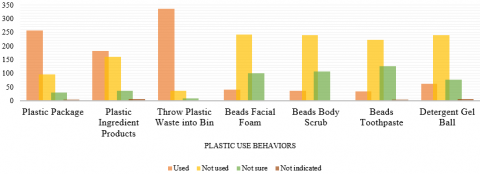
Figure 2 presents both positive and negative behaviors of the Thai marine tourists in seven issues relevant to environmentally friendly products. The results indicate that over half of Thai marine tourists, at about similar percentages, stated they were not using microbead-containing facial foam (63.02%), body scrub (62.50%), toothpaste (58.07%), or detergent gel balls (62.50%). However, about one third of them were uncertain about whether they are using these (26.04; 27.86; 32.55; and 19.79, in the same order). Undeniably, they still use plastic packages (66.67%), as well as plastic ingredient products such as facial masks and T-shirts (47.14%). However, the result show positive behavior in that most of the tourists discarded plastic wastes into trash bins (87.76%).
Figure 2. Behaviors of marine tourists in using environmentally friendly products (n = 384)
Source: The authors’ elaboration
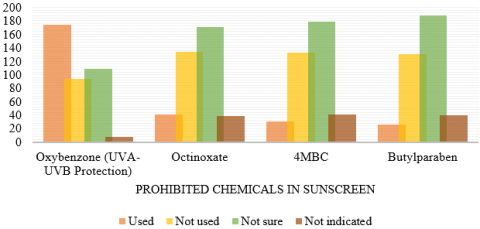
Figure 3. Behaviors of tourists in using sunscreens with four banned chemicals (n = 384)
Source: The authors’ elaboration
Figure 3 presents the behaviors of Thai marine tourists in using sunscreens containing the four banned chemicals, and found that they were unsure of using Butylparaben (48.96%), 4-Methylbenzylid Camphor (4MBC) (46.61%), Octinoxate (44.53%), or Oxybenzone (UVA and UVB protection) (28.39%).
However, undeniably a large fraction of the respondents (45.31%) replied that they were using sunscreen containing Oxybenzone. Sunscreens with the four prohibited chemicals are not allowed especially in the marine national parks of Thailand since 3rd of August 2021, which was during the COVID-19 spread [27], but this doesn’t mean that marine tourists can’t use sunscreens with the prohibited chemicals outside the marine national parks, on shore, and such sunscreen can be imported from outside since there is no nationwide ban on them. This is concordant to the statement mentioned about inefficient enforcement of the sunscreens prohibited in Thailand, although Thailand as well as many countries around the world have been ratified as parties to the United Nations Convention on the Law and the Sea or UNCLOS (1982) and the Convention on Biological Diversity or CBD (1992) to protect marine environment [10]. Besides, too much control restricting the prohibited chemicals in sunscreen − such as ban on importing, producing, or selling − will intrude on other personal rights, especially at strong UV radiation areas, as well as for those who have sensitive skin that might contract cancer.
4.1.4 Behavior in social media consumption
Figure 4 presents behaviors of Thai marine tourists in using social media, split by the different generations, and it is found that respondents from Generation Z (age from 20 to 23 years) consume TikTok media the most (85.11%), followed by 73.47 percent for Generation Y (age from 24 to 43 years) and 63.47 percent for Generation X (age from 44 to 60 years). However, Facebook is still a popular social media for Generations Y (91.46%), X (90.11%), and Z (82.98%) in the Thai society.
Similar to the results from Saaipin [28]; Xian [29]; and Zhou et al. [30]; Generation Z, the first generation that was born and grew up in the digital era, is the most devoted as TikTok users, on comparing to the other age groups. Besides, the data also confirm that social media such as TikTok, Facebook, and others, nowadays highly influence the society, especially after COVID-19, this being an emerging media consumption pattern [31]. This also leads to our decision to produce TikTok VDO clips of environmentally marine friendly products in objective two.
Figure 4. Behaviors of Thai marine tourists in social media consumption (n = 384)
Source: The authors’ elaboration
4.2 Objective two
To develop and produce the environmental awareness communications for a campaign broadcast via TikTok especially to Thai marine tourists, promoting environmentally marine friendly products.
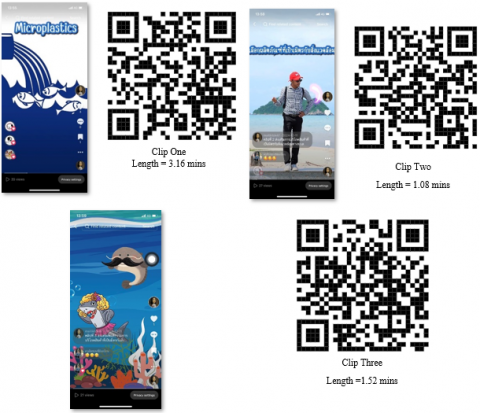
Three TikTok VDO clips were designed based on prior literature on microplastics and the impacts to environment from sunscreen chemicals (see Figure 5). These were 1) microplastics and their impacts (3.16 mins); 2) alternative marine friendly products (1.08 mins); and 3) prohibition of sunscreens using four banned chemicals in Marine National Parks of Thailand (1.52 mins).
Figure 5. The three TikTok VDO clips produced
Source: The authors’ elaboration
The TikTok VDO production used a variety of techniques to compose the VDOs, such as information shared by a scientific expert (Clip One), experiences of a licensed tour guide (Clips Two and Three) as the main actor, VDO recording at real site and background e.g. a littered beach, inserting free pictures, graphics and cartoons from the internet, overlaying text where appropriate, and providing supporting information from relevant reliable documents and international research results. Real voices with official Thai language were used in Clips One and Three, as well as auto English voice speaker in Clip Three stating the four prohibited chemicals in sunscreens (Butylparaben, 4-Methylbenzylid Camphor (4MBC), Octinoxate, and Oxybenzone), while there was no speaker but instead a contemporary song downloaded from TikTok in Clip Two.
Although there is a general suggestion that TikTok VDO should be about 15 to 60 seconds long [32], these TikTok VDOs had similar durations as those that Nguyen and Diederich [33] have been producing for science communication on astronomy, life science, physics, chemistry, and Earth science.
After that, the satisfaction survey form for use with the treatment group (n = 30), with scoring from lowest = 1 to highest = 5 on 18 issues, and with one open-ended issue, was filled by the three experts from environment, mass media communication, and eco-tourism fields.
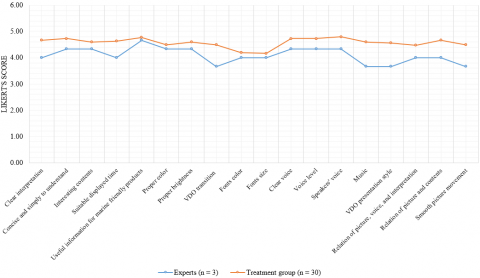
The results revealed a total average opinion that was high (mean = 4.09), while the opinion that the clips were useful for marine friendly products was the highest (mean = 4.67), but the lowest scorings were for VDO transition, music, VDO presentation style, and smooth picture movement (mean = 3.67) (see Figure 6).
The experts further mentioned that the clip with a dance is suitable for TikTok audiences (Clip Two), and the clips were simply presented for ease of understanding by lay audiences, but each VDO clip should clearly mention the targeted age range in the main target audience, as well as have Thai and English soundtracks of strictly equal content. These opinions will help improve the clips in the next revision of them.
Figure 6. Satisfaction with TikTok clips when evaluated by experts and the treatment group
Source: The authors’ elaboration
4.3 Objective three
To study the effectiveness and satisfaction of environmental awareness communications broadcast via TikTok.
4.3.1 Knowledge tests comparison
Tables 5 and 6 present the comparative results between control (n = 30) and treatment (n = 30) groups in knowledge tests with 10 questions. The control group did not watch the TikTok VDO clips produced for this study, while the treatment group watched them.
Table 5. The ten questions asked in the knowledge test (n = 60)
|
No. |
Question |
Number of Correct Answers by Participants |
|
|
Control (n = 30) |
Treatment (n = 30) |
||
|
1 |
What is marine waste? |
21 |
28 |
|
2 |
What is the largest component of marine waste? |
29 |
30 |
|
3 |
What is the visible impact of marine plastic waste? |
11 |
25 |
|
4 |
What is microplastics’ impact on environment? |
15 |
25 |
|
5 |
Which plastic products should be avoided? |
5 |
13 |
|
6 |
What is inappropriate for a marine tourist? |
1 |
7 |
|
7 |
What is not ‘microplastics’? |
9 |
19 |
|
8 |
What are the characteristics of microplastics? |
24 |
21 |
|
9 |
What chemicals in sunscreen should be avoided? |
11 |
27 |
|
10 |
What will happen if using sunscreen with prohibited chemicals in a marine national park of Thailand? |
5 |
12 |
Source: The authors’ elaboration
Table 6. Effectiveness of TikTok VDO clips: Knowledge comparison (n = 60)
|
Participant Group |
n |
Mean |
S.D. |
t |
p |
|
Control |
30 |
4.37 |
1.63 |
*5.91 |
0.00 |
|
Treatment (watched the TikTok VDO clips) |
30 |
6.9 |
1.69 |
Source: The authors’ elaboration
The results show that the knowledge test results of these two groups were significantly different, so that the TikTok VDO clips were effective in providing knowledge and significantly increased (at the .01 and .05 p-thresholds) score levels with the Cohen’s d effect size at 1.52, which means that these TikTok VDOs help audiences to increase knowledge with a large effect [34].
Our results are similar to the results in Arnot et al. [35] and İlkay Unay-Gailhard et al. [36] in that using TikTok for environmental awareness communications increases learning, and finally can change behaviors of the participants.
However, having awareness and knowledge may not be enough to change behaviors due to subjective norms and perceived behavioural controls, two further components affecting changes in behavior, as mentioned in the “theory of planned behaviour” [37, 38].
4.3.2 Satisfaction
The results showed that most of the treatment group rated satisfaction similarly as the three experts, on the 18 issues (one to five scores on Likert scale), also similar to the previous study by Muneenam and Suwannattachote [39] in VDO production.
In general, the treatment group was satisfied (mean = 4.58) with the three TikTok VDOs produced, slightly more so than the three experts (mean = 4.09) over the 18 issues (see Figure 6). The top three highest ratings were for speakers’ voices (mean = 4.80), useful information on marine friendly products (mean = 4.77), and conciseness and ease of understanding, as well as clear voice and voice level (mean = 4.73) at the same ranking. However, the tree issues with the poorest ratings were fonts size (mean = 4.17), font color (mean = 4.20), and relation of picture, voice and interpretation (mean = 4.47).
This study observed Thai marine tourists’ behaviors as regards environmentally marine friendly products, and found that undeniably the tourists still use plastic products as in their usual lifestyle, such as plastic packages and T-shirts; and facial masks that were heavily used during COVID-19 or to protect from air pollution such as PM2.5, and they are still commonly used after COVID-19 though somewhat less. However, almost all the respondents replied that they threw wastes into trash bin. Noticeably, plastic wastes are still polluting the marine environment, carried in by winds and waterways.
It is good that half of the Thai marine tourists did not favor products containing microplastic beads, such as this type of facial foam, body scrub, toothpaste, or detergent gel ball. However, one third of them were uncertain about whether they are using these products. In addition, most of the Thai marine tourists answered that they were not sure whether they are using three from the four prohibited chemicals in a sunscreen, especially banned at marine national parks in Thailand, these being Butylparaben, 4-Methylbenzylid Camphor (4MBC), and Octinoxate.
This study then produced three VDO clips for the TikTok platform, on microplastics and their impacts; on alternative marine friendly products; and on prohibition of four chemicals in sunscreens in the Marine National Parks of Thailand. TikTok is highly popular in many countries around the world, including Thailand, and the clips mainly targeted Thai audience to increase awareness, knowledge, and best practices regarding environmentally marine friendly products, to reduce negative impacts on the marine environment. The results of this study also revealed that among the Thai marine tourist respondents, TikTok had the highest penetration of social media platforms among Generation Z, while Facebook was dominant in Generations Y and X. However, these VDO clips for TikTok platform can be similarly posted on Facebook for sharing. Additionally, stratified comparison study of TikTok or Facebook behavioral responses of among two to three generations could re-assess strength of these results.
Before the three TikTok VDO clips were broadcast to the treatment group, they were evaluated by three experts in environment, mass media communication, and eco-tourism fields. After that their effectiveness was measured in knowledge tests for 30 treatment participants and 30 control participants, and significant differences were found at .01 and .05 p-levels, which means that the three TikTok VDO clips were able to raise awareness, increase knowledge, and hopefully change behaviors. Concordant to the satisfaction ranking by the three experts, also the 30 treatment participants rated that the three VDO clips as being useful information for marine friendly products (4.67 and 4.77 respectively, on Likert scale from one to five).
Regarding the limitations of this research study, the current study focused only on Thai marine tourists, while a future study could survey foreign marine tourists in Thai marine tourism context. Furthermore, the effects and effectiveness of TikTok VDO braodcasting in a natural setting, with some location focused advertising of these resources to get the attention of relevant audience − such as in-flight entertainment, or advertisement at the arrival entrance of airport, should be inspected.
The authors wish to thank the National Science, Research and Innovation Fund (NSRF) and the Prince of Songkla University (Grant No.: ENV6701050S) for research funding in the fiscal year 2024, all representative participants, anonymous reviewers for their thoughtful suggestions and comments, statistics consultation performed by Asst. Prof. Dr. Noodchanath Kongchouy, Prince of Songkla University, and the proofreading service performed by Assoc. Prof. Dr. Seppo Karrila, Prince of Songkla University.
[1] Jitsumpun, P., Muneenam, U. (2021). Can tour guides protect the marine and coastal environment from mass tourism impacts: Situation of Andaman Ocean, Thailand, pre-COVID-19. Geojournal of Tourism and Geosites, 39(4spl): 1325-1330. https://doi.org/10.30892/gtg.394spl01-774
[2] Sawangwong, P. (2005). สิ่งแวดล้อมทางทะเล [Marine environment]. Indo-China Journal, 5-6: 6-13.
[3] UNEP. (2009). Marine litter: A global challenge. UNEP, Nairobi.
[4] Choosuk, C., Khunnikom, P., Boonsom, T., Khunwishit, S., Ruthirako, P., Thitinanthakorn, J. (2024). Local perspectives on community-driven marine debris management for sustainable tourism in the Andaman Islands, Thailand. Geojournal of Tourism and Geosites, 55(3): 1156-1163. https://doi.org/10.30892/gtg.55316-1288
[5] Sari, M.M., Inoue, T., Harryes, R.K., Suryawan, I.W.K., Yokota, K., Notodarmojo, S., Priyambada, I.B. (2021). Potential of recycle marine debris in pluit emplacement, Jakarta to achieve sustainable reduction of marine waste generation. International Journal of Sustainable Development and Planning, 17(1): 119-125. https://doi.org/10.18280/ijsdp.170111
[6] Borriello, A., Massey, G., Rose, J.M. (2022). Extending the theory of planned behaviour to investigate the issue of microplastics in the marine environment. Marine Pollution Bulletin, 179: 113689. https://doi.org/10.1016/j.marpolbul.2022.113689
[7] Champar-ngam, N. (2020). Micro plastics: Problems in water source ecosystems. EAU Heritage Journal Science and Technology, 14(2): 25-39.
[8] One&All. (2021). How does the sunscreen protection impacts coral reef? Why many countries prohibiting it? https://oneandallthailand.com/reef-safe-sunscreen/, accessed on Feb. 10, 2025.
[9] Akerlof, K.L. (2023). Promoting environmentally friendly sun-protection behaviors among coastal state residents. Environmental Science & Policy, 142(2023): 121-130. https://doi.org/10.1016/j.envsci.2023.02.007
[10] Tanasupatawat, T. (2023). Management problem of sunscreen impact on Thailand's marine environment. Master dissertation. Department of Natural Resources and Environmental Law, Thammasat University, Bangkok, Thailand.
[11] Department of Pollution Control. (2023). Thailand State of Pollution Report 2023. https://www.pcd.go.th/ebook/book18/PCD%202024.html, accessed on Feb. 10, 2025.
[12] Sivadas, S.K., Mishra, P., Kaviarasan, T., Sambandam, M., Dhineka, K., Murthy, M.V., Nayak, R., Sivyer, D., Hoehn D. (2022). Litter and plastic monitoring in the Indian marine environment: A review of current research, policies, waste management, and a roadmap for multidisciplinary action. Marine Pollution Bulletin, 176: 113424. https://doi.org/10.1016/j.marpolbul.2022.113424
[13] Saengtong, K. (2009). Environmental performance indicator and ISO14001 acceptability for performance evaluation of Koh Chang marine national park. Master dissertation. Department of Technology of Environmental Management, Mahidol University, Nakhonpathom, Thailand.
[14] Saengthong, K., Aroonsrimorakot, S., Tantrakarnapa, K. (2010). Environmental performance indicators and ISO14001 acceptability for performance evaluation of Koh Chang marine national park. Paper presented at the 48th Kasetsart University Annual Conference, Bangkok, pp. 1-8.
[15] Chankrajang, S. (2020). Consumer's exposure, attitude and behavior responses towards communication-driven by algorithm and personal data of environmentally friendly products in Facebook. Master dissertation. Department of Communication Arts, Chulalongkorn University, Bangkok, Thailand.
[16] Ottman, J.A. (1993). Green Marketing: Challenges and Opportunities for the New Marketing Age. NTC Business Books, New York, USA.
[17] OECD. (1999). Environmental Communication: Applying Communication Tools Towards Sustainable Development. OECD Publications, Paris.
[18] Southwick, L., Guntuku, S.C., Klinger, E.V., Seltzer, E., McCalpin, H.J., Merchant, R.M. (2021). Characterizing COVID-19 content posted to TikTok: Public sentiment and response during the first phase of the COVID-19 pandemic. Journal of Adolescent Health, 69(2): 234-241. https://doi.org/10.1016/j.jadohealth.2021.05.010
[19] Tanyajaroen, P. (2021). Exposure behavior of attitude and decision to use the TikTok application. Master dissertation. Department of Communication Arts, Dhurakij Pundit University, Bangkok, Thailand.
[20] The Bureau of Registration Administration, Department of Provincial Administration. (2024). Population pyramid. https://www.boi.go.th/index.php?page=demographic, accessed on Feb. 19, 2025.
[21] Department of National Parks, Wildlife and Plant Conservation. (2025). Marine National Park. https://portal.dnp.go.th/Content/marine?contentId=21014, accessed on Feb. 17, 2025.
[22] GEO-Informatics Research Center for Natural Resource and Environment (Cartographer). (2025). Marine National Parks in Thailand [Map]. GEO-Informatics Research Center for Natural Resource and Environment (Cartographer), Prince of Songkla University, Hat Yai, Thailand.
[23] VIARES. (2024). Experimental group. https://viares.com/blog/clinical-research-explained/experimental-group/, accessed on Apr. 14, 2025.
[24] Choochom, O. (2009). Quasi-experimental research. Warasarn Phuettikammasat, 15(1): 1-15. http://bsris.swu.ac.th/journal/150952/file/1.pdf.
[25] Official Statistics Registration Systems. (2023). Thai population by age. https://stat.bora.dopa.go.th/stat/statnew/statMONTH/statmonth/#/displayData, accessed on Nov. 30, 2023.
[26] Worrakijkasemsakun, S. (2011). Chapter 11: Inference statistics. In Research Methodology in Behavioral Science and Social Science. CUPress, Bangkok, pp. 345-391.
[27] Ratchakitcha. (2021). Department of national parks wildlife and plant conservation: Do not bring and use the following dangerous chemical sunscreen. https://www.ratchakitcha.soc.go.th/DATA/PDF/2564/E/175/T_0001.PDF, accessed on Mar. 3, 2025.
[28] Saaipin, N. (2020). Phenomenon of visual culture on TikTok in Thai society. Sarn Sue Sin Journal, 3(5): 55-56.
[29] Xian, Y. (2020). A reflection of motivations and lifestyles via TikTok (Douyin) and Instagram story: A content analysis and comparative study of Thailand and Chinese Gen Z users. Master dissertation, Bangkok University in Communication Arts, Bangkok, Thailand.
[30] Zhou, Q., Sotiriadis, M., Shen, S. (2023). Using TikTok in tourism destination choice: A young Chinese tourists' perspective. Tourism Management Perspectives, 46: 101101. https://doi.org/10.1016/j.tmp.2023.101101
[31] Muneenam, U., Suwannattachote, P. (2024). Creative tourism in environmental issues in Thailand. International Journal of Sustainable Development and Planning, 19(5): 1805-1815. https://doi.org/10.18280/ijsdp.190518
[32] Thanee, M. (2020). Content and personal branding of TikTok application users in Tiktokuni campaign. Master dissertation. Faculty of Communication Arts, Chulalongkorn University, Bangkok, Thailand.
[33] Nguyen, H., Diederich, M. (2023). Facilitating knowledge construction in informal learning: A study of TikTok scientific, educational videos. Computers & Education, 205(2023): 104896. https://doi.org/10.1016/j.compedu.2023.104896
[34] Sukamonsant, S. (2010). Effect size: Practical research significant. Pasaa Paritat Journal, 25(2010): 26-38. https://so07.tci-thaijo.org/index.php/PasaaParitat/article/view/1078/781.
[35] Arnot, G., Pitt, H., McCarthy, S., Cordedda, C., Marko, S., Thomas, S.L. (2024). Australian youth perspectives on the role of social media in climate action. Australian and New Zealand Journal of Public Health, 48(1): 100111. https://doi.org/10.1016/j.anzjph.2023.100111
[36] Unay-Gailhard, İ., Lawson, K., Brennan, M.A. (2023). An examination of digital empathy: When farmers speak for the climate through TikTok. Journal of Rural Studies, 102: 103075. https://doi.org/10.1016/j.jrurstud.2023.103075
[37] Borriello, A., Massey, G., Rose, J.M. (2022). Extending the theory of planned behavior to investigate the issue of microplastics in the marine environment. Marine Pollution Bulletin, 179: 113689. https://doi.org/10.1016/j.marpolbul.2022.113689
[38] To-ngiw, E. (2022). Examining the relationship between environmental knowledge and consumers' green buying intentions. Master dissertation. Department of Commerce and Accountancy, Chulalongkorn University, Bangkok, Thailand.
[39] Muneenam, U., Suwannattachote, P. (2014). Local wisdom conservation through interpretation. In the 10th National and International Social Science Symposium "Social Innovation for Sustainable Development in ASEAN Community", Chiang Rai, pp. 95-105.