Josué Briones-Bitar | Brayan Pinto-Ponce | Jhon Caicedo-Potosí | Eduardo Santos-Baquerizo | Paúl Carrión-Mero | Fernando Morante-Carballo*
© 2025 The authors. This article is published by IIETA and is licensed under the CC BY 4.0 license (http://creativecommons.org/licenses/by/4.0/).
OPEN ACCESS
In recent decades, smart buildings have gained relevance in scientific research and architectural and engineering practices because of their potential to optimise energy consumption, improve infrastructural safety, and increase sustainability in urban environments. However, despite the exponential growth in scientific publications on this topic, studies that comprehensively analyse the trends, challenges, and emerging opportunities in this field based on a detailed bibliometric review are lacking. The aim of this study is to analyse the scientific evolution and trends in smart buildings through a bibliometric approach, identifying the main research areas, the most influential authors and institutions, and the most active collaborative networks. To conduct this research, a methodology based on bibliometric analysis of highly relevant scientific databases, such as Scopus and WoS, will be used. Data analysis was conducted using R-Studio and VOSViewer software. R-Studio allows the processing and merging of information, while VOSViewer facilitates network analysis, allowing the mapping of collaborations between authors and institutions. PRISMA methodology was also applied to select 43 publications focused on innovations, technologies, processes, and construction materials in developing countries. The results of this study include identifying patterns of scientific collaboration, the areas of the most significant growth in smart buildings, and the revelation of potential knowledge gaps that could represent opportunities for future research. The main lines of interest include project management, such as BIM, and sustainability through ecological materials and energy efficiency. This study contributes to an in-depth understanding of the dynamics of the bright building field, providing a roadmap for academics and innovators interested in advancing the field. By promoting urban resilience practices and the development of sustainable and innovative infrastructure, this research aligns with SDG 9 (Industry, Innovation and Infrastructure) and SDG 11 (Sustainable Cities and Communities).
sustainable buildings, building technology, building materials, bibliometric, sustainable infrastructure
In recent decades, rapid urban growth and the need to address challenges arising from climate change have driven the development of new solutions in architecture and engineering. Among these solutions, smart buildings have emerged as an innovative approach to optimise resource use, improve quality of life in urban environments, and contribute to global sustainability [1]. The world population has reached 8.16 billion inhabitants worldwide, according to United Nations estimates for 2024 [2, 3]; it is expected to reach 9.70 billion by 2050 [2], intensifying the demand for efficient and sustainable infrastructures [4]. These buildings not only respond to contemporary demands for energy efficiency [5] and infrastructural safety [6]. According to Sabando, green innovation in small and medium-sized enterprises transforms the construction sector, promoting more sustainable and climate change resilient buildings [7]. In addition, this transformation offers new opportunities for the development of cities that are more resilient and adaptable to the changing conditions of the modern world [8] (e.g., Internet of Things (IoT) and information and communication technologies (ICT)).
IoT refers to the interconnection of devices and systems through digital networks, enabling real-time data collection and analysis improving efficiency and automated decision making [9]. IoT is an important application in smart buildings, which are defined as infrastructures that integrate advanced technologies, such as automation, artificial intelligence, real-time monitoring systems [10]. In addition, they employ ICT models; it comprises intelligent models, digital tools and platforms to monitor and control the energy efficiency and performance of buildings [11], to optimise building performance in terms of energy consumption, comfort, safety [12], and sustainability. The key components of these buildings include automated energy management systems [13], sensors that detect changes in the environment [14], communication networks that enable the interconnection of devices [15], and advanced building materials that promote efficiency and resilience [16]. This approach transforms the design and operation of buildings and contributes to creating smart cities [17]. The concept of smart cities is related to buildings that enable better management of resources and help combat urban challenges, such as pollution, mobility [18], and resilience to climate change [19]. A relevant case is the Humberto Molina Astudillo Hospital in Zaruma, Ecuador, where mining activity and soil instability caused its technical closure; this case highlights the importance of geotechnical studies in developing safe and resilient infrastructures [20]. In addition, communities living in these cities benefit from safer, more efficient, and equitable environments that promote social cohesion and collective well-being [21]. In this way, both cities and their inhabitants experience an improved quality of life and environmental protection [22].
The concept of smart buildings has evolved since its earliest development in the 1980s, when it focused primarily on the automation of systems within buildings [23]. As technologies have advanced and environmental concerns have gained prominence, the approach has evolved towards a holistic view, including sustainability, energy efficiency [24] and integration with a wider urban environment [25]. This evolution has been accompanied by exponential growth in scientific research on the subject, which has generated a vast number of publications covering various areas of study, including energy efficiency [24], automation and control [26], environmental sustainability [27], user comfort and well-being [28], safety and risk management [29] and operational economy and efficiency [30]. Figure 1 shows the evolution of smart buildings over time.
Figure 1. Chronological diagram showing the evolution of smart buildings over time
In the context of the growing interest in smart buildings, a bibliometric analysis is essential to map this field's evolution and highlight the main trends, actors and collaboration networks. Therefore, the bibliometric review is a valuable tool for analyzing the volume and impact of scientific research, identifying knowledge gaps, and proposing new directions for the future [31]. This analysis allows us to perform systematic reviews defined in more active and emerging research areas and understand how researchers, institutions and countries collaborate to advance in this field.
A modern approach to smart buildings is to conduct a systematic review that includes a bibliometric analysis. This bibliometric analysis of clever constructs introduces a differentiated approach by integrating systematic methodologies for adoption in developing countries. This study incorporates an evolutionary process of smart buildings and a comparative evaluation of scientific collaboration patterns and the influence of regulations. In addition, this study establishes connections between technological adoption theory and urban sustainability [32], which provides an interdisciplinary perspective that has not been widely explored in previous reviews.
Given the research question, how have smart buildings evolved, what has happened in this respect in developing countries, and what technological and social adaptations have been necessary to overcome the economic, infrastructure, and cultural barriers to their implementation? A bibliometric analysis of scientific publications on this topic is proposed to identify the scientific and technological cooperation in this field. This approach will provide a comprehensive analysis of the evolution of smart buildings, facilitate strategic decision-making regarding research and development investments, and direct future research towards areas with the most significant potential for impact. Furthermore, by examining collaborative networks and publication patterns, this study aims to reveal opportunities to strengthen scientific and technological cooperation and promote faster and more coordinated progress in this field for the sustainable development of cities in emerging contexts. It also emphasized the lack of bibliometric reviews analyzing the intersection between smart buildings and sustainability in developing countries.
This research has focused on a secondary study using VOSViewer software to analyze scientific publications in Scopus and WoS on the evolution of smart buildings and on this process through a systematic review in developing countries using scientific metrics [33] to examine the evolution of smart buildings. Scopus and WoS have been prioritized because of their excellent coverage of scientific literature in engineering and technology, allowing broad development in this field [34]. The methodological process of this study is divided into three phases: I) Preparation of ideas and geoscientific data from SCOPUS and WoS data, II) Merging of databases and application of scientific metrics, III) Analyzing and reviewing the literature. Figure 2 shows the methodological diagram applied in this study.
2.1 Sample selection based on Scopus and WoS data
The first step in this research on evolutionary processes in smart construction is the selection of a sample of relevant data obtained from reliable sources of scientific publications. For this purpose, two central academic databases were considered: Scopus and the Web of Science (WoS). Although both offer advanced tools and coverage of peer-reviewed literature, Scopus, owned by Elsevier, is the primary source for this study because of its multidisciplinary nature and more than 91 million records. Scopus facilitates bibliometric analysis and systematic reviews with advanced analytical tools, allowing a focus on the evolution of smart construction techniques and methodologies [35]. On the other hand, WoS, managed by Clarivate Analytics, is also an outstanding database for its selection of publications and emphasis on the quality of citations [36]. However, in this case, Scopus was prioritised for its greater breadth and applicability in this field of study. Both databases provide platforms for analysing technological innovations, particularly in engineering and applied technology [35].
The second step is the selection of variables or search engines, which avoid extensive, literature-centred results in the area of knowledge and limit the number of results. In this research, we considered the documents that were searched in titles, abstracts, and keywords, using the following search criteria: smart buildings and developing countries and their synonyms.
2.2 Merging of databases and application of scientific metrics
Database merging begins by converting the data obtained from the Scopus and WoS databases into .txt files, which are processed in R Studio to merge the databases. During this process, different search strategies were employed using keywords associated with the topics of interest, such as construction technology, smart building, and developing countries. For construction technology, terms such as ‘building tech*’, ‘construction tech*’, and ‘building information modelling’ were used, resulting in 39,965 Scopus entries and 22,734 WoS entries. In the case of smart building, terms included ‘smart construction*’, ‘smart build*’ and ‘smart construction*’, resulting in 31,947 Scopus entries and 6,749 WoS entries. For developing countries, terms such as ‘developing country*’ and ‘development path*’ were used, resulting in 347,598 Scopus and 195,830 WoS entries (see Table 1).
Table 1. Search strategies
|
Topic |
Keywords |
Scopus |
WoS |
|
(i) Construction tech |
"building tech*" OR "construction tech*" OR "building automation*" OR "building information modeling*" OR "building information modelling" |
39,965 |
22,734 |
|
(ii) Smart building |
"smart construction*" OR "smart build*" OR "intelligent construction*" OR "intelligent build*" |
31,947 |
6,749 |
|
(iii) Developing countries |
"developing country*" OR "development path*" |
347,598 |
195,830 |
|
Strategy I |
i and iii |
522 |
354 |
|
Strategy II |
ii and iii |
267 |
34 |
|
Strategy main |
Strategy I or Strategy II |
743 |
378 |
Figure 2. Scheme of the method used
Subsequently, two search strategies were applied. Strategy I combined the themes of construction technology and developing countries, generating 522 records in Scopus and 354 in WoS. Strategy II mixes the themes of smart buildings and developing countries with 267 records in Scopus and 34 in WoS. Finally, a global archive is generated that combines the data obtained from both strategies (Strategies I and II), resulting in 743 records in Scopus and 378 in WoS. The global file with 1,121 initial documents was reduced to 838 records and exported in .xlsx format on September 9, 2024. A purge was performed by removing non-authored and duplicate records, leaving 821 records. The global database was analysed with Bibliometrix, highlighting a study period between 1975 and 2024, collecting 821 documents from 464 sources (journals, conferences, and books). These documents are related to the themes of smart buildings, technological buildings, automated buildings, and developing countries, and they seek to cover all relevant areas within the fields of titles, abstracts, and keywords.
2.3 Analysis and review of the literature
To underpin the analysis theoretically, it incorporates Rogers' diffusion of innovation theory, which explains how new technologies and practices are adopted in different societies. It also focuses on sustainability, examining how urban systems integrate technological innovations in the context of sustainable development. These theoretical frameworks allow for better interpretation and applicability to different regions [37]. In this phase, the systematic review was carried out using the "Preferred Reporting Items for Systematic Reviews and Meta-Analyses (PRISMA)" methodology, and a selection analysis of scientific publications was performed by applying the following criteria: (i) Identification through a search in Scopus and WoS databases, obtaining 1,121 initial records; (ii) Selection, where duplicate and authorless records were eliminated, reducing the base to 821 articles; (iii) Eligibility, filtering high-impact (Q1) documents, resulting in 297 articles; and (iv) Inclusion, limiting the search to documents related to developing countries, resulting in 43 final papers [38].
The research also shows a considerable number of keywords used by the authors, totalling 2,189, reflecting the diversity of topics addressed within the field. The average number of citations per paper is 13.72, while the average age of the documents is 7.61 years, suggesting that both recent studies and more established research are being cited.
Figure 2 shows the methodology applied for the systematic review and selection of documents for complete analysis. The selection criteria were titles, abstracts, and keywords related to developing countries; the types of papers analysed were open access. Finally, a review of the implications of smart buildings in developing countries, where the most used technologies, methods, intelligent systems, hardware, and implementation of Arduino systems are compiled.
3.1 Scientific production review by period
The annual growth in the publication of these papers was 9.06%, reflecting a sustained interest and development in smart building research. International collaboration is also significant, with 18.64% of publications including international co-authorships, demonstrating the global relevance of these topics in various contexts.
A total of 2,199 researchers participated in these publications, of which 113 were solo authors. The average number of co-authors per paper is 3.27, indicating a high degree of scientific collaboration favouring the integration of different perspectives and disciplines, which is key to innovative building solutions.
Figure 3 shows the evolution of scientific production in three periods: Period I (1975-2007), Period II (2007-2014) and Period III (2014-2024). During Period I, the number of annual papers was relatively low, not exceeding ten documents per year in most cases.
In Period II, an increase in production was observed, reaching between 10 and 30 documents per year, reflecting growing interest in the subject. Finally, scientific production showed a notable increase in Period III, reaching 112 papers annually. The growth trend of the output fitted an exponential function, y=0.6733e(0.0887x), with a coefficient of determination R2=0.8561, indicating an accelerated increase in publications, particularly in the last few years of the analysis. This trend reflects the increasing attention of the scientific community to this topic in recent years. In addition, for Period 1, there were 93 documents and 731 citations; for Period 2, 72 documents and 1,056 citations; and for Period 3, 646 documents and 9,480 citations.
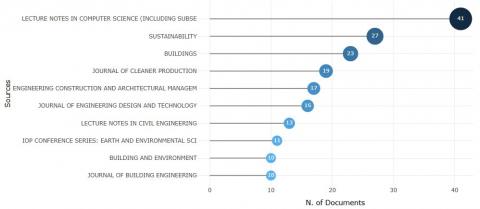
Figure 4 shows an analysis of the top ten journals that have influenced the development of the field of study on smart building interactions. The most prominent journal is Lecture Notes in Computer Science (Including Subseries), with 41 publications, followed by Sustainability with 27 papers and Buildings with 23. These sources represent key publications in the field, evidencing growing interest in sustainability, building technology, and environmental management in the built environment.
Table 2 presents a longitudinal analysis of scientific productivity in three phases (1958-2024), showing steady growth in publications and citations. In Phase I (1958-2007), there were 93 publications at a rate of 1.90 per year and 731 total citations. In Phase II [2007-2014], although publications decreased to 72, the annual average increased to 10.29 and total citations to 1,056. In Phase III [2014-2024], a remarkable increase was observed with 656 publications (65.6 per year) and 9,480 citations. Citations per publication also increased in each phase, with 7.86 in Phase I, 14.66 in Phase II, and 14.45 in Phase III. In addition, the percentage of distinct citations increased from 21.33% in Phase I to 65.40% in Phase III, indicating growing interest and increased influence of research in this field over time. These data support a correlation between scientific output and smart buildings, with Phases II and III peaks.
Period I: Initial process [1975-2007]: the first steps in building automation were observed, focusing on integrating centralised control systems for energy and climate management. This period marked the beginning of the ‘smart building’ concept, where essential technologies, such as sensors for environmental monitoring and energy management systems, began to be implemented. The first international standards promoted the interoperability between different building systems at the regulatory level, laying the foundation for the development of more efficient and sustainable buildings [39].
Figure 3. Scientific production of articles on smart constructions (linear and exponential trend adjustments exponential trend adjustments of the number of publications)
Figure 4. Top 10 journals according to distribution of publications
Table 2. Main characteristics of the phases
|
Phase |
Period |
TP |
TP/YEAR |
TC |
TC/TP |
DC |
% DC |
|
I |
1958-2007 |
93 |
1.90 |
731 |
7.86 |
45 |
21.33% |
|
II |
2007-2014 |
72 |
10.29 |
1056 |
14.66 |
28 |
13.27% |
|
III |
2014-2024 |
656 |
65.60 |
9480 |
14.45 |
138 |
65.40% |
Note: TP: Number of publications; TC: Number of citations; DC: Number of documents without citations.
Period II: Development [2007-2014]: the evolution of digital technologies and the IoT [40] transformed the smart building landscape. During this time, Building Information Modelling (BIM) became popular, enabling better planning and management of the building lifecycle [41]. Regulations began to focus on sustainability, driving the adoption of green technologies such as solar panels and water harvesting systems. This period also saw an increase in the implementation of communication networks connecting various systems within the building, improving operational efficiency and user experience [42].
Period III: Maturity [2014-2024]: the integration of advanced technologies such as artificial intelligence (AI) and machine learning in building management has intensified [43]. These innovations enable control over energy resources and facilitate predictive maintenance. Regulations have evolved to include stricter sustainability and energy efficiency standards, reflecting a global commitment to more environmentally responsible construction [44]. In addition, emerging technologies are expected to continue revolutionizing the sector, making buildings even smarter and more adaptive to users' changing needs.
Table 3 presents a ranking of the countries with the most collaborative publications related to the study of smart buildings, especially in developing countries. China leads in output and impact with 101 papers and 2,825 citations, focusing on urban sustainability, energy efficiency and advanced technologies such as the IoT [10], and the integration of renewable energy in buildings. India and Malaysia, with 48 and 40 papers, respectively, address issues such as adapting sustainable technologies to local contexts, improving urban infrastructure, water resource management and urban planning in the face of climate change [45]. The United States and the United Kingdom stand out for research on smart buildings, energy efficiency, artificial intelligence for building management, and regulations promoting green buildings, with more than 500 citations each. In the case of African countries such as South Africa, Tunisia and Egypt, research focuses on sustainability in urban environments, resilient infrastructure, efficient water management and adaptation to extreme climates [46, 47]. Finally, Australia contributes from the perspective of climate adaptation, innovative city development, and energy efficiency in building. This overview reflects the geographical distribution of academic collaboration, with a substantial contribution from Asian countries and other regions, especially in Africa [48].
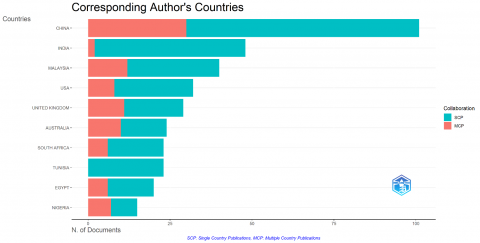
Figure 5 shows the countries of the corresponding authors in a review on smart buildings in developing countries, highlighting the number of papers and the type of collaboration: ‘SCP’ (single-country publications) in blue and ‘MCP’ (multi-country collaboration) in red. China leads in mainly SCP publications, followed by India with fewer MCPs. Other prominent countries are Malaysia, the United States, the United Kingdom, Australia, South Africa, Tunisia, Egypt and Nigeria, where SCPs generally outnumber MCPs, although some, such as Malaysia and Egypt, show more balance in international collaborations. This suggests a leadership role for China and other emerging countries in smart building research, emphasising national collaborations and local development of these technologies.
Table 3. Ranking of countries by collaboration
|
Rank |
Country |
Documents |
Citations |
|
1 |
China |
101 |
2825 |
|
2 |
India |
48 |
565 |
|
3 |
Malaysia |
40 |
483 |
|
4 |
USA |
32 |
713 |
|
5 |
United Kingdom |
29 |
591 |
|
6 |
Australia |
24 |
404 |
|
7 |
South Africa |
23 |
468 |
|
8 |
Tunisia |
23 |
241 |
|
9 |
Egypt |
20 |
267 |
Figure 6 is a ‘TreeMap’ showing key themes and their frequency of occurrence in smart building studies in developing countries. Blocks of different sizes and colours represent the themes; the size indicates the number of times each theme is mentioned, while the percentage represents its relative share.
The most prominent themes are ‘developing countries’ with 317 mentions (15%) within the developing countries in this study are India, South Africa, Egypt, Malaysia, and South America; ‘smart construction buildings’ with 207 mentions (10, followed by concepts such as; ‘sustainable development’ (5%) focusing on the use of renewable energy technologies, energy management systems (BMS) and sustainable and recycled building materials; ‘automation’ (4%) including buildings such as Residential buildings: equipped with automated systems for climate control, lighting and security.
Commercial Buildings Integrate technology to optimise space use and operational efficiency and Public Infrastructure, such as smart bridges and roads that use sensors for monitoring and maintenance; the construction industry (4%) focuses on BIM, IoT technologies, and the use of information and communication technologies (ICT) [40]. Automated systems; energy efficiency (3%), where the focus is on: Efficient HVAC systems [13]. Sensor-controlled LED lighting [14] and energy monitoring to optimise consumption [15]; and architectural design (3%) where they focus their designs on: sustainability architecture using eco-friendly materials [16], adaptive architectures and involves flexible spaces that can be modified according to need and integrated technological architecture which involves spaces designed to incorporate emerging technologies such as 3D printing, augmented reality (AR) and virtual reality (VR), smart materials, IoT technology, prefabricated building systems, integrated renewable energies (solar panels and geothermal systems).
Figure 5. Top 10 countries of the corresponding author
Figure 6. Distribution of author keywords
Other relevant topics include “energy utilization,” “housing,” “performance,” and “BIM” (Building Information Modeling), each with about 2%. This map reveals a broad approach ranging from geographical and technological context to specific areas of energy efficiency, sustainability, architectural design and automation, highlighting the complexity and interdisciplinarity in studying smart buildings in developing country environments.
3.2 Scientific metrics
In bibliometric research, co-occurrence analysis is a technique that allows us to know the keywords that are part of the database related to the topic of study. This analysis included i) using VOSViewer software to represent the network and obtain 3,530 author keywords. ii) The researchers post-processed the keywords to unify similar terms. And iii). The study used a threshold of words that appeared at least ten times.
In this co-occurrence analysis, there are 60 keywords; the most important word classes are developed countries (84 occurrences), smart buildings (206 occurrences), construction (140 occurrences), energy (130 occurrences) and sustainable development (113 occurrences). Figure 7 shows nodes of different sizes (representing the frequency of the term), and the proximity of these nodes indicates their correlation. In addition, they are differentiated by color, according to the central theme of the research. The minimum word size for this analysis is 5, which gives 3 clusters.
Cluster 1 (Construction project management and planning): It focuses on concepts such as project management, design, integration, innovation, modeling, knowledge, and construction. These terms are grouped around key processes for the planning and execution of construction projects, with an emphasis on the use of modern tools such as BIM (Building Information Modeling) and related technologies. This cluster reflects how integrated methodologies improve efficiency, quality and sustainability in construction [46, 47].
Cluster 2 (Sustainable construction and reduction of environmental impact): It encompasses terms related to sustainability, such as green buildings, environmental impact, sustainable materials, life cycle, environmental technologies, as well as terms related to costs and decision making. It focuses mainly on the reduction of environmental impact in the building sector through the use of sustainable materials and technologies, considering the entire life cycle of a building, from its design to its operation [44].
Figure 7. Keywords network
Cluster 3 (Implementation of new technologies in the construction industry): This cluster includes terms such as the IoT, smart buildings, smart homes, renewable energy, automation, and wellness-related concepts such as health and healthcare. It focuses on integrating advanced technologies and automation to improve building functionality and sustainability [26].
3.3 Synthesis of the literature review
In the systematic review performed using the PRISMA method, 43 documents focusing on research related to developing countries were selected and analyzed. Of the 43 papers analysed, 28 were from Asia, 11 from Africa, and four from America. These studies cover countries such as Egypt, Nigeria, Ghana, India, and Kenya and deal with issues such as sustainability and innovation in the construction sector. These studies highlight advanced technologies, such as BIM, which has transformed project planning and execution through improved spatial coordination and reduced errors and delays. For example, in Ghana, future standards have been implemented to optimise the use of renewable energy and improve energy efficiency while lowering operating costs [46, 47].
The focus on sustainable materials is a key pillar in these projects. Countries such as Egypt and Kenya are leading initiatives using local recycled materials, compressed earth blocks, and certified timber [40] to reduce the carbon footprint of buildings. These initiatives are complemented by energy-efficient lighting, efficient air-conditioning systems, and passive techniques that maximise natural ventilation and thermal insulation. In addition, social housing projects in these regions have integrated sustainable solutions, including efficient water management and responsible urban design, improving the quality of life of communities, and fostering social inclusion and economic development [49].
The analysis also identified the countries with the highest scientific production on each continent. Nigeria and Ghana stand out in sustainability and optimisation strategy research in Africa [50]. In the Americas, Ecuador, Colombia, and Peru are leaders in sustainable standards and technologies, with Ecuador being the most representative [51]. Studies on energy efficiency and resource management have been conducted in Europe, Poland, and Serbia, while in Asia, Pakistan and Bangladesh stand out for their innovative approaches, such as using stabilised earth blocks [52].
The patterns identified in adopting smart buildings in developing countries show progression aligned with innovation diffusion theory. The high concentration of publications in countries such as China and India suggest an “early adopter” effect driven by government policies and economic incentives [53]. Likewise, limited international cooperation in African and Latin American regions highlights structural barriers that slow the adoption of these technologies [54].
Advances in smart buildings in developing countries reflect a holistic approach to sustainability, modernisation, and efficiency. Technologies such as BIM and methodologies such as AHP-TOPSIS for evaluating alternative energy technologies have proven to be key tools for optimising resources and improving operational efficiency of buildings. These initiatives underline the importance of adapting sustainable solutions to local contexts and laying the foundation for a more equitable and resilient future in the building sector.
Table 4 of international standards for the management and sustainability of smart buildings includes widely recognized standards such as Leadership in Energy and Environmental Design (LEED) in North America, Building Research Establishment Environmental Assessment Method (BREEAM) in Europe, and Green Star in Oceania. In Asia, Comprehensive Assessment System for Built Environment Efficiency (CASBEE) in Japan and ISO 14001 for environmental management stand out. In South America, the Excellence in Design for Greater Efficiencies (EDGE) standard has gained popularity for its practicality and affordability in sustainability [44], especially adapted for developing countries. For example, in Colombia and Mexico, EDGE has been key in sustainable social housing projects, such as the Bosques de Aragon multifamily complex in Mexico City, which integrates the design of green spaces in a residential area [55]. In Africa, the Green Building Council of South Africa is promoting sustainable practices in buildings such as the PwC Tower in Johannesburg [56].
These standards establish guidelines to reduce water and energy consumption and promote the use of recycled materials and efficient waste management. For example, LEED-certified buildings have reported a decrease of up to 30% in energy consumption [57] and 40% in water use compared to conventional buildings [58]. In quantitative terms, projects such as the Empire State Building in New York, which obtained a LEED Gold certification, reduced operating costs by $4.4 million per year thanks to improvements in energy efficiency [59].
To implement these regulations, professionals must have specific certifications, such as LEED AP (Accredited Professional) or national agency certifications. These ensure that experts understand and can properly implement the standards, ensuring compliance with sustainability and efficiency goals [60].
Table 4. International standards for smart building management and sustainability
|
Region |
Country |
Normative |
Description of Standard |
|
America |
USA |
i) LEED ii) ASHRAE iii) WELL Building Standard |
i) Promoting sustainable and energy efficient buildings through certification [61] ii) Air conditioning and ventilation in smart buildings [62] iii) Improving health and wellness in buildings through indoor environmental quality standards [63] |
|
Canada |
BOMA |
Regulating the efficient use of space and maintenance in commercial buildings [64] |
|
|
International (ISO) |
ISO 50001; ISO 45001 |
Promoting energy efficiency and reducing operating costs in smart buildings [65] / Improve worker safety and health in automated and connected environments [66] |
|
|
ISO/IEC 27001: Information Security |
Protecting information and interconnected systems in smart buildings from cyber threats [67] |
||
|
Europe |
United Kingdom |
BREEAM |
Assess and reduce the environmental impact of buildings through sustainable methodologies [68] |
|
Germany and France |
DIN V 18599 and NF EN 15232-1 |
Improving the energy efficiency of buildings through control and automation [69] |
|
|
International (ISO & IEC) |
ISO 16484/ IEC 62443 |
Standardize the architecture of automation and communications systems in smart buildings [70] / Ensuring cybersecurity in smart building automation and control systems [71] |
|
|
Asia |
Japan |
CASBEE |
Evaluate the sustainability of buildings through resource management and environmental efficiency [72] |
|
International (ISO) |
ISO 37101 |
Encourage the development of sustainable buildings and communities with smart technologies [73] |
|
|
International (ISO) |
ISO 14001: Environmental Management Systems |
Provide guidelines for environmental management and reduction of the ecological impact of buildings [74] |
|
|
Oceania |
Australia |
Green Star |
Certifying the sustainability and efficiency of buildings in terms of resources, energy and well-being [75] |
|
New Zealand |
NABERSNZ |
Evaluating the energy performance of buildings to reduce environmental impact [76] |
|
|
Africa |
South Africa |
Green Building Council of South Africa |
Promoting sustainability and energy efficiency in smart buildings in South Africa [77] |
|
International (ISO) |
ISO 14090: Climate Change Adaptation |
Establish resilience measures in buildings to reduce the impact of climate change [78] |
|
|
Worldwide |
International (ISO) |
ISO 50001: Energy Management |
Promote energy efficiency through the management and automation of energy resources [65] |
|
International (ISO) |
ISO 9001 |
Ensuring quality assurance and optimization of operations in automated buildings [79] |
|
|
International (ISO) |
ISO 45001: Occupational Health and Safety |
Ensure safe working environments, including in buildings with automated systems [66] |
|
|
International |
Edge Certification |
Sustainable construction by reducing resources in construction [44] |
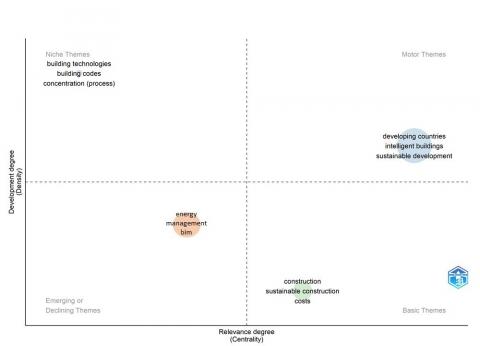
Figure 8 presents a thematic analysis in a two-dimensional plane, where the vertical axis represents the degree of development (density) and the horizontal axis represents the degree of relevance (centrality) of the themes in innovative and sustainable construction. Four quadrants of thematic groupings were identified: driving, core, emerging or declining, and niche. The driving theme quadrants are developing countries, smart buildings, and sustainable development, indicating importance and consolidation in the literature and reflecting the growing interest in implementing advanced technologies to improve energy efficiency and sustainability in the building sector. In the quadrant of basic topics that constitute the structural basis of the field, construction, sustainable construction, and costs appear, demonstrating the importance of efficient management of resources and expenses in sustainable infrastructure projects. Emerging or declining topics include energy management and BIM, which, although less central, show potential for evolution driven by environmental regulations and digitization of the construction process. Finally, the niche topic quadrant includes construction technologies, building codes, concentration processes, and specialized issues, with less impact on the general knowledge structure. These topics are essential for formulating regulations and methodologies to improve the safety and quality of smart buildings [80].
Figure 8. Evolution and positioning of topics in intelligent construction
A systematic review and bibliometric analysis of smart building studies showed regional differences in technology adoption, methodologies, and barriers. Implementing technologies such as BIM, Geographic Information Systems (GIS), and innovative materials have transformed smart infrastructure planning and development, although their application presents specific challenges depending on the regional context [81].
Studies in America reveal that countries such as Mexico and Brazil have adopted technologies such as BIM, which analyzes all phases of a project's life cycle (from idea to project closure or operation), and GIS, to improve urban planning and management [32]. The integration of these tools has made it possible to optimise resources and reduce costs in large infrastructure projects [81]. However, the lack of technological infrastructure and training limits their implementation in rural and less economically developed areas. This finding suggests the need for public policies to promote the expansion of these technologies to less developed regions.
The European region stands out for technological innovation, focusing on energy efficiency, and using hybrid and sustainable materials [82]. Countries such as Germany and France have implemented advanced digital simulations and real-time monitoring systems that guarantee the sustainability of buildings throughout their life cycle. Integrating BIM into infrastructure projects has facilitated the creation of structures that comply with strict environmental standards, making them replicable models for other regions [83].
In Africa, research has shown an adaptive approach based on local materials such as stabilised soil, bamboo, and recycled materials [50]. Countries such as Ghana and South Africa have developed pilot projects integrating these solutions with accessible technologies such as CAD and low-cost structural sensors. Although these developments are promising, challenges remain related to the lack of digital infrastructure and technical training, which limits the widespread adoption of smart buildings [84].
The Asian region presents a combination of advanced technologies and local solutions, particularly in China, India, and Malaysia [45]. The use of BIM (such as in China, where the applicability of BIM improves construction efficiency and generates economic benefits; in Malaysia, its advantages include design optimization, cost estimation and project tracking) [85] and GIS (as in China, GIS provides geospatial data and spatial analysis functions that, when combined with BIM, support the design of smart cities) for large urban projects has facilitated efficient planning and resource optimization. For example, in China, adopting digital tools has made it possible to address rapid urban growth [86], and in India, combining digital technologies with traditional practices has been explored, favouring solutions adapted to rural and urban contexts.
In Oceania, countries such as Australia and New Zealand stand out for their focus on energy efficiency and climate resilience. BIM implementation and energy monitoring systems has enabled the construction of sustainable buildings using recycled materials, such as recycled concrete aggregates (obtained from construction waste, improving water absorption density, and increasing workability) [87], considering circular economy strategies that minimise the ecological footprint of projects [88] and renewable technologies, such as solar panels. These advances are key to addressing environmental challenges and represent a model for developing regions seeking to integrate sustainable practices [48].
Bibliometric analysis indicates that the evolution of smart buildings does not follow a linear adoption pattern but varies according to social, economic, regulatory, and technological factors [21]. Although digitization and automation have been driven by regulations in advanced economies, implementing these technologies in developed countries depends on financing availability and local material adaptation [39].
The systematic review represented 5.24% of the papers in this research and allowed us to identify a global pattern: developed countries, such as Germany, China, and Australia, lead in technological innovation [45] and in the development of advanced materials [83], while developing countries place a greater emphasis on adaptive solutions based on local resources and low-cost technologies [86]. This finding underscores the importance of adapting technological solutions to each region's economic and social needs to promote equity in access to smart buildings.
Another key aspect is the low level of international collaboration in Africa and Latin America. While countries such as China and India have demonstrated a high level of scientific cooperation, regions with fewer technological resources have lower exchange networks, which slows the adoption of innovations [86]. Promoting international partnerships and technology transfer programs is essential to close this gap and ensure access to smart buildings in less-developed contexts.
Table 5 shows the contributions to sustainable construction as they vary according to each country's economic and technological context. While China and the United States lead innovation and automation, developing nations like India and Egypt prioritize adapting materials and energy efficiency strategies.
Table 5. Main contributions to sustainable construction by country
|
Country |
Significant Contributions in Sustainable Construction |
|
China |
Integration of the IoT in buildings, development of energy efficiency technologies, sustainable urbanization, and integration of renewable energy in buildings [36] |
|
India |
Implement sustainable technologies adapted to local contexts, water resource management strategies and urban planning to mitigate climate change [36, 74] |
|
Malaysia |
Use Building Information Modeling (BIM) to optimize designs, costs, environmental monitoring systems, and building energy efficiency [48] |
|
USA |
Certifications such as LEED, development of smart materials, building management automation and green building regulations [48] |
|
United Kingdom |
Use of the BREEAM system to assess the sustainability of buildings, research in bioclimatic architecture and energy efficiency [57] |
|
Australia |
Implementing climate resilience strategies, developing recycled materials and circular economy practices in construction [39, 64] |
|
South Africa |
Application of energy efficiency systems in urban environments, sustainable construction regulations and adaptation to extreme climates [45] |
|
Tunisia |
Development of resilient infrastructures, implementation of energy saving strategies in public and private buildings [42] |
|
Egypt |
Local recycled materials are used in construction, and passive technologies are integrated to maximize energy efficiency and reduce carbon footprint [43] |
|
Mexico |
Application of EDGE certification in sustainable housing projects, incorporating green design in urban areas [44] |
|
Colombia |
Sustainable building regulations, integration of energy management systems and green building in urban developments [42] |
|
Peru |
Research and application of sustainable technologies in buildings, energy efficiency programs and reduction of environmental impact in construction [42] |
This study analyzes 821 papers on smart buildings through bibliometric methods and 43 papers through a systematic review in developing countries, representing 5.24% of the total sample. The results show that in developing countries in Africa, the main focus of smart buildings is on adaptive solutions based on local resources and low-cost technologies. Strategies such as using sustainable materials (e.g., compacted earth blocks and structural bamboo) and integrating affordable renewable energies (e.g., decentralised solar systems) have been implemented. These solutions seek to reduce costs, improve structural resilience, and respond to climate change challenges.
In contrast, in developed countries, such as Germany, China, and Australia, the development of smart buildings is driven by technological innovation in advanced materials and automated building management systems. In addition, international collaboration in these nations has favoured access to and rapid adoption of new technologies. At the same time, Africa faces a significant lag due to the lack of scientific cooperation networks and technology transfer programs.
Strengthening international partnerships and encouraging technology transfer are essential to closing this gap and ensuring that African countries can benefit from smart building innovations. These initiatives can optimise the use of energy and resources and contribute to the fight against climate change, aligning with SDGs 9 and 11. In addition, strategies are identified to strengthen urban resilience through emerging technologies such as IoT and BIM and their sustainable approaches, such as energy efficiency and harnessing natural factors, which provide empirical evidence for the design of publics politics.
This study underscores the importance of international collaboration in sharing knowledge and closing technological gaps. However, regions such as Africa and Latin America face significant challenges owing to limited scientific and technological cooperation, which has slowed progress. Fostering partnerships and technology exchange programs is key to bringing these advances to more places.
The integration of advanced technology and sustainable practices in construction is transforming cities (such as the Bosque de Aragón multifamily complex in Mexico, which combines green designs with affordable housing; in Africa, the use of recycled materials such as compressed earth and bamboo; and in South Africa, the Pwc Tower in Johannesburg demonstrates how to integrate sustainability into corporate buildings). These innovations enable better resource management, reduced energy costs, and lower environmental impacts, creating more future-proof and future-friendly environments for their inhabitants.
Although this study provides a broad overview of smart buildings, it identifies knowledge gaps, particularly in less-researched regions. This opens up great opportunities for new research oriented towards more inclusive solutions adapted to local contexts. These, in turn, could focus on optimising technologies, such as BIM and IoT, designing public policies that promote sustainability and resilience, and strengthening scientific collaboration networks. They can also boost technology transfer to developing countries and promote smart buildings aligned with the SDGs.
To the ESPOL research project “Management and Evaluation of Scientific Research in Earth Sciences, Economics, Management and its links with Society” with Code CIPAT-7-2022.
[1] Wang, H. (2024). Smart building. In Digital Transformation with AI and Smart Servicing Technologies for Sustainable Rural Development, pp. 151-196. https://doi.org/10.1201/9781032686691-7
[2] United Nations. (2024). Una Población En Crecimiento. https://www.un.org/es/global-issues/population.
[3] Worldometers. (2024). Población Mundial Actual. https://www.worldometers.info/es/poblacion-mundial/.
[4] CEPEI. (2023). Crecimiento poblacional: Los grandes retos de las ciudades. https://cepei.org/documents/crecimiento-poblacional-los-grandes-retos-de-las-ciudades/.
[5] Can, H., Minkovska, D., Stoyanova, L. (2020). Estimation of energy performance classes of concrete structures with artificial intelligence models. In 3rd International Conference on High Technology for Sustainable Development, HiTech 2020. https://doi.org/10.1109/HiTech51434.2020.9364003
[6] Pocock, D. (2021). Identifying and realising the benefits of smart infrastructure and construction. In Proceedings of the Institution of Civil Engineers: Smart Infrastructure and Construction, 172(4): 160-165. https://doi.org/10.1680/jsmic.20.00010
[7] Sabando-Vera, D., Montalván-Burbano, N., Parrales-Guerrero, K., Yonfá-Medranda, M., Plaza-Úbeda, J.A. (2025). Growing a greener future: A bibliometric analysis of green innovation in SMEs. Technological Forecasting and Social Change, 212: 123976. https://doi.org/10.1016/j.techfore.2025.123976
[8] Bijlani, V. (2023). Smart buildings for sustainable smart cities. In 2023 1st International Conference on Advanced Innovations in Smart Cities (ICAISC), Jeddah, Saudi Arabia, pp. 1-6. https://doi.org/10.1109/ICAISC56366.2023.10085629
[9] Kayyali, M. (2022). Internet of Things (IoT): Emphasizing its applications and emergence in environmental management—The profound cases. In Environmental Informatics. Springer Nature Singapore, pp. 201-212. https://doi.org/10.1007/978-981-19-2083-7_11
[10] Muñiz, R., del Coso, R., Nuño, F., Villegas, P.J., Álvarez, D., Martínez, J.A. (2024). Solar-powered smart buildings: Integrated energy management solution for IoT-enabled sustainability. Electronics, 13(2): 317. https://doi.org/10.3390/electronics13020317
[11] Krishnan, P., Prabu, A.V., Loganathan, S., Routray, S., Ghosh, U., AL-Numay, M. (2023). Analyzing and managing various energy-related environmental factors for providing personalized IoT services for smart buildings in smart environment. Sustainability, 15(8): 6548. https://doi.org/10.3390/su15086548
[12] Anatona, Hakam, A., Nur, M., Husodo, P., Novalinda, Syafrizal, Zulqaiyyim. (2024). Earthquake resilience of traditional nias island houses: Lessons from the 2004 and 2005 earthquakes. International Journal of Sustainable Development and Planning, 19(2): 599-607. https://doi.org/10.18280/ijsdp.190217
[13] Wang, W., Dwijendra, N., Sayed, B.T., Alvarez, J.R.N., Al-Bahrani, M., Alviz-Meza, A., Cárdenas, Y. (2023). Internet of Things energy consumption optimization in buildings: A step toward sustainability. Sustainability, 15(8): 6475. https://doi.org/10.3390/su15086475
[14] Dahmane, W.M., Dollinger, J.F., Ouchani, S. (2020). A BIM-based framework for an optimal WSN deployment in smart building. In 2020 11th International Conference on Network of the Future (NoF), Bordeaux, France, pp. 110-114. https://doi.org/10.1109/NoF50125.2020.9249099
[15] Djehaiche, R., Aidel, S., Sawalmeh, A., Saeed, N., Alenezi, A.H. (2023). Adaptive control of IoT/M2M devices in smart buildings using heterogeneous wireless networks. IEEE Sensors Journal, 23(7): 7836-7849. https://doi.org/10.1109/JSEN.2023.3247007
[16] Wang, J., Shi, D., Song, Y. (2022). Advanced materials in smart building skins for sustainability: From nano to macroscale. Advanced Materials in Smart Building Skins for Sustainability: From Nano to Macroscale, pp. 1-278. https://doi.org/10.1007/978-3-031-09695-2
[17] Singh, T., Solanki, A., Sharma, S. (2021). Role of smart buildings in smart city-Components, technology, indicators, challenges, future research opportunities. Digital Cities Roadmap: IoT-Based Architecture and Sustainable Buildings, pp. 449-476. https://doi.org/10.1002/9781119792079.ch14
[18] Rachmawati, R., Haryono, E., Ghiffari, R.A., Reinhart, H., Fathurrahman, R., Rohmah, A.A., Permatasari, F.D., Sensuse, D.I., Sunindyo, W.D., Kraas, F. (2024). Achieving sustainable urban development for Indonesia's new capital city. International Journal of Sustainable Development and Planning, 19(2): 443-456. https://doi.org/10.18280/ijsdp.190204
[19] Góngora, G.P.M. (2015). Revisión de literatura sobre ciudades inteligentes: Una perspectiva centrada en las TIC. Ingeniare, (19): 137-149.
[20] Carrión, P., Solórzano, J., Morante, F., Chávez, M.Á., Montalván, N., Briones, J. (2022). Technical closure of the humberto molina astudillo hospital and its implications for sustainability, zaruma-ecuador. International Journal of Sustainable Development and Planning, 17(2): 363-373. https://doi.org/10.18280/ijsdp.170202
[21] Fernández, D. (2017). Factores de desarrollo de las ciudades inteligentes. Revista Universitaria de Geografía, 26(1): 135-152. https://www.scielo.org.ar/scielo.php?pid=S1852-42652017000100007&script=sci_arttext.
[22] Berawi, M. (2023). Smart cities: Accelerating sustainable development agendas. International Journal of Technology, 14(1): 1-4. https://doi.org/10.14716/ijtech.v14i1.6323
[23] Buckman, A.H., Mayfield, M., B.M. Beck, S. (2014). What is a smart building? Smart and Sustainable Built Environment, 3(2): 92-109. https://doi.org/10.1108/SASBE-01-2014-0003
[24] Patil, M., Boraste, S., Minde, P. (2022). A comprehensive review on emerging trends in smart green building technologies and sustainable materials. Materials Today: Proceedings, 65(2): 1813-1822. https://doi.org/10.1016/j.matpr.2022.04.866
[25] Ye, J., Hassan, T.M., Carter, C.D., Zarli, A. (2008). ICT for energy efficiency: The case for smart buildings. Department of Civil and Building Engineering, Loughborough University. https://doi.org/10.1201/9781482266665-87
[26] Yu, H. (2021). Application and design of intelligent building automation control system. Journal of Physics: Conference Series, 2074: 012077. https://doi.org/10.1088/1742-6596/2074/1/012077
[27] Kliem, S., Tahouni, Y., Cheng, T., Menges, A., Bonten, C. (2019). Biobased smart materials for processing via fused layer modeling. AIP Conference Proceedings, 2289(1): 020034. https://doi.org/10.1063/5.0028730
[28] Chowdhury, F., Lovén, L., Cortés, M., Halkola, E., Seppänen, T., Pirttikangas, S. (2020). Emotional well-being in smart environments: An experiment with EEG. UbiComp/ISWC 2020 Adjunct - Proceedings of the 2020 ACM International Joint Conference on Pervasive and Ubiquitous Computing and Proceedings of the 2020 ACM International Symposium on Wearable Computers, Espoo, Finland, pp. 680-683. https://doi.org/10.1145/3410530.3414437
[29] Burmester, M., Munilla, J. (2016). Resilient metro-scale smart structures: Challenges & future directions. IoTBD 2016 - Proceedings of the International Conference on Internet of Things and Big Data, 2: 137-147. https://doi.org/10.5220/0005922501370147
[30] Yao, T., Huang, Z., Zhao, W. (2020). Are smart cities more ecologically efficient? Evidence from China. Sustainable Cities and Society, 60: 1022008. https://doi.org/10.1016/j.scs.2019.102008
[31] Herrera-Franco, G., Bollmann, H.A., Lofhagen, J.C.P., Bravo-Montero, L., Carrión-Mero, P. (2023). Approach on water-energy-food (WEF) nexus and climate change: A tool in decision-making processes. Environmental Development, 46: 100858. https://doi.org/10.1016/j.envdev.2023.100858
[32] Li, Y., Lai, Y., Lin, Y. (2024). The role of diversified Geo-information technologies in urban governance: A literature review. Land, 13(9): 1408. https://doi.org/10.3390/land13091408
[33] Morante-Carballo, F., Pinto-Ponce, B., Santos-Baquerizo, E., Briones-Bitar, J., Berrezueta, E., Carrión-Mero, P. (2024). Systematic review on seismic hazards in the coastal regions of the pacific ring of fire. International Journal of Safety and Security Engineering, 14(5): 1591-1605. https://doi.org/10.18280/ijsse.140526
[34] Herrera-Franco, G., Merchán-Sanmartín, B., Caicedo-Potosí, J., Bitar, J.B., Berrezueta, E., Carrión-Mero, P. (2024). A systematic review of coastal zone integrated waste management for sustainability strategies. Environmental Research, 245: 117968. https://doi.org/10.1016/j.envres.2023.117968
[35] Elsevier. (2024). Scopus: Base de datos de citas y resúmenes completa, multidisciplinaria y fiable. https://www.elsevier.com/es-es/products/scopus.
[36] Web of Science. (2024). Bases de datos Web of Science. https://www.recursoscientificos.fecyt.es/licencias/productos-contratados/wos.
[37] Urbizagastegui, R. (2019). El modelo de difusión de innovaciones de rogers en la bibliometría mexicana. Palabra Clave (La Plata), 9(1): e071. https://doi.org/10.24215/18539912e071
[38] Miranda, R., Garcia-Carpintero, E. (2019). Comparison of the share of documents and citations from different quartile journals in 25 research areas. Scientometrics, 121(1): 479-501. https://doi.org/10.1007/s11192-019-03210-z
[39] Flórez de la Colina, M.A. (2004). Smart houses, towards a definition. Informes de La Construcción, 56(494): 11-17. https://doi.org/10.3989/ic.2004.v56.i494.444
[40] González, D.R. (2013). Arquitectura y Gestión de la IoT. Revista Digital de Las Tecnologias de La Información y Las Comunicaciones, 12. https://web.archive.org/web/20140826065027id_/http://revistatelematica.cujae.edu.cu:80/index.php/tele/article/viewFile/119/115.
[41] Azhar, S. (2011). Building information modeling (BIM): Trends, benefits, risks, and challenges for the AEC industry. Leadership and Management in Engineering, 11(3): 241-252. https://doi.org/10.1061/(ASCE)LM.1943-5630.0000127
[42] Feige, A., Wallbaum, H., Krank, S. (2011). Harnessing stakeholder motivation: Towards a Swiss sustainable building sector. Building Research & Information, 39(5): 504-517. https://doi.org/10.1080/09613218.2011.589788
[43] Kediya, S., Bhorkar, M.P., Deshpande, P., Jain, R., Puri, C., Gudadhe, A.A. (2023). Review on the significance of artificial intelligence in construction engineering and management. In 2023 International Conference on Communication, Security and Artificial Intelligence (ICCSAI), Greater Noida, India, pp. 1-5. https://doi.org/10.1109/ICCSAI59793.2023.10420911
[44] EDGE. (2018). Guía del usuario de software EDGE. https://edgebuildings.com/wp-content/uploads/2022/07/2022001613SPAspa001.pdf?lang=es.
[45] Jiancheng, S., Saar, C.C., Aminudin, E. (2023). Digital twinning in the malaysian construction industry. In Digitalization in Construction. Routledge, pp. 271-293. https://www.taylorfrancis.com/chapters/edit/10.1201/9781003408949-15/digital-twinning-malaysian-construction-industry-shan-jiancheng-chai-chang-saar-eeydzah-aminudin.
[46] Ismaeel, W.S., Lotfy, R.A.E.R. (2023). An integrated building information modelling-based environmental impact assessment framework. Clean Technologies and Environmental Policy, 25(4): 1291-1307. https://doi.org/10.1007/s10098-022-02443-6
[47] Veluchamy, C., Kalamdhad, A.S. (2017). A mass diffusion model on the effect of moisture content for solid-state anaerobic digestion. Journal of Cleaner Production, 162: 371-379.
[48] Chen, S., Zeng, Y., Majdi, A., Salameh, A., Alkhalifah, T., Alturise, F., Elhosiny, H. (2023). Potential features of building information modelling for application of project management knowledge areas as advances modeling tools. Advances in Engineering Software, 176: 103372. https://www.sciencedirect.com/science/article/pii/S0965997822002733.
[49] Oyawa, W. (2004). Eco-materials for developing countries. Structural Engineering International: Journal of the International Association for Bridge and Structural Engineering, 14(3): 208-212. https://doi.org/10.2749/101686604777963801
[50] Kibwage, J., Frith, O., Paudel, S. (2011). Bamboo as a sustainable building material for meeting housing needs in East Africa: A value chain case study in Ethiopia. Journal of Bamboo and Rattan, 10(1-2): 19-36. http://hdl.handle.net/10625/51138.
[51] Syed, R., Zeeshan, H., Chapal, H., Kashan, M., Fazil, P., Momoh, M., Peng, H., Zhao, G. (2018). Retrofitting low-cost heating ventilation and air-conditioning systems for energy management in buildings. Applied Energy, 236: 648-661. https://doi.org/10.1016/j.apenergy.2018.12.020
[52] Kamran, I., Shahab, H., Farooq, A. (2020). Influence of waste gypsum on the microstructural characteristics and strength behavior of unfired mud block. Arabian Journal for Science and Engineering, 45: 8551-8560. https://doi.org/10.1007/s13369-020-04749-3
[53] Higham, I. (2024). Early adoption of international policy innovations: A theoretical framework-With evidence on business and human rights in Colombia and Ecuador. Review of International Studies, pp. 1-23. https://doi.org/10.1017/S026021052400072X
[54] Molinari, A., Mena, F., Ghiglione, J. (2022). South-South cooperation: Building productive bridges between Latin America and Africa. Third World Quarterly, 43(9): 2091-2111.
[55] Łabuz, R. (2018). Urban green areas in the context of the multi-family housing. International Multidisciplinary Scientific GeoConference: SGEM, 18(6.4): 853-860. https://doi.org/10.5593/sgem2018V/6.4/S10.105
[56] Masia, T., Kajimo-Shakantu, K., Opawole, A. (2020). A case study on the implementation of green building construction in Gauteng province, South Africa. Management of Environmental Quality, 31(3): 602-623. https://doi.org/10.1108/MEQ-04-2019-0085
[57] International Finance Corporation. (2022). Edificios verdes: Construcción sostenible en mercados emergentes. https://www.ifc.org/es/insights-reports/2023/building-green-in-emerging-markets.
[58] Pactoglobal. (2024). Edificios sostenibles generan hasta un 30% en ahorro de energía y un 40% en frenar emisiones de gases de efecto invernadero. https://www.pactoglobal-colombia.org/news/edificios-sostenibles-generan-hasta-un-30-en-ahorro-de-energia-y-un-40-en-frenar-emisiones-de-gases-de-efecto-invernadero.html#:~:text=De acuerdo con un estudio de la U.S. Green Building,para las empresas en opera.
[59] compromisoRSE. (2011). El empire state obtiene la certificación LEED Oro. https://www.compromisorse.com/rse/2011/09/15/el-empire-state-obtiene-la-certificacion-leed-oro/.
[60] Mohsen, R.A., Yousef, P.H.A., El Seoud, T.A. (2022). Suitability of green city criteria (LEED) according to the Egyptian special environmental characteristics. International Journal of Sustainable Development and Planning, 17(4): 1259-1271. https://doi.org/10.18280/ijsdp.170424
[61] Morante-Carballo, F., Santos-Baquerizo, E., Pinto-Ponce, B., Chacón-Montero, E., Briones-Bitar, J., Carrión-Mero, P. (2024). Proposal for the rehabilitation of houseshold in seismic vulnerability zones. International Journal of Safety and Security Engineering, 14(3): 701-716. https://doi.org/10.18280/ijsse.140304
[62] Smith, R.M. (2015). Planning for urban sustainability: The geography of LEED®-Neighborhood DevelopmentTM (LEED®-NDTM) projects in the United States. International Journal of Urban Sustainable Development, 7(1): 15-32. https://doi.org/10.1080/19463138.2014.971802
[63] Liu, B., Rosenberg, M., Athalye, R. (2018). National impact of ANSI/ASHRAE/IES standard 90.1-2016. In 2018 Building Performance Analysis Conference and SimBuild co-organized by ASHRAE and IBPSA-USA. https://publications.ibpsa.org/conference/paper/?id=simbuild2018_C008.
[64] WELL Building Standard – Explore the standard. https://v2.wellcertified.com/en/wellv2/overview/, accessed on Apr. 16, 2025.
[65] Rahman, F. (2014). Do green buildings capture higher market-values and prices? A case-study of LEED and BOMA-BEST properties. University of Waterloo.
[66] International Organization for Standardization – ISO 50001:2018. https://www.iso.org/obp/ui#iso:std:iso:50001:ed-2:v1:es, accessed on Apr. 16, 2025.
[67] International Organization for Standardization – ISO 45001:2018. https://www.iso.org/obp/ui/#iso:std:iso:45001:ed-1:v1:es, accessed on Apr. 16, 2025.
[68] International Organization for Standardization. (2022). ISO-27001:2022-Guia-de-implantacion. https://www.nqa.com/medialibraries/NQA/NQA-Media-Library/PDFs/Spanish QRFs and PDFs/NQA-ISO-27001-Guia-de-implantacion.pdf.
[69] BREEAM. (2020). BREEAM ES VIVIENDA 2020 - Manual técnico. https://breeam.es/manuales-tecnicos/#286-289-wpfd-breeam-es-vivienda.
[70] Federal Funding for Efficient Buildings– DIN V 18599-5:2018-09. (2018). https://doi.org/10.31030/2875514
[71] International Organization for Standardization – ISO 16484-1:2024. https://www.iso.org/es/contents/data/standard/08/48/84890.html, accessed on Apr. 16, 2025.
[72] International Electrotechnical Commission – IEC 62443. https://ingertec.com/norma-iec-62443/, accessed on Apr. 16, 2025.
[73] Japan Sustainable Building Consortium – Comprehensive Assessment System for Built Environment Efficiency (CASBEE). https://www.ibecs.or.jp/CASBEE/english/, accessed on Apr. 16, 2025.
[74] International Organization for Standardization – ISO 37101:2016. https://www.iso.org/standard/61885.html, accessed on Apr. 16, 2025.
[75] International Organization for Standardization. (2015). Iso 14001:2015. Norma Internacional ISO 14001, 2015, 1-54. http://www.itvalledelguadiana.edu.mx/ftp/Normas ISO/ISO 14001-2015 Sistemas de Gestion Mabiental.pdf%0Awww.iso.ch.
[76] Green Building Council of Australia – Introducing Green Star. https://www.gbca.org.au/uploads/91/2139/Introducing_Green_Star.pdf, accessed on Apr. 16, 2025.
[77] NABERS. (2023). Estimating NABERS ratings. https://www.nabers.gov.au.
[78] World Bank Group – Green Buildings Market Intelligence South Africa Country Profile. https://edgebuildings.com/wp-content/uploads/2022/04/South-Africa-Green-Building-Market-Intelligence-EXPORT.pdf, accessed on Apr. 16, 2025.
[79] International Organization for Standardization – ISO 14090:2019. https://www.iso.org/obp/ui#iso:std:iso:14090:ed-1:v1:es, accessed on Apr. 16, 2025.
[80] International Organization for Standardization. (2015). ISO 9001:2015 (traducción oficial). Universidad Autónoma de Guerrero, 2015: 1-42. https://www.iso.org.
[81] Tennekes, M. (2018). tmap: Thematic maps in R. Journal of Statistical Software, 84(6): 1-39. https://doi.org/10.18637/jss.v084.i06
[82] Adepoju, O. (2022). Building information modelling. In Re-skilling Human Resources for Construction 4.0. Springer Tracts in Civil Engineering, pp. 43-64. https://doi.org/10.1007/978-3-030-85973-2_3
[83] Xinyu, W., Haoran, L., Khan, K. (2024). Innovation in technology: A game changer for renewable energy in the European Union? Natural Resources Forum. https://doi.org/10.1111/1477-8947.12450
[84] Gökçe, H.U., Gökçe, K.U. (2014). Interoperable ICT platform for energy efficient smart buildings. In Progress in Sustainable Energy Technologies Vol II. Springer, Cham, pp. 229-308. https://doi.org/10.1007/978-3-319-07977-6_20
[85] Danso, H. (2012). Assessment of the awareness of structural computer aided design programs of Universities in Ghana. European Journal of Social Sciences, 30(1): 41-47.
[86] Ang Soon Ern, P., Xian Yang, W., Kasim, N., Hairi Osman, M., Hani Adnan, S., Suhada Natasha, N., Ali, R. (2022). Building information modelling (BIM) in Malaysian industrialised building system (IBS) construction projects: Benefits and challenges. IOP Conference Series: Earth and Environmental Science, 1022(1): 012020. https://doi.org/10.1088/1755-1315/1022/1/012020
[87] Chen, X., Cheng, M., Yang, X., Chu, Z., Duan, K. (2023). Smart cities are more populous: Evidence from China. Land, 12(10): 1917. https://doi.org/10.3390/land12101917
[88] Pavlů, T. (2018). The utilization of recycled materials for concrete and cement production—A review. IOP Conference Series: Materials Science and Engineering, 442: 012014. https://doi.org/10.1088/1757-899X/442/1/012014