Hai Huang | Mohd Khairul Azhar Mat Sulaiman* | Nor Zalina Harun
© 2025 The authors. This article is published by IIETA and is licensed under the CC BY 4.0 license (http://creativecommons.org/licenses/by/4.0/).
OPEN ACCESS
The value of heritage buildings is gradually being emphasized, yet the public's understanding of cultural value remains nebulous. This has resulted in heritage buildings not being adequately protected. In this context, there is an urgent need for the study of evaluating the cultural value of heritage buildings. In this study, the Analytic Hierarchy Process (AHP) combined with a questionnaire survey was used to evaluate the cultural value of heritage buildings, five experts were invited to set the weights of the evaluation indexes of four major categories and 14 subcategories, and 200 valid questionnaires were distributed and successfully collected. It was found that the artistic/aesthetic value of heritage buildings was evaluated the highest, followed by historic value, scientific/technical value the third, and local/place value the lowest. Among the demographic variables, gender, education, and occupation had no significant effect on the evaluation of cultural values, but the age factor showed significant differences. In addition, the public tended to prioritize the artistic/aesthetic value of heritage buildings, while experts gave more importance to their historic value. For these results, the researcher carried out reliability and validity tests, comprehensive analysis, and variance analysis. This study demonstrates that the combination of a questionnaire survey and AHP realizes the quantitative evaluation of the cultural value of immateriality and gets rid of the subjectivity of qualitative evaluation.
heritage building, cultural value, evaluation, AHP
Heritage buildings are iconic buildings of cultural, historical, economic, and political significance, of high importance and global significance [1]. From the mid-nineteenth century onwards, an appreciation began to emerge that heritage buildings are precious and should be protected [2]. The UNESCO Convention on the Protection and Promotion of the Diversity of Cultural Expressions (2005) revealed an increased recognition of the importance of intangible heritage and cultural diversity within heritage preservation [3]. The purpose of architectural conservation is to preserve our cultural heritage and historical sources [4]. Therefore, the role of architectural conservation has shifted from preservation to being part of urban regeneration and sustainable development [5]. Heritage buildings constitute an important asset when striving to implement the strategies of sustainability [6]. Giving new life to heritage buildings ensures environmental and social benefits for the community and also contributes to the preservation of our national heritage [7]. Currently, on a worldwide scale, heritage buildings are aged and with clear signs of degradation [8]. Heritage buildings symbolize and epitomize relevant periods of the past. Rather than destroying them, they should be preserved, as they are a testament to the lifestyle and culture of the people who lived in or around them [1].
A growing body of scientific literature focuses on energy efficiency measures in heritage buildings, but this approach often compromises cultural values [9]. ‘Cultural Values’ are inclusive not only of attributes traditionally considered to be part of ‘culture’ such as stories and myths but also of attributes that might be considered to be part of ‘nature’ [10]. Section 31-1 of the Norwegian Planning and Building Act stipulates that when carrying out renovations or restorations, municipalities shall ensure that the historical, architectural, or other cultural values associated with a building are preserved as far as possible [4]. Culture can both connect and separate people. It defines societies and distinguishes communities. While the evidence for the existence of culture is tangible, the concept itself is difficult to define and assess, in part because it is often inaccessible and intangible. As a result, cultural values are rarely taken into account in many fields, whereas they are arguably an important component [11].
The conservation movement urgently needs to incorporate innovations in cultural approaches into mainstream practice. Incorporating locally specific cultural values has the potential to give new and additional meaning to conservation measures for local communities [12]. Therefore, value evaluation has grown to become an imperative activity in determining the significance of heritage objects or places and the attendant conservation decisions [13]. Due to the immateriality of cultural value and the characteristics of continuous change, people's cognition of the cultural value of heritage buildings is very ambiguous, and scholars are also discouraged from the assessment research of cultural value, and most of the existing research results carry out the qualitative description [14-19]. Therefore, this study intends to carry out quantitative evaluation research on cultural value for heritage buildings, which can enrich the methodology of cultural value evaluation.
The AHP method, semantic difference method, beauty degree evaluation method, comparative judgment method, and geographic information system method are five evaluation methods commonly used in architecture and related fields founded on the psychophysical school. Among the indicator-based assessment methods, AHP has attracted the most attention [20]. AHP has become one of the most widely used and recognized MCDM tools available to policymakers and researchers [21]. According to the research aims and needs of this study, it is found that the AHP method has great advantages in decomposing building elements, constructing a recursive model, and weighting treatment to reduce evaluation bias, which can keenly capture the key quantitative elements among the many influencing factors, quickly sort out the hierarchical logic, and is suitable for the construction of evaluation models. The AHP method is an easy way to make a quantitative analysis of non-quantitative events and is also an effective way for people to make objective descriptions of subjective judgments. This study aims to adopt the AHP method to quantitatively describe and discuss the cultural value of heritage buildings and to help the stakeholders of heritage buildings to better recognize their cultural value, to promote the preservation and inheritance of cultural value.
3.1 Study area
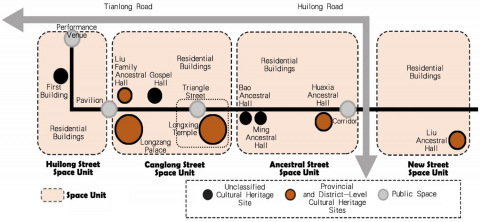
Longxing Ancient Town, located in Yubei District, Chongqing, China, was gazetted as a Historical and Cultural Town by the Chinese government in 2005. It is famous for its 600 years of history and its pure and simple folk style, and is an important carrier of information for studying the development and evolution of regional culture, with a core area of 87,335 square meters. A main street serves as the main traffic flow of the ancient town, preserving a large number of ancient buildings with regional characteristics and concentrating them into a cluster of ancient buildings. As shown in Figure 1, the spatial pattern of the ancient town is centered on Longxing Temple and Longzang Palace, which is a spatial structure of the ancient town centered on religious beliefs [22]. As a national historical and cultural town, Longxing Ancient Town reflects the conservation status of many towns in China and has the significance of a sample for examining the effectiveness of conservation [23].
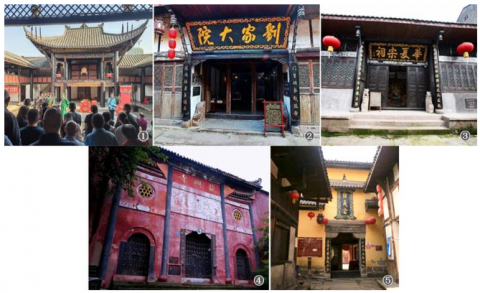
In terms of architectural function, the existing cultural preservation buildings in Longxing Ancient Town are mainly religious or ancestral public buildings, of which five heritage buildings have been gazetted by the government, namely Liu Family Ancestral Hall, Liu Family Courtyard, Huaxia Ancestral Hall, Longxing Temple, and Longzang Palace [23], as shown in Figure 2.
Figure 1. Spatial unit division and typical spatial elements of Longxing Ancient Town
Figure 2. Heritage buildings: ① Liu Family Ancestral Hall, ② Liu Family Courtyard, ③ Huaxia Ancestral Hall, ④ Longxing Temple, ⑤ Longzang Palace
3.2 Research design
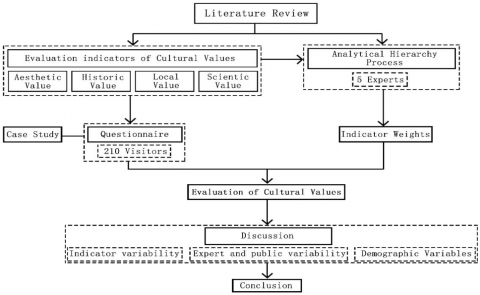
The overview of the research framework is presented in Figure 3. In previous studies, the author has compared and summarized the classification of cultural values in cultural heritage, further produced an evaluation system of cultural value indicators of heritage buildings, invited experts to evaluate the indicators in the evaluation system and calculated the weights of the indicators by AHP. Then, this study used the convenience sampling method to conduct a questionnaire survey of the visitors in Longxing Ancient Town. Although there are many advantages of using convenience sampling, surveyors often cannot make self-selection, and people can arbitrarily decide whether or not to fill out questionnaires or participate in interviews. P-value interpretation lacks significance, and there is a lack of generalizability of the research results, but this study focuses on exploring the feasibility of the quantitative evaluation of cultural values, the convenience sampling applies to this study. Based on the questionnaire survey, the differences in the indicators of cultural value and the impact of demographic variables on these evaluation indicators were comparatively analyzed.
3.3 Determination of indicator weights based on AHP
3.3.1 Establishment of an indicator evaluation system
This study first divided the evaluation objectives into the target layer, criterion layer, and indicator layer. Concerning the research theme of cultural value evaluation of heritage buildings, this study first constructed a recursive hierarchical structure of evaluation index system based on the literature review, classified different indexes according to their attributes after an in-depth analysis of relevant factors, and ultimately formed a three-layer structure of evaluation index system, as shown in Table 1.
Table 1. Hierarchical evaluation index system
|
Categorized Object |
Major Category |
Subcategories |
|
Cultural value A |
Historic Value B1 |
Time-honored C11 |
|
Symbolic C12 |
||
|
Educational C13 |
||
|
Conceptual C14 |
||
|
Local/Place Value B2 |
Belong to local C21 |
|
|
Circulated in full C22 |
||
|
Conceptual C23 |
||
|
Artistic/Aesthetic Value B3 |
Artistic C31 |
|
|
Notable C32 |
||
|
Evidential C33 |
||
|
Conceptual C34 |
||
|
Scientific/Technical Value B4 |
Workmanship C41 |
|
|
Technological C42 |
||
|
Conceptual C43 |
3.3.2 Constructing a judgment matrix
This study determined the weights of the indicators by establishing a judgment matrix. We designed a set of questionnaires for assessing the cultural value of heritage buildings based on the criterion layer and the indicator layer, using the Delphi method, and invited five experts with rich work experience in cultural heritage to participate in filling out the questionnaires, including an ancient town manager, an operator responsible for attracting investment to the ancient town, an operator responsible for the overall planning, design and management of the ancient town, an architect, and a government-recognized provincial-level expert in ancient building Restoration technology experts. The experts scored each element of the evaluation system according to the 1-9 scale method (according to the importance of the description of the corresponding score), two by two comparisons, each questionnaire contained a criterion-level element evaluation matrix and the corresponding indicator-level element evaluation matrix. Five questionnaires were finally successfully recovered and all of them passed the validation.
The relative importance of each indicator was quantified by the decision maker's two-by-two comparison scoring of each indicator factor under the same criterion category. In this study, to improve the accuracy and rigor of the comparative weights of the indicator factors and reduce the subjectivity of the decision-makers in the judgment process, the judgment matrix was constructed by synthesizing the decision-making results of multiple decision-makers. According to Eq. (1), the arithmetic mean of the scoring results of the experts was calculated as the original data for constructing the judgment matrix of each indicator factor.
$Q_\sigma=\frac{\sum_{i=1}^n x_i}{n}$ (1)
In the formula, $Q_\sigma$ denotes the score of the importance of each indicator factor, $n$ denotes the total number of valid samples, and $x_i$ is the scoring value of individual samples on the indicator factors. The judgment matrix was obtained after comprehensive processing as shown in Table 2.
Table 2. Criterion level judgment matrix A
|
|
Historic Value |
Local/ Place Value |
Artistic/ Aesthetic Value |
Scientific/ Technical Value |
|
Historic Value |
1 |
2.00 |
1.40 |
2.80 |
|
Local/ Place Value |
0.50 |
1 |
0.87 |
2.20 |
|
Artistic/ Aesthetic Value |
0.71 |
1.15 |
1 |
2.60 |
|
Scientific/ Technical value |
0.36 |
0.45 |
0.38 |
1 |
3.3.3 Hierarchical single ordering and consistency test
To ensure the validity of hierarchical single sorting, we need to perform a consistency test on the judgment matrix. This process involved calculating the maximum eigenvalue and eigenvector of the judgment matrix and other indicators. Through the consistency test, we could ensure the accuracy of the hierarchical ordering, and further calculate the weight of each factor indicator in the corresponding indicators of the previous level. Taking the criterion-level judgment matrix $S_A$ as an example, there were:
$S_A=\left[\begin{array}{cccc}1 & 2.00 & 1.40 & 2.80 \\ 0.50 & 1 & 0.87 & 2.20 \\ 0.71 & 1.15 & 1 & 2.60 \\ 0.36 & 0.45 & 0.38 & 1\end{array}\right]$
Take judgment matrix $S_A$ as an example, calculate its eigenvalues and eigenvectors, i.e., calculate the maximum eigenvalue $\lambda_{\max }$ and the corresponding unit eigenvector T that satisfies Eq. (2), and it can be known that the value of each element corresponding to T is the weight value occupied by each factor indicator in its previous layer of indicators.
$S_A T=\lambda_{\max } T$ (2)
In this study, the square root method was chosen to calculate the relative weight of each factor indicator to determine the hierarchical single ranking, the specific steps were as follows:
In the first step, the geometric mean of the elements of each row of the matrix $S_A$ was calculated as shown in Eq. (3), where $n$ is the order of the judgment matrix, and $a_{i j}$ is the value of the element in the ith row and jth column of the matrix $S_A$.
$u_i=\left(\prod_{j=1}^{y n} a_{i j}\right)^{\frac{1}{n}}(i, j=1,2, \cdots, n)$ (3)
In the second step, the vector ${U}=\left({u}_1, {u}_2, \cdots, {u}_{{n}}\right)$ was normalized to obtain the weight vector T, which was calculated as shown in Eq. (4), where $u_i$ denotes the geometric mean of row $i$. The weight vector T was calculated as follows. The vector $T=\left(t_1, t_2, \cdots, t_n\right)$ is the eigenvector corresponding to $\lambda_{\max }$ of the judgment matrix ${S}_{{A}}$.
$t_i=\frac{u_i}{\sum_{i=1}^n u_i}(i=1,2, \cdots, n)$ (4)
Based on the calculations, the single-ranking weights of the factors at the criterion level can be calculated as T = (0.3828, 0.2261, 0.2768, 0.1144).
To ensure that the judgment matrix is suitable for conducting the AHP analysis, we need to test its consistency. This step is crucial to ensure the accuracy and reliability of the whole analysis process.
The first step was to calculate $\lambda_{\max }$. The specific formula is shown in Eq. (5).
$\lambda_{\max }=\frac{1}{n} \sum_{i=1}^n \frac{(S T)_i}{t_i}(i=1,2, \cdots, n)$ (5)
In the second step, the consistency indicator C.I. was calculated with the following Eq. (6).
$C.I. =\frac{\lambda_{\max }-n}{n-1}$ (6)
In the third step, the corresponding average stochastic consistency indicator R.I. was found, which was determined mainly by referring to the statistical correspondence table between the matrix order and the average stochasticity indicator presented in Table 3.
Table 3. Mean randomized consistency indicators
|
n |
1 |
2 |
3 |
4 |
5 |
6 |
7 |
8 |
9 |
|
R.I. |
0 |
0 |
0.52 |
0.89 |
1.12 |
1.26 |
1.36 |
1.41 |
1.46 |
In the fourth step, the consistency ratio C.R. was calculated with the following Eq. (7) and judging criteria:
$C . R .=\frac{C . I .}{R . I .}<0.1$ (7)
The criterion layer judgment matrix for the calculation of relevant indicators and test consistency, from the calculation of the test results can be obtained: $\lambda_{\max }=4.0200$, C.I. $=$ $0.0067, C . R .=\frac{C . I .}{R . I .}=0.0075<0.1$, that is, the judgment matrix $S_A$ consistency test passed.
The rest of the judgment matrix performs the same calculation to get the weights of each element of the indicator layer and the consistency test results, each judgment matrix passed the consistency test, and the hierarchical single sorting was valid.
3.4 Questionnaire survey
For the visitors of Longxing Ancient Town, we distributed 30 questionnaires per day at the main entrance of the town, at different times of the day between December 8 and 14, 2024, and for one week in a row, 210 questionnaires were sent out in total, with a web link to the questionnaires. The reason for collecting the questionnaires through web links was to avoid interfering with the visitors' tour, and social media interactions are more acceptable. Before distributing the questionnaires through the web link, we used a set of fixed words to explain the purpose of this survey to the visitors and thanked them in person. We first stated in the questionnaire that the purpose of this survey is for academic research only, and thanked them again for providing valuable information for the protection of cultural heritage. To make the aim of the research clearer, we inserted photos of heritage buildings in Longxing Ancient Town in the link and stated that the task is to address the results of the visitors' perceptions of their attention to the cultural value. We inserted into the questionnaire a scale for assessing the cultural value of heritage buildings containing four major categories, which were further classified into 14 subcategories, as shown in Table 4, and invited visitors to rate the level of concern in each indicator. Then we collected some demographic variables such as age, gender, occupation, education level, etc.
Table 4. Matrix scale questions in questionnaires
|
Categories |
Questions |
1 |
2 |
3 |
4 |
5 |
|
Historic Value |
Time-honored: Length of history. |
|
|
|
|
|
|
Symbolic: The object was involved in or associated with important events in the past. |
|
|
|
|
|
|
|
Educational: Heritage objects are where the potential for the future to understand the past lies. |
|
|
|
|
|
|
|
Conceptual: Integral materialization of conceptual intentions. |
|
|
|
|
|
|
|
Local/ Place Value |
Belong to local: Exist within a certain geographical scope. |
|
|
|
|
|
|
Circulated in full: The way of transmission from one generation to another. |
|
|
|
|
|
|
|
Conceptual: Integral materialization of conceptual intentions. |
|
|
|
|
|
|
|
Artistic/ Aesthetic Value |
Artistic: Original product of creativity and imagination. |
|
|
|
|
|
|
Notable: Product of a creator, holding his signature. |
|
|
|
|
|
|
|
Evidential: part of the History of Art or Architecture. |
|
|
|
|
|
|
|
Conceptual: Integral materialization of conceptual intentions. |
|
|
|
|
|
|
|
Scientific/ Technical Value |
Workmanship: Original result of human labor, and craftsmanship. |
|
|
|
|
|
|
Technological: Skillfulness of techniques and materials, representing an outstanding quality of work. |
|
|
|
|
|
|
|
Conceptual: Integral materialization of conceptual intentions. |
|
|
|
|
|
4.1 Hierarchical total ordering and testing
The determination of the total hierarchical ranking was obtained based on the calculation of the single ranking results. Specifically, if the target layer S consists of criteria such as S1, S2,..., Sn, whose weight values corresponding to S are s1, s2,..., sn, respectively; the criterion layer Sn consists of factor indicators such as Sn1, Sn2,..., Snm, whose weights corresponding to S are si1, si2,..., sim (i=1, 2,..., n), then the weight Sj of each factor indicator in the indicator layer Snm relative to the criterion layer S is the total ranking of the level Sn. The calculation formula is as shown in Eq. (8).
$s_j=s_i s_{i j}(i=1,2, \cdots, n ; j=1,2, \cdots, m)$ (8)
The consistency test for the hierarchical total ordering was based on a single-level ordering for the calculation of the corresponding indexes with the following Eq. (9).
$C.R. =\frac{\sum_{i=1}^n { C.I. }{ }_i s_i}{\sum_{i=1}^n { R.I. } s_i}$ (9)
In the formula, $C.I._{i}$ was the value of the consistency test indicator for the factor indicators in level Sn for conducting single sorting, and $R.I._{i}$ was the value of the corresponding average random consistency indicator. Substituting the aforementioned weights of the indicators in each level into the above formula, the proportion of the weights of each factor indicator relative to the total goal could be calculated and assigned as in Table 5.
According to Eq. (9), the substitution of relevant data shows that $C . R .=\frac{0.0069}{0.7640}=0.0091<0.1$. The hierarchical total ordering is valid.
Table 5. Summary of combined factor weights
|
Target Layer A |
Criterion Layer B and Weights |
Indicator Layer C |
Weights (%) |
Combined Weights (%) |
|
Cultural Value A |
Historic Value B1 38.28 |
Time-honored C11 |
35.09 |
13.43 |
|
Symbolic C12 |
23.57 |
9.02 |
||
|
Educational C13 |
27.90 |
10.68 |
||
|
Conceptual C14 |
13.44 |
5.15 |
||
|
Local/Place Value B2 22.61 |
Belong to local C21 |
41.42 |
9.36 |
|
|
Circulated in full C22 |
38.51 |
8.70 |
||
|
Conceptual C23 |
20.07 |
4.54 |
||
|
Artistic/ Aesthetic Value B3 27.68 |
Artistic C31 |
38.71 |
10.71 |
|
|
Notable C32 |
26.63 |
7.37 |
||
|
Evidential C33 |
23.35 |
6.46 |
||
|
Conceptual C34 |
11.31 |
3.13 |
||
|
Scientific/ Technical Value B4 11.44 |
Workmanship C41 |
51.73 |
5.92 |
|
|
Technological C42 |
33.67 |
3.85 |
||
|
Conceptual C43 |
14.61 |
1.67 |
4.2 Results of the questionnaire
A total of 210 questionnaires were distributed and 200 valid questionnaires were gathered upon final collection, with a recovery rate of 95.24%. The demographic variable data of this questionnaire survey are shown in Table 6. 86 of the respondents were male and 114 were female. Among the respondents, the largest number of respondents were in the age group of 41-50 years old, which accounted for 30%, the age group of 22 years old and below accounted for 23%, the age group of 23-30 years old accounted for 22.5%, the age group of 31-40 years old accounted for 13.5%, the age group of 51-60 years old accounted for 8%, and the age group of 60 years old and above accounted for 3%. Regarding the education level of the respondents, 67% were undergraduates, 2% were graduate students and above, and 31% were high school and below. Among these respondents, 50.5% visited the ancient town 4-6 times per year, 36.5% visited 1-3 times, and 13% visited 7 times or more. Of the respondents, 22.5% were engaged in construction-related industries.
In the matrix scale questions, we described the following aspects of the heritage buildings in the ancient towns based on the respondents' concerns when traveling in the ancient towns. The top three choices in the "most concerned" items of this questionnaire were "Artistic: Original product of creativity and imagination" in artistic/aesthetic value (45 people), "Technological: Skillfulness of techniques and materials, representing an outstanding quality of work" in scientific/Technical value (45 people), and "Evidential: part of the History of Art or Architecture" in artistic/aesthetic value (44 people). The highest number of people choosing the item "very unconcerned" was "Time-honored: Length of history" in the historic value (11 people). The most concentrated choice among all respondents was "Notable: Product of a creator, holding his signature" in artistic/aesthetic values with the highest number (75 people).
Table 6. The demographic variable data of the questionnaire survey
|
Variables |
Variable Description |
Number of People |
|
Gender |
Male |
86 |
|
Female |
114 |
|
|
Age |
22 years and below |
46 |
|
23~30 |
45 |
|
|
31~40 |
27 |
|
|
41~50 |
60 |
|
|
51~60 |
16 |
|
|
60 and above |
6 |
|
|
Educational Attainment |
High school and below |
62 |
|
Undergraduate |
134 |
|
|
Graduate and above |
4 |
|
|
Number of visits to ancient towns in a year |
1-3 times |
73 |
|
4-6 times |
101 |
|
|
7 times and above |
26 |
|
|
Industry |
Industries related to heritage conservation |
45 |
|
Other industries |
155 |
In addition, 69% of the respondents believed that the heritage buildings should be preserved and inherited, 18% thought that it did not matter, and 13% thought that the heritage buildings should not be preserved and inherited. Combining the weights assigned to each indicator and the ratings of the interviewees, the final scores of each indicator were calculated, which further resulted in the average value of each indicator in the criterion layer, as shown in Table 7.
The cultural values of heritage buildings show balanced and robust evaluation results in multiple dimensions. The maximum difference between the mean values of the four categories of cultural values at the criterion level is 0.128 (the highest artistic/aesthetic value is 3.513, and the lowest local/place value is 3.385). The standard deviation values of the indicators show that the data are more aggregated and do not show a large state of dispersion, which further illustrates the robustness of the data. In addition, the difference between the median and mean values again demonstrates the balance of the data (0.101 for historic values, 0.052 for geographical values, 0.237 for artistic/aesthetic values, and 0.064 for scientific/technical values).
Table 7. Mean values of indicators at the criterion level
|
Designation |
Average Value |
Standard Deviation |
Median |
|
Artistic/Aesthetic Value |
3.513 |
0.934 |
3.750 |
|
Historic Value |
3.399 |
0.984 |
3.500 |
|
Scientific/Technical Value |
3.397 |
0.997 |
3.333 |
|
Local/Place Value |
3.385 |
0.978 |
3.333 |
5.1 Reliability and validity analysis
In this study, the questionnaire data were analyzed for reliability using the SPSS.27 version. The value of the reliability coefficient was 0.908, which is greater than 0.9, thus indicating that the quality of the reliability of the study data is high. For the "alpha coefficient for items deleted", the reliability coefficient does not increase significantly when any question item is deleted, thus indicating that the question items should not be deleted. Regarding the "CITC value", the CITC values of the analyzed items are all greater than 0.4, which indicates that there is a good correlation between the analyzed items, and also indicates that the level of reliability is good. In summary, the research data reliability coefficient value is higher than 0.9, which comprehensively indicates that the data reliability is of high quality and can be used for further analysis. The KMO value is 0.894 and the KMO value is more than 0.8, the research data is very suitable for extracting the information.
From the CFA factor analysis overall model test results, it can be seen that the values of absolute fit index, relative fit index, and parsimonious fit index all meet the evaluation criteria, indicating that the actual fitting effect of this model is ideal. The absolute values of the standardized loading coefficients are all greater than 0.6 and show significance, which means that there is a good measurement relationship. The AVE values corresponding to the four factors are all greater than 0.5, and the CR values are all higher than 0.7, which means that the data of this analysis has a good aggregation (convergence) validity. In addition, in terms of AVE square root values, historic value (0.794), local/place value (0.794), artistic/aesthetic value (0.786), and scientific/technical value (0.812) are all greater than the maximum of the absolute values of the correlation coefficients between the factors, implying that they have good discriminant validity.
5.2 Comprehensive evaluation analysis
As can be seen from the average value of each indicator at the criterion layer, the artistic/aesthetic value stands out with a rating of 3.513, showing its unique charm and wide recognition. This is not only a praise for its external form, but also a deep exploration and affirmation of its internal artistic/aesthetic value. The score of "the image of the building is creative and imaginative" is the highest among all indicators (3.54), indicating that the external image of the building has a high status in the minds of visitors. The reason for the highest score for artistic/aesthetic value is that most of the visitors came to the ancient town to relax and not to learn or increase their knowledge, so visual stimulation became the first element that attracted the visitors. This is in line with the findings of some scholars, in a study by Plieninger et al. [24], aesthetic value was identified as the most important perceived value, and aesthetic appreciation was found to be the strongest motivator of interest in environmental topics [25].
The historic value (score 3.399) is slightly lower than the artistic/aesthetic value, indicating that people value the role of heritage buildings as carriers of historical and cultural heritage. Heritage buildings tell historical stories to people, and people can have a glimpse of the history through this building, which is a witness to history and a recorder of history. The highest score (3.46) was given to "architecture can help future people understand the past", indicating that people emphasize the close connection between the building and the history and culture, especially the relevance to certain historical events. Following an initial visual engagement with the exterior of the building, tourist destinations tend to prioritize historical discourse, with tourists subsequently absorbing information about the building's historical significance. Chen's [26] study suggested that although historic value has been regarded by experts as the most important value of architectural heritage sites from the outset, non-experts are not sensitive to ‘pure’ historic value.
In terms of scientific/technical value, the rating of 3.397 indicates that the object has a certain contribution and significance in scientific research, technological exploration, or knowledge transmission. The indicator "Excellent architectural craftsmanship refers to the fine craftsmanship of the building" scored the highest (3.42), indicating that traditional craftsmanship is highly valued by people. As visitors progress further into the building, they are presented with the opportunity to gain a deeper understanding of its intricate details. These details are evident in the superb construction workmanship and traditional construction techniques employed, which consequently leads visitors to appreciate the scientific/technical value of the building. How people judge their value will lead to the survival of the item and may ultimately lead to the tragedy of ‘the inheritor dying with the craft’ [27]. Therefore, this study incorporates the consideration of scientific/technical value, but when viewing heritage buildings, tourists need to have a certain level of expertise to recognize these skills, resulting in the third highest level of concern for scientific/technical value.
Among the local/place values, the rating of 3.385 indicates that the promotion and inheritance of regional culture has been deeply rooted in people's hearts. The materials and structures of the buildings, as well as the lifestyles of the inhabitants carried by the buildings, all reinforce the uniqueness and continuity of the local culture. The highest score (3.41) for "the building is characterized by typical local culture" indicates that heritage buildings are not only witnesses to the development of local history but also carry the emotional memory and cultural identity of the local people, as well as the embodiment of local customs. After the Second World War, Western models dominated heritage management in what some have called ‘cultural imperialism’ [28]. In post-colonial contexts such as Australia, a new focus has emerged and consideration of local Indigenous values has become crucial [29, 30]. The term 'local value' is a pivotal concept in the construction industry, yet it is largely unknown to the general public. Consequently, local/place values are frequently overlooked in assessments, despite their significant role in architectural practice. This also resulted in local/place values being ranked last in terms of concern.
In summary, it is common that the public places more importance on the external image of heritage buildings, most of the respondents, as non-professional practitioners in cultural heritage preservation, would prioritize the artistic/aesthetic value of heritage buildings. In the process of learning more about heritage buildings, their history will always be paid attention to inadvertently, which is the historic value described in this study. Then, its exquisite craftsmanship and those construction techniques that have been inherited are praised by people and are described as the scientific/technical value. Based on the importance level of people's concern when visiting, the historic value is ranked second and the scientific/technical value is ranked third. The concept of local/place value is more often used by professionals to describe the regional characteristics of a place and is not very popular among the public, which also leads to the fourth place in the score of local/place value. This multi-dimensional value evaluation not only helps us to recognize and understand the object more comprehensively but also provides a strong basis for its protection and inheritance.
5.3 Variance analysis
5.3.1 Analysis of variances based on demographic variables
An analysis of variance was utilized to examine the differences between gender, education, and industry on four items: historic value, local/place value, artistic/aesthetic value, and scientific/technical value, none of which showed significance (p>0.05), and all of which showed consistency, and there were no differences.
An analysis of variance was utilized to examine the variability of age. Age for historic value presents a 0.01 level of significance (F=5.863, p=0.000), as well a specific comparison of the differences can be seen, there is a more significant difference between the group mean scores comparison results for "51~60>41~50>31~40>22 years old and below>60 or more>23~30". Age for the local/place value shows a 0.01 level of significance (F = 7.047, p = 0.000), as well as the specific comparison of the differences, can be seen, there is a more obvious difference between the group mean score comparison results for "41~50>51~60>22 years old and under>60 or more>23~30>31~40". Age for artistic/aesthetic value shows a 0.05 level of significance (F=2.431, p=0.036), as well a specific comparison of the differences can be seen, there is a more obvious difference between the group mean score comparison results for "41~50>22 years old and below>60 or more>51~60>31~40>23~30". Age for the scientific/Technical value shows a 0.01 level of significance (F=3.407, p=0.006), as well as the specific comparison of the differences, can be seen, there is a more obvious difference between the group mean scores comparison results for "51~60>22 years old and under>60 or more>41~50>31~40>23~30". For ease of understanding, the conclusions are represented in Figure 4. The horizontal axis represents the age group, and the vertical axis represents the rating.
To assess the practical significance of the findings, effect sizes are necessary. T-tests were conducted using Cohen's d values to indicate the magnitude of the effect size, and the thresholds for distinguishing between small, medium, and large effect sizes were 0.20, 0.50, and 0.80, respectively. The corresponding Cohen's d values for historic value, local/place value, artistic/aesthetic, and scientific/technical value were 0.020, 0.176, 0.034, and 0.032, indicating that the t-test results for gender showed small differential effects for them respectively. 0.032, indicating that the t-test results for gender on historic value, local/place value, artistic/aesthetic, and scientific/technical value all showed small differential effects. There is a significant difference (p<0.05) in the perception of cultural values among different age groups. Specifically, the partial Eta-squared value corresponding to local value is 0.154, meaning that the magnitude of differences in the perception of these values belongs to a large effect; while the partial Eta-squared values corresponding to historic value, artistic/aesthetic value, and scientific/technical value are 0.131, 0.059 and 0.081, respectively, showing that the magnitude of these differences is relatively small and belongs to a medium effect. Significant differences (p<0.05) also existed in cultural value perceptions for people with different academic qualifications. Specifically, the biased Eta-squared value corresponding to scientific/technical value is 0.027, implying that the magnitude of the differences in the perception of these values is relatively small but still statistically significant; the biased Eta-squared value corresponding to local/place values is 0.024, showing a similar magnitude of difference; and the biased Eta-squared values corresponding to historic value and artistic/aesthetic values are 0.015 and 0.016, respectively, and the differences in these are smaller in magnitude, but still statistically significant.
An analysis of variance (ANOVA) was used to investigate the differences between ages for historic value, local/place value, artistic/aesthetic, and scientific/technical value. All of them showed significance (p<0.05) for different ages, and all of them were different and needed to be analyzed by post hoc tests. Age is significant at the 0.01 level for historic value (F=5.863, p=0.000), and the mean scores of the groups with more significant differences are compared as follows: “22 years old and below>23~30; 41~50>22 years old and below; 31~40>23~30; 41~50>23~30; 51~60>23~30”. Age showed 0.01 level of significance (F=7.047, p=0.000) for local/place value, and the comparison of mean scores for groups with more significant differences were “22 years and under>23~30; 22 years and under>31~40; 41~50>23~30; 51~60>23~30; 41~50>31~40; 51~60>23~30; 41~50>31~40; 51~60>23~30; 41~50>23~30; 51~60>31~40”. Age showed a 0.05 level of significance (F=2.431, p=0.036) for artistic/aesthetic value, and the comparison of mean scores of groups with more significant differences was “22 years old and below>23~30; 41~50>23~30”. Age is significant for scientific/technical value at the 0.01 level (F=3.407, p=0.006), and the comparison of group mean scores with more significant differences is “22 years old and below>23~30; 31~40>23~30; 41~50>23~30; 51~60>23~30”.
Different age groups value different aspects of the cultural value of heritage buildings. Figure 4 shows that the artistic/aesthetic value is most valued by those aged 30 and below, the historic value by those aged 31-40, the local/place value by those aged 41-50, the scientific/technical value by those aged 51-60, and the artistic/aesthetic value by those aged 60 and above. There was a consistent trend in the ratings given for all four criteria of cultural value across all age groups, with the lowest average scores for each value given by those in the 23-30 age group and the highest average scores for each value given by those in the 51-60 age group. However, among those aged 60 and over, the artistic/aesthetic value, unlike the other values, shows a trend of decreasing ratings, showing an "upward" trend, and is the highest scoring value in this age group. Among the respondents, both the youngest and oldest age groups gave the highest scores for artistic/aesthetic value. Interestingly, the different age groups happen to value different aspects of cultural values separately. As people grow older and become more experienced, they begin to understand the importance of history, and therefore the historic value of heritage buildings gradually increases. As people's experience increases, they also become more attached to their local area, so local/place values are gradually emphasized. After this, more experienced people will continue to explore the deeper value of heritage buildings, such as the scientific/technical value of the workmanship and craftsmanship of the building.
Figure 4. Comparison of age and all items analyzed
5.3.2 Variances in expert and respondent ratings
In terms of the weights given by the experts, the top three indicators are "the length of time the building has existed" in the historic value (13.43%), "the image of the building is creative and imaginative" in the artistic/aesthetic value (10.71%), and "the building helps people in the future to understand the past" in the historic value (10.68%). Among the scores given by the respondents, the top three scores were all for artistic/aesthetic value, with "Artistic: Original product of creativity and imagination" (score 3.54), "Evidential: part of the History of Art or Architecture" (score 3.51) and "Conceptual: Integral materialization of conceptual intentions" (score 3.51) in that order. This reflects the similarities and differences between experts and the general public in viewing the cultural value of heritage buildings. The general public attaches more importance to the external image of the building, in other words, eye-catching heritage buildings are more appealing to people, while experts attach more importance to the history of the heritage building, whether it is the length of its existence or the history and culture it has inherited as a carrier, which is more valued by experts. This is because when people visit, visual stimulation is often the most direct, which also leads to the image of the building (aesthetic value) becoming the primary factor to attract the general public. However, the experts have the relevant professional foundation, are very familiar with the image of the building, and attach more importance to its historical and cultural connotations, so they pay primary attention to the historical value of the building.
In summary, the quantitative evaluation of the cultural value of heritage buildings helps visitors to understand the value of heritage, which is at the heart of the manager's management focus, the “statement of significance”. The aim of management is no longer just to protect the place, but to preserve and enhance its significance, i.e., “value-based heritage management”, of which cultural values are the most important aspect. This shift has undoubtedly led to better management practices and helped to bridge the gap between heritage managers and the interests of tourists and communities [31]. Based on this, managers can formulate more rational heritage conservation policies that take into account the cultural values of heritage buildings and the attitudes of stakeholders, and contribute to urban planning decisions in terms of value assessment.
The significance of heritage buildings is clear. However, the intangible nature of cultural value and the characteristics of ongoing change have resulted in a scarcity of studies focused on the quantitative evaluation of cultural value. To address this gap, this paper employed a questionnaire survey in conjunction with the AHP to quantitatively evaluate the intangible cultural value of the heritage buildings located in Longxing Ancient Town, Chongqing, China. The study demonstrated that the heritage buildings exhibit a balanced and robust representation across four dimensions: historic value, local/place value, artistic/aesthetic value, and scientific/technical value. After a comprehensive comparison, people value the artistic/aesthetic value of heritage buildings the most, ranking their external image in the first place, the historic value, and scientific/technical value in the second and third places according to the importance of people's concerns when they visit heritage buildings. Local/place value was ranked the lowest because its concept is easily overlooked due to its low popularity among the public.
In terms of demographic variables, gender, education, and occupation show consistency, but in terms of age, there are more obvious differences among the four aspects of the criterion layer. People in the 23-30 age group gave the lowest average scores for each value, while people in the 51-60 age group gave the highest average scores for each value. The youngest and the oldest age groups of the respondents rated artistic/aesthetic values the highest. In other age groups, different cultural values of heritage buildings were concerned respectively. In addition, there is a difference in the perception of the cultural value of heritage buildings between experts and the public, the general public often prioritizes the artistic/aesthetic value of heritage buildings, while experts place greater emphasis on their historic value.
This study showed that questionnaires combined with AHP realize the quantitative evaluation of the cultural value of immateriality and get rid of the subjectivity of qualitative evaluation. Admittedly, there are still areas for improvement in our data collection, such as the coverage of the respondents of the questionnaire survey and the reasonableness of the sample size. The convenience sampling method leads to limited generalizability of the results of cultural value assessment of heritage values, but this assessment framework can still be useful for future related studies. In conclusion, the quantitative evaluation of the cultural value of heritage buildings is a positive attempt, and the evaluation system of 14 indicators derived from the criteria layers of historic value, local/place value, artistic/aesthetic value, and scientific/technical value can also provide a reference for similar studies in the future.
[1] Mısırlısoy, D., Günçe, K. (2016). Adaptive reuse strategies for heritage buildings: A holistic approach. Sustainable Cities and Society, 26: 91-98. https://doi.org/10.1016/j.scs.2016.05.017
[2] Elsorady, D.A. (2014). Assessment of the compatibility of new uses for heritage buildings: The example of Alexandria National Museum, Alexandria, Egypt. Journal of Cultural Heritage, 15(5): 511-521. https://doi.org/10.1016/j.culher.2013.10.011
[3] Tengberg, A., Fredholm, S., Eliasson, I., Knez, I., Saltzman, K., Wetterberg, O. (2012). Cultural ecosystem services provided by landscapes: Assessment of heritage values and identity. Ecosystem Services, 2: 14-26. https://doi.org/10.1016/j.ecoser.2012.07.006
[4] Senior, C., Salaj, A.T., Vukmirovic, M., Jowkar, M., Kristl, Ž. (2021). The spirit of time—The art of self-renovation to improve indoor environment in cultural heritage buildings. Energies, 14(13): 4056. https://doi.org/10.3390/en14134056
[5] Bullen, P.A., Love, P.E.D. (2011). Adaptive reuse of heritage buildings. Structural Survey, 29(5): 411-421. https://doi.org/10.1108/02630801111182439
[6] Seduikyte, L., Grazuleviciute-Vileniske, I., Kvasova, O., Strasinskaite, E. (2018). Knowledge transfer in sustainable management of heritage buildings. Case of Lithuania and Cyprus. Sustainable Cities and Society, 40: 66-74. https://doi.org/10.1016/j.scs.2018.03.013
[7] Shen, L., Langston, C. (2010). Adaptive reuse potential: An examination of differences between urban and non‐urban projects. Facilities, 28(1/2): 6-16. https://doi.org/10.1108/02632771011011369
[8] Prieto, A.J., Macías-Bernal, J.M., Chávez, M.J., Alejandre, F.J., Silva, A. (2019). Impact of maintenance, rehabilitation, and other interventions on functionality of heritage buildings. Journal of Performance of Constructed Facilities, 33(2): 04019011. https://doi.org/10.1061/(ASCE)CF.1943-5509.0001271
[9] Pracchi, V. (2014). Historic buildings and energy efficiency. The Historic Environment: Policy & Practice, 5(2): 210-225. https://doi.org/10.1179/1756750514Z.00000000052
[10] Stephenson, J. (2005). Values in space and time: A framework for understanding and linking multiple cultural values in landscapes. Doctor thesis, University of Otago, Dunedin, New Zealand.
[11] Pizzirani, S., McLaren, S.J., Seadon, J.K. (2014). Is there a place for culture in life cycle sustainability assessment? The International Journal of Life Cycle Assessment, 19(6): 1316-1330. https://doi.org/10.1007/s11367-014-0722-5
[12] Infield, M., Entwistle, A., Anthem, H., Mugisha, A., Phillips, K. (2018). Reflections on cultural values approach to conservation: Lessons from 20 years of implementation. Oryx, 52(2): 220-230. https://doi.org/10.1017/S0030605317000928
[13] Olukoya, O.A.P. (2021). Framing the Values of vernacular architecture for a value-based conservation: A conceptual framework. Sustainability, 13(9): 4974. https://doi.org/10.3390/su13094974
[14] Bergeron, J., Paquette, S., Poullaouec-Gonidec, P. (2014). Uncovering landscape values and micro-geographies of meanings with the go-along method. Landscape and Urban Planning, 122: 108-121. https://doi.org/10.1016/j.landurbplan.2013.11.009
[15] Brown, G., Helene Hausner, V., Lægreid, E. (2015). Physical landscape associations with mapped ecosystem values with implications for spatial value transfer: An empirical study from Norway. Ecosystem Services, 15: 19-34. https://doi.org/10.1016/j.ecoser.2015.07.005
[16] Edwards, D.M., Collins, T.M., Goto, R. (2016). An arts-led dialogue to elicit shared, plural and cultural values of ecosystems. Ecosystem Services, 21: 319-328. https://doi.org/10.1016/j.ecoser.2016.09.018
[17] Cerveny, L.K., Biedenweg, K., McLain, R. (2017). Mapping meaningful places on Washington’s Olympic Peninsula: Toward a deeper understanding of landscape values. Environmental Management, 60(4): 643-664. https://doi.org/10.1007/s00267-017-0900-x
[18] Enemark, J., Fischer, L., Reise, K. (2018). Protecting the natural and cultural values of the Wadden Sea. In Waddenland Outstanding, pp. 67-79. Amsterdam University Press.
[19] Breyne, J., Dufrêne, M., Maréchal, K. (2021). How integrating ‘socio-cultural values’ into ecosystem services evaluations can give meaning to value indicators. Ecosystem Services, 49: 101278. https://doi.org/10.1016/j.ecoser.2021.101278
[20] Ma, H., Li, S., Chan, C.S. (2018). Analytic hierarchy process (AHP)-based assessment of the value of non-World Heritage Tulou: A case study of Pinghe County, Fujian Province. Tourism Management Perspectives, 26: 67-77. https://doi.org/10.1016/j.tmp.2018.01.001
[21] Mushtaha, E., Shamsuzzaman, M., Abdouli, S.A., Hamdan, S., Soares, T.G. (2020). Application of the analytic hierarchy process to developing sustainability criteria and assessing heritage and modern buildings in the UAE. Architectural Engineering and Design Management, 16(5): 329-355. https://doi.org/10.1080/17452007.2019.1693335
[22] Gu, J.Y. (2022). Study on the protection and renewal strategies of ancient towns from the perspective of "cultural context repair" - taking Chongqing Longxing Ancient Town as an example [Trans]. In Spatial Governance for High-quality Development—Proceedings of the 2021 China Urban Planning Annual Conference (09 Urban Cultural Heritage Protection). https://d.wanfangdata.com.cn/conference/ChxDb25mZXJlbmNlTmV3UzIwMjQxMTEzMTU1MjI0EggxMDQyNTEyORoIYXhvMWJ4amE%3D.
[23] Dai, Y., Jing, L., Jia, K. (2023). Evaluation of the value measurement and performance of the spatial conservation of famous historical and cultural towns: Based on an empirical study of Longxing Town in Chongqing. City Renovation, 2: 132-137.
[24] Plieninger, T., Dijks, S., Oteros-Rozas, E., Bieling, C. (2013). Assessing, mapping, and quantifying cultural ecosystem services at a community level. Land Use Policy, 33: 118-129. https://doi.org/10.1016/j.landusepol.2012.12.013
[25] Erickson, D.L., Ryan, R.L., De Young, R. (2002). Woodlots in the rural landscape: Landowner motivations and management attitudes in a Michigan (USA) case study. Landscape and Urban Planning, 58(2-4): 101-112. https://doi.org/10.1016/S0169-2046(01)00213-4
[26] Chen, D. (2023). How visitors perceive heritage value—A quantitative study on visitors’ perceived value and satisfaction of architectural heritage through SEM. Sustainability, 15(11): 9002. https://doi.org/10.3390/su15119002
[27] Vrdoljak, A.F. (2018). Indigenous peoples, world heritage, and human rights. International Journal of Cultural Property, 25(3): 245-281. https://doi.org/10.1017/S0940739118000218
[28] Byrne, B.M. (1991). The Maslach burnout inventory: Validating factorial structure and invariance across intermediate, secondary, and university educators. Multivariate Behavioral Research, 26(4): 583-605. https://doi.org/10.1207/s15327906mbr2604_2
[29] Sullivan, E.C. (1997). New model for predicting freeway incidents and incident delays. Journal of Transportation Engineering, 123(4): 267-275. https://doi.org/10.1061/(ASCE)0733-947X(1997)123:4(267)
[30] Smith, J.A. (2004). Reflecting on the development of interpretative phenomenological analysis and its contribution to qualitative research in psychology. Qualitative Research in Psychology, 1(1): 39-54. https://doi.org/10.1191/1478088704qp004oa
[31] Duval, M., Smith, B., Hœrlé, S., Bovet, L., Khumalo, N., Bhengu, L. (2019). Towards a holistic approach to heritage values: A multidisciplinary and cosmopolitan approach. International Journal of Heritage Studies, 25(12): 1279-1301. https://doi.org/10.1080/13527258.2019.1590449