
Raudhatul Ulfa | Izarul Machdar | Suhendrayatna | Yunardi Yunardi*
© 2026 The authors. This article is published by IIETA and is licensed under the CC BY 4.0 license (http://creativecommons.org/licenses/by/4.0/).
OPEN ACCESS
The urea fertilizer industry generates substantial volumes of ammonia-rich wastewater, constituting significant toxic threats to aquatic ecosystems if discharged untreated. Conventional ammonia-stripping methods require subsequent treatment of the stripped ammonia, limiting their effectiveness. This study proposes an alternative approach that simultaneously removes ammonia from urea industry wastewater and recovers struvite-bearing crystalline precipitates. Experiments were conducted in a stirred-tank reactor using actual urea-plant wastewater, with potassium dihydrogen phosphate (KH₂PO₄) and magnesium chloride hexahydrate (MgCl₂·6H₂O) as precipitating agents. At an initial ammonium nitrogen (NH₄⁺-N) concentration of 466.73 ± 2.09 mg/L, a stoichiometric molar ratio of Mg²⁺: NH₄⁺: PO₄³⁻ = 1:1:1 was maintained for efficient struvite formation. The crystallization process was operated at pH levels of 9-10 through the addition of potassium hydroxide (KOH) for approximately 5 hours, with flow rates ranging from 22 to 90 L/h and an impeller speed of 80 rpm. Solid-liquid separation isolated the settled crystals, which were subsequently dried. The process reduced effluent NH₄⁺-N concentration to 107.53 ± 8.7 mg/L, achieving 77 ± 1.54% removal efficiency and recovering 132.72–157.72 g of crystalline precipitates, equivalent to 12.86–44.26% of the theoretical struvite mass. X-ray diffraction (XRD) analysis identified struvite as a major crystalline phase, with additional reflections suggesting the possible presence of secondary mineral phases. Scanning electron microscopy (SEM) showed rod-like and irregular crystal morphologies. These findings demonstrate the potential for simultaneous ammonium removal and recovery of struvite-bearing precipitates, although further characterization is required to determine product purity.
ammonium nitrogen removal, struvite crystals, fertilizer industry, stirred tank reactor, wastewater treatment
Urea fertilizer consumption in Indonesia is expected to grow at about 1.7% annually, with total national production projected to reach 9.4 million tons per year. Several major state-owned enterprises, including PT Pusri, PT Kujang, PT Kaltim, PT Pupuk Iskandar Muda (PIM), and Petrokimia Gresik, predominantly meet this demand [1]. A major environmental concern in urea manufacturing is liquid waste generation, estimated at about 0.3 tons per ton of urea produced. This wastewater contains high concentrations of urea (0.3–1.5% w/w), ammonia (2.0–9.9% w/w), and carbon dioxide (0.8–6.0%) [2, 3].
Among these producers, PT Pupuk Iskandar Muda (PIM) in Aceh Province generates substantial volumes of ammonia-laden wastewater as a by-product of urea synthesis. If not properly treated, discharging this effluent poses a serious risk to adjacent water bodies due to its high ammonia concentration, elevated pH, and residual urea content. Prior studies indicate that this wastewater frequently exceeds regulatory discharge limits; uncontrolled release has been associated with eutrophication and aquatic toxicity in receiving water systems [4-6]. These observations confirm the need to develop effective treatment technologies and resource-recovery strategies to mitigate this environmental challenge at both the facility and industry levels.
Nutrient accumulation in aquatic ecosystems triggers algal blooms, reduces dissolved oxygen, and ultimately jeopardizes aquatic biodiversity and water quality [7, 8]. In Indonesia, ammonia stripping towers are commonly used in the nitrogen fertilizer industry to reduce ammonia concentrations in effluent. Nonetheless, these systems exhibit significant limitations, including sensitivity to variations in influent ammonia concentrations and an inability to recover ammonia as a high-value nutrient product [9]. Struvite precipitation is a viable alternative for reducing effluent NH₄⁺-N concentrations while producing a solid-phase product suitable for use as a slow-release fertilizer. This approach tackles the treatment and resource-recovery challenges inherent in conventional stripping systems.
Recent research has identified a method for reducing ammonia levels in wastewater while simultaneously producing struvite crystals (MgNH4PO4·6H2O). Struvite is synthesized from equimolar quantities of magnesium, ammonium, phosphate, and six water molecules. This compound has attracted considerable attention as a slow-release fertilizer, with potential fertilizer value. Struvite's low solubility (0.018 g/100 mL at 25 ℃) and its resistance to leaching from precipitation make it particularly suitable for application in inundated regions.
Numerous methodologies have been explored for struvite synthesis and nutrient recovery from wastewater. These methodologies encompass stirred-tank reactors [10-12], fluidized-bed reactors [13], electrochemical systems [14], adsorption/ion-exchange technology [15], and membrane technology [16]. Stirred tank reactors are commonly used in laboratory-scale investigations because they are simple and effectively homogenize wastewater with reactants [10]. Their widespread use in research facilities has deepened understanding of the mechanisms that influence struvite formation and reactor performance. The crystallization method significantly affects struvite production efficiency, with the reactor mixing regime as a critical factor. Adequate mixing enhances nucleation and crystal growth by increasing the rate of ion mass transfer from the solution to the solid phase [17, 18]. Recent investigations have significantly advanced our understanding of the role of mixing in struvite formation. For instance, a 33% enhancement in struvite precipitation can be achieved by increasing the mixing rate from 160 rpm to 240 rpm. At the same time, phosphorus recovery can be accomplished by isolating struvite from both synthetic and natural urine [13]. Furthermore, the impact of turbulence on crystal morphology has been observed: areas of low turbulence within reactors tend to promote dendritic growth, whereas higher turbulence is associated with a more equiaxed crystal appearance. As Liu et al. [19] and Sakthivel et al. [20] document, turbulence plays a pivotal role in determining crystallization morphology.
The relationship between mixing speed and struvite precipitability is nonlinear. Inadequate stirring speeds can cause fouling and deposit accumulation on the mixer blades, reducing mixing efficiency and adversely affecting crystal quality [11]. Furthermore, low stirring velocities may induce oversaturation, promoting the nucleation of new struvite crystals instead of facilitating their growth [21]. In contrast, excessively high stirring speeds above 500 rpm can completely inhibit struvite crystal growth [22].
These findings highlight the need to optimize operational conditions in stirred-tank reactors to improve struvite production efficiency. This raises critical questions about the fundamental design of stirred crystallization reactors to effectively remove ammonium nitrogen and increase struvite crystal yield. Suggested modifications include partitioning the reaction zone into sedimentation areas and incorporating baffles to improve mixing dynamics. By incorporating a dual-zone configuration and evaluating selected operating conditions, this study aims to investigate ammonium removal and struvite crystallization performance in a modified stirred tank reactor treating nitrogen-rich wastewater. The study will evaluate the effectiveness of these modifications through comprehensive analyses, including quantifying struvite production, comparing actual yields with theoretical mass-balance calculations, and investigating struvite crystal properties using scanning electron microscopy (SEM) and X-ray diffraction (XRD).
This research aims to expand the literature on sustainable wastewater treatment strategies that support ecological preservation and resource recovery in the urea fertilizer sector. This study provides quantitative performance data for a continuous-flow dual-zone stirred-tank reactor treating urea fertilizer wastewater at HRTs of 1, 1.5, 2, 3, and 4 h, including NH₄⁺-N removal efficiency, recovered precipitate mass, and crystal characterization. Prior to this research, a batch-scale study was conducted to identify suitable operating parameters, thereby establishing the foundation for the development of a laboratory-scale continuous-flow system. Building upon this preliminary work, the present study evaluates the performance of a modified dual-zone stirred-tank reactor under continuous operation, utilizing actual urea fertilizer wastewater with an inlet ammonium concentration of approximately 500 mg/L and hydraulic retention times (HRT) ranging from 1 to 4 hours.
This study evaluates a dual-zone stirred-tank reactor with an internal circulation draft tube and distinct reaction-sedimentation zones for continuous struvite crystallization from actual wastewater produced by a urea fertilizer plant. This real-world investigation introduces complexities often absent in controlled laboratory settings.
2.1 Ammonia determination from wastewater
The ammonia concentration in effluent water from a urea fertilizer plant was determined by analyzing the nitrogen content of ammonium ions (NH4+). This method used a UV-Vis spectrophotometer to measure the reaction of Nessler reagent (K2HgI4) with sodium potassium tartrate tetrahydrate (C4H4KNaO6·4H2O). Nessler's reagent was selected because it reacts specifically with ammonium ions to form a yellow complex. The spectrophotometer was then used to quantify the intensity of this complex, facilitating the calculation of ammonia concentration in the effluent sample.
2.2 Reactor design
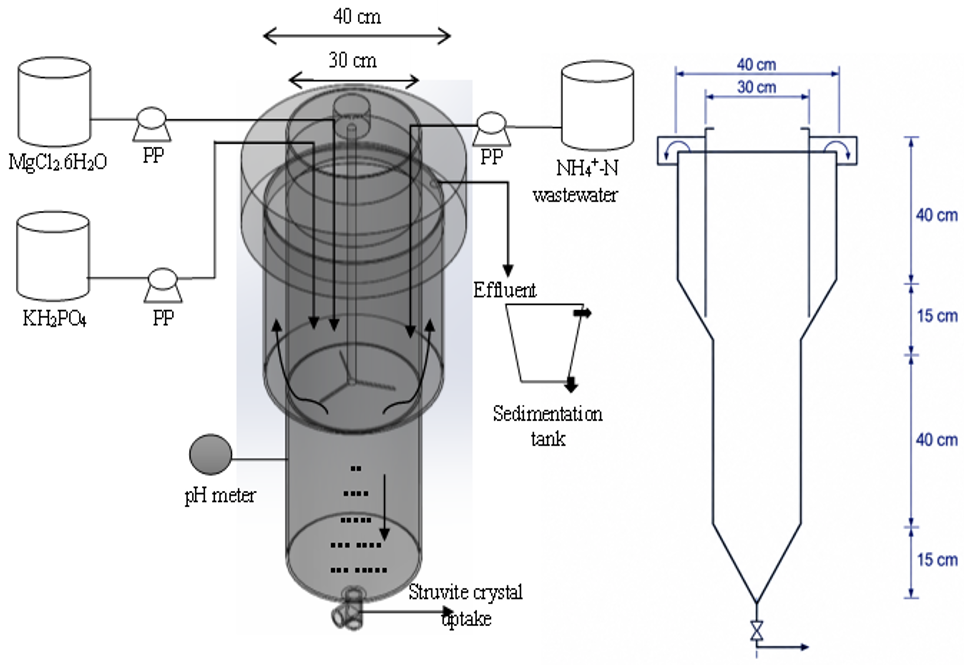
Figure 1 presents a schematic diagram of the modified struvite crystallization reactor, a cylindrical tank made of transparent acrylic. This modification was based on previous research by Ulfa et al. [23], which aimed to remove nutrients from wastewater to produce struvite. The reactor (Figure 1), constructed from transparent acrylic, measured 110 cm in height and was composed of four vertically arranged geometric sections. These sections, listed from top to bottom, included: (i) an upper cylindrical section for reaction and crystal growth (40 cm internal diameter, 40 cm height); (ii) a frustum-shaped transition section (15 cm height) tapering from 40 cm to 30 cm in diameter; (iii) a lower cylindrical sedimentation section (30 cm internal diameter, 40 cm height); and (iv) a conical bottom section (30 cm base diameter, 15 cm height) fitted with a valve for struvite crystal withdrawal. The internal geometric volume of each section was determined using standard formulas: V = πr²h for a cylinder; V = (πh/3)(R² + Rr + r²) for a conical frustum; and V = πr²h/3 for a cone, where R and r denote the larger and smaller radii, respectively, and h represents the section height. The calculated volumes for sections (i) through (iv) were 50.3 L, 14.5 L, 28.3 L, and 3.5 L, respectively, yielding a total geometric volume of approximately 96.6 L. During operation, the liquid level was maintained approximately 5 cm below the top rim of the upper section, establishing an effective working volume of 90 L. This constitutes approximately 93% of the total geometric volume, with the remaining 6.6 L serving as freeboard. The 90 L effective working volume was subsequently used to calculate the HRT.
Figure 1. Schematic diagram of the modified reactor for the experimental study
The mixing system used a four-blade stainless-steel marine propeller, 15 cm in diameter, positioned at the center of the reactor's upper reaction zone. It functioned at a constant rotational speed of 80 revolutions per minute (rpm), yielding a tip speed of approximately 0.63 meters per second (m/s). This operational speed was based on existing literature, which suggests that moderate mixing intensities of 60–100 rpm effectively homogenize reagents and promote struvite crystal growth [12], while minimizing attrition and excessive turbulence that may inhibit crystallization at speeds exceeding 500 rpm. Although the power input was not directly measured in this study, the selected setting of 80 rpm effectively balances adequate mass transfer for nucleation with the mitigation of shear forces that could compromise crystal quality, as indicated by prior research on fertilizer wastewater [4, 11]. Three sets of dosing pumps (JCMB 45-5 AILIPU Solenoid Dosage) were used to introduce ammonia waste, MgCl2⸳6H2O solution, and KH2PO4 solution into the reactor. The reactor featured internal circulation that forced the reactants into the solution via a draft tube, and it operated continuously at room temperature. The draft tube was designed to minimize the loss of crystal products in the reactor effluent. A bottom valve opened to expel the crystalline product that had accumulated at the bottom of the reactor. A sedimentation tank in the effluent stream separated the crystalline product. Although this study did not include formal measurements of particle size distribution and settling velocity, the sedimentation-zone design was guided by visual observations of crystal accumulation and quantitative mass-recovery data, which indicated effective solids separation. The recovery of crystalline precipitates ranged from 132.72 to 157.72 g across the investigated HRTs, demonstrating that the dual-zone reactor configuration operated under the tested laboratory-scale continuous-flow conditions. Future research should integrate laser diffraction analysis and settling column tests to improve sedimentation performance for industrial applications.
Although this study did not incorporate a direct side-by-side comparison with a conventional single-zone stirred reactor, the dual-zone modification—characterized by integrated sedimentation and a draft tube—was explicitly developed to address the crystal loss observed in our previous batch-scale investigations [23] and in the literature concerning inadequate solids retention in standard STR configurations [11, 12]. This design supports solid-liquid separation by allowing crystals to settle in the lower zone while maintaining mixing in the upper section. The consistent struvite recovery (132.72–157.72 g) indicates that the configuration functioned under the tested laboratory conditions. Therefore, these results should be interpreted as performance observations for the tested configuration rather than as evidence of superiority over conventional single-zone reactors. Future research should prioritize controlled comparative studies between conventional and modified reactor designs.
2.3 Experimental procedure
The struvite synthesis process began with preparing a solution by diluting wastewater from the urea fertilizer industry. The raw wastewater contained ammonium nitrogen at 2,376 mg/L, with an initial pH of 10.53. The wastewater was subsequently diluted with clean water to obtain a target ammonium nitrogen concentration of approximately 500 mg/L. Following dilution, the pH of the wastewater was observed to decrease to a range of 8.7–9.2. The final ammonium nitrogen concentration was verified using a Shimadzu UV-1700 UV-Vis spectrophotometer, yielding an average concentration of 466.73 ± 2.09 mg/L. To achieve an ammonium nitrogen concentration of approximately 500 mg/L in a total volume of 60 liters, the concentrated wastewater was first transferred to a 60-liter storage tank, and then clean water was added to reach the 60-liter mark. The mixture was stirred thoroughly until homogeneous. The final ammonium nitrogen concentration was verified using a Shimadzu UV-1700 UV-Vis spectrophotometer, yielding an average concentration of 466.73 ± 2.09 mg/L, close to the target. After determining the ammonium nitrogen concentration, we added magnesium chloride (MgCl₂) and potassium hydrogen phosphate (KH₂PO₄) as reagents to provide magnesium (Mg²⁺) and phosphate (PO₄³⁻) ions for struvite crystal formation. These reagents were prepared in separate 60-liter tanks, with a molar ratio of Mg: NH₄:PO₄ of 1:1:1. The 1:1:1 molar ratio was selected to meet the stoichiometric requirements for struvite formation and is consistent with methodologies reported by El Diwani et al. [24] and Warmadewanthi and Bachtiar [25] for treating wastewater generated by the fertilizer industry. Although many industrial processes utilize a slight excess of Mg²⁺, with a molar ratio of Mg: NH₄:PO₄ = 1.5:1:1, to ensure complete precipitation, this study employed an equimolar ratio (1:1:1) to reduce reagent costs during laboratory evaluations. Notably, K⁺ from KH₂PO₄ does not integrate into the struvite structure but may instead form potassium struvite (MgKPO₄·6H₂O) under high-pH conditions. Future research should investigate alternative phosphate sources, such as H₃PO₄ and Na₂HPO₄, to better understand this phenomenon.
For a 60 L feed solution containing 466.73 mg/L NH₄⁺-N, the total nitrogen mass was approximately 28.0 g, corresponding to about 2.00 mol of NH₄⁺-N. Based on the stoichiometric molar ratio of Mg²⁺: NH₄⁺:PO₄³⁻ = 1:1:1, approximately 2.00 mol of phosphate and 2.00 mol of magnesium were required. Therefore, the corresponding reagent requirements were approximately 272.2 g of KH₂PO₄ and 406.6 g of MgCl₂·6H₂O for each 60 L feed preparation. These calculations were based on the molar masses of KH₂PO₄ and MgCl₂·6H₂O, which are 136.09 g/mol and 203.30 g/mol, respectively. Although the cost of these reagents is a significant operational expense, it is partially offset by the commercial value of the recovered struvite, which yields 132-158 g per run and serves as a slow-release fertilizer. The reactants were added to the reactor to initiate struvite synthesis. The pH was maintained between 9 and 10 using a Hanna 9814 pH meter, adding potassium hydroxide (KOH) as needed to keep it within this optimal crystallization range.
The prepared solution, with controlled concentration and pH, was fed into the reactor to begin crystal synthesis. In the reactor, Mg²⁺ and PO₄³⁻ ions reacted with ammonium (NH₄⁺) to form struvite crystals (MgNH₄PO₄·6H₂O). Three independent dosing pumps were used to continuously supply the diluted wastewater, which was the sole source of ammonium (NH₄⁺) (no external ammonium was added), the MgCl₂·6H₂O solution, and the KH₂PO₄ solution into the reactor. The total influent flow rate (Qtotal) was defined as the sum of the individual flow rates of wastewater (QN), magnesium solution (QMg), and phosphate solution (QP), as expressed in Eq. (1):
Qtotal = QN + QMg + QP (1)
The nominal hydraulic retention time (HRT) was calculated as:
HRT = V/Qtotal (2)
In Eq. (2), V represents the effective working volume of the reactor, and Qtotal is the total influent flow rate. In this study, the effective working volume was 90 L. Therefore, total influent flow rates of approximately 22, 30, 45, 60, and 90 L/h corresponded to nominal HRTs of approximately 4, 3, 2, 1.5, and 1 h, respectively. The impeller speed was maintained at 80 rpm to ensure thorough mixing and uniform reagent distribution. Effluent samples were collected in duplicate at 2.5 and 5 hours during each 5-hour experimental run. The NH₄⁺-N concentration of each sample was determined in triplicate using the Nesslerization method, and these measurements were averaged. For each run, effluent concentrations were measured at 2.5 and 5 h; the reported values represent the mean of these two sampling times and are expressed as mean ± standard deviation. Over the 5-hour operating period, the number of hydraulic turnovers (calculated as run time divided by HRT) was 1.25, 1.67, 2.5, 3.33, and 5 for nominal HRTs of 4, 3, 2, 1.5, and 1 hour, respectively. In an ideally mixed reactor, these turnovers would result in the displacement of approximately 71%, 81%, 92%, 96%, and 99% of the initial reactor contents. In continuous-flow systems, steady-state conditions are typically assumed after a minimum of three to five HRTs, at which point 95–99% of the initial reactor contents have been displaced. This assumption is generally corroborated by consecutive effluent concentrations exhibiting less than 5–10% variation under constant operating conditions. However, in the present study, only the 1-hour and 1.5-hour HRT conditions surpassed three turnovers within the 5-hour experimental duration, and a formal steady-state criterion based on effluent stability was not applied. Consequently, results obtained from longer HRTs, particularly the 4-hour HRT, may still be influenced by the initial reactor contents, necessitating cautious interpretation of comparisons between different HRT conditions.
The theoretical struvite-equivalent mass was calculated from the NH₄⁺-N loading over each 5-hour experimental run. The three dosing pumps operated at equal volumetric flow rates; therefore, the wastewater flow rate (QN) was one-third of the total influent flow rate (Qtotal). Using the NH₄⁺-N concentration of the wastewater feed before reagent mixing (466.73 mg/L), the wastewater volume processed (QN × 5 h), and the molar masses of nitrogen (14.007 g/mol) and struvite (245.41 g/mol), the theoretical mass was calculated assuming complete 1:1 molar conversion of ammonium to struvite. The recovered-solids-to-theoretical-mass ratio was calculated by dividing the recovered crystalline solids by this theoretical mass and multiplying by 100. These ratios indicate collected solid mass relative to stoichiometric potential, not confirmed struvite purity or nitrogen recovery.
Upon completion, the struvite crystals settled at the bottom of the reactor and were separated from the remaining solution via filtration. The crystals were then dried at room temperature with fan-assisted airflow to reduce moisture content. Room-temperature fan-assisted drying was intentionally chosen to prevent the thermal decomposition of struvite, which commences at approximately 55–60 ℃ due to the gradual loss of crystallization water molecules. Although the direct effects of drying on crystal structure were not assessed separately, XRD analysis of the dried product showed diffraction peaks consistent with struvite (2θ = 16.60°, 21.58°, 30.29°, and 33.38°). This suggests that the drying method did not cause substantial phase changes. Although particle size distribution analysis was not conducted in this study, it is recommended for future research as a critical parameter for evaluating sedimentation performance and the product's suitability for fertilizer applications. The final product was dry struvite, rich in nitrogen, phosphorus, and magnesium—essential nutrients for enhancing soil fertility and promoting plant growth.
3.1 Characteristics of wastewaters
Wastewater effluent from the urea fertilizer industry in Aceh, Indonesia, exhibits distinctive chemical characteristics, primarily elevated ammonia concentrations, a crucial element in the nitrogen cycle. The effluent contains 2,376 mg/L ammonium nitrogen, 878 mg/L chemical oxygen demand (COD), and 89.34 mg/L total suspended solids (TSS), with a pH of 10.53. This elevated ammonia level requires careful management during wastewater treatment, as inadequate handling may cause significant environmental impacts. Additionally, the effluent contains phosphate (7.80 mg/L), urea (3,744.2 mg/L), and various organic materials, as indicated by the COD value. The moderate COD and relatively low TSS concentrations, compared with other industrial wastewaters, suggest that nitrogen removal is the primary challenge. These components underscore the complexity of industrial effluents, which require effective treatment before their discharge into the environment. Table 1 compares the effluent characteristics observed in this study with those documented in previous research across various industrial and waste sources.
As shown in Table 1, effluents from fertilizer manufacturing facilities and methanogenic landfills often contain elevated concentrations of ammonia nitrogen and phosphate, which, if not adequately treated, can cause significant environmental consequences, such as eutrophication. El Diwani et al. [24] reported that effluents from fertilizer industries contain substantial levels of ammonia (approximately 2651.5 mg/L) and phosphate (577.72 mg/L). Similarly, Warmadewanthi and Bachtiar [25] reported phosphate and ammonium concentrations of 9815 mg/L and 2558 mg/L, respectively, in the effluent from a fertilizer industry in Surabaya, Indonesia. Both studies indicated that reactor-based treatment systems, including fluidized bed reactors and struvite precipitation methods, can effectively recover phosphate and ammonium, achieving recovery rates of up to 73% for phosphate and 57% for ammonium under optimal operating conditions.
Table 1. Comparison of effluent characteristics between the present study and previous research
|
Parameter |
The Present Study |
Other Previous Studies |
|||
|
Aceh, Indonesia |
Fertilizer Industry, Indonesia [25] |
Fertilizer Industry, Cairo [24] |
Landfill Leachate, Italy [26] |
Urine Waste, Nepal [27] |
|
|
pH |
10.53 |
8 |
8.09 |
8.2 |
5.6 |
|
COD (mg/L) |
878 |
100 |
- |
4070 |
7660 |
|
TSS (mg/L) |
89.34 |
9.66 |
- |
1009 |
- |
|
N – NH4 (mg/L) |
2376 |
2558 |
2651.5 |
2350 |
438 |
|
Urea (mg/L) |
3744.2 |
- |
- |
- |
4450 |
|
PO4 (mg/L) |
7.80 |
9815 |
577.72 |
14 |
388 |
In landfill applications, Siciliano et al. [26] found that leachate contains ammonia nitrogen at a concentration of 2.35 g/L. Their struvite precipitation process, which uses magnesium sourced from bittern and phosphorus derived from bone meal, achieved remarkable recovery rates of over 98% for nitrogen and 99% for phosphorus. The struvite products generated from these waste streams demonstrated potential as slow-release fertilizers, with heavy metal content remaining within safe limits, thereby offering a more sustainable approach to waste treatment. Furthermore, Etter et al. [27] showed that producing struvite from source-separated urine in Nepal could be done cost-effectively using locally available resources, specifically bittern waste from the salt industry as a magnesium source. Their study reported ammonium and phosphate concentrations in urine waste at 438 mg/L and 388 mg/L, respectively, with a phosphorus removal efficiency of 90%.
3.2 Ammonium nitrogen removal performance
Given the native phosphate concentration of only 7.80 mg/L in the undiluted wastewater, struvite formation is predominantly driven by the addition of KH₂PO₄, compared with 2,376 mg/L NH₄- N. This process is better characterized as chemical-assisted ammonium removal with concomitant struvite production, rather than as comprehensive nutrient recovery from the waste stream. For a standard 60 L batch containing 466.73 mg/L NH₄⁺-N, or 28.0 g of nitrogen, a feed solution with the same NH₄⁺-N concentration would require approximately 272.2 g of KH₂PO₄ and 406.6 g of MgCl₂·6H₂O. This is necessary to maintain a stoichiometric molar ratio of Mg²⁺: NH₄⁺:PO₄³⁻ of 1:1:1. The cost of these reagents is a significant operational expense and should be considered when assessing the process's economic feasibility relative to the value of the recovered struvite. This requirement represents a substantial operational cost that must be weighed against the commercial value of the recovered struvite (132–158 g per run, which is valued as a slow-release fertilizer). Consequently, although the process shows potential as a pre-treatment method for high-strength ammonium wastewater, its economic feasibility remains uncertain. It requires further evaluation through a comprehensive techno-economic assessment, particularly given reagent consumption and operating costs.
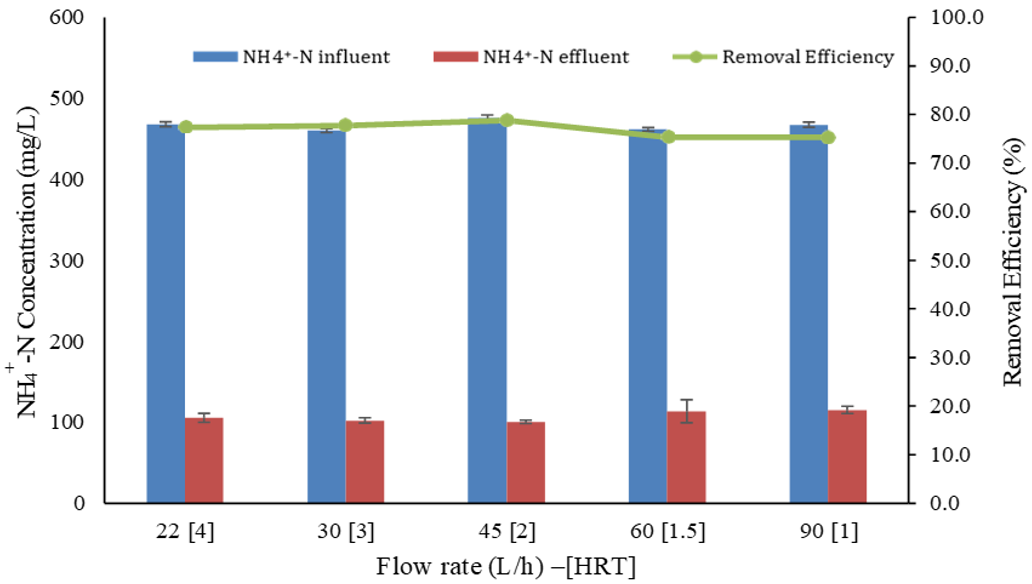
Figure 2. Average influent and effluent NH₄⁺-concentrations and removal efficiencies at different flow rates and hydraulic retention times (HRT) during the 5-hour experimental period
The difference between the input and output ammonia concentrations was used to assess the extent to which ammonium nitrogen was removed during the crystallization process. The study examined HRTs of 4, 3, 2, 1.5, and 1 hour. Figure 2 shows NH₄⁺-N removal efficiency of 75.3–77.4% across HRTs of 1–4 h. The overall mean NH₄⁺-N concentrations were 466.73 ± 2.09 mg/L in the diluted wastewater before reagent addition and 107.53 ± 8.7 mg/L in the reactor effluent. Across the five nominal HRTs, the influent NH₄⁺-N concentrations remained similar, whereas the effluent concentrations were slightly higher at the two shortest HRTs (1 and 1.5 h) than at 2–4 h, consistent with the marginally lower removal efficiencies under these conditions. The result at a nominal HRT of 1 h indicates substantial average ammonium removal under that flow condition but does not establish the time needed to reach steady state. These results indicate that an HRT of 1 h may be sufficient for substantial ammonium removal under the tested conditions, as extending the HRT beyond 1 h resulted in only a small observed increase in removal efficiency. However, the statistical significance of these differences was not evaluated. The 1-hour condition completed the largest number of hydraulic turnovers (Section 2.3), indicating it was the least influenced by the initial reactor contents. Therefore, the minor differences observed at longer HRTs should not be overemphasized.
Removal efficiency varied by only 2.1 percentage points across HRTs of 1 to 4 h, rising from 75.3% to 77.4%. These results indicate relatively small differences in average ammonium removal performance among the tested HRT conditions. Ulfa et al. [4] reported similar trends, observing limited changes in ammonium removal efficiency across HRTs of 3–5 h at an influent concentration of 500 mg/L. However, because the present results represent averages over the 5-hour operating period and steady-state conditions were not independently verified, these findings should not be interpreted as evidence of rapid equilibrium attainment.
These results indicate that HRT influenced ammonium removal only slightly under the tested conditions. The high efficiency attained with short HRT indicates that an HRT of approximately 1 hour may suffice for practical applications, although further validation is required. Operational cost and treatment-capacity implications require further evaluation beyond the present experimental scope. However, if higher removal efficiencies are necessary, merely prolonging the HRT may not be the most effective strategy. Additional treatment steps may be required if lower effluent NH₄⁺-N concentrations are targeted, although such configurations were not evaluated in this study. The stable ammonium removal efficiency of 75–78% across HRTs of 1-4 hours highlights the inherent limitations of struvite precipitation under the examined conditions. This relatively consistent removal efficiency may be influenced by crystallization kinetics, reagent availability, and competing ions under the operational pH range of 9–10. Furthermore, the low native phosphate concentration (7.80 mg/L) in the wastewater limits PO₄³⁻ availability, regardless of retention time. Importantly, the high average removal efficiency observed at an HRT of 1 hour suggests that substantial ammonium removal can be achieved under shorter retention-time conditions. Extending the HRT beyond 1 hour provided only limited additional removal, possibly because of kinetic constraints and competition from other ions in the complex industrial matrix; however, these mechanisms were not examined directly. These findings indicate that substantial ammonium removal was observed at an HRT of 1 hour, while extending the HRT provided only limited additional removal under the tested conditions.
3.3 Crystalline solids and recovery performance
Crystalline solids were quantified following each 5-hour experimental run. As delineated in Table 2, an increase in the total flow rate from 22 to 90 L/h corresponded to an increase in the collected solid mass from 132.72 to 157.72 g. However, the theoretical struvite-equivalent mass exhibited a more substantial increase, rising from 299.84 to 1,226.60 g, commensurate with the elevated wastewater nitrogen loading. This observation suggests that the increment in collected solid mass was considerably less pronounced than the theoretical production potential. The observed discrepancy may be attributable to several unquantified factors, including but not limited to ammonia volatilization at pH 9–10 under continuous agitation, incomplete precipitation, solids remaining in suspension or entrained within the effluent, and solids adhering to reactor surfaces. Average NH₄⁺-N removal efficiencies demonstrated only marginal variations across different HRT conditions; therefore, these results should not be interpreted as indicative of verified steady-state performance. The recovered solid mass consistently fell below the theoretical value, a deficit previously reported in our antecedent batch study [28]. This discrepancy, while expected in real-world applications, warrants further investigation. One plausible explanation is that struvite particles remained suspended in the effluent flow at the top of the reactor, failing to settle and thus eluding collection. This phenomenon highlights the complex nature of the crystallization and sedimentation processes involved in struvite recovery.
Particle size growth emerged as a crucial characteristic of the reaction process. Larger particles settle more readily in the sedimentation section, improving recovery rates. The initial experiment used struvite, which resulted in particle sizes exceeding 5 hours of processing [23]. The reactor design incorporates a sedimentation zone intended to facilitate solid-liquid separations and the collection of crystalline precipitates. However, its comparative effectiveness in improving solids retention was not evaluated in the present study. Although particle size distribution and settling velocity were not directly quantified, the consistent recovery of solids suggests that sedimentation is crucial for retaining precipitated crystals within the system. This observation suggests that optimizing particle size growth could be a key factor in improving overall process efficiency. These results indicate that solids retention and crystal collection influenced the difference between actual and theoretical struvite yields.
Table 2. Recovered crystalline solids and theoretical struvite-equivalent mass under different flow rates and hydraulic retention times (HRT)
|
Flow Rate (L/h) – [HRT] (h) |
Recovered Crystalline Solids (g) |
Theoretical Struvite-Equivalent Mass (g) |
Recovered Solids-to-Theoretical Struvite Ratio (%) |
|
22 [4] |
132.72 |
299.84 |
44.26 |
|
30 [3] |
139.39 |
408.87 |
34.09 |
|
45 [2] |
148.96 |
613.30 |
24.29 |
|
60 [1.5] |
155.72 |
817.74 |
19.04 |
|
90 [1] |
157.72 |
1,226.60 |
12.86 |
At the highest flow rate (90 L/h, HRT = 1 h), 157.72 g of crystalline solids were recovered compared with a theoretical struvite-equivalent mass of 1,226.60 g, corresponding to a recovered-solids-to-theoretical-mass ratio of 12.86%. At the lowest flow rate (22 L/h; nominal HRT ≈ 4 h), 132.72 g was recovered compared with a theoretical mass of 299.84 g, giving the highest ratio (44.26%). The ratio therefore decreased with increasing influent loading, despite a modest rise in collected solid mass. This pattern may reflect limitations in precipitation and/or solids retention at higher flow rates, although neither mechanism was separately quantified. Because the recovered solids may contain secondary mineral phases, the mass ratio should not be interpreted as struvite purity or as a direct ammonium recovery efficiency. Moreover, the recovered mass remained relatively constant (132.72–157.72 g) despite an approximately four-fold increase in nitrogen loading, suggesting that part of the recovered solids may not scale with throughput (e.g., precipitate formed from the initial reactor contents); this could not be resolved with the present data.
In addition, several factors beyond the loss of effluent particles may contribute to the persistent discrepancy between theoretical and measured recovered crystalline solids. At the operating pH of 9–10, a substantial fraction of ammoniacal nitrogen exists as free NH₃. Under continuous stirring, this NH₃ may be lost to the atmosphere, which would lower effluent NH₄⁺-N without forming struvite. Therefore, the observed removal efficiency does not necessarily reflect nitrogen converted into crystalline solids. This loss was not quantified in the present study. Incomplete reaction kinetics during HRTs of 1 to 4 hours limit the complete conversion of precursor ions. Furthermore, trace amounts of calcium ions may promote competitive hydroxyapatite precipitation, which consumes phosphate without promoting struvite production. XRD analysis also indicated the presence of secondary phases (tentatively assigned to andalusite), suggesting that struvite was not the only solid recovered. Additionally, crystal adhesion to reactor walls, draft tube surfaces, and impeller components likely constitutes an unquantified loss mechanism, underscoring the practical challenges of achieving complete solids recovery in continuous-flow crystallization systems.
El Diwani et al. [24] reported producing 47.52 g of struvite per liter of effluent at an optimal pH of 9.6, using bittern as the magnesium source from fertilizer industry effluent. Siciliano et al. [26] found that methanogenic landfill leachate could produce struvite with up to 95% phosphorus recovery efficiency, yielding about 303 g of struvite from 4.8 liters of effluent. In contrast, Etter et al. [27] found that approximately 1 kg of struvite, with a phosphorus recovery efficiency exceeding 90%, could be generated from 640 liters of waste urine at pH 9-10. These studies demonstrate that struvite precipitation effectively removes phosphorus and nitrogen from various high-ammonium waste streams, with recovery efficiencies typically exceeding 90% under optimized conditions [28-30]. In comparison, the present study attained a removal rate of 77% for NH₄⁺-N.
3.4 Structural and morphological characterization of struvite
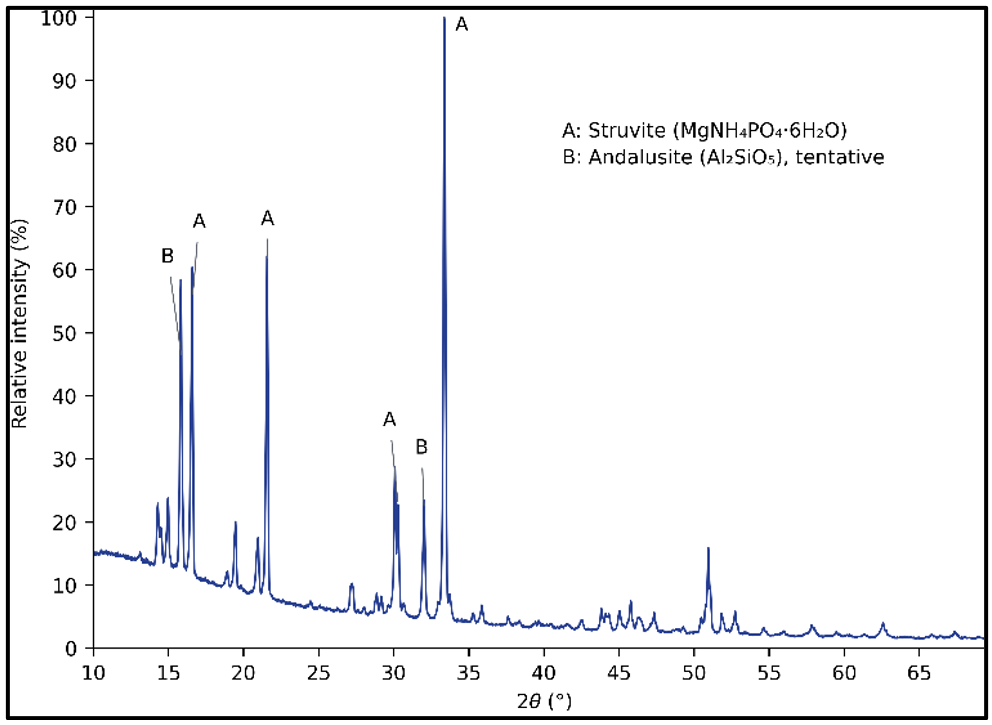
Figure 3 illustrates the results of the struvite investigation conducted via XRD. The analysis focused on two primary parameters: the 2θ peak position and the high and low peak intensities. The diffraction pattern of the recovered solids showed reflections attributable mainly to struvite (NH₄MgPO₄·6H₂O), together with additional reflections tentatively assigned to andalusite (Al₂SiO₅). Notable struvite peaks were detected at 2θ values of 16.60°, 21.58°, 30.29°, and 33.38°. Additional peaks at 2θ values of 15.87° and 32.02° were tentatively assigned to andalusite; however, this assignment requires further confirmation because ICP-OES analysis was not conducted. These assignments were made by comparison with a reference struvite diffraction pattern [20].
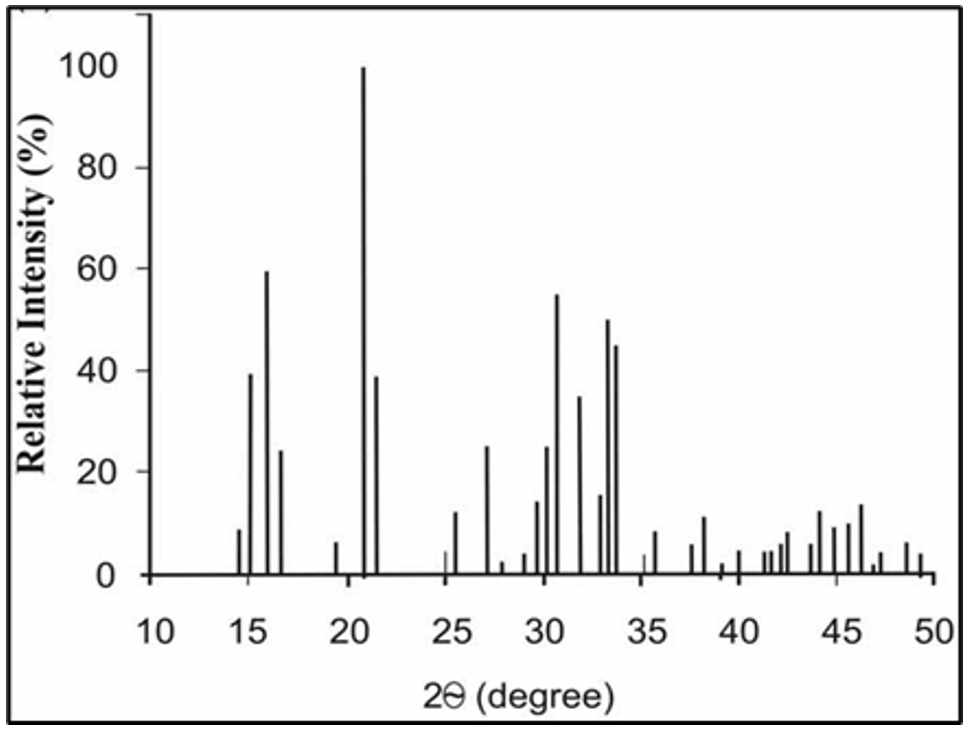
The experimental XRD reflections at 2θ = 16.60°, 21.58°, 30.29°, and 33.38° in Figure 3(a) are close to reflections at approximately 16.6°, 21.6°, 30.3°, and 33.4°, respectively, in the struvite reference pattern shown in Figure 3(b) [20]. This agreement in peak positions supports the assignment of these reflections to struvite. These findings are also consistent with previous research by Machdar et al. [9], who investigated struvite synthesis at a batch scale. The presence of reflections other than those of struvite suggests that the precipitation process was not exclusively selective for struvite. Andalusite is an aluminum silicate mineral. If confirmed, its presence would suggest contamination or unintended side effects during synthesis. This phenomenon may be attributed to the complex composition of wastewater from the fertilizer production plant, which is used as reactor feed. The additional reflections tentatively assigned to andalusite suggest the possible presence of secondary impurity phases; however, the present data cannot confirm the source of Al³⁺- and Si⁴⁺-containing species because comprehensive elemental analysis, such as ICP-OES, was not conducted. While minor leaching of silica from the acrylic reactor walls may occur, the primary source of these impurities is likely attributed to the complex effluent matrix, which contains unquantified metal ions. Additionally, using KH₂PO₄ and KOH may lead to potassium struvite (MgKPO₄·6H₂O) co-precipitation, given its isostructural nature with struvite and its highly similar diffraction pattern. This analytical gap underscores the importance of comprehensive pretreatment characterization using inductively coupled plasma optical emission spectrometry (ICP-OES) to identify potential interfering ions before struvite precipitation experiments. Such secondary phases, if present, would reduce the purity of the recovered product [31].
(a)
(b)
Figure 3. X-ray diffraction (XRD) analysis: (a) the present study; (b) the struvite standard by Sakthivel et al. [20]
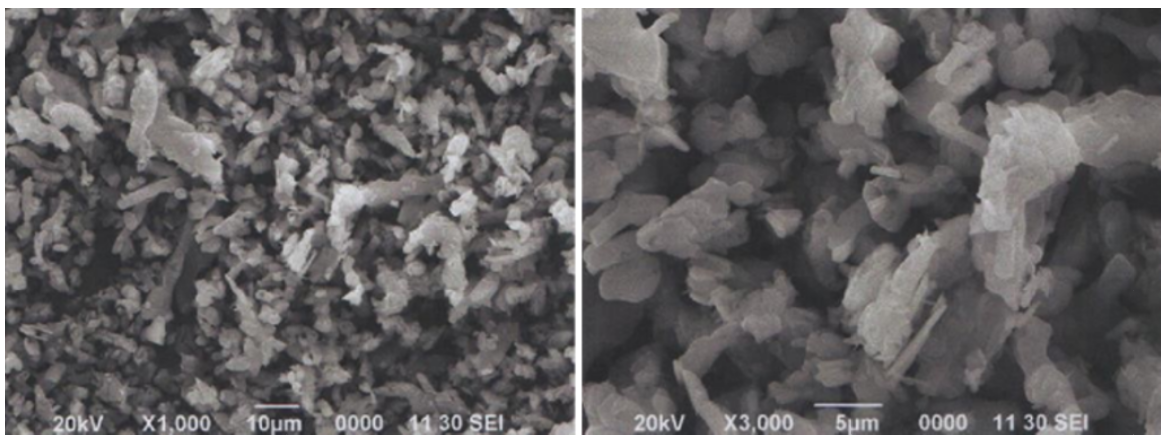
Complementing the XRD analysis, SEM was used to investigate the morphology of the struvite products. The SEM images revealed uneven, rod-like struvite crystals ranging from 0.1 to 1 mm in size, as shown in Figure 4. The observed rod-like and irregular crystal morphologies correspond with the moderate mixing regime employed (80 rpm, tip speed ≈ 0.63 m/s). This degree of turbulence promotes the growth of elongated struvite crystals, in contrast to the equiaxed morphologies generated under high-shear conditions (>200 rpm). Existing literature [17, 23, 25] indicates that mixing intensities of 60–100 rpm optimize crystal elongation while minimizing attrition. Conversely, excessive turbulence (>500 rpm) completely inhibits struvite formation. The irregular surface features observed can be attributed to the co-precipitation of secondary phases, such as andalusite, as identified by XRD, and to the heterogeneous ionic environment characteristic of real industrial wastewater. This environment introduces competing nucleation sites and impurities that are typically absent in synthetic systems.
The observed rod-like morphology is consistent with that reported for struvite by Liu et al. [13]. However, as SEM alone cannot identify mineral phases, these structures may also contain impurities resulting from coprecipitation with foreign ions [30]. This observation aligns with the XRD results, indicating a mixed mineral composition and suggesting that the synthesis process needs improvement to facilitate struvite formation.
Figure 4. Scanning electron microscopy (SEM) images of the experiment's struvite precipitate
The irregularities observed in the material's crystal structure suggest that suboptimal growth conditions or contaminants may influence its formation [32]. The XRD and SEM results suggest reduced material purity, highlighting the inherent challenges of processing complex waste streams in struvite recovery methodologies. This scenario underscores the need for further characterization and process control to improve struvite selectivity and minimize co-precipitation of undesired contaminants. Despite these challenges, the XRD results are consistent with struvite as a crystalline phase in the recovered solids, and SEM provides complementary morphological information. These findings suggest that treating actual industrial wastewater may lead to the co-precipitation of secondary phases, which are less common in synthetic systems. Additionally, it is crucial to characterize the feedstock using pre-treatment methods, such as ICP-OES, to identify interfering ions before scaling up struvite crystallization.
Combined XRD and SEM analysis identified struvite as a crystalline phase in the recovered solids. The struvite reference pattern in Figure 3(b) [20] shows reflections at 2θ values of approximately 16.60°, 21.6°, 30.3°, and 33.4°. Additional reflections were tentatively attributed to andalusite. Using both techniques provided complementary insights into phase composition and crystal morphology that neither method could provide alone. These findings indicate that product characterization is important when struvite is recovered from actual industrial wastewater, because possible secondary phases or impurities may affect crystal purity.
This study presents laboratory-scale observations using a 90-L reactor; however, further work is required before concluding practical or industrial implementation. The current continuous-flow configuration incorporates manual pH adjustment and was operated at constant flow rates, in contrast to the batch-scale configuration used in prior work [23]. Nevertheless, scaling up will require integrating automated pH control systems and real-time monitoring of supersaturation conditions to ensure consistent struvite purity and removal efficiency. Pilot-scale investigations, such as those conducted by Aguado et al. [11] employing seawater-derived magnesium sources, have demonstrated stable operation over extended periods. The present results are insufficient to determine scale-up feasibility, which would require long-term pilot operation and detailed hydraulic and solids-handling evaluation. While a comprehensive economic assessment of full-scale implementation is beyond the scope of this laboratory investigation, the substantial average ammonium removal observed at a 1-hour HRT suggests the potential for higher-throughput operation; however, this requires further validation. The 75.3% NH₄⁺-N removal achieved at an HRT of 1 h indicates substantial ammonium reduction under the tested conditions, but its use as a practical pre-treatment step requires further validation.
In addition, this study has several limitations that warrant acknowledgment. The experiments employed a single mixing speed of 80 rpm and did not investigate a range of hydrodynamic conditions for optimization. Additionally, the ion characterization of the industrial feedstock was limited to standard parameters: NH₄⁺-N, COD, TSS, and PO₄³⁻. Although the 90-liter reactor signifies an advancement over bench-scale experiments, further continuous-flow optimization and a formal analysis of particle size and settling are imperative. Finally, an economic feasibility assessment is crucial to evaluate reagent costs relative to struvite revenue at an industrial scale.
The findings presented herein are derived from specific experimental conditions: urea fertilizer wastewater sourced from PT Pupuk Iskandar Muda in Aceh, Indonesia, diluted to an inlet NH₄⁺-N concentration of 466.73 ± 2.09 mg/L; a dual-zone 90-L stirred-tank reactor equipped with a draft tube and a dedicated sedimentation zone; an impeller speed maintained at 80 rpm; and a stoichiometric molar dosing ratio of Mg²⁺: NH₄⁺:PO₄³⁻ established at 1:1:1. The conclusions drawn from this study should be interpreted within these parameters, and their applicability to other types of wastewater, reactor configurations, or operational conditions necessitates independent verification.
This study demonstrated that the modified dual-zone stirred-tank reactor achieved a removal efficiency of 77 ± 1.54% for ammonium nitrogen from wastewater generated by urea fertilizer plants (initial NH₄⁺-N concentration: 466.73 ± 2.09 mg/L). The reactor consistently reduced effluent concentrations to 107.53 ± 8.7 mg/L across HRTs of 1–4 hours, while producing 132.72–157.72 g of recovered crystalline solids per run, corresponding to recovered-solids-to-theoretical struvite mass ratios of 12.86–44.26%. The relatively similar mean removal efficiencies among HRT conditions do not establish rapid equilibrium or steady-state operation. This result suggests that short-retention-time operation may be feasible under the tested conditions, although long-term stability and economic implications were not evaluated. These results indicate substantial ammonium removal and recovery of crystalline solids; however, no direct comparison with a conventional single-zone stirred reactor was made to quantify performance differences. Further side-by-side studies with conventional single-zone reactors are required to determine whether the dual-zone configuration provides measurable performance advantages. These findings pertain specifically to the experimental setup used in this study and should be understood in that context.
The 77 ± 1.54% reduction in NH₄⁺-N lowered the concentration from 466.73 ± 2.09 mg/L in the diluted wastewater to 107.53 ± 8.7 mg/L in the reactor effluent, indicating a substantial reduction in ammonium load under the tested conditions. Although this reduction brought the treated wastewater closer to regulatory discharge requirements, the remaining NH₄⁺-N concentration suggests that single-stage struvite precipitation should be considered a pre-treatment step rather than a stand-alone compliance technology. Practical applications would still require additional polishing treatment to ensure full regulatory compliance. Therefore, this process's main contribution is its ability to reduce high-strength ammonium loads while converting some nitrogen into recoverable crystalline solids.
XRD analysis of the crystal deposit showed peaks consistent with struvite (NH₄MgPO₄·6H₂O), along with additional reflections tentatively assigned to andalusite (Al₂SiO₅). This heterogeneous pattern suggests that the precipitation process was not entirely selective for struvite, as anticipated. If confirmed, the andalusite phase may be associated with trace amounts of Al³⁺ and Si⁴⁺ species in the wastewater. However, without ICP-OES analysis, this connection remains a hypothesis that needs to be verified in future studies. The presence of secondary phases suggests that struvite precipitation is less selective in complex industrial effluents than in synthetic systems. Future studies should include comprehensive elemental analysis, particle-size and settling evaluation, long-term operation, and controlled comparisons with conventional single-zone reactors to assess better crystal purity, process stability, and reactor performance.
The authors gratefully acknowledge financial support from Universitas Syiah Kuala (USK) through its Excellent Research Program for Doctoral Acceleration (PRUUPD) under grant No. 292/UN11/SPK/PNBP/2020, carried out within the Chemical Engineering Department, Faculty of Engineering, USK. Additional support for publication costs was provided by the Ministry of Higher Education, Science, and Technology through Malikussaleh University (grant No. 037/SPK/C3/DT.05.00/BP/2025). The authors also thank PT. Pupuk Iskandar Muda, Aceh, Indonesia, for generously providing wastewater samples for this research.
[1] Integrated Agricultural and Plant Nutrition Solutions: Pupuk Indonesia produces and markets urea, NPK, and various other types of fertilizers. https://www.pupuk-indonesia.com/.
[2] Rahimpour, M.R., Mottaghi, H.R., Barmaki, M.M. (2010). Enhancement of urea, ammonia and carbon dioxide removal from industrial wastewater using a cascade of hydrolyser–desorber loops. Chemical Engineering Journal, 160(2): 594-606. https://doi.org/10.1016/j.cej.2010.03.081
[3] Laghari, A.N., Siyal, Z.A., Soomro, M.A., Bangwar, D.K., Khokhar, A.J., Soni, H.L. (2018). Quality analysis of urea plant wastewater and its impact on surface water bodies. Engineering, Technology & Applied Science Research, 8(2): 2699-2703. https://doi.org/10.48084/etasr.1767
[4] Ulfa, R., Machdar, I., Yunardi, Y., Suhendrayatna, S. (2024). Influence of ammonia concentration on struvite production and ammonia removal efficiency in a continuous-flow crystallizer reactor. Journal of Ecological Engineering, 25(12): 83-92. https://doi.org/10.12911/22998993/193752
[5] Scherger, L.E., Zanello, V., Lexow, C. (2021). Impact of urea and ammoniacal nitrogen wastewaters on soil: Field study in a fertilizer industry (Bahía Blanca, Argentina). Bulletin of Environmental Contamination and Toxicology, 107: 565-573. https://doi.org/10.1007/s00128-021-03280-x
[6] Matijašević, L., Dejanović, I., Lisac, H. (2010). Treatment of wastewater generated by urea production. Resources, Conservation and Recycling, 54(3): 149-154. https://doi.org/10.1016/j.resconrec.2009.07.007
[7] Darwish, M., Aris, A., Puteh, M.H., Abideen, M.Z., Othman, M.N. (2016). Ammonium-nitrogen recovery from wastewater by struvite crystallization technology. Separation & Purification Reviews, 45(4): 261-274. https://doi.org/10.1080/15422119.2015.1119699
[8] Chavan, R., Mutnuri, S. (2020). Demonstration of pilot-scale integrative treatment of nitrogenous industrial effluent for struvite and algal biomass production. Journal of Applied Phycology, 32: 1215-1229. https://doi.org/10.1007/s10811-019-01978-4
[9] Machdar, I., Depari, S.D., Ulfa, R., Muhammad, S., Hisbullah, A.B., Safrul, W. (2018). Ammonium nitrogen removal from urea fertilizer plant wastewater via struvite crystal production. IOP Conference Series: Materials Science and Engineering, 358: 012026. https://doi.org/10.1088/1757-899X/358/1/012026
[10] Kim, D., Min, K.J., Lee, K., Yu, M.S., Park, K.Y. (2017). Effects of pH, molar ratios and pre-treatment on phosphorus recovery through struvite crystallization from effluent of anaerobically digested swine wastewater. Environmental Engineering Research, 22(1): 12-18. https://doi.org/10.4491/eer.2016.037
[11] Aguado, D., Barat, R., Bouzas, A., Seco, A., Ferrer, J. (2019). P-recovery in a pilot-scale struvite crystallisation reactor for source separated urine systems using seawater and magnesium chloride as magnesium sources. Science of the Total Environment, 672: 88-96. https://doi.org/10.1016/j.scitotenv.2019.03.485
[12] Warmadewanthi, Rodlia, A., Ikhlas, N., Pandebesie, E.S., Bagastyo, A.Y., Herumurti, W. (2020). The effect of mixing rate on struvite recovery from the fertilizer industry. IOP Conference Series: Earth and Environmental Science, 506: 012013. https://doi.org/10.1088/1755-1315/506/1/012013
[13] Liu, X.N., Hu, Z.Y., Zhu, C.Y., Wen, G.Q., Meng, X.C., Lu, J. (2013). Influence of process parameters on phosphorus recovery by struvite formation from urine. Water Science and Technology 68(11): 2434-2440. https://doi.org/10.2166/wst.2013.514
[14] Cusick, R.D., Logan, B.E. (2012). Phosphate recovery as struvite within a single chamber microbial electrolysis cell. Bioresource Technology, 107: 110-115. https://doi.org/10.1016/j.biortech.2011.12.038
[15] Ortueta, M., Celaya, A., Mijangos, F., Muraviev, D. (2015). Ion exchange synthesis of struvite accompanied by isothermal supersaturation: Influence of polymer matrix and functional groups type. Solvent Extraction and Ion Exchange, 33(1): 65-74. https://doi.org/10.1080/07366299.2014.951283
[16] Bu, F., Du, S.Y., Xie, L., Cao, R., Zhou, Q. (2017). Swine manure treatment by anaerobic membrane bioreactor with carbon, nitrogen and phosphorus recovery. Water Science and Technology, 76(8): 1939-1949. https://doi.org/10.2166/wst.2017.278
[17] Rahman, M.M., Salleh, M.A.M., Rashid, U., Ahsan, A., Hossain, M.M., Ra, C.S. (2014). Production of slow release crystal fertilizer from wastewaters through struvite crystallization – A review. Arabian Journal of Chemistry, 7(1): 139-155. https://doi.org/10.1016/j.arabjc.2013.10.007
[18] Ariyanto, E., Sen, T.K., Ang, H.M. (2014). The influence of various physico-chemical process parameters on kinetics and growth mechanism of struvite crystallisation. Advanced Powder Technology, 25(2): 682-694. https://doi.org/10.1016/j.apt.2013.10.014
[19] Liu, X.N., Hu, Z.Y., Mu, J., Zang, H.X., Liu, L. (2014). Phosphorus recovery from urine with different magnesium resources in an air-agitated reactor. Environmental Technology, 35(22): 2781-2787. https://doi.org/10.1080/09593330.2014.921732
[20] Sakthivel, R.S., Azizurrahaman, M., Prabhu, V.G., Chariar, V.M. (2020). Recovery of phosphorus from stored urine using continuous flow reactor in decentralized level operations. Blue-Green Systems, 2(1): 237-249. https://doi.org/10.2166/bgs.2020.005
[21] Rahaman, M.S., Ellis, N., Mavinic, D.S. (2008). Effects of various process parameters on struvite precipitation kinetics and subsequent determination of rate constants. Water Science & Technology, 57(5): 647-654. https://doi.org/10.2166/wst.2008.022
[22] Stratful, I., Scrimshaw, M.D., Lester, J.N. (2004). Removal of struvite to prevent problems associated with its accumulation in wastewater treatment works. Water Environment Research, 76(5): 437-443. https://doi.org/10.2175/106143004x151491
[23] Ulfa, R., Machdar, I., Yunardi, Y., Rinaldi, W., Jauharlina, J. (2020). Residence time distribution study in laboratory scale struvite crystallization reactor with online conductivity measurement. IOP Conference Series: Materials Science and Engineering, 845: 012003. https://doi.org/10.1088/1757-899X/845/1/012003
[24] El Diwani, G., El Rafie, S., El Ibiari, N.N., El-Aila, H.I. (2007). Recovery of ammonia nitrogen from industrial wastewater treatment as struvite slow releasing fertilizer. Desalination, 214(1-3): 200-214. https://doi.org/10.1016/j.desal.2006.08.019
[25] Warmadewanthi, Bachtiar, Y.F.R. (2019). Study of struvite crystallization from fertilizer industry wastewater by using fluidized bed reactor. MATEC Web of Conferences, 276: 06006. https://doi.org/10.1051/matecconf/201927606006
[26] Siciliano, A., Stillitano, M.A., Limonti, C., Marchio, F. (2016). Ammonium removal from landfill leachate by means of multiple recycling of struvite residues obtained through acid decomposition. Applied Sciences, 6(11): 375. https://doi.org/10.3390/app6110375
[27] Etter, B., Tilley, E., Khadka, R., Udert, K.M. (2011). Low-cost struvite production using source-separated urine in Nepal. Water Research, 45(2): 852-862. https://doi.org/10.1016/j.watres.2010.10.007
[28] Ulfa, R, Machdar, I., Suhendrayatna, S., Yunardi, Y. (2021). Optimization of struvite batch crystallization reactor for recovery process from urea fertilizer plant wastewater. In Proceedings of the 2nd International Conference on Experimental and Computational Mechanics in Engineering, Springer, pp. 411-419. https://doi.org/10.1007/978-981-16-0736-3_39
[29] Zhang, T., Jiang, R.F., Deng, Y.X. (2017). Phosphorus recovery by struvite crystallization from livestock wastewater and reuse as fertilizer: A review. In Physico-Chemical Wastewater Treatment and Resource Recovery. InTech. https://doi.org/10.5772/65692
[30] Lee, S.H., Yoo, B.H., Kim, S.K., Lim, S.J., Kim, J.Y., Kim, T.H. (2013). Enhancement of struvite purity by re-dissolution of calcium ions in synthetic wastewaters. Journal of Hazardous Materials, 261: 29-37. https://doi.org/10.1016/j.jhazmat.2013.06.072
[31] Deer, W.A., Howie, R.A., Zussman, J. (2013). An Introduction to the Rock-Forming Minerals, 3rd ed. Mineralogical Society of Great Britain and Ireland, London, U.K. https://doi.org/10.1180/DHZ
[32] Le Corre, K.S., Valsami-Jones, E., Hobbs, P., Parsons, S.A. (2007). Impact of reactor operation on success of struvite precipitation from synthetic liquors. Environmental Technology, 28(11): 1245-1256. https://doi.org/10.1080/09593332808618885