Mustafa A. Al Yousif | Fatima Al-Zahraa K. Al-Saeedy | Intidhar Jabir Idan | Dheyaa H. Al-Tufaili | Hawraa K. Al-Dulaimi | Isra’a Sadi Samaka | Udai Adnain Jahad*
© 2026 The authors. This article is published by IIETA and is licensed under the CC BY 4.0 license (http://creativecommons.org/licenses/by/4.0/).
OPEN ACCESS
Due to their water solubility and brilliant colours, anionic dye removal is the hardest task in wastewater treatment plants. Activated carbon (AC) is used in wastewater treatment plants to remove colours, but it's expensive. Thus, using different agro-residues to adsorb dyes from solutions provides an alternative. In this study, date palm fibre (DPF) remains were chemically treated with 3-chloro-2-hydroxypropyl trimethylammonium chloride to enhance the surface area and remove anionic dyes from a synthetic solution. The experiments were conducted with modified date palm fibre (MDPF) and commercial AC to compare their elimination of Reactive Orange 16 (RO16) dye from a synthetic aqueous solution that was prepared in the laboratory for scientific experimentation purposes. The study parameters were contact time, dose of active ingredients, and initial dye concentration. An increase in dye concentration resulted in a corresponding improvement in RO16 removal efficiency. MDPF achieved a removal rate of 98.6% and AC of 99.94%. The equilibrium data to the equilibrium isotherm models of Freundlich and Langmuir. The equilibrium data displayed a better fit to the Langmuir isotherm model in comparison with the other models, with a monolayer adsorption capacity of 7.47 mg/g for MDPF and 43.5 mg/g for AC. The outcomes show that MDPF can act as an effective and economical absorbent for removing anionic dyes from aqueous solution.
dye, reactive orange, date palm fiber, activated carbon, Langmuir, Freundlich
Water contamination is among the most significant environmental challenges worldwide, particularly in developing countries. Among various sources of water contamination, textile industries contribute significantly through the release of substantial volumes of dye-laden wastewater into aquatic systems. The presence of dyes in wastewater reduces water transparency, results in a decline in the aesthetic appearance of water bodies, and may negatively influence aquatic ecosystems. Furthermore, many synthetic dyes possess complex aromatic structures and high chemical stability, which make them resistant to biodegradation and difficult to remove using conventional wastewater treatment processes [1, 2].
Reactive azo dyes are extensively employed in textile manufacturing processes because of their excellent color stability and resistance to fading. However, their discharge into aquatic systems may cause environmental and health concerns. Previous studies have reported that certain azo dyes and their decomposition products could be associated with toxic effects, including skin irritation, dermatitis, and potential carcinogenic effects [3].
Over the past two decades, adsorption has received considerable attention as an efficient approach for removing dyes from wastewater. This method is widely applied owing to its simple operation, high removal efficiency, low sludge generation, flexible design, and suitability for treating pollutants that are resistant to biological degradation [2]. Among various adsorbents, activated carbon (AC) has been widely regarded as a highly effective adsorbent due to its extensive surface area and high adsorption ability. Nevertheless, the relatively expensive nature of commercial AC restricts its widespread application, especially in developing regions. Therefore, increasing attention has been directed toward developing economical adsorbents derived from agricultural residues [4].
Date palm residues represent an abundant lignocellulosic biomass resource, particularly in Middle Eastern and North African countries. Large quantities of date palm wastes, including fibres, leaves, and other agricultural residues, are generated annually, creating disposal challenges while providing a valuable raw material for environmental applications. Given their lignocellulosic characteristics and the widespread availability of date palm residues, they have been explored for producing AC and other value-added products for wastewater treatment applications [4, 5].
The utilization of date palm residues as adsorbent materials has been reported in several studies due to their renewable nature, abundance, and suitable chemical composition. Date palm fibers mainly consist of cellulose, hemicellulose, and lignin, which include various functional groups capable of interacting with pollutants during adsorption processes. Previous studies have demonstrated the potential of date palm-derived materials for removing different contaminants, including dyes and heavy metals, from aqueous solutions [4, 5]. However, untreated biomass often exhibits limited adsorption capacity because of the limited availability of adsorption sites and weak affinity toward certain pollutants. Therefore, chemical modification of biomass-based adsorbents has been considered an effective strategy to enhance their adsorption performance.
Chemical modification using quaternary ammonium compounds has attracted considerable attention for enhancing the adsorption of anionic pollutants. The introduction of positively charged quaternary ammonium groups onto biomass surfaces improves electrostatic interactions between the adsorbent and anionic dye molecules, leading to enhanced adsorption activity [6].
Although numerous studies have investigated biomass-based adsorbents for dye removal, limited research has focused on chemically modified date palm fibres (MDPF) containing quaternary ammonium functional groups for removing negatively charged dyes. Therefore, additional research is necessary to assess the adsorption potential of MDPF and its applicability as an alternative adsorbent relative to commercial AC.
This study investigates the adsorption potential of chemically MDPF as an affordable and efficient adsorbent to remove Reactive Orange 16 (RO16) from a synthetic solution. The performance of MDPF was evaluated and evaluated against commercial AC using batch adsorption experiments carried out under different lab conditions, such as contact time, adsorbent dosage, and initial dye concentration. Furthermore, Langmuir and Freundlich isotherm models were applied to analyze the adsorption equilibrium behavior to evaluate the feasibility of MDPF as an environmentally friendly alternative adsorbent for anionic dye removal in wastewater treatment applications.
2.1 Batch adsorption experimental study
The adsorption tests were conducted in 250 mL flasks. For each flask, 100 mL of RO16 dye solution with pH around 7 was added, then the adsorbents were added to the corresponding flasks and securely covered with aluminum foil to stop evaporation and leakage. The speed of agitation was 200 rpm at room temperature. Samples of 10 mL were taken, and all samples were filtered using NICE Ashless fast filter paper before the analysis to reduce the interference of the MDPF during the analysis. The concentrations of RO6 in the solutions before and after adsorption were measured using a UV-1800 spectrophotometer (Shimadzu, Japan) at the maximum absorption wavelength (λmax) of 493 nm. The adsorption capacity at equilibrium condition, qe(mg/g), was calculated using Eq. (1), and the percent removal of RO16 dye was measured using Eq. (2). For each experiment, the pH was measured and kept consistent. The pH of the RO16 dye solution at the initial point was fixed around 7 by using 0.1 M NaOH and 0.1 M HCl. The experiments were done three times for each under the same conditions. The data presented in the current study show the mean of three measurements (Mean ± SD).
$q_e=\left(C_o-C_e\right) \frac{V}{W}$ (1)
$\%$ Removal $=\frac{C_o-C_e}{C_o} \times 100$ (2)
where, Co and Ce denote the initial and equilibrium dye concentrations (mg/L), respectively; W denotes the mass of adsorbent (g), and V denotes the volume of dye solution (L).
2.2 Adsorption isotherm models
Adsorption refers to the accumulation and transfer of an adsorbate at the interface between liquid and solid phases. To comprehend the structure and mechanism of adsorption systems, a crucial piece of information is the equilibrium adsorption isotherm. To assess the appropriateness of the model for process design [7], experimental data are analyzed using several isotherm models.
The adsorption isotherm looks at the reaction that happens on the adsorbent surface at a specified constant temperature. To find out how well different adsorbents can adsorb a certain adsorbate [8], scientists usually look at the properties of adsorption isotherms under set reaction conditions. People often use the Freundlich and Langmuir models to explain how adsorption works. The shape of adsorption isotherms gives us a general idea of how the sorption process works and how much surface area the adsorbate covers. This information is useful for determining whether the process will work for a specific use.
2.2.1 Langmuir model
Langmuir model was first developed to show how gases stick to solid adsorbents. The ideal localised monolayer model is another name for it [9]. The main ideas behind this model are: Some parts of the sorbent hold onto the adsorbate (molecules or ions). There can only be one molecule, anion, or cation of the adsorbate at a time [6]. The amount of energy needed for sorption is the same everywhere. The size of each site depends on the shape of the sorbate. In Eq. (3), Langmuir [9] shows the Langmuir isotherm as a straight line.
$\frac{C_e}{q_e}=\frac{1}{b \times q_{\max }}+\frac{C_e}{q_{\max }}$ (3)
where, Ce represents the equilibrium dye concentration. (mg/L), b is the Langmuir adsorption equilibrium constant (L/mg). qmax is the Equilibrium adsorption capacity (mg/g).
From the results of Ce/qe against Ce, a line is obtained. The slope can be used to calculate the values of qmax and b.
In Eq. (4) below, the fundamental characteristic of a thermally balanced Langmuir line can be either the equilibrium constant or the coefficient of separation.
$\mathrm{R}_{\mathrm{L}}=\frac{1}{1+\mathrm{b} \times \mathrm{C}_{\mathrm{o}}}$ (4)
where, Co: the dye concentration at the initial time, b: the Langmuir constant, and RL: the equilibrium constant that expresses the nature of the adsorption, as given below:
RL = 1 (linear), RL = 0 (irreversible), RL > 1 (unfavorable), and 0 < RL ≤ 1 (favorable).
2.2.2 Freundlich model
Eq. (5) is a practical formula typically utilized when the surfaces of the adsorbate are diverse. It is an exponential distribution of different effective zones with respect to the corresponding potential. At first, the strong binding zones on the adsorbate are utilized, resulting in a decrease in binding strength as occupancy increases [10, 11]. The Freundlich isotherm is expressed by Eq. (5).
$q_e=K_F C_e^{1 / n}$ (5)
Also, it can be presented as below:
$\log q_e=\log K_F+\frac{1}{n} \log C_e$ (6)
where, qe denotes the amount of adsorbate per unit mass of adsorbent, and Ce represents the equilibrium concentration of the adsorbate. KF expresses the binding between the adsorbent and the adsorbate, and 1/n (between 0 and 1) shows the extent of adsorption or surface variation [12, 13].
There are four primary types of materials used: chemicals, which are used to MDPF; date palm fiber was the raw material for making the adsorbent; commercial AC, which is used to compare the adsorption capacity; and dye, which is used to make the adsorbate solution.
3.1 Chemicals
The chemicals utilized in this study, along with their respective suppliers, applications, and purity grades, are illustrated in Table 1.
Table 1. List of chemicals
|
Name |
Formula |
Molecular Weight (g/mol) |
Purity Grade (%) |
Supplier |
Purpose |
|
Sodium hydroxide |
NaOH |
40.00 |
98 |
MERCK |
To prepare adsorbent and for pH adjustment |
|
(3-chloro-2-hydroxypropyl)trimethylammonium chloride |
ClCH2CH(OH)CH2N(CH3)3Cl |
188.10 |
60 |
SIGMA |
To prepare adsorbent |
|
Hydrochloric acid |
HCl |
36.46 |
37 wt.% |
ACROS |
For pH adjustment |
|
Acetic acid |
CH3COOH |
60.05 |
99 |
ACROS |
To prepare adsorbent |
3.2 Preparation of adsorbent from date palm fiber
The date palm fibers (DPF) have been taken from Iraqi farms as the raw material for making adsorbents. DPF was initially washed thoroughly with water to remove dust and unwanted particles. The collected DPF sample was then rinsed with distilled water and oven-dried at 50 ℃ for 24 h to eliminate residual moisture. The dried DPF coarse powder was sieved through stainless steel sieves with mesh sizes of 0.125 and 2 mm to obtain particles ranging from 0.125 to 2 mm.
The DPF modification procedure was adapted from the method described by Idan et al. [6], with appropriate modifications. Briefly, 1 g of dried DPF was treated with a mixture containing 1.5 g NaOH, 6.67 mL of (3-chloro-2-hydroxypropyl) trimethylammonium chloride (CHMAC) solution (60 wt% in water), and 2.5 mL of distilled water. The resulting mixture was placed in a sealed container and maintained at room temperature for 24 h. Following the modification reaction, the MDPF was washed with 0.1% acetic acid solution to terminate the reaction, followed by repeated washing with distilled water until a neutral pH was reached. The resulting MDPF was subsequently dried at 50 ℃ for 24 h and stored in a sealed container until further use.
3.3 Activated carbon
Table 2 provides the physical properties of commercial activated carbon (CAC). The study employed AC with a mesh size of one millimeter. We cleaned the AC with distilled water. Then put it in the oven at 100–110 ℃ for an hour to dry it. Ordinarily, this period of time was enough to get rid of any additional moisture in the particles.
Table 2. Physical properties of the utilized activated carbon (AC)
|
Item Name |
Granular Activated Carbon |
|
Base |
Coconut shell |
|
Particle density |
1.50 × 10³ kg per m³ |
|
Bulk density |
0.30 × 10³ kg per m³ |
|
pH |
10.2–10.6 |
|
Iodine No. (mg/g) |
1100–1130 |
|
Void fraction |
0.4 |
|
BET surface area |
650 m2/g |
|
Ash content (%) |
≤5 |
|
Internal porosity |
0.55 |
3.4 Preparation of dye solution
This study used RO16 dye as an adsorbate to test the effectiveness of MDPF as an adsorbent material. A 1000 mg/L RO16 dye stock solution was prepared by dissolving 1 g of dye powder in a 1000 mL volumetric flask and then making up the solution to volume with distilled water. Working solutions of various concentrations were then freshly prepared prior to each adsorption experiment by diluting the stock solution with water, according to Eq. (7). Table 3 shows the composition and characteristics of the RO16 dye.
$C_1 V_1=C_2 V_2$ (7)
where, C₁ and C₂ denote the desired dye concentration and the concentration of the stock solution (mg/L), respectively, while V₁ represents the desired dye volume and V₂ is the stock dye volume (mL).
Table 3. Composition and characteristics of the reactive dye (Reactive Orange 16 (RO16))
|
Characteristics |
RO16 |
|
Chemical formula |
C₂₀H₁₇N₃Na₂O₁₁S₃ |
|
Molecular weight (gram/mol) |
617.55 |
|
Dye content |
≥70% |
|
λmax (nm) |
493 nm |
|
Physical state |
Dry powder |
4.1 Characterization of MDPF
4.1.1 Morphological characterization (SEM)
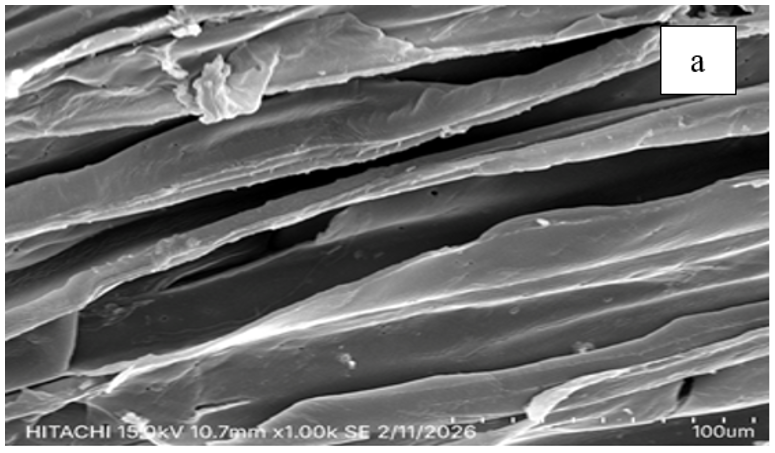
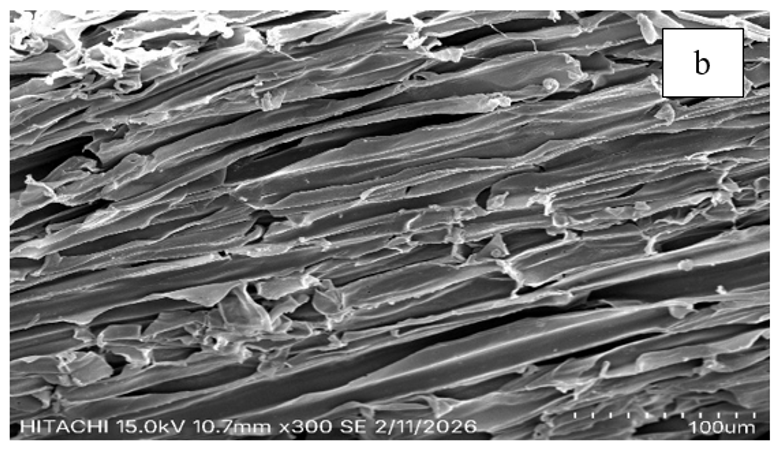
The surface characteristics of DPF and MDPF were investigated by Scanning Electron Microscopy (SEM), with the resulting micrographs shown in Figure 1. The SEM analysis was performed to assess the morphological changes induced by the modification treatment. As shown in Figure 1, the untreated DPF exhibits a relatively smooth surface composed of bundles of fine fibers covered by a lignocellulosic layer. Following modification, substantial changes in the surface morphology of MDPF can be observed, including pore enlargement and partial splitting of the fiber structure. These changes expose previously inaccessible internal regions of the fibers and may increase the availability of active sites for interaction with dye molecules. Consequently, the modified structure of MDPF is expected to provide a more favorable surface for adsorption and enhance its adsorption performance.
Figure 1. Scanning Electron Microscopy (SEM) micrograph: (a) date palm fibre (DPF), (b) modified date palm fibre (MDPF)
4.1.2 Fourier transform infrared spectroscopy (FT-IR)
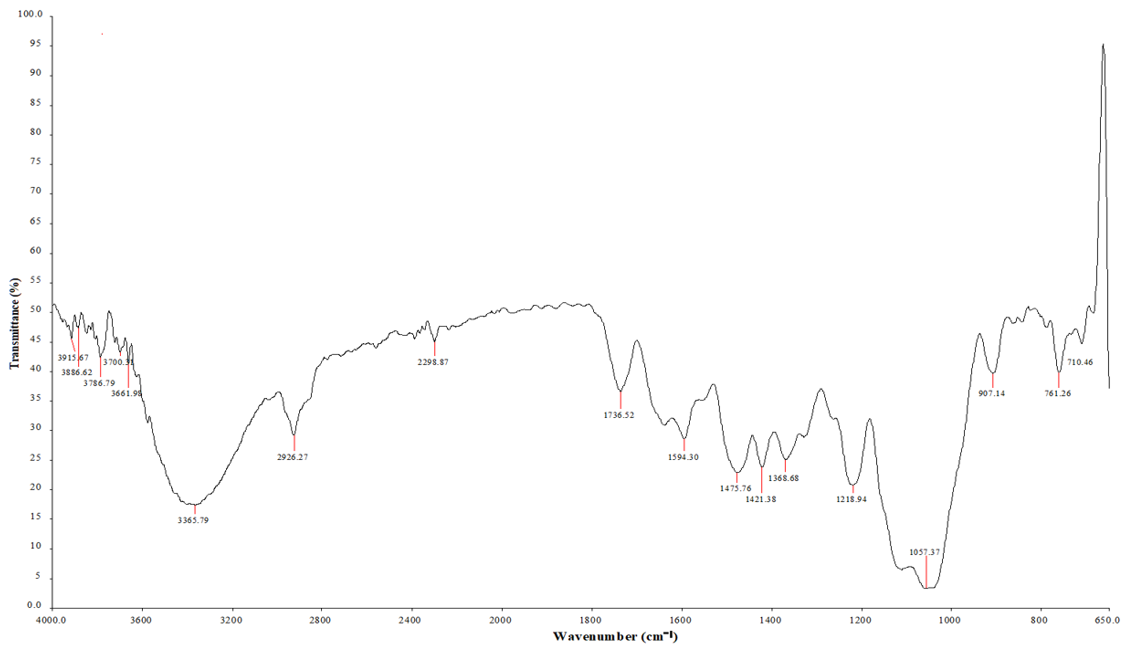
The FT-IR spectrum of MDPF presented in Figure 2 reveals several characteristic absorption bands associated with the functional groups present in the modified fiber. The broad absorption region from 3365 to 3915 cm⁻¹ can be attributed to O–H stretching vibrations. The bands observed at 2298 and 1736 cm⁻¹ are associated with C=C and C–O stretching vibrations, respectively. In addition, the absorption bands at 1594, 1475, and 1421 cm⁻¹ can be assigned to aromatic C=C stretching vibrations. The band detected at 1057 cm⁻¹ corresponds to the C–O–C linkage characteristic of the cellulose structure. Moreover, the bands occurring within the range of 761–710 cm⁻¹ are attributed to CH₂ rocking vibrations.
Figure 2. Fourier transform infrared spectroscopy (FT-IR) for modified date palm fibre (MDPF)
4.2 Calibration curve
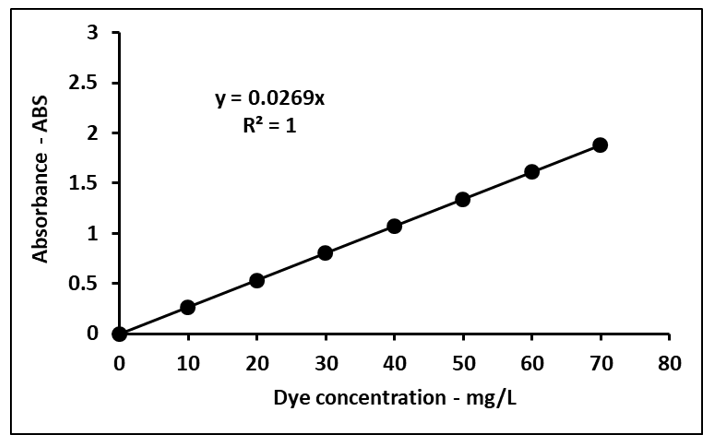
It is a means of determining the amount of dye present in samples by matching them to the standard ones with recognized concentrations. Figure 3 shows a calibration curve for RO16 dye.
Figure 3. Calibration Reactive Orange 16 (RO16)
4.3 Pilot test for batch adsorption
4.3.1 Modified date palm fiber
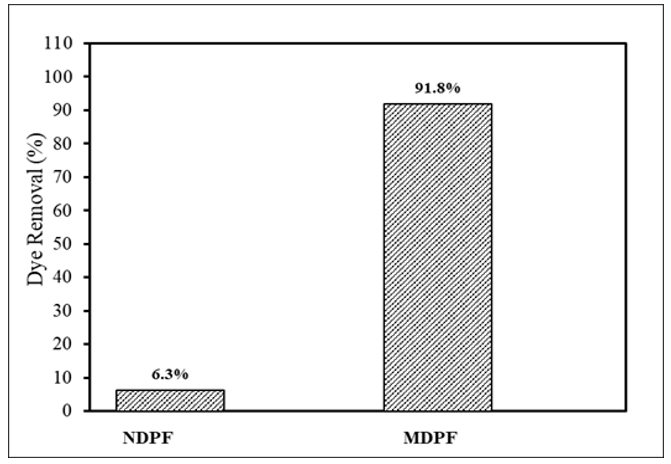
Adsorption research on a 100 mg/L RO16 dye solution was done to see how the improved procedure affected natural date palm fibre (NDPF) as an adsorbent. Figure 4 shows how much RO16 dye was removed from NDPF and MDPF in percentage terms. Using MDPF removed 6.3% and 91.8% of the RO16 dye. The data show that MDPF removed a lot more than NDPF. These results demonstrate that chemical modification substantially improved the adsorption performance of date palm fibers toward RO16 under the investigated experimental conditions. Under the investigated experimental conditions, the adsorption performance of unmodified DPF was considerably lower than that of MDPF. This could be because there are no quaternary ammonium functional groups on the surface of unmodified DPF. Results reveal that quaternized DPF worked better than the native DPF.
Figure 4. NDPF and MDPF impacts on Reactive Orange 16 (RO16) dye removal (Co = 100 mg/L, stirring speed = 200 rpm, t = 3 h)
4.3.2 Adsorbent dosage
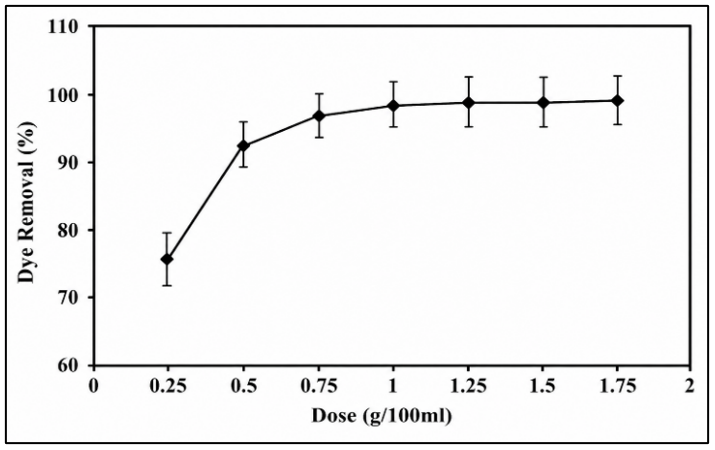
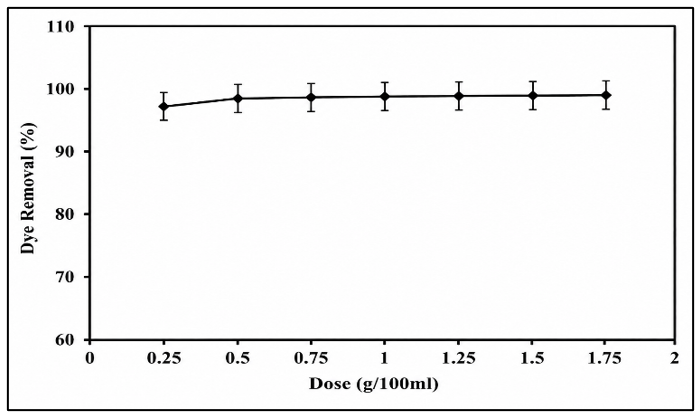
The impact of the adsorbent dose on the elimination of RO16 dye was studied using a large variety of adsorbent quantities (0.25, 0.5, 0.75, 1, 1.25, 1.5, and 1.75 g) in 100 mL of a solution containing 100 mg/l of dye, for both MDPF and AC. Figures 5 and 6 show the results for dye removal after using MDPF and AC, respectively. Increasing the dose of the absorbent material from 0.25 g to 1.75 g led to an increase in dye removal efficiency, which may be attributed to the increased availability of adsorption sites on the surface of the material as the amount added increased. The highest RO16 dye removal efficiency was 98.6% and 99.94% for 1.25 g doses of MDPF and AC, respectively. There was no noticeable increase in dye removal with an increase in the absorbent dose beyond 1.25 g, as the saturation point was reached. Therefore, a dosage of 1.25 g/100 mL of MDPF was chosen in subsequent experiments, as it represented the lowest amount used while achieving the best dye removal efficiency.
Figure 5. MDPF dosage impacts on Reactive Orange 16 (RO16) removal (Co = 100 mg/L, Stirring Speed = 200 rpm, t = 3 h, values demonstrated as mean ± SD (n = 3))
Figure 6. Activated carbon (AC) dosage impacts on Reactive Orange 16 (RO16) removal rate (Co = 100 mg/L, stirring speed = 200 rpm, t = 3 h, values demonstrated as mean ± SD (n = 3))
4.3.3 Contact time
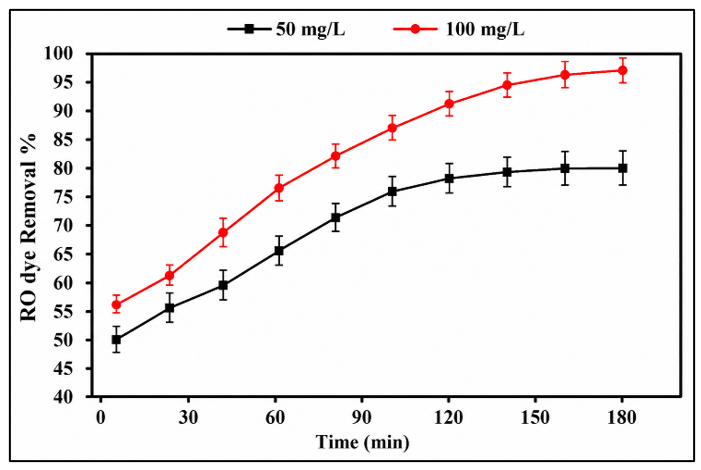
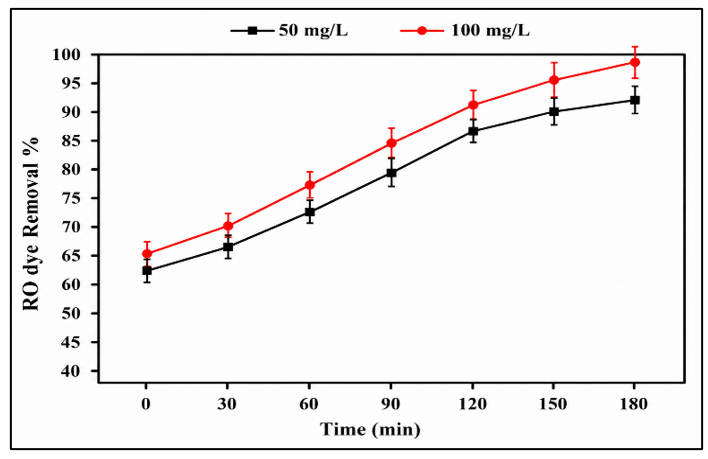
The findings attained from the experiments evaluating the equilibrium time of RO16 dye are presented in Figures 7 and 8, for MDPF and AC, respectively. A sharp rise in removal efficiency occurred during the initial adsorption period, followed by a progressive increase until equilibrium was achieved. The equilibrium time was found to be three hours at initial concentrations of 50 and 100 mg/L for both MDPF and AC. The rapid adsorption observed during the initial stage can be related to the abundance of unoccupied active sites on the adsorbent surface. This observation indicates a rapid uptake of dye molecules during the initial adsorption stage. As contact time increased, the adsorption rate progressively declined until equilibrium was reached, where only minor changes in dye removal were observed.
According to Singh and Arora [2], the process of dye adsorption can be divided into three stages: firstly, the molecules of dye overcome the boundary layer effect; secondly, the adsorption to the surface (which is a rapid process in general); and finally, the diffusion of adsorbate through the porous structure of the adsorbent. It also needs more contact time than the previous steps.
Figure 7. Contact time impacts on the removal of Reactive Orange 16 (RO16) percentage using modified date palm fibre (MDPF) (dose = 1.25 g/100 mL, stirring speed = 200 rpm, values demonstrated as mean ± SD (n = 3))
Figure 8. Contact time impacts on the removal of Reactive Orange 16 (RO16) percentage using activated carbon (AC) (dose = 1.25 g/100 mL, stirring speed = 200 rpm, values demonstrated as mean ± SD (n = 3))
4.3.4 Initial concentration
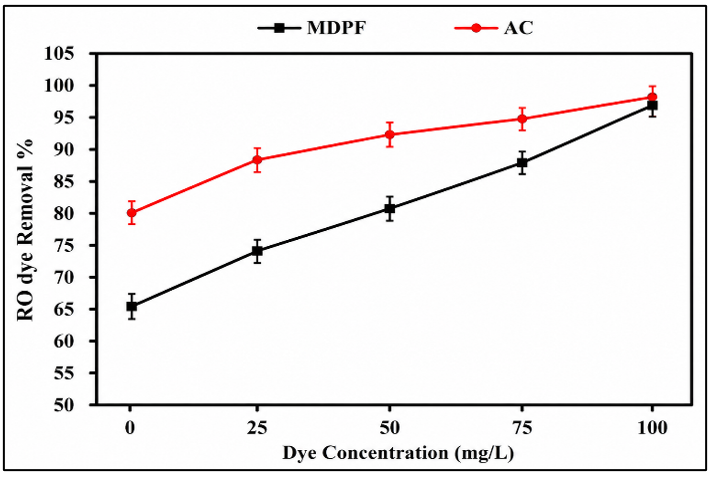
Dye concentration represents a key parameter in overcoming the resistance experienced by molecules during their transfer between the solid and aqueous phases. The display in Figure 9 shows the effect that the initial concentration of RO16 had on the rate of dye that was ultimately removed.
When the concentration of RO16 dye was raised from 10 mg/L to 100 mg/L, it was noticed that the proportion of dye that was removed increased from 65.4% to 98.6%. This was observed based on Figure 9 [14]. In accordance with Sivakumar and Palanisamy [15], a growth in Co of the dye will result in an enhancement of interaction between the dye and the adsorbent. To put it another way, Sen [16] has proven that high initial concentrations of dyes contribute to the production of the driving force necessary to facilitate dye mass transfer across the existing resistance from the solvent to the surfaces of the adsorbent material.
Figure 9. Impacts of initial dye concentration on Reactive Orange 16 (RO16) removal rate (stirring speed = 200 rpm, contact time = 3 h, dosage = 1.25 g/100 mL, values demonstrated as mean ± SD (n = 3))
4.4 Batch adsorption isotherms studies
Adsorption isotherms are a fundamental requirement when designing any adsorption system. This principle is important because it enhances lines of adsorption, describes adsorbent surface characteristics, calculates its capacity, and helps in devising successful systems of adsorption as it describes how dyes adhere to the adsorbent [17, 18]. Table 4 shows the raw values used in the calculations of the Freundlich and Langmuir isotherm models.
Table 4. The raw data values
|
C₀ (mg/L) |
Cₑ (mg/L) |
qₑ (mg/g) |
Cₑ/qₑ (g/L) |
|
10 |
0.173 |
0.79 |
0.22 |
|
25 |
0.485 |
1.960 |
0.248 |
|
40 |
0.829 |
3.13 |
0.265 |
|
55 |
1.804 |
4.26 |
0.424 |
|
70 |
2.351 |
5.41 |
0.435 |
|
85 |
3.005 |
6.56 |
0.458 |
|
100 |
6.647 |
7.47 |
0.89 |
4.4.1 Langmuir isotherm model
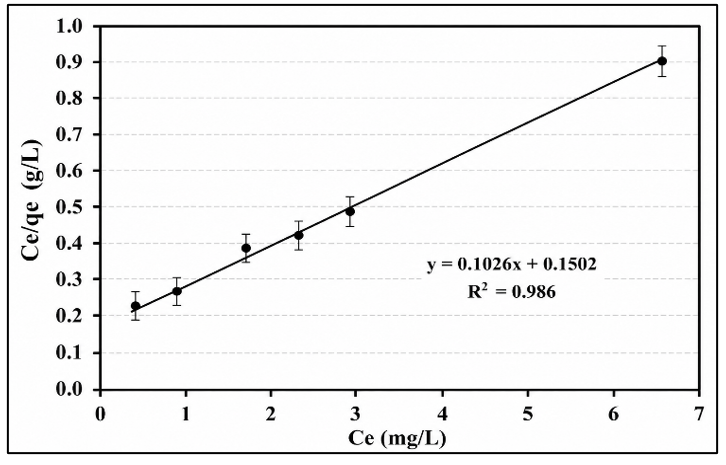
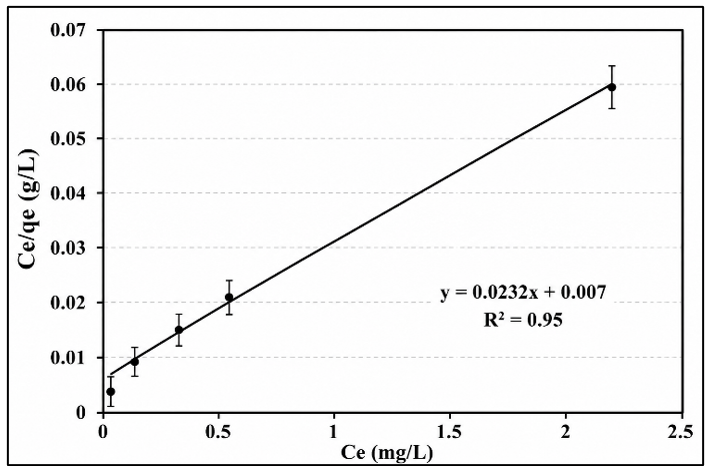
The linear equations for the constant-temperature line of Ange more for the absorption of the anionic dye RO 16 on MDPF and AC are shown in Figures 8 and 9. The hypothesis that was proposed by Langmuir states that the sorption energy remains constant and is self-governance which are independent of the surface loading [19]. Subsequently, Langmuir studied the adsorption rate in 1918 and found that max adsorption can occur for the covered surface with a single layer of the adsorbate [9]. Eq. (3) shows the linear form of the Langmuir function, as illustrated in Figures 10 and 11.
Figure 10. Linear isothermal Langmuir adsorption isotherm for Reactive Orange 16 (RO16) on modified date palm fibre (MDPF) (values are shown as mean ± SD (n = 3))
Figure 11. Linear isothermal Langmuir isotherm for Reactive Orange 16 (RO16) adsorption on activated carbon (AC) (values are shown as mean ± SD (n = 3))
4.4.2 Freundlich isotherm model
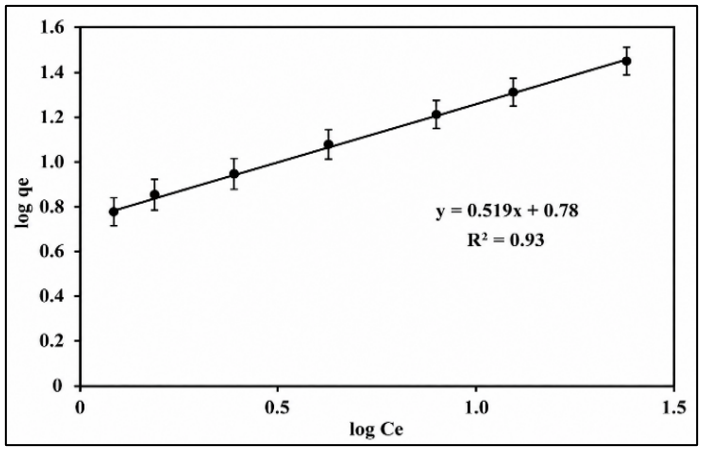
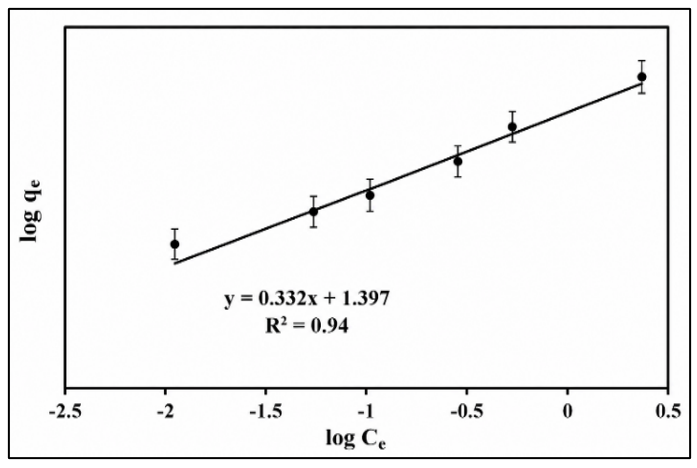
Figures 12 and 13 show the logarithmic structure of Freundlich's isotherm formula for the adsorption of RO16 dye on MDPF and AC, respectively. A linear relationship characterized by a slope of 1/n and a y-intercept of log KF is obtained by plotting log Ce versus log qe. This shows that the line is linear. The Freundlich parameters KF and n are subsequently determined. The value of n reflects the favorability of the process of adsorption under different experimental conditions, and the value of KF (mg/g) represents the distribution or adsorption factor of dye RO16 on MDPF for a unit equilibrium ratio [20].
Figure 12. Linear Freundlich plot of Reactive Orange 16 (RO16) adsorption on modified date palm fibre (MDPF) (values are shown as mean ± SD (n = 3))
Figure 13. Linear Freundlich plot for Reactive Orange 16 (RO16) adsorption on activated carbon (AC) (values are shown as mean ± SD (n = 3))
Table 5 contains the parameters that were stated for the Freundlich and Langmuir models respective. Equilibrium curves for RO16 dye adsorption on modified date palm fiber (MDPF) and commercial AC showed good agreement with the Langmuir and Freundlich models based on batch experimental data. The coefficients of determination demonstrated that the Langmuir model exhibited a superior fit to the experimental data compared with the other model. The maximum retention capacities on both MDPF and commercial AC were found to be close, with only a very slight difference between them. The maximum adsorption capacity achieved by MDPF was 7.47 mg/g, while the maximum adsorption capacity achieved by commercial activated-carbon equal to 43.5 mg/g.
Table 5. Constants set for Langmuir and Freundlich isotherm models
|
Model |
Parameters |
Value |
|
|
Commercial AC |
MDPF |
||
|
Langmuir |
qmax (mg/g) |
43.5 |
7.47 |
|
b (L/mg) |
3.28 |
0.15 |
|
|
RL |
0.003 |
0.063 |
|
|
R2 |
0.95 |
0.986 |
|
|
Freundlich |
KF ((mg/g)(L/mg)¹/ⁿ) |
25.06 |
6.03 |
|
1/n |
0.332 |
0.519 |
|
|
R2 |
0.94 |
0.98 |
|
It should be noted that the comparison between MDPF and commercial AC was performed using the materials in their available forms. Differences in particle size and other physical characteristics, such as specific surface area and moisture content, were not standardized in this study. Therefore, the observed adsorption performance reflects the investigated experimental conditions and should not be interpreted as a direct intrinsic comparison between the two adsorbents.
In this study, modified date palm fiber (MDPF) served as a chemically modified biosorbent for the extraction of reactive orange dye 16 from aqueous media. The interest in using this type of fiber is related to its availability as a renewable biomass material and its potential for application in wastewater treatment. The adsorption performance of MDPF was assessed and compared with commercial AC under laboratory batch conditions. According to the findings obtained from the experiments and analyses conducted, the main conclusions of the current study can be outlined as follows:
1. MDPF exhibited greater adsorption efficiency than normal DPF in removing RO16 dye, which was 91.8% and 6.3% using a 0.5 g dose of MDPF and NDPF, respectively.
2. The effectiveness of MDPF for the elimination of RO16 dye. The adsorption performance of MDPF approached that of commercial AC under the investigated laboratory conditions, although differences in particle size and other physical characteristics between the two adsorbents should be considered when interpreting the comparison. However, further economic assessment is required to confirm its cost-effectiveness for large-scale applications.
3. The adsorbent dosage easily affects the adsorption removal efficiency for using MDPF, while it is not the case for AC. MDPF successfully began to give increasingly higher removal percentages of RO16 dye at elevated amounts (greater than 0.75 g). The highest RO16 dye removal efficiency was 98.6% and 99.94% for a 1.25 g dose of MDPF and AC, respectively.
4. The maximum adsorption capacities of MDPF and AC were 7.47 mg/g and 43.5 mg/g, respectively.
5. To evaluate the different isotherms, the coefficient of determination (R²) was used in order to find the best fit for the experimental data from each isotherm. Langmuir exhibited higher values of R² compared with Freundlich. The best model is the Langmuir one for the experimental data. The experimental results verified using the Langmuir curve model indicate that the surfaces of the adsorbent materials used are homogeneous in nature.
6. The values (RL) are 0.063 and 0.003 for MDPF and AC, respectively. This increase confirms that the isothermal Langmuir is suitable for RO16 dye.
The researchers extend their sincere thanks and gratitude to all the entities and individuals who provided the necessary facilities and support to complete this study.
[1] Ismael, Rouf, S., Nagapadma, M. (2015). Modeling of fixed bed column studies for adsorption of azo dye on chitosan impregnated with a cationic surfactant. International Journal of Scientific and Engineering Research, 6(2): 538-544. https://doi.org/10.14299/ijser.2015.02.006
[2] Singh, K., Arora, S. (2011). Removal of synthetic textile dyes from wastewaters: A critical review on present treatment technologies. Critical Reviews in Environmental Science and Technology, 41(9): 807-878. https://doi.org/10.1080/10643380903218376
[3] Chung, K.T. (2016). Azo dyes and human health: A review. Journal of Environmental Science and Health, Part C, 34(4): 233-261. https://doi.org/10.1080/10590501.2016.1236602
[4] Ahmad, T., Danish, M., Rafatullah, M., et al. (2011). The use of date palm as a potential adsorbent for wastewater treatment: A review. Environmental Science and Pollution Research, 19(5): 1464-1484. https://doi.org/10.1007/s11356-011-0709-8
[5] Jonoobi, M., Shafie, M., Shirmohammadli, Y., Ashori, A., Zarea-Hosseinabadi, H., Mekonnen, T. (2019). A review on date palm tree: Properties, characterization and its potential applications. Journal of Renewable Materials, 7(11): 1055-1075. https://doi.org/10.32604/jrm.2019.08188
[6] Idan, I.J., Jamil, S.N.A.B.Md., Abdullah, L.C., Choong, T.S.Y. (2017). Removal of reactive anionic dyes from binary solutions by adsorption onto quaternized kenaf core fiber. International Journal of Chemical Engineering, 2017: 1-13. https://doi.org/10.1155/2017/9792657
[7] Arami, M., Limaee, N.Y., Mahmoodi, N.M., Tabrizi, N.S. (2005). Removal of dyes from colored textile wastewater by orange peel adsorbent: Equilibrium and kinetic studies. Journal of Colloid and Interface Science, 288(2): 371-376. https://doi.org/10.1016/j.jcis.2005.03.020
[8] Nandiyanto, A.B.D., Hofifah, S.N., Inayah, H.T., et al. (2021). Adsorption isotherm of carbon microparticles prepared from pumpkin (Cucurbita maxima) seeds for dye removal. Iraqi Journal of Science, 62(5): 1404-1414. https://doi.org/10.24996/ijs.2021.62.5.2
[9] Langmuir, I. (1918). The adsorption of gases on plane surfaces of glass, mica and platinum. Journal of the American Chemical Society, 40(9): 1361-1403. https://doi.org/10.1021/ja02242a004
[10] Freundlich, H.M.F. (1907). On adsorption in solutions. Zeitschrift für Physikalische Chemie, 57: 385-470. https://doi.org/10.1515/zpch-1907-5723
[11] Saleh, Z.A., Hasan, A.A., Idan, I.J., Al-Isawi, R.H.K., Al Saleh, H.A.A. (2024). Peanut shell as a natural adsorbent for the removal of acid blue 25 from aqueous solution. Environmental Research, Engineering and Management, 80(1): 21-31. https://doi.org/10.5755/j01.erem.80.1.34614
[12] Hamdaoui, O., Naffrechoux, E. (2007). Modeling of adsorption isotherms of phenol and chlorophenols onto granular activated carbon. Part I. Two-parameter models and equations allowing determination of thermodynamic parameters. Journal of Hazardous Materials, 147(1-2): 381-394. https://doi.org/10.1016/j.jhazmat.2007.01.021
[13] Jahad, U.A., Al-Ameri, R., Chabuk, A., et al. (2022). Dissolved oxygen variation on the steps with a quarter circle end sill for flows over the stepped spillways. International Journal of Design & Nature and Ecodynamics, 17(5): 639-648. https://doi.org/10.18280/ijdne.170501
[14] Adamu, A. (2008). Adsorptive removal of reactive azo dyes using industrial residue. Master’s thesis, Addis Ababa University.
[15] Sivakumar, P., Palanisamy, N. (2010). Mechanistic study of dye adsorption on to a novelnon-conventional low-cost adsorbent. Advances in Applied Science Research, 1(1): 58-65. https://www.primescholars.com/articles/mechanistic-study-of-dye-adsorption-on-to-a-novelnonconventional-lowcost-adsorbent.pdf.
[16] Sen, T.K. (2013). Review on dye removal from its aqueous solution into alternative cost effective and non-conventional adsorbents. Journal of Chemical and Process Engineering. https://doi.org/10.17303/jce.2014.105
[17] El-Khaiary, M.I. (2008). Least-squares regression of adsorption equilibrium data: Comparing the options. Journal of Hazardous Materials, 158(1): 73-87. https://doi.org/10.1016/j.jhazmat.2008.01.052
[18] Muhammed, S.M.A., Al-Qaisi, A.Z., Al Yousif, M.A., Alkadhim, N. (2024). Using eucalyptus peels as a permeable reactive barrier for treating groundwater contaminated with copper ions: A simulation with COMSOL software. Journal of Ecological Engineering, 25(11): 37-45. https://doi.org/10.12911/22998993/192637
[19] Shagufta, Dhar, R., Kim, B.S., Alblooshi, A., Ahmad, I. (2018). Removal of synthetic cationic dye from aqueous solution using date palm leaf fibers as an adsorbent. International Journal of Engineering and Technology (UAE), 7(4): 3007-3013. https://doi.org/10.14419/ijet.v7i4.14332
[20] Al-Harby, N.F., Albahly, E.F., Mohamed, N.A. (2021). Kinetics, isotherm and thermodynamic studies for efficient adsorption of Congo Red dye from aqueous solution onto novel cyanoguanidine-modified chitosan adsorbent. Polymers, 13(24): 4446. https://doi.org/10.3390/polym13244446