I Komang Damar Jaya* | Sudirman | Anak Agung Ketut Sudharmawan | Sulfaida Pratami | Shinichi Yonemochi | Kokyo Oh
OPEN ACCESS
Applying high rates of inorganic fertilizer (IF) is common among smallholder farmers seeking to increase tomato yields in dryland tropics, but it is unsustainable. This study examined how combining IF with organic amendments affects soil properties and tomato yield in Gumantar Village, North Lombok, Indonesia, from March to August 2025. Treatments included: (A) 100% inorganic NPK at 1200 kg ha⁻¹, (B) IF + 5 t ha⁻¹ seaweed compost (SC), (C) IF + 5 t ha⁻¹ chicken manure (CM), (D) combination of all, (E) half-dose IF + seaweed, (F) half-dose IF + CM, (G) half-dose IF + both, and (H) seaweed + CM, arranged in a randomized block with three replications. Some soil properties, such as C-organic, total N, soil pH, cation exchange capacity (CEC), available P, and tomato yield, were affected by the short-term organic amendment, especially in combination with half-dose IF treatments. Data variability suggests short-term organic effects are unstable, especially in C-organic, microbial count, N-NO3, and available P. SC and CM, abundant in Indonesia, can reduce waste and support sustainable dryland tomato production.
dryland agriculture, sustainable intensification, soil properties, tomato cultivation, seaweed compost, chicken manure
Tomato (Solanum lycopersicum L.) is a vital global vegetable, valued for its vitamin C, provitamin A carotenoids such as β-carotene and lycopene, potassium, folate, polyphenols, and antioxidants [1]. Regular consumption boosts micronutrient intake, making tomatoes an affordable supplement to diets [2]. Beyond health, tomatoes increase household income and market opportunities for smallholders in dryland tropical areas [3]. Their ability to be grown intensively on small plots and quickly sold offers rapid income and flexible supply for nutrition, the food industry, and export markets. As a result, they serve as both a health resource and a driver of rural economic growth. Tomatoes are profitable for smallholders in tropical drylands due to their short cycle, high demand, and low land needs [4]. This makes them suitable for resource-limited households, allowing farmers to earn cash in a season and diversify beyond staple crops.
The main challenges to sustainable tomato farming in sandy loam soils of the dryland tropics include low soil fertility, limited water availability, thermal and radiation stress, and reliance on inorganic fertilizers (IF). These soils have low organic carbon and nitrogen content and low cation exchange capacity (CEC), which reduces nutrient retention and increases the risk of leaching after rain or irrigation. This hampers soil fertility, limits tomato yield potential (especially during fruit set and growth), and reduces fertilizer efficiency. Their coarse texture and low matrix potential limit water availability and promote rapid drainage, leading to rapid moisture loss and temporary drought stress [5-7].
Intensifying tomato production in the dryland tropics is crucial for high yields, farmers' incomes, and food security, thereby aiding poverty reduction and zero hunger (SDGs 1 and 2). A recent study indicates that achieving high yields requires a very high rate (1.2 ton ha-1) of compound fertilizer (NPK 16-16-16) [8]. However, reliance on IF can harm fragile soils, reduce microbial diversity [9], and threaten sustainability, conflicting with SDG 12. Sustainable intensification (SI) is a strategy to boost productivity while protecting ecosystems. Research shows SI enhances land productivity, supports rural livelihoods, and strengthens ecosystem services [10-12].
Recent research shows that combining organic and biological soil amendments can significantly reduce reliance on synthetic fertilizers while enhancing soil organic carbon, microbial activity, CEC, and overall fertility [7]. Amendments and biostimulants address nutrient imbalances, combat soil degradation, and improve tomato yield and quality as part of sustainable nutrient management. Studies have shown that compost and animal manure can improve soil nutrient supply and crop productivity, particularly in coarse-textured tropical soils [13, 14]. Yield gains in tomatoes often occur when organic amendments are used with IFs [15]. Using soil amendments in tomato production boosts productivity, profitability, and soil health, supporting SDGs 1, 2, and 12.
Among smallholder farmers in dryland regions, the use of poultry manure is widespread, and its agronomic benefits are well recognized [16]. However, the potential effects of poultry manure, alone or with seaweed compost (SC), on tomato production in drylands have not been systematically studied. Interest in SC is rising due to abundant seaweed biomass along coastlines, which accumulates naturally through wave action. Seaweed grows rapidly, does not compete for land, and requires no extra nutrients during cultivation [17, 18]. Using seaweed biomass in compost is environmentally friendly. Seaweed, as a biostimulant and biofertilizer, is well documented [19, 20]. Although promising [21], reports on its effects on soil and tomato yield in drylands are limited. This study assesses the short-term impacts of SC, poultry manure, IF, and their combinations on soil in dryland tomato cultivation to support SI. Indonesia, the second-largest seaweed producer [22], has over 3.5 billion poultry [23]. Using seaweed and chicken manure (CM) for tomato farming can reduce disposal issues.
2.1 Site
The field experiment was conducted from March to August 2025 on a farmer-managed plot in Gumantar Village, Kayangan District, North Lombok Regency, West Nusa Tenggara Province, Indonesia (116°28′ E, 8°25′ S; 40 m a.s.l.). The site is located about 200 m from the coast and has a relatively long dry season from March to November, classified as D3 under the Oldeman climate classification [24]. Over the past eight years, mean annual rainfall has been approximately 1200 mm, with three to four wet months from December to February or March. Maximum air temperatures range from 33 to 36 ℃, minimum temperatures from 21 to 28 ℃, and relative humidity from 60% to 95%. The soil at the site is an Entisol with sandy loam texture, dominated by sand (70%), with the remaining 30% split between clay (15%) and silt (15%).
2.2 Experimental design and materials
In this study, the treatments evaluated were as follows: (A): NPK 16-16-16 IF at a dosage rate of 1200 kg ha-1 (IF), (B): IF + 5 ton ha-1 SC, (C): IF + 5 ton ha-1 CM, (D): IF + SC + CM, (E): 50% IF + SC, (F): 50% IF + CM, (G): 50% IF + SC + CM, and (H): SC + CM. All treatments were repeated three times and arranged in a randomized block design (RBD). Each treatment plot measured 6 m2 (6 × 1 m) and contained 20 plants, spaced at 60 × 60 cm.
The experiment employed three primary inputs: IF, SC, and CM. The IF used was NPK 16–16–16 Pak Tani Biru, produced by Saprotan Utama; the SC (commercial name: REGEN) was manufactured by PT Regeneratif Kehidupan Nusantara; and the CM (commercial name: Tricho KOMPOS) was supplied by UD GoTAMA. According to the product labels, the NPK fertilizer contains 16% N, 16% P2O5, 16% K2O, 1% MgO, 5.15% CaO, 0.09% S, 7% NO3, 90 ppm B2O3, 60 ppm Zn, 60 ppm Cu, and 55 ppm Mn. The SC contained 43.60% organic C, a C/N ratio of 29, a pH (H₂O) of 7.5, 1.48% N, 0.10% P₂O₅, 2.66% K₂O, 359 ppm total Fe, 14 ppm total Zn, and 5.66% humic substances. Laboratory analyses conducted by the manufacturer indicated that the nutrient composition of the composted material (CM) was as follows: carbon (C), 29.15%; total nitrogen (N), 1.15%; total phosphorus (P), 4.44%; total potassium (K), 2.58%; magnesium (Mg), 1169.4 ppm; calcium (Ca), 3.87%; and boron (B), 182.38 ppm. The tomato variety used in this study was ‘Servo’, produced by East West Seeds.
2.3 Procedure and measurements
a. Treatment applications: Half of the IF for all treatments was applied as a basal fertilizer, with the remaining half applied as a supplemental fertilizer. The SC and CM were applied after the basal fertilizer and lightly mixed into the soil on top of the treatment plots. The treatment plots were then covered with plastic mulch.
b. Transplanting: Twenty planting holes were prepared in each experimental plot at 60 × 60 cm spacing. Tomato seedlings, 24 days after sowing, were transplanted into the designated holes. A bamboo stake (125 cm long) was inserted 10 cm from each plant, to a depth of 25 cm, to provide structural support during vegetative growth and fruiting and prevent lodging.
c. Top-dressing: The remaining IF for each treatment was divided into three equal parts and applied at 28, 42, and 63 days after transplanting (DAT). For each top-dressing event, the fertilizer was dissolved in 5 L of water, yielding 250 mL of fertilizer solution per plant, which was applied directly into the planting hole.
d. Plant maintenance: Crop management practices included irrigation, manual removal of weeds emerging in the planting holes, pest prevention, and calcium fertilization. Gravity-fed irrigation was applied every five to seven days, depending on plant conditions. Weeds growing within the planting holes were removed manually every two weeks. Pest control targeted leaf-feeding whiteflies (Bemisia tabaci) and fruit borers (Helicoverpa armigera) using pesticides containing imidacloprid and emamectin benzoate as active ingredients. Calcium fertilization was applied because blossom-end rot was frequently observed at the experimental site. The calcium fertilizer used (High Cal) contained 48.78% CaO, 21.05% MgO, and 5% B. The fertilizer was applied three times at 45, 52, and 59 DAT by diluting 3 g of the fertilizer into 1 liter of water (around 7.5 kg ha-1). Each crop received 100 mL of fertilizer solution per application.
e. Microscopic and Elemental Analysis: The structural characteristics and elemental composition of the SC were examined using scanning electron microscopy (SEM) and energy‑dispersive X‑ray spectroscopy (EDX) at the Center for Environmental Science, Saitama, Japan, using JEOL instrumentation. The same analytical procedures were applied to the CM, with observations conducted at the Integrated Laboratory of the Islamic University of Indonesia in Mataram using a JEOL JCM‑7000 NeoScope™.
f. Tomato yield and two quality attribute measurements: The observed yield parameters included the number of fruits per plant, fruit weight per plant, and total fruit weight per plot. The fruit weight per plot was then converted to per hectare, considering that only 90% of the land is adequate for planting tomato crops. Fruits were harvested five times at three- to five-day intervals at the pink stage. Data for the number of fruits per plant were based on three plant samples per treatment, while fruit weight per plot was based on 20 plants in a treatment plot. Total soluble solids (TSS) were measured using a portable refractometer, and vitamin C content was calculated based on the titration method.
g. Soil parameters: Pre‑treatment soil parameters included texture, pH (electrometry), total N (Kjeldahl), organic C (Walkley–Black), available P (Morgan–Wolff), available K (Morgan–Wolff), available Ca (Morgan–Wolff), and CEC (percolation method). Soil samples were collected using a core from 1 to 5 cm depth at three different locations across the experimental field and then pooled into a composite sample.
h. Soil parameters at 60 DAT: In addition to the same soil parameters measured prior to treatment, several additional variables were assessed. These included bulk density (gravimetric method) and total microbial colony-forming unit (CFU) count (streak plate method). Soil samples, one sample for each treatment, were collected using a 5 cm diameter core at a depth of 1 to 5 cm. Each soil sample was taken from the middle of the plot, at about 30 cm from the planting holes. Soil bulk density samples were taken at a depth of 5 to 10 cm in each treatment plot.
2.4 Data analysis
The data were analyzed using Minitab ® (21.4, 2023). A balanced Analysis of Variance (ANOVA) of RBD was performed, followed by Tukey's post hoc test to identify significant pairwise differences at the 5% level. Central data of this study, such as soil bulk density, soil organic carbon, total N, and microbial colonies, are presented in boxplots to show the data dynamics and identify outliers.
3.1 Characteristics of the field soil, seaweed compost, and chicken manure
The soil at the experimental site was nutrient-poor, primarily due to its low organic carbon content (Table 1), thereby reducing CEC. There's a positive correlation between soil organic carbon and CEC, especially in soils with pH above 5.5. The soil pH was slightly alkaline, typical of sandy dryland soils with carbonate accumulation and minimal acidification from IF. Dryland areas often have less intensive cultivation than irrigated fields, reducing the risk of soil acidification. The low organic matter was linked to reduced total nitrogen, while higher phosphorus (P) and potassium (K) likely stemmed from leftover fertilizer.
Table 1. Soil analysis results before the treatments were applied
|
Parameters |
Unit |
Method |
Value |
Grade |
|
pH |
- |
Electrometry |
7.64 |
Slightly alkaline |
|
N-total |
% |
Kjeldahl |
0.11 |
Low |
|
N-NH4 |
ppm |
Morgan |
2.83 |
Low |
|
N-NO3 |
ppm |
Morgan |
6.33 |
Medium |
|
C-organic |
% |
Walkey & Black |
1.18 |
Low |
|
P Morgan |
ppm |
Spectrophotometry |
11.48 |
High |
|
K exchangeable |
cmol kg-1 |
Percolation |
1.00 |
High |
|
Ca exchangeable |
cmol kg-1 |
Percolation |
5.67 |
Medium |
|
CEC |
cmol kg-1 |
Percolation |
5.04 |
Low |
|
C/N ratio |
- |
- |
10.73 |
Low |
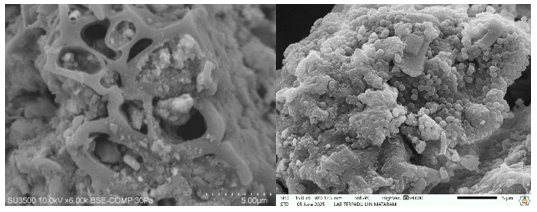
SEM images at 4000× show that SC is more porous (Figure 1). The C/N ratio of SC was 29:1, indicating higher carbon content and greater persistence in soil, while CM has a C/N ratio of 25:1 (based on information provided by the companies) and contains slightly higher nitrogen levels, which contribute to soil fertility.
Applying soil amendments such as SC and CM at 5 t ha⁻¹, alone or with IF, affected soil properties and tomato yield in variable ways. Soil organic C, total N, microbial counts, CEC, pH, and available P changed significantly, while soil bulk density and available N (NO₃⁻) and available K remained unaffected. Yield (fruit weight per plot), yield components, and tomato quality parameters were significantly affected by the treatments.
Figure 1. Structural differences between seaweed compost (SC) (left) and chicken manure (CM) (right) at 4000× magnification
There was large variation in the data, especially in microbial counts, N-NO3, and available P, with coefficients of variation (CV) larger than 50%, and more than 42% for C-organic (Table A1). There was also a significant effect of block on yield and yield components of the tomato plants. These results imply short-term amendments have a limited impact on soil, but can potentially replace IF without reducing yield. Detailed findings are discussed below.
3.2 Effect of treatments on soil bulk density, C-organic, total N, and microbial abundance
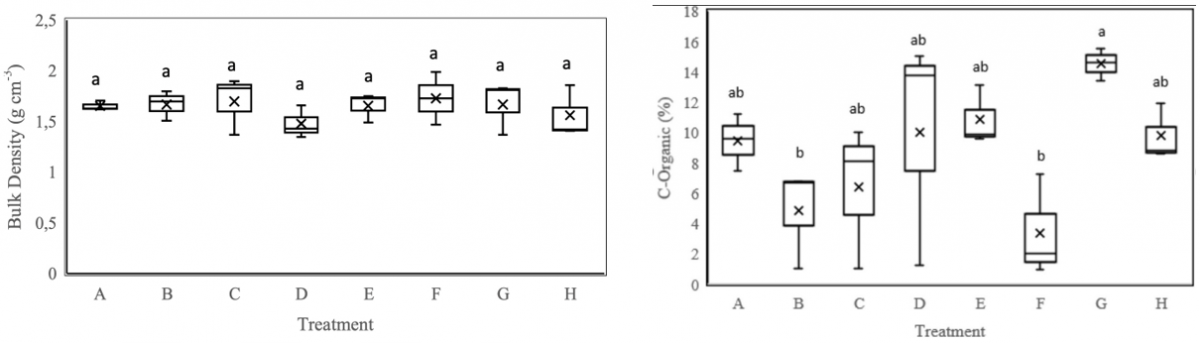
The lack of significant change in soil bulk density over 60 days after applying SC and CM to sandy loam soil (Figure 2) is due to several factors, mainly the short study period and soil and organic material traits. Sandy loam soils usually have low initial bulk density, and adding organic amendments may not quickly displace enough mineral particles to show a measurable reduction. Additionally, organic decomposition, which helps form stable aggregates and improve soil structure, depends on microbial activity and environmental conditions, and often takes longer to affect bulk density [25, 26].
The dosage of organic amendments is crucial, as large reductions in bulk density often require higher application rates [27], which significantly alter the soil's mass–volume relationship. In this study, each amendment was applied at 5 tons ha⁻¹. Prior research indicates that about a year is needed to see a marked decrease in bulk density at 67.2 tons ha⁻¹ of organic matter, while lower rates show no measurable effect. Other studies also find that roughly six months are necessary for organic materials to cause detectable reductions in bulk density [25]. Overall, both the number of amendments and observation time influence whether changes are detectable.
This interpretation is further supported by the variability observed in the boxplot data. The treatment without soil amendments exhibited a very narrow interquartile range and whiskers, indicating highly homogeneous bulk density values. In contrast, treatments receiving organic amendments displayed much wider interquartile ranges and whiskers, suggesting that the amendments' effects varied over the short observation period. Such variability may reflect uneven distribution of the applied materials or interactions between plant roots and the amendments, which can slow decomposition and delay structural changes in the soil [25]. Together, these results indicate that while organic amendments can improve soil physical properties, detectable changes in bulk density in sandy loam soils require sufficiently high application rates, longer decomposition periods, and more uniform incorporation of the amendments.
Soil organic carbon levels varied across treatments, with the highest in Treatment G, which was not significantly different from the others except Treatments F and B (Figure 2), due to a high coefficient of variation (42.78%), as seen in Treatments B, C, D, and F, with long whiskers. A trend showed that combining soil amendments with 100% IF generally lowered median values, with wider ranges and longer whiskers. This pattern may be associated with high IF doses, linked to increased mineral N, stimulating microbial activity via ‘positive priming’, increasing CO₂ emissions, and reducing soil organic C [28], but requires further verification, since CO2 was not measured. CM, with a lower C:N ratio than SC, also decomposes faster, leaving less residual organic C in the soil.
The 50% IF combined with SC and CM (Treatment G) yielded high, stable soil organic C after 60 days, likely due to the synergistic effects of these amendments. SC, rich in recalcitrant polysaccharides, polyphenols, and biostimulants, promotes humus formation and soil aggregation, increasing C redeposition [20]. CM provides labile carbon, stimulating microbial activity. Together with IF, these amendments boost microbial growth, microbial counts, and C protection in soil aggregates.
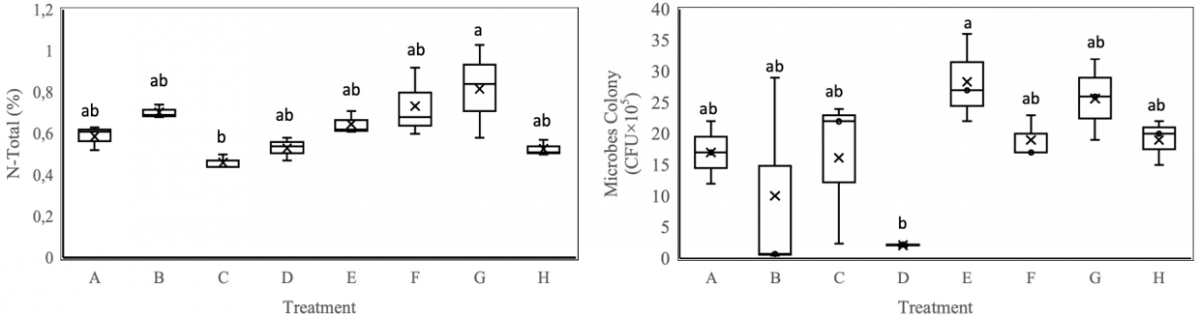
Total soil nitrogen varied across treatments, with the highest in Treatment G (50% IF, SC, and CM), as shown in Figure 3. When combined with 100% IF, nitrogen levels decreased markedly due to variations in organic nitrogen fractions and mineralization rates [29]. CM, with a slightly lower C/N ratio, mineralizes faster, releasing inorganic nitrogen within 60 days [30]. SC, which contains more recalcitrant organic matter, may slow mineralization, thereby extending microbial activity. These different rates affect nitrogen availability, resulting in higher short-term nitrogen in soils amended with CM [31].
This study shows that organic amendments and IF doses jointly affect microbial counts in sandy loam dryland soil for 60 days. Treatment E (50% NPK + SC) yielded the highest CFU count, indicating that combining moderate IF with diverse organic substrates optimizes microbial proliferation. SC likely contributes beneficial compounds that can enhance soil biological processes and support microbial growth. These compounds act as slow-release carbon sources, especially effective in sandy loam soils with low organic matter, where microbes are limited by carbon and moisture [32]. The moderate NPK dose provided enough nitrogen for microbial metabolism without causing osmotic stress. Prior research confirms that balanced nutrient availability enhances microbial abundance and enzyme activity [33].
Treatment D (100% NPK with SC and CM) had the lowest CFU counts and narrow data range, indicating that combining organic amendments with high IF may hinder microbial growth. Previous studies show that high mineral nitrogen levels can decrease microbial diversity and alter community structure [34, 35], potentially reducing microbial abundance. CM, rich in labile carbon and low in C:N ratio, may contribute to rapid microbial respiration [36]. When paired with high NPK, this may increase the microbial count. Co-occurring seaweed polysaccharides and degradable carbon from CM can increase substrate competition, favoring fast-growing microbes. This results in fewer CFU counts than treatments with moderate nutrients.
The remaining treatments did not differ significantly from Treatments E and D. Treatment B showed variability, with potential for high colony counts, while Treatment C, despite similar variability, tended to have lower CFU values. These patterns suggest microbial responses in sandy loam dryland soils depend on the balance between mineral nutrients and organic amendments. Sandy loam soils, with low water-holding capacity and limited organic matter protection, usually show weak microbial responses unless amendments significantly change substrate availability [37]. These findings align with previous studies that seaweed-based amendments improve microbiome and soil structure, whereas excessive mineral fertilization or highly labile manure can reduce microbial abundance due to soil chemical changes [38, 39].
3.3 Effect of treatments on other soil properties
Soil pH was higher in the treatment receiving 100% IF, except for treatments C and D, where IF was combined with organic amendments (SC and poultry manure) (Table 2). The increased soil pH (more alkaline) in the IF treatment with SC was due to the application of high rates of calcium-rich fertilizer starting at the fruit enlargement stage to prevent blossom-end rot in tomatoes. Conversely, when larger amounts of organic amendments were added (treatment D) or IF rates were reduced, soil pH dropped significantly. This suggests that sufficient organic matter can neutralize soil alkalinity. This effect likely occurs because organic matter acts as a soil buffer [40].
Table 2. Effect of treatments on soil pH, readily available N (NO3-), available P, available K, and cation exchange capacity (CEC) in the soil at 60 days after transplanting (DAT)
|
Treatments |
Measured Parameters |
||||
|
pH |
N-NO3 (ppm) |
P-Available (ppm) |
K-Available (ppm) |
CEC (cmol kg-1) |
|
|
A (100% IF) |
7.45a |
4.99 ± 0.94 |
9.46b |
20.97 ± 2.80 |
17.70b |
|
B (100% IF + SC) |
7.20ab |
6.27 ± 0.32 |
17.00b |
19.61 ± 3.73 |
17.78b |
|
C (100% IF + CM) |
6.86bc |
6.45 ± 1.78 |
67.80ab |
25.17 ± 1.87 |
17.16b |
|
D (100% IF + SC + CM) |
6.72bc |
10.74 ± 3.35 |
127.36a |
30.59 ± 6.49 |
13.33d |
|
E (50% IF + SC) |
6.76bc |
9.46 ± 3.11 |
9.59b |
15.25 ± 1.84 |
13.96d |
|
F (50% IF + CM) |
6.67bc |
3.53 ± 0.87 |
66.44ab |
21.74 ± 2.78 |
14.62c |
|
G (50% IF + SC + CM) |
6.57c |
4.87 ± 0.61 |
53.09b |
29.54 ± 6.90 |
19.69a |
|
H (SC + CM) |
6.55c |
5.59 ± 2.29 |
87.76ab |
22.92 ± 2.55 |
15.88cd |
Nitrate‑N did not differ significantly among treatments (p > 0.05), although Treatment D showed the highest mean value (Table 2). The increased nitrogen from SC and CM, combined with a high dose of IF, is likely the main reason for the higher available N levels in the soil. Short‑term spikes in available soil N after applying SC and CM occur because these organic inputs contain highly mineralizable nitrogen and bioactive polysaccharides that stimulate ammonifying and nitrifying microbes. Previous research shows that the short‑term application of SC can increase soil-available N [41]. Similarly, studies have reported increases in soil-available N shortly after the application of CM [42].
Available phosphorus in the soil was significantly affected by the treatments, but available potassium was not (p > 0.05), as seen in Table 2. In sandy loam soils, which naturally have low nutrient retention and low organic matter content, organic amendments are essential to enhance soil fertility, particularly the availability of phosphorus and potassium, as well as CEC [14]. When used in moderate amounts, IF such as NPK, along with organic matter, boosts phosphate solubility by releasing organic acids and encouraging microbial activity that mobilizes phosphorus [43]. This combined effect is most effective with moderate chemical inputs, as too much NPK can saturate the soil and diminish the benefits of organic amendments. Previous research showed that combining organic inputs significantly increases the availability of phosphorus and potassium in dryland sandy loam soils when paired with moderate NPK [44].
Exchangeable potassium remained unaffected by treatments (p > 0.05), but Table 2 shows a trend: combining IF (high or medium) with SC and CM increased values. Organic amendments boost exchangeable potassium and improve soil structure, aiding root access [45]. However, high NPK rates may cause nutrient antagonism, especially between calcium and magnesium, disrupting nutrient balance and uptake [46]. Organic matter buffers these effects but may not fully prevent them if chemical inputs are excessive. Sandy loam soils benefit most from organic inputs, which increase CEC by adding negatively charged colloids that hold cations, thereby improving nutrient retention [47], as shown in Table 2. However, the CEC in all treatments was categorized as low [48]. Soil amendments perform better with moderate IF than with high doses, emphasizing balanced nutrient management over excessive chemical fertilization [49].
3.4 Effect of treatments on yield, yield components, and quality
Tomato yield and its components were significantly affected by the treatments (Table 3). Treatment D outperformed others, while Treatment H performed the worst. Despite numerical differences among treatments, most pairwise comparisons were not significant (p > 0.05), likely due to high variability among blocks/plots caused by leaf curl virus spread by B. tabaci and early fruit drop caused by H. armigera. An earlier study found that increased fertilizer, especially nitrogen, did not affect yield once a threshold was reached [50]. This suggests that the 50% IF used is sufficient for sandy loam in dryland North Lombok, Indonesia. The same study found that combining IF with organic amendments improved yields, consistent with the trend observed in Table 3.
Table 3. Effect of treatments on the yield, yield components, and two quality attributes of tomatoes (total soluble solids = TSS, and vitamin C)
|
Treatments |
Measured Parameters |
||||
|
Number of Fruits per Plant-1 |
Fruit Weight per Plant-1 (g) |
Fruit Yield (ton ha-1) |
TSS (brix) |
Vit. C (mg 100 g-1) |
|
|
A (100% IF) |
19.4ab |
668.4bc |
16.05ab |
4.03 ± 0.14 |
42.89 ± 5.71 |
|
B (100% IF + SC) |
21.9ab |
866.9ab |
19.20ab |
3.80 ± 0.10 |
44.14 ± 2.02 |
|
C (100% IF + CM) |
23.4ab |
876.5ab |
19.80ab |
4.36 ± 0.30 |
42.84 ± 1.56 |
|
D (100% IF + SC + CM) |
26.4a |
951.5a |
21.45a |
4.20 ± 0.06 |
38.13 ± 6.38 |
|
E (50% IF + SC) |
22.0ab |
783.8abc |
18.00ab |
4.20 ± 0.10 |
44.26 ± 2.18 |
|
F (50% IF + CM) |
20.3ab |
727.6abc |
16.20ab |
4.40 ± 0.10 |
46.03 ± 1.57 |
|
G (50% IF + SC + CM) |
20.7ab |
686.0bc |
14.10ab |
3.37 ± 0.22 |
40.28 ± 3.63 |
|
H (SC + CM) |
19.0b |
597.3c |
12.15b |
3.97 ± 0.20 |
46.02 ± 1.46 |
Results show that IF use can be reduced by up to 50% without reducing tomato yield significantly when organic amendments, either SC or CM at 5 ton ha-1, are added. Replacing half of the IF with SC (Treatment E) increased yield by 12%, whereas replacing the IF with CM did not. Mixing CM with SC to replace 50% of IF (Treatment G) lowered the yield by 12%. A 50% reduction in IF yields comparable results to conventional methods, which is positive, as high-dose IF can harm soil quality. Adding organic matter enhances water and nutrient retention, especially in sandy loam soils.
No significant differences were detected in TSS and vitamin C (p > 0.05), the two quality attributes measured in this study (Table 3). Organic matter amendments rarely enhance tomato fruit quality, such as TSS and vitamin C, when combined with high or moderate IF levels due to nutrient saturation and trade-offs. Plants with ample chemical nutrients prioritize vegetative growth over secondary metabolite production. Organic fertilizers boost TSS and vitamin C only at high application rates (>20 g kg-1); at low rates, the effects are minimal [51]. In future research, other quality attributes, such as firmness, color, flavor, or aroma, should be included to provide a better understanding of the effect of organic amendments on tomato quality.
The benefits of organic amendments, such as improved nutrient cycling and micronutrient availability, decline in chemically contaminated soils. Overuse of IF harms microbes, alters soil chemistry, causes salt buildup, pH shifts, and reduces fruit quality [52]. An earlier study found a significant interaction between organic fertilizer and IF in improving tomato quality [53]. Excessive urea disrupts nitrogen transformation, decreases nutrient efficiency, and affects fruit compounds [54]. Organic amendments work best within balanced nutrient management systems, rather than merely supplementing excessive chemical fertilizer inputs.
The results indicated that short-term use of SC, CM, IF, and their combinations had varying impacts on soil properties and tomato yield under dryland conditions. Notable changes were seen in soil organic carbon, total nitrogen, microbial colony counts, pH, available phosphorus, and CEC. In all these areas, preliminary results suggest that 50% of NPK combined with organic amendments has potential and warrants further verification.
The treatments significantly impact tomato yield and yield components, but not the two fruit quality attributes measured in this study. This suggests that the half dose of the inorganic NPK (16–16–16) fertilizer, when combined with 5 t ha⁻¹ of SC or CM, can still achieve yields comparable to those obtained with higher IF rates. This short-term preliminary experiment offers a positive outlook for tomato cultivation on sandy loam dryland soils. However, long-term studies are necessary to assess the effects of reducing IF use and adding organic amendments on the sustainability of intensive horticulture in dryland areas, such as tomato farming.
This work was funded by the University of Mataram under the International Research Collaboration Scheme with Contract Number: 3100/UN18.L1/PP/2025.
Table A1. Analysis of variance (ANOVA) results for all parameters
|
Parameters |
Anova Results |
||||||
|
Residual |
R2 (%) |
Coefficient of Variation (%) |
F Block |
F Treatment |
P Block |
P Treatment |
|
|
Bulk density |
0.19 |
38.94 |
11.58 |
2.62 |
0.53 |
1.08 |
0.800 |
|
C-organic |
3.70 |
61.75 |
42.78 |
1.39 |
2.83 |
0.280 |
0.046 |
|
N-total |
0.11 |
64.34 |
17.59 |
0.35 |
3.51 |
0.711 |
0.022 |
|
Microbe colony |
8.62 |
59.23 |
50.22 |
0.46 |
2.77 |
0.642 |
0.049 |
|
Soil pH |
0.20 |
80.27 |
2.92 |
1.21 |
7.79 |
0.328 |
0.001 |
|
N-NO3 |
3.62 |
40.88 |
55.81 |
0.12 |
1.35 |
0.892 |
0.299 |
|
P-available |
33.01 |
74.58 |
60.22 |
3.77 |
4.79 |
0.049 |
0.006 |
|
K-available |
6.29 |
58.72 |
27.08 |
3.06 |
1.97 |
0.079 |
0.133 |
|
CEC |
0.87 |
90.64 |
5.35 |
1.01 |
19.08 |
0.388 |
0.000 |
|
Number of fruits plant-1 |
2.51 |
89.58 |
11.60 |
50.41 |
2.79 |
0.000 |
0.048 |
|
Fruit weight plant-1 |
91.74 |
89.92 |
11.92 |
44.08 |
5.24 |
0.000 |
0.004 |
|
Fruit weight plot-1 |
1.84 |
78.92 |
16.13 |
13.24 |
3.70 |
0.001 |
0.018 |
|
TSS |
0.33 |
51.46 |
7.33 |
0.50 |
1.98 |
0.617 |
0.131 |
|
Vitamin C |
6.11 |
33.03 |
14.18 |
1.35 |
0.60 |
0.290 |
0.747 |
[1] Collins, E.J., Bowyer, C., Tsouza, A., Chopra, M. (2022). Tomatoes: An extensive review of the associated health impacts of tomatoes and factors that can affect their cultivation. Biology, 11(2): 239. https://doi.org/10.3390/biology11020239
[2] Canene-Adams, K., Campbell, J.K., Zaripheh, S., Jeffery, E.H., Erdman, J.W. (2005). The tomato as a functional food. The Journal of Nutrition, 135(5): 1226-1230. https://doi.org/10.1093/jn/135.5.1226
[3] Degefa, K., Biru, G., Abebe, G. (2022). Factors affecting tomato productivity in Western Oromia, Ethiopia: Evidence from smallholder farmers. International Journal on Food, Agriculture and Natural Resources, 3(2): 5-10. https://doi.org/10.46676/ij-fanres.v3i2.70
[4] Ajibare, D.B., Anthony, L., Alabi, O.O., Njoku, V.O., Ukaoha, C.A., Oluleye, O.D. (2022). Resource use efficiency and profitability analysis of tomato production (Lycopersicum esculetum species) in Federal Capital Territory, Nigeria. European Journal of Agriculture and Food Sciences, 4(5): 75-82. https://doi.org/10.24018/ejfood.2022.4.5.539
[5] Fujii, K., Hayakawa, C., Panitkasate, T., et al. (2017). Acidification and buffering mechanisms of tropical sandy soil in northeast Thailand. Soil and Tillage Research, 165: 80-87. https://doi.org/10.1016/j.still.2016.07.008
[6] Ibrahimi, K., Alghamdi, A.G. (2022). Available water capacity of sandy soils as affected by biochar application: A meta-analysis. Catena, 214: 106281. https://doi.org/10.1016/j.catena.2022.106281
[7] Li, Y.B., Zhang, R.F., Zhang, C., et al. (2025). Integrative approaches to nutrient management in tomato cultivation for improved sustainability and productivity. Frontiers in Plant Science, 16: 1626136. https://doi.org/10.3389/fpls.2025.1626136
[8] Safta, L., Jaya, I.K.D., Suheri, H., Sudirman, S. (2025). Increasing tomato yield in a sandy dryland through the application of UV plastic shade and soil amendment. Jurnal Penelitian Pendidikan IPA, 11(1): 226-235. https://doi.org/10.29303/jppipa.v11i1.10259
[9] Holík, L., Hlisnikovský, L., Honzík, R., Trögl, J., Burdová, H., Popelka, J. (2019). Soil microbial communities and enzyme activities after long-term application of inorganic and organic fertilizers at different depths of the soil profile. Sustainability, 11(12): 3251. https://doi.org/10.3390/su11123251
[10] Pretty, J., Bharucha, Z.P. (2014). Sustainable intensification in agricultural systems. Annals of Botany, 114(8): 1571-1596. https://doi.org/10.1093/aob/mcu205
[11] Struik, P.C., Kuyper, T.W. (2017). Sustainable intensification in agriculture: The richer shade of green. A review. Agronomy for Sustainable Development, 37: 39. https://doi.org/10.1007/s13593-017-0445-7
[12] Liao, C., Brown, D.G. (2018). Assessments of synergistic outcomes from sustainable intensification of agriculture need to include smallholder livelihoods with food production and ecosystem services. Current Opinion in Environmental Sustainability, 32: 53-59. https://doi.org/10.1016/j.cosust.2018.04.013
[13] Ebido, N.E., Nnadi, A.L., Adeoluwa, O.O., Ndubuaku, U.M., Obalum, S.E., Ugwuoju, C.L., Ajoagu, G.M., Baiyeri, K.P. (2024). Influence of brewery waste and animal manure-based compost on the growth of green amaranth in sandy tropical soils. Organic Farming, 10(1): 69-79. https://doi.org/10.56578/of100104
[14] Musei, S.K., Kuyah, S., Nyawira, S., et al. (2024). Sandy soil reclamation technologies to improve crop productivity and soil health: A review. Frontiers in Soil Science, 4: 1345895. https://doi.org/10.3389/fsoil.2024.1345895
[15] Rahman, M., Alauddin, M., Mohsin, G.M., Alam, M.A., Rahman, M.K. (2024). Combination of composted poultry manure and inorganic fertilizers enhance growth and yield of tomato (Lycopersicon esculentum Mill.) in a rooftop growing system. Journal of Phytology, 16: 28-35. https://doi.org/10.25081/jp.2024.v16.8717
[16] Motsi, H., Phiri, E.E., Mothapo, P.N. (2025). Manure utilisation under smallholder farmers in Sub–Saharan Africa. A systematic review and meta-analysis. Nutrient Cycling in Agroecosystems, 131: 613-634. https://doi.org/10.1007/s10705-025-10447-z
[17] Cárdenas-Aguiar, E., Gascó, G., Lado, M., Méndez, A., Paz-Ferreiro, J., Paz-González, A. (2024). Characterization of biochar from beach-cast seaweed and its use for amelioration of acid soils. Land, 13(6): 881. https://doi.org/10.3390/land13060881
[18] Rajak, R.C., Jacob, S., Kim, B.S. (2020). A holistic zero waste biorefinery approach for macroalgal biomass utilization: A review. Science of the Total Environment, 716: 137067. https://doi.org/10.1016/j.scitotenv.2020.137067
[19] Syaifudin, M., Xu, J.L., Fan, W.K., et al. (2026). Future directions of seaweed-based bioeffectors and biofertilizer. Journal of Soil Science and Plant Nutrition, 26: 1996-2019. https://doi.org/10.1007/s42729-025-02977-w
[20] Singh, A., Sharma, K., Chahal, H.S., Kaur, H., Hasanain, M. (2025). Seaweed-derived plant boosters: Revolutionizing sustainable farming and soil health. Frontiers in Soil Science, 5: 1504045. https://doi.org/10.3389/fsoil.2025.1504045
[21] Eriksen, M.L., Salvador, R., Kjærsgaard, N.C., Hedegaard, M., Lund, V., Knudby, T. (2025). Circular business models for composting waste seaweed: Potential, barriers, and enablers. European Journal of Sustainable Development, 14(4): 39-50. https://doi.org/10.14207/ejsd.2025.v14n4p39
[22] Yadav, D.S., Alichen, A., Bhagiya, B.K., Mantri, V.A. (2025). Analysis of three-decade change in global seaweed statistics revealed its emergence as a major aquaculture commodity. In Biotechnological Interventions to Aid Commercial Seaweed Farming. Springer, Singapore, pp. 3-18. https://doi.org/10.1007/978-981-97-9427-0_1
[23] Sumiati, Fadilah, R., Darmawan, A., Nadia, R. (2025). Challenges and constraints to the sustainability of poultry farming in Indonesia. Animal Bioscience, 38(4): 802-817. https://doi.org/10.5713/ab.24.0678
[24] Oldeman, L.R., Las, I., Muladi, M. (1980). The agroclimatic map of Kalimantan, Maluku, Irian Jaya, and Bali, West and East Nusa Tenggara. Contribution, Central Research Institute for Agriculture, Bogor, 60. https://www.cabidigitallibrary.org/doi/full/10.5555/19820729965.
[25] Bondì, C., Castellini, M., Iovino, M. (2025). Temporal variability of physical quality of a sandy loam soil amended with compost. Biologia, 80: 1221-1232. https://doi.org/10.1007/s11756-024-01637-1
[26] de Araújo, A.S.F., Lima, L.M., de Melo, W.J., dos Santos, V.M., de Araujo, F.F. (2016). Soil properties and cowpea yield after six years of consecutive amendment of composted tannery sludge. Acta Scientiarum. Agronomy, 38(3): 407-413. https://doi.org/10.4025/actasciagron.v38i3.28281
[27] Hasanah, U., Widjajanto, D., Amelia, R., Rahman, A., Adrianton. (2025). Effect of soil aggregate size and organic matter on tomato early growth, yield and root and soil physicochemical properties. International Journal of Design & Nature and Ecodynamics, 20(2): 217-225. https://doi.org/10.18280/ijdne.200201
[28] Li, J., Liu, Z.F., Jin, M.K., et al. (2023). Microbial controls over soil priming effects under chronic nitrogen and phosphorus additions in subtropical forests. The ISME Journal, 17(12): 2160-2168. https://doi.org/10.1038/s41396-023-01523-9
[29] Baitilwake, M.A., Salomez, J., Mrema, J.P., Neve, S.D. (2012). Nitrogen mineralization of two manures as influenced by contrasting application methods under laboratory conditions. Communications in Soil Science and Plant Analysis, 43(1-2): 357-367. https://doi.org/10.1080/00103624.2012.641473
[30] Qi, X.C., Qu, Z.M., Zhang, J.M., Liu, Y.L., Li, C.L. (2022). The mixed application of organic amendments with dinsinct properties to optimize soil nitrate management and increase greenhouse tomato yield. Research Square. https://doi.org/10.21203/rs.3.rs-2136955/v1
[31] Masunga, R.H., Uzokwe, V.N., Mlay, P.D., et al. (2016). Nitrogen mineralization dynamics of different valuable organic amendments commonly used in agriculture. Applied Soil Ecology, 101: 185-193. https://doi.org/10.1016/j.apsoil.2016.01.006
[32] Xavier James, V.C., Pushpa Thiraviam, A.G., Al-Dosary, M.A., et al. (2025). Evaluation of nutrient composition and biostimulant properties of seaweeds for improving soil microbial population and tomato plant growth. BioResources, 20(1): 1431-1451. https://doi.org/10.15376/biores.20.1.1431-1451
[33] Lin, D., Ma, Q.X., Ye, Y.Q., et al. (2026). Nutrient balance regulates soil microbial health under long-term fertilization. Cell Reports, 45(4): 117274. https://doi.org/10.1016/j.celrep.2026.117274
[34] Beltran-Garcia, M.J., Martínez-Rodríguez, A., Olmos-Arriaga, I., Valdes-Salas, B., Di Mascio, P., White, J.F. (2021). Nitrogen fertilization and stress factors drive shifts in microbial diversity in soils and plants. Symbiosis, 84: 379-390. https://doi.org/10.1007/s13199-021-00787-z
[35] Yin, W., Yang, X.L., Liu, W.F. (2025). Sustainable management and regulation of agricultural water resources in the context of global climate change. Sustainability, 17(6): 2760. https://doi.org/10.3390/su17062760
[36] Mierzwa-Hersztek, M., Klimkowicz-Pawlas, A., Gondek, K. (2018). Influence of poultry litter and poultry litter biochar on soil microbial respiration and nitrifying bacteria activity. Waste and Biomass Valorization, 9: 379-389. https://doi.org/10.1007/s12649-017-0013-z
[37] Ozores-Hampton, M., Stansly, P.A., Salame, T.P. (2011). Soil chemical, physical, and biological properties of a sandy soil subjected to long-term organic amendments. Journal of Sustainable Agriculture, 35(3): 243-259. https://doi.org/10.1080/10440046.2011.554289
[38] Dincă, L.C., Grenni, P., Onet, C., Onet, A. (2022). Fertilization and soil microbial community: A review. Applied Sciences, 12(3): 1198. https://doi.org/10.3390/app12031198
[39] Renaut, S., Masse, J., Norrie, J.P., Blal, B., Hijri, M. (2019). A commercial seaweed extract structured microbial communities associated with tomato and pepper roots and significantly increased crop yield. Microbial Biotechnology, 12(6): 1346-1358. https://doi.org/10.1111/1751-7915.13473
[40] Dvořáčková, H., Dvořáček, J., Hueso González, P., Vlček, V. (2022). Effect of different soil amendments on soil buffering capacity. PloS ONE, 17(2): e0263456. https://doi.org/10.1371/journal.pone.0263456
[41] Chen, Y.P., Li, J.Y., Huang, Z.B., et al. (2020). Impact of short-term application of seaweed fertilizer on bacterial diversity and community structure, soil nitrogen contents, and plant growth in maize rhizosphere soil. Folia Microbiologica, 65: 591-603. https://doi.org/10.1007/s12223-019-00766-4
[42] Ruiz Diaz, D.A., Sawyer, J.E. (2008). Plant‐available nitrogen from poultry manure as affected by time of application. Agronomy Journal, 100(5): 1318-1326. https://doi.org/10.2134/agronj2008.0010
[43] Rawat, P., Das, S., Shankhdhar, D., Shankhdhar, S.C. (2021). Phosphate-solubilizing microorganisms: Mechanism and their role in phosphate solubilization and uptake. Journal of Soil Science and Plant Nutrition, 21: 49-68. https://doi.org/10.1007/s42729-020-00342-7
[44] Suherman, S., Kurniawan, E., Asysyuura, A., et al. (2025). Comparative study of soil amendment and organic fertilizer use to optimize agricultural dryland. Biological Environment and Pollution, 5(1): 31-39. https://doi.org/10.31763/bioenvipo.v5i1.893
[45] Dong, L., Zhang, W.T., Xiong, Y.W., et al. (2022). Impact of short-term organic amendments incorporation on soil structure and hydrology in semiarid agricultural lands. International Soil and Water Conservation Research, 10(3): 457-469. https://doi.org/10.1016/j.iswcr.2021.10.003
[46] Malvi, U.R. (2011). Interaction of micronutrients with major nutrients with special reference to potassium. Karnataka Journal of Agricultural Sciences, 24(1): 106-109. https://www.1stfruits.co.za/wp/wp-content/uploads/2019/09/Interaction-of-micronutrients-with-major-nutrients-with-special-reference-to-potassium.pdf.
[47] Ćirić, V., Prekop, N., Šeremešić, S., et al. (2023). The implication of cation exchange capacity (CEC) assessment for soil quality management and improvement. Agriculture and Forestry, 69(4): 113-133. https://doi.org/10.17707/AgricultForest.69.4.08
[48] Trigunasih, N.M., Narka, I.W., Saifulloh, M. (2023). Measurement of soil chemical properties for mapping soil fertility status. International Journal of Design & Nature and Ecodynamics, 18(6): 1381-1390. https://doi.org/10.18280/ijdne.180611
[49] Matisic, M., Dugan, I., Bogunovic, I. (2024). Challenges in sustainable agriculture—The role of organic amendments. Agriculture, 14(4): 643. https://doi.org/10.3390/agriculture14040643
[50] Tao, Y., Liu, T., Wu, J.Y., et al. (2022). Effect of combined application of chicken manure and inorganic nitrogen fertilizer on yield and quality of cherry tomato. Agronomy, 12(7): 1574. https://doi.org/10.3390/agronomy12071574
[51] Gao, F.C., Li, H.J., Mu, X.G., et al. (2023). Effects of organic fertilizer application on tomato yield and quality: A meta-analysis. Applied Sciences, 13(4): 2184. https://doi.org/10.3390/app13042184
[52] Galić, L., Vukadinović, V., Nikolin, I., Lončarić, Z. (2025). Soil properties and microelement availability in crops for human health: An overview. Crops, 5(4): 40. https://doi.org/10.3390/crops5040040
[53] Islam, M.A., Islam, S., Akter, A., Rahman, M.H., Nandwani, D. (2017). Effect of organic and inorganic fertilizers on soil properties and the growth, yield and quality of tomato in Mymensingh, Bangladesh. Agriculture, 7(3): 18. https://doi.org/10.3390/agriculture7030018
[54] Qu, Z.M., Qi, X.C., Shi, R.G., et al. (2020). Reduced N fertilizer application with optimal blend of controlled-release urea and urea improves tomato yield and quality in greenhouse production system. Journal of Soil Science and Plant Nutrition, 20: 1741-1750. https://doi.org/10.1007/s42729-020-00244-8