Effects of Soil and Foliar Application of Nano-Zinc Fertilizer on Root Development and Nutrient Uptake of Wheat (Triticum aestivum L.) in Calcareous Mollisols Soil

Rana Saadallah Aziz* | Fatih Abid Hassan | Mohammed Ayad Harbawi | Qahtan D. Essa Al-Khafagi
© 2025 The authors. This article is published by IIETA and is licensed under the CC BY 4.0 license (http://creativecommons.org/licenses/by/4.0/).
OPEN ACCESS
Calcareous soils are characterized by low availability of micronutrients, particularly zinc. The limited amount of plant-available zinc in such soils restricts the growth and productivity of wheat. A pot experiment was carried out under plastic-house conditions during the winter season of 2024–2025 to evaluate the efficiency of nano-zinc fertilizer (12% Zn) applied via two methods: soil application at rates of 0, 3, 5, and 7 kg Zn ha⁻¹, and foliar application at concentrations of 0, 1, 1.5, and 2 g Zn L⁻¹. The study focused on root growth and nutrient uptake of wheat plants during the vegetative stage, which extended for sixty days. The results showed that nano-zinc fertilization enhanced root growth indicators by increasing root depth by 13.39% and 40.34%, and increasing dry matter accumulation by 20% and 122.27%, for soil and foliar applications, respectively, compared to their corresponding controls. Both soil and foliar nano-zinc applications increased root contents of the macronutrients nitrogen, phosphorus, and potassium, in addition to zinc. It was evident that foliar application of nano-zinc was more efficient than soil application, while the combined application of both methods achieved the highest overall effectiveness. These findings indicate that nano-zinc fertilization is a promising practice for improving mineral nutrient uptake and enhancing root development in wheat during the vegetative growth stage, thereby increasing its competitive capacity in calcareous soils and ultimately contributing to improved root growth and yield.
wheat, root system, nano-zinc, soil, foliar application
Wheat (Triticum aestivum L.) is one of the most important strategic cereal crops in the world, as more than half of the world's population relies on it as the primary source of energy and vegetable protein. Global production reached approximately 799 million tons in 2023 [1]. In Iraq, wheat is considered one of the major field crops that occupies a leading position in agricultural production. The cultivated area exceeded 4 million dunams during the 2023–2024 season, with a production of more than 5.2 million tons [2]. Nineveh Governorate contributed over 26.6% of the total national output, thanks to the fertility of its soil and the suitability of its climatic conditions [3, 4]. However, wheat productivity in Iraq remains below the global average due to a number of constraints, including the low availability of micronutrients in calcareous soils, especially zinc.
Zinc is a trace element essential for plant growth, as it is a component of many vital enzymes such as dehydrogenase and carbonic anhydrase. It also participates in the formation of auxins (IAA), which stimulate root cell division and elongation. Its deficiency leads to impaired root growth and reduced efficiency of uptake of major elements such as nitrogen, phosphorus, and potassium, in addition to a decline in overall productivity [5], Most Iraqi soils, including those in Nineveh Governorate, are characterized by low availability of zinc due to the high degree of soil and calcium carbonate interaction, which causes zinc to be fixed in the form of insoluble complexes and reduces its availability to plants [6].
The root system plays an important role in plant yield. The deeper, more widespread, and denser the wheat root system, the greater the amount of water and nutrients absorbed and the greater the efficiency of utilization of these elements. This is reflected in the components of the yield, thus increasing the total seed yield [7-9].
Recent technological developments have led to the introduction of nano-fertilizers as an innovative option. To address mineral nutrition problems in calcareous soils, zinc nano-particles are characterized by their small size and high specific surface area, which enhances their solubility and penetration through plant cell membranes, increasing their use efficiency compared to conventional zinc [10, 11]. Nano-zinc fertilization increases the efficiency of nutrient absorption and improves root growth indicators in cereal crops, including wheat [12, 13].
The application method is a critical factor in determining the effectiveness of fertilizer. Soil application provides continuous nutrition to the plant via the roots, while foliar application bypasses soil problems and delivers the element directly to plant tissues during critical growth stages. Research results have shown that combining the two methods results in a response superior to using either method alone, due to the integration of continuous soil supply with the rapid efficiency of foliar application [14, 15]. Given the limited research on the root system, this study aims to: (1) compare the effects of soil application and foliar spraying of nano-zinc on wheat root growth and nutrient uptake; (2) determine the optimal concentrations for the two methods, alone and in combination; and (3) evaluate their economic benefits.
A pot experiment was conducted under greenhouse conditions during the winter season of 2024–2025, using soil taken from the village of Mishrif in Nineveh Governorate. This soil was classified according to research [16]. Table 1 shows the coordinates and classification of the soil.
Table 1. Location, classification, and agricultural use of the experimental soil
|
Property |
Value |
|
Location |
Mushrif village – Nineveh province |
|
Longitude |
43°12′ E |
|
Latitude |
36°25′ N |
|
Soil order |
Mollisols |
|
Suborder |
Udolls |
|
Great group |
Argiudolls |
|
Agricultural utilization |
Cereal cultivation (wheat and barley) |
The soil was collected from a depth of 0–30 cm, air-dried, ground, and sieved with a 2 mm sieve. Then, some physical and chemical analyses were carried out (Table 2) based on studies [17, 18].
Table 2. Some physical and chemical properties of the experimental soil
|
Property |
Value |
Unit |
|
Soil separates |
|
|
|
Sand |
200 |
g kg⁻¹ |
|
Silt |
320 |
|
|
Clay |
480 |
|
|
Soil texture |
Clay |
|
|
pH |
7.6 |
– |
|
EC |
1.5 |
dS m⁻¹ |
|
Bulk density |
1.25 |
Mg m⁻³ |
|
Field capacity |
300 |
g kg⁻¹ |
|
Organic matter |
6.0 |
|
|
CaCO₃ |
200 |
|
|
Available N |
23 |
mg kg⁻¹ |
|
Available P |
9 |
|
|
Available K |
180 |
|
|
Available Zn |
0.4 |
The experiment was carried out using plastic pots of diameter 25 cm and depth 25 cm, where 7 kg of dry soil sifted with a sieve with holes' diameter of 4 mm was placed in each pot. NPK fertilizers were added as a basic boost to all experimental units before planting according to the fertilizer recommendation [2], where 200 kg N ha-1 were added in the form of urea (46% N), 120 kg P ha-1 in the form of triple superphosphate (21% P), and 80 kg K ha⁻¹ in the form of potassium sulfate (42% K). 10 Wafiya wheat seeds were planted in each pot on 12/9/2024, and were thinned after germination to three plants. A nano-zinc fertilizer containing 12% Zn (produced by Al-Khadraa Nano Fertilizers Company / Iran) was used, the fertilizer with a purity of 99%, highly water-soluble and particle size of 40–50 nm (TEM), it was added in two ways: ground addition at levels (G1: 0, G2: 3, G3: 5, G4: 7) kg Zn ha-1 mixed with the soil before planting, and foliar addition at levels (F1: 0, F2: 1, F3: 1.5, F4: 2) g Zn L-1. Two sprays were added; the first 35 days after planting and the second 15 days after the first addition, taking into account covering the soil surface with a piece of nylon to prevent foliar fertilizer from dripping onto the soil, the foliar application was carried out using a handheld sprayer (2 L) with the addition of a surfactant (0.1% liquid soap) to enhance foliar absorption efficiency. Spraying was performed early in the morning, ensuring uniform coverage of the foliage from all directions until complete wetting was achieved [17, 19].
The experiment was conducted with three replications using a Completely Randomized Design (CRD) and involved two factors: soil fertilization at four levels and foliar fertilization at four levels; accordingly, the total number of experimental units amounted to 48 units. Statistical analysis of the data was performed using SAS software, and differences between means were evaluated using the least significant difference (LSD) test at a 5% probability level [20]. The experiment was terminated sixty days after planting. The root system was obtained using a water sprayer and a sieve to prevent loss of any part of the roots, then washed several times with tap water, followed by distilled water, and dried using blotting paper. Root depth was measured, then dried in an oven at 70℃ for 48 hours and weighed [21]. The samples were ground and then digested using concentrated sulfuric acid (H2SO4) and hydrogen peroxide (H2O2) at a concentration of 30%. The concentration of elements in the acid extract was determined. Nitrogen was determined by the Kjeldahl method [22], phosphorus and potassium [23], and zinc was determined using an atomic absorption spectrophotometer [18], according to the total content of each element by multiplying the concentration by the dry weight [24].
3.1 Effect of ground and foliar fertilization with nano-zinc in root depth (cm)
Root depth and spread are among the most important indicators of root growth in plants, as they reflect the plant's ability to absorb water and nutrients from the soil [25]. It was noted from Figure 1 that root depth increased significantly with ground and foliar application of nano-zinc. With foliar application, the highest depth was in treatment F4 (2 g L-1), which recorded 35.10 cm and significantly outperformed other spray levels, with a 40.34% increase over the control treatment, which recorded the lowest root depth of 25.01 cm. With ground application, the highest depth was 32.17 cm in treatment G4 (7 kg ha-1), which significantly outperformed other fertilizer treatments, with a 13.39% increase over the control treatment, which recorded the lowest root depth of 28.37 cm.

Figure 1. Effect of ground and foliar application of nano-Zn fertilizer on root length (cm plant-1) of wheat
Table 3. Effect of ground and foliar application of nano-Zn fertilizer on root length (cm plant-1) of wheat
|
Ground Application |
Foliar Application |
Mean (G) |
|||
|
F1 |
F2 |
F3 |
F4 |
||
|
G1 |
23.41 |
27.63 |
31.26 |
33.19 |
28.37 |
|
G2 |
24.98 |
29.55 |
32.91 |
34.68 |
30.53 |
|
G3 |
25.44 |
30.12 |
33.77 |
35.80 |
31.28 |
|
G4 |
26.20 |
31.08 |
34.65 |
36.73 |
32.17 |
|
Mean (F) |
25.01 |
29.10 |
33.15 |
35.10 |
— |
|
LSD0.05 |
G: 0.85, F: 0.85, F × G: 1.70 |
||||
Each value in the table represents the mean of three replicates ± 0.38.
Regarding the effect of the two-way interaction between the two application methods, it was noted from Table 3 that the highest roots penetrated 36.73 cm in the F4G4 treatment (2 g Zn L-1 + 7 kg Zn ha-1), which was significantly superior to the control treatment. The decrease in root penetration in the unfertilized study soil may be attributed to the low concentration of available zinc in this soil (Table 2) as a result of the sedimentation and adsorption processes that occur for the element in the soil due to the high degree of soil reaction and the increased concentration of calcium carbonate. The increase in root penetration when fertilized with zinc may be attributed to the vital role of zinc in stimulating the formation of auxins (IAA), which are responsible for the division and elongation of root cells, in addition to activating enzymes such as dehydrogenase and carbonic anhydrase, which increase metabolic activity and energy production in root tissues [26], especially nanoparticles of zinc possess a large surface area and a high capacity for dissolution and penetration into root tissues, which enhances the rate of root elongation and deepening [27].
The increase in root penetration depth under foliar application compared to soil application may be attributed to the fact that foliar fertilization with nano-zinc allows for the direct and rapid absorption of zinc through the leaves, enabling its swift translocation while bypassing the limitations of calcareous soils and the fixation processes that the element undergoes in such soils. This, in turn, enhances the efficiency of photosynthesis and the associated vital metabolic processes [28].
3.2 Effect of ground and foliar fertilization with nano-zinc on root dry weight (g plant-1)
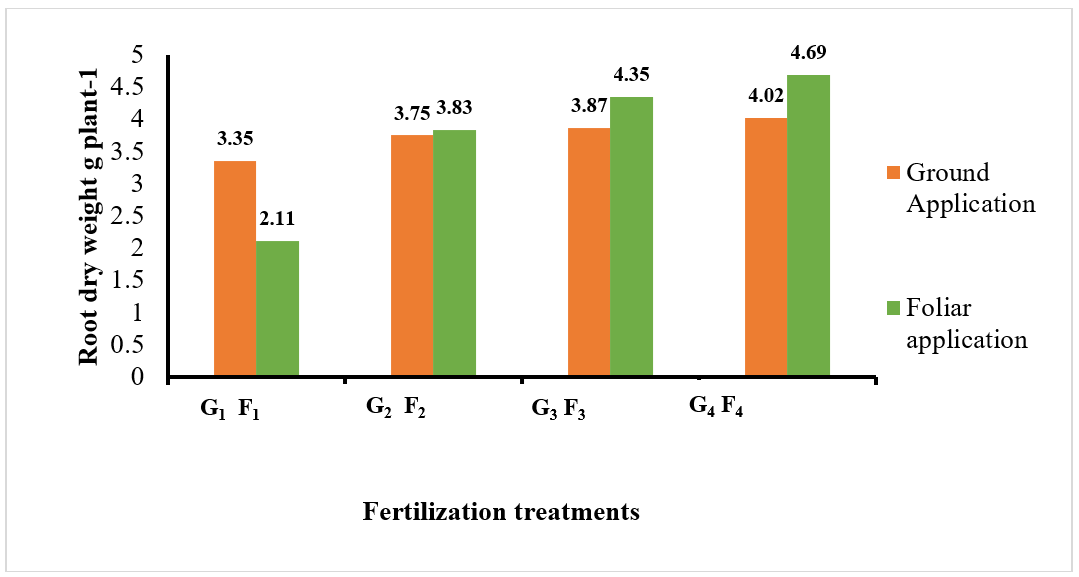
Figure 2 shows that the dry weight increased significantly with fertilization with nano-zinc. The highest dry weight was 4.69 and 4.02 g in both the F4 foliar application treatment and the G4 ground application treatment, respectively, compared to the lowest dry weight of 2.11 and 3.35 g in the control treatment for both application methods.
As for the dual effect of the two application methods, it is noted from Table 4 that the highest root dry weight was 5.07 g in the F4G4 treatment (2 g Zn L-1 + 7 kg Zn ha-1), fertilized using both foliar and ground fertilization methods, which significantly outperformed the control treatment, which recorded the lowest root dry weight (1.38 g). This increase in dry weight in the presence of zinc may be due to improved enzyme efficiency and enhanced photosynthesis, thus increasing carbon supply to the plant and directing it to the roots [29, 30]. In addition, zinc protects cell membranes from oxidation, reducing root tissue damage and maintaining their efficiency for a longer period. Its use in nanoscale form also contributed to increased absorption and transport efficiency within cells due to its high specific surface area and easy permeability. These explanations have been supported by recent studies confirming that nano-zinc improves root growth by raising physiological activity and ionic balance in growing plants [31-33].
Table 4. Effect of ground and foliar application of nano-Zn fertilizer on root dry weight (g plant-1) of wheat
|
Ground Application |
Foliar Application |
Mean (G) |
|||
|
F1 |
F2 |
F3 |
F4 |
||
|
G1 |
1.38 |
3.31 |
4.23 |
4.46 |
3.35 |
|
G2 |
2.24 |
3.90 |
4.31 |
4.55 |
3.75 |
|
G3 |
2.44 |
3.99 |
4.36 |
4.68 |
3.87 |
|
G4 |
2.37 |
4.11 |
4.51 |
5.07 |
4.02 |
|
Mean (F) |
2.11 |
3.83 |
4.35 |
4.69 |
— |
|
LSD0.05 |
G: 0.13, F: 0.13, F × G: 0.27 |
||||
Each value in the table represents the mean of three replicates ± 0.06.
Figure 2. Effect of ground and foliar application of nano-Zn fertilizer on root dry weight (g plant-1) of wheat
3.3 Effect of ground and foliar fertilization with nano-zinc on root nitrogen content (mg plant-1)
It is noted from Table 5 that ground and foliar addition of nano-zinc led to a significant increase in root nitrogen content. The highest root content of this element was 35.76 and 28.17 mg plant-1 in both ground addition treatments G4 and foliar F4, while the lowest root content was 9.49 and 17.69 mg plant-1 in the comparison treatment for the two addition methods, respectively. As for the interaction effect between the two addition methods, it is noted that the highest root nitrogen content, 48.55 mg plant⁻¹, was in treatment F4G4 (2 g Zn L-1 + 7 kg Zn ha-1), fertilized using both foliar and ground fertilization methods, which significantly outperformed the comparison treatment. which recorded the lowest root content of the element (7.60 mg plant-1). The increase in plant nitrogen content when fertilized with nano-zinc may be due to the role of nano-zinc in improving root growth and increasing the surface area (Table 3 and Table 4), which led to an increase in the efficiency of nitrogen uptake.
Table 5. Effect of ground and foliar application of nano-zinc on root nitrogen content (mg plant-1)
|
Ground Application |
Foliar Application |
Mean(G) |
|||
|
F1 |
F2 |
F3 |
F4 |
||
|
G1 |
7.60 |
8.71 |
9.36 |
12.31 |
9.49 |
|
G2 |
15.26 |
17.22 |
18.45 |
22.86 |
18.45 |
|
G3 |
20.94 |
23.76 |
27.62 |
28.96 |
25.32 |
|
G4 |
26.98 |
33.34 |
34.15 |
48.55 |
35.76 |
|
Mean(F) |
17.69 |
20.76 |
22.40 |
28.17 |
|
|
LSD0.05 |
G: 1.84, F:1.56, F × G: 3.12 |
||||
Each value in the table represents the mean of three replicates ± 0.69.
In addition, stimulating the formation of auxins by nano-zinc increased root density and accelerated the absorption processes [34], demonstrating that nano-zinc fertilization enhanced nitrogen uptake in wheat by increasing the efficiency of nitrogen metabolism [35], zinc nanoparticles improved the dynamics of nitrogen uptake in the rhizosphere. The increased root nitrogen content when combined with foliar and soil application of zinc may be due to the fact that both methods provide the plant with balanced and responsive nutrition, which increases the activity of nitrogen-assimilating enzymes, improves root growth and root hair development, and thus increases nitrogen accumulation in the roots [36].
3.4 Effect of ground and foliar fertilization with nano-zinc on root phosphorus content (mg plant-1)
Table 6 shows that ground and foliar application with nano-zinc resulted in a significant increase in root phosphorus content. Root phosphorus content increased from 2.17 mg plant-1 in the control treatment G1 to 3.42 mg plant-1 in the ground fertilization treatment G4 (7 kg Zn ha-1), while root phosphorus content increased from 1.40 mg plant-1 in the control treatment F1 to 4.01 mg plant-1 in the foliar spray treatment F4 (2 g Zn L-1). It is also noted from the table that the lowest root phosphorus content was in the control treatment G1F1, reaching 0.87 mg/plant-1, while the highest root phosphorus content was recorded when the two addition methods were combined in treatment G4F3 (7 kg Zn ha-1 + 1.5 g Zn L-1), reaching 4.50 mg plant-1. The increase in root phosphorus content when fertilized with nano-zinc may be due to the fact that zinc application to calcareous soils reduces phosphorus fixation by high concentrations of calcium carbonate, thereby increasing the availability of phosphorus to plants in addition to the element's ability to improve the solubility of fixed phosphate in calcareous soil as a result of increased root secretion of organic acids and stimulating the activity of microorganisms that release the phosphonate enzyme, which releases organic phosphorus from complex compounds in the soil. This increases the release of organic and mineral phosphorus [33, 36-39]. Furthermore, increased root growth may have contributed to increased absorption efficiency, which increased root phosphorus content [40].
Table 6. Effect of ground and foliar application of nano-zinc on root phosphorus content (mg plant-1)
|
Ground Application |
Foliar Application |
Mean (G) |
|||
|
F1 |
F2 |
F3 |
F4 |
||
|
G1 |
0.87 |
1.76 |
2.88 |
3.15 |
2.17 |
|
G2 |
1.40 |
2.64 |
3.92 |
4.11 |
3.02 |
|
G3 |
1.61 |
2.88 |
4.26 |
4.35 |
3.28 |
|
G4 |
1.70 |
3.05 |
4.50 |
4.41 |
3.42 |
|
Mean (F) |
1.40 |
2.59 |
3.89 |
4.01 |
|
|
LSD0.05 |
G: 0.216, F: 0.216, F × G: 0.432 |
||||
Each value in the table represents the mean of three replicates ± 0.10.
3.5 Effect of ground and foliar fertilization with nano-zinc on the root potassium content (mg plant-1)
Table 7 shows a significant increase in the root potassium content when fertilized with zinc and by both addition methods. Foliar zinc addition was more effective in increasing potassium uptake compared to ground addition. The root potassium content increased from 10.59 and 7.78 mg plant-1 in the two control treatments to 11.38 and 13.03 mg plant-1 for both ground fertilization treatment G4 and foliar spray treatment F4, respectively. It is also noted from the table that the lowest root potassium content was in the control treatment G1F1, reaching 6.52 mg plant-1, while the highest value was achieved when the two addition methods were combined in treatment G4F3 (7 kg Zn ha-1 + 1.5 g Zn L-1) (where it reached 13.47 mg plant-1, a 106.5% increase compared to the control treatment. The increased root potassium content when fertilized with zinc may be due to the increased demand for potassium resulting from improved plant growth when zinc is added. Zinc also increases root growth and depth (Tables 3 and 4), which enhances the absorption of nutrients, including potassium. Zinc also enhances the activity of ion transport proteins within cell membranes, increasing the movement of potassium from the soil into plant cells. In addition, the improved ionic balance provided by nano-zinc reduces competition between ions and increases the efficiency of potassium absorption [34, 40-42].
Table 7. Effect of ground and foliar application of nano-zinc on root potassium content (mg plant-1)
|
Ground Application |
Foliar Application |
Mean(G) |
|||
|
F1 |
F2 |
F3 |
F4 |
||
|
G1 |
6.52 |
8.73 |
12.36 |
12.76 |
10.59 |
|
G2 |
7.94 |
9.86 |
12.71 |
13.00 |
10.88 |
|
G3 |
8.25 |
10.22 |
12.88 |
13.18 |
11.13 |
|
G4 |
8.41 |
10.46 |
13.47 |
13.19 |
11.38 |
|
Mean (F) |
7.78 |
9.82 |
12.85 |
13.03 |
|
|
LSD0.05 |
G: 0.24, F: 0.24, F × G: 0.48 |
||||
Each value in the table represents the mean of three replicates ± 0.11.
3.6 Effect of soil and foliar fertilization with nano-zinc on root zinc content (mg plant-1)
Table 8 shows that the lowest root content of zinc was in the unfertilized study soil (treatment G1F1, which reached 0.067 mg plant⁻¹, while the highest root content of zinc was 0.294 mg plant-1 when the two addition methods were combined in treatment G4F3 (7 kg Zn ha-1 + 1.5 g Zn L-1). This is consistent with what was indicated by studies [43, 44].
The table indicates the superiority of foliar addition of zinc over ground addition in the root content of this element, as the highest root content of zinc was 0.257 mg plant -1 when foliar addition was made, while the highest content was 0.227 mg plant-1 when ground addition was made. The decrease in the root content of plants from Zinc content in the unfertilized research soil may be attributed to the low concentration of the element in the study soil, It is noted from Table 2 that the available concentration of zinc in the research soil was 0.4 mg kg-1, which is less than the critical limit for this element in calcareous soils determined by Soltanpour and Schwab [25], which is 1 mg kg-1. This is likely due to the high concentration of calcium carbonate (200 g kg-1), the high degree of soil reaction (7.6), and the low percentage of organic matter (6 g kg-1), which exposes the element to precipitation reactions and thus reduces its availability in the soil, high calcium carbonate in the soil leads to a high degree of soil reaction, and consequently, zinc precipitation in the form of zinc carbonate (ZnCO₃) or zinc hydroxide (Zn(OH)₂), high soil reaction rates also lead to increased intensity Zinc adsorption to the mineral (goethite) restricts zinc mobility and reduces the dissolution rate of zinc-containing compounds, especially when the amount of calcium carbonate is high. Furthermore, the high clay concentration in the study soil (480 g kg-1) increases the adsorption of the element to the surfaces of clay minerals [45-47]. These results indicate that wheat grown under these conditions requires zinc fertilization to increase absorption efficiency and achieve balanced growth and higher yields. resulting from the high concentration of calcium carbonate and the degree of soil reaction, which reduces the availability of the element due to the sedimentation processes to which it is exposed [48].
The increase in root zinc content when fertilized with nano-zinc may be attributed to the small size and high specific surface area of zinc nanoparticles, which improves their solubility and ease of penetration through root cell walls and membranes, thus increasing absorption efficiency. In addition, the improvement in root growth and rhizosphere expansion due to nano-fertilization contributed to an increase in total zinc absorption [49]. In Tables 3-8, the reduction in LSD values may be attributed to the high homogeneity among replicates, resulting from conducting the experiment under controlled greenhouse conditions in terms of temperature, irrigation, soil type, and nano-fertilizer application rates, which led to a reduction in experimental variability among the experimental units.
In this experiment, soil application of nano-zinc required a larger amount of the element, totaling 7.5 g, with an estimated cost of 75,000 IQD, whereas foliar application consumed a smaller amount of only 2 g, with an estimated cost of 20,000 IQD. Despite the lower cost of foliar application, the treated plants showed a clear improvement in root growth indicators, such as root depth, dry weight, and nutrient uptake efficiency, compared to the soil application, which showed a moderate response. Therefore, foliar application of nano-zinc is considered more efficient and economically feasible, as it combines lower cost with higher absorption efficiency and enhanced root growth, making it a profitable investment for farmers.
Table 8. Effect of ground and foliar application of nano-zinc on root zinc content (mg plant-1)
|
Ground Application |
Foliar Application |
Mean (G) |
|||
|
F1 |
F2 |
F3 |
F4 |
||
|
G1 |
0.067 |
0.121 |
0.190 |
0.202 |
0.145 |
|
G2 |
0.094 |
0.178 |
0.256 |
0.263 |
0.198 |
|
G3 |
0.111 |
0.196 |
0.286 |
0.281 |
0.219 |
|
G4 |
0.124 |
0.209 |
0.294 |
0.283 |
0.227 |
|
Mean (F) |
0.099 |
0.176 |
0.257 |
0.257 |
|
|
LSD0.05 |
G: 0.012, F: 0.012, F × G: 0.024 |
||||
Each value in the table represents the mean of three replicates ± 0.0054.
From the above results, it can be concluded: 1) Foliar application of nano-zinc is more effective and economical than soil application; 2) The combination of the two is most effective, with the optimal combination being 7 kg ha⁻¹ in soil + 2 g L⁻¹ in foliar application; 3) nano-zinc mainly works by promoting root growth and improving nutrient absorption;4) We recommend to conduct field experiments that cover all growth and full production stages and to study the mechanisms of absorption.
The author is deeply grateful to the College of Agriculture and Forestry, University of Mosul, for the facilities provided, which contributed to enhancing the quality of this work.
[1] FAO. (2024). FAOSTAT: Crops and Livestock Products. Statistics Division, Food and Agriculture Organization of the United Nations: Rome, Italy.
[2] Al-Abedi, J.A. (2011). Guide to the use of chemical and organic fertilizers in Iraq. The General Authority for Agricultural Extension, Iraqi Ministry of Agriculture, 90.
[3] FAO & Hall, S. (2023). Global Lessons Learned on Sustainable Reintegration in Rural Areas. Rome, Italy.
[4] Iraq Ministry of Agriculture (2024). Iraq Annual Country Report. Baghdad: Ministry of Agriculture. https://reliefweb.int/attachments/5cfeb82a-1abb-4421-b3b6-f7d1b0812226/WFP-0000165418.pdf.
[5] Rashid, A., Ryan, J. (2004). Micronutrient constraints to crop production in soils with Mediterranean-type characteristics: A review. Journal of Plant Nutrition, 27(6): 959-975.
[6] Akpan, N.J., Awotoye, O.O., Odoh, P.C., Adewusi, A.A., Oladeji, F.O., Ogundare, J.F. (2025). Effects of nano zinc oxide (n-ZnO) on soil physicochemical properties, micronutrient dynamics, and the growth performance of Ficus benjamina. Asian Soil Research Journal, 9(3): 125-136. https://doi.org/10.9734/asrj/2025/v9i3195
[7] Odone, A., Popovic, O., Thorup-Kristensen, K. (2024). Deep roots: Implications for nitrogen uptake and drought tolerance among winter wheat cultivars. Plant and Soil, 500(1): 13-32. https://doi.org/10.1007/s11104-023-06255-5
[8] Wang, Y., Li, W., Deng, Y., Xue, J., Gao, Z. (2024). Higher seed rates enlarge the effects of wide-belt sowing on root length density, thereby improving nitrogen uptake and use efficiencies in winter wheat. Plants, 13(17): 2476. https://doi.org/10.3390/plants13172476
[9] Alhadede, A.A.K.A., Al-Khafagi, Q.D.E. (2025). Effect of ionic strength on the dissolution and precipitation of carbonate minerals and the nature of ionic species from some calcareous soil. Journal of Global Innovations in Agricultural Sciences, 699-705.
[10] Dimkpa, C.O., Bindraban, P.S. (2020). Nano-fertilizers: New products for the industry? Journal of Agricultural and Food Chemistry, 66(26): 6462-6473. https://doi.org/10.1021/acs.jafc.7b02150
[11] Raza, M.A.S., Muhammad, F., Farooq, M., Aslam, M.U., Akhter, N., Toleikienė, M., Binobead, M.A., Ali, M.A., Rizwan, M., Iqbal, R. (2025). ZnO-nanoparticles and stage-based drought tolerance in wheat (Triticum aestivum L.): Effect on morpho-physiology, nutrients uptake, grain yield and quality. Scientific Reports, 15(1): 5309. https://doi.org/10.1038/s41598-025-89718-2
[12] Ali, A.M., Ibrahim, S.M., Omer, A.M. (2023). Foliar spraying of nano-silicate and nano-zinc on wheat (Triticum aestivum L.) under salt stress conditions enhances productivity and reduces the optimal nitrogen fertilizer rate. Communications in Soil Science and Plant Analysis, 54(19): 2731-2744. https://doi.org/10.1080/00103624.2023.2240817
[13] Harbawi, M.A., AlBadrani, W.A., Ghazal, R.A. (2021). The effect of fertilisation using Trichoderma harzianum and cow manure on releasing CO2 in two soils with different textures in north of Iraq. Asian Journal of Water, Environment and Pollution, 18(3): 117-122. https://doi.org/10.3233/AJW210036
[14] Morales Díaz, Y.D.L.C., Socorro Castro, A.R., Rojas Valladares, A.L. (2017). The professionalization of teachers in the research management process, at the Metropolitan University of Ecuador. Revista Universidad y Sociedad, 9(4): 6-12. http://scielo.sld.cu/pdf/rus/v9n4/rus01417.pdf.
[15] Sah, S.K., David, A.A., Swaroop, N., Thomas, T., Toppo, N., Yadav, D.K. (2024). Response of different levels of nitrogen and foliar application of nano zinc on physico-chemical properties of soil in wheat (Triticum aestivum L.) var. PWB-373. International Journal of Plant & Soil Science, 36(7): 882-891. https://doi.org/10.9734/ijpss/2024/v36i74800
[16] Schoeneberger, P.J., Wysocki, D.A., Benham, E.C. (2012). Field Book for Describing and Sampling Soils. Government Printing Office.
[17] Ghanem, H.E., Hamza, D.A., Zain El-Abdeen, A.A., Elbatrawy, W.S., El-Habashy, H.M. (2025). Influence of zinc foliar spray on growth, some important physiological processes, yield and yield attributes of bread wheat under water stress. Scientific Reports, 15(1): 14943. https://doi.org/10.1038/s41598-025-94728-1
[18] Lindsay, W.L., Norvell, W. (1978). Development of a DTPA soil test for zinc, iron, manganese, and copper. Soil Science Society of America Journal, 42(3): 421-428. https://doi.org/10.2136/sssaj1978.03615995004200030009x
[19] Gogos, A., Knauer, K., Bucheli, T.D. (2012). Nanomaterials in plant protection and fertilization: Current state, foreseen applications, and research priorities. Journal of Agricultural and Food Chemistry, 60(39): 9781-9792. https://doi.org/10.1021/jf302154y
[20] Gomez, K.A., Gomez, A.A. (1984). Statistical Procedures for Agricultural Research. John Wiley & Sons.
[21] Allen, S.E., Grimshaw, H.M., Parkinson, J.A., Quarmby, C. (1974). Chemical Analysis of Ecological Materials. Blackwell Scientific Publications.
[22] Bremner, J.M. (1996). Nitrogen – Total. In Methods of Soil Analysis Part 3 – Chemical Methods. https://doi.org/10.2136/sssabookser5.3.c37
[23] Tandon, R. (1999). Cholinergic aspects of schizophrenia. The British Journal of Psychiatry, 174(S37): 7-11. https://doi.org/10.1192/S0007125000293586
[24] Jones, D.R. (2001). A taxonomy of global optimization methods based on response surfaces. Journal of Global Optimization, 21(4): 345-383. https://doi.org/10.1023/A:1012771025575
[25] Soltanpour, P.N., Schwab, A.P. (1977). A new soil test for simultaneous extraction of macro-and micro-nutrients in alkaline soils. Communications in Soil Science and Plant Analysis, 8(3): 195-207. https://doi.org/10.1080/00103627709366714
[26] Turan, M.A., Katkat, V., Taban, S. (2007). Variations in proline, chlorophyll and mineral elements contents of wheat plants grown under salinity stress. Journal of Agronomy, 6(1): 137-141. https://doi.org/10.3923/ja.2007.137.141
[27] Martínez-Ríos, O., Bravo-Vinaja, Á., San-Martín-Hernández, C., Hidalgo-Moreno, C.I., Sánchez-de-Jesús, M.A., Llampallas-Díaz, J.D., Santillan-Balderas, D.S., García-Preciado, J.C. (2024). Zinc deficiency in calcareous soils: A bibliometric analysis from 1989 to 2024. Agriculture, 14(12): 2285. https://doi.org/10.3390/agriculture14122285
[28] Mossa, A.W., Gashu, D., Broadley, M.R., Dunham, S.J., McGrath, S.P., Bailey, E.H., Young, S.D. (2021). The effect of soil properties on zinc lability and solubility in soils of Ethiopia – An isotopic dilution study. Soil, 7(1): 255-268. https://doi.org/10.5194/soil-7-255-2021
[29] Smith, C.L., Blake, J.A., Kadin, J.A., Richardson, J.E., Bult, C.J., the Mouse Genome Database Group. (2018). Mouse Genome Database (MGD)-2018: Knowledgebase for the laboratory mouse. Nucleic Acids Research, 46(D1): D836-D842. https://doi.org/10.1093/nar/gkx1006
[30] Nie, Z., Zhao, P., Shi, H., Wang, Y., Qin, S., Liu, H. (2019). Nitrogen supply enhances zinc uptake and root-to-shoot translocation via up-regulating the expression of TaZIP3 and TaZIP7 in winter wheat (Triticum aestivum). Plant and Soil, 444(1): 501-517. https://doi.org/10.1007/s11104-019-04295-4
[31] Sary, D.H., Abd El-Aziz, M.E. (2025). Synthesis and characterization of nano-micronutrient fertilizer and its effect on nutrient availability and maize (Zea Mays L.) productivity in calcareous soils. Scientific Reports, 15(1): 25838. https://doi.org/10.1038/s41598-025-11273-7
[32] Nayak, S., Shivay, Y.S., Prasanna, R., Mandi, S., Parveen, S., Baral, K., Reddy, K.S. (2023). Soil and foliar application of Zn enhances its biofortification, bioavailability, and productivity in both biofortified and non-biofortified wheat varieties. Journal of Food Composition and Analysis, 124: 105691. https://doi.org/10.1016/j.jfca.2023.105691
[33] Ramesh, M.N.P. (2024). Effect of foliar application of nano zinc on nutrient uptake, yield and quality of wheat on zinc deficient and sufficient soils of inceptisol. Doctoral dissertation, Mahatma Phule Krishi Vidyapeeth.
[34] Sone, B.T., Makamu, E., Mohamed, H.E.A., Oputu, O., Fester, V. (2021). Green-synthesized ZnO via Hyphaene thebaica fruit extracts: Structure & catalytic effect on the Ozonation of Coralene Rubine-S2G azo disperse dye. Environmental Nanotechnology, Monitoring & Management, 16: 100515. https://doi.org/10.1016/j.enmm.2021.100515
[35] Prasad, K., McLoughlin, C., Stillman, M., Poplau, S., et al. (2021). Prevalence and correlates of stress and burnout among US healthcare workers during the COVID-19 pandemic: A national cross-sectional survey study. EClinicalMedicine, 35: 100879. https://doi.org/10.1016/j.eclinm.2021.100879
[36] El-Saadony, M.T., Alkhatib, F.M., Alzahrani, S.O., Shafi, M.E., Abdel-Hamid, S.E., Taha, T.F., Aboelenin, S.M., Soliman, M.M., Ahmed, N.H. (2021). Impact of mycogenic zinc nanoparticles on performance, behavior, immune response, and microbial load in Oreochromis niloticus. Saudi Journal of Biological Sciences, 28(8): 4592-4604. https://doi.org/10.1016/j.sjbs.2021.04.066
[37] Sharma, K., Dushyant, Pandey, V., Mahan, N., et al. (2025). Evaluating the impact of nano-zinc and nitrogen fertilizers on growth, yield, nutritional quality and economics of wheat (Triticum aestivum L.) cultivation in Western Uttar Pradesh. Plant Science Today, 12(2): 1-12. https://doi.org/10.14719/pst.8139
[38] Amin, S., Aziz, T., Zia-Ur-Rehman, M., Saleem, I., Rizwan, M., Ashar, A., Mussawar, H.A., Maqsood, M.A. (2023). Zinc oxide nanoparticles coated urea enhances nitrogen efficiency and zinc bioavailability in wheat in alkaline calcareous soils. Environmental Science and Pollution Research International, 30(27): 70121-70130. https://doi.org/10.1007/s11356-023-27209-5
[39] Jalil, S., Nazir, M.M., Ali, Q., Zulfiqar, F., Moosa, A., Altaf, M.A., Zaid, A., Nafees, M., Yong, J.W.H., Jin, X. (2023). Zinc and nano zinc mediated alleviation of heavy metals and metalloids in plants: An overview. Functional Plant Biology, 50(11): 870-888. https://doi.org/10.1071/FP23021
[40] Yu, B.G., Chen, X.X., Cao, W.Q., Liu, Y.M., Zou, C.Q. (2020). Responses in zinc uptake of different mycorrhizal and non-mycorrhizal crops to varied levels of phosphorus and zinc applications. Frontiers in Plant Science, 11: 606472. https://doi.org/10.3389/fpls.2020.606472
[41] Abbas, M., Murtaza, G., Owens, G., Khursheed, M.M., Hussain, T. (2025). Interactive effects of zinc oxide nanoparticles and phosphorus on wheat (Triticum aestivum L.) grown under salt-affected soil conditions. Journal of Plant Nutrition and Soil Science, 188(1): 139-150. https://doi.org/10.1002/jpln.202400136
[42] Shoukat, A., Saqib, Z.A., Akhtar, J., Aslam, Z., Pitann, B., Hossain, M.S., Mühling, K.H. (2024). Zinc and silicon nano-fertilizers influence ionomic and metabolite profiles in maize to overcome salt stress. Plants, 13(9): 1224. https://doi.org/10.3390/plants13091224
[43] Qureshi, M.A., Jaskani, M.J., Khan, A.S., Ahmad, R. (2022). Influence of endogenous plant hormones on physiological and growth attributes of Kinnow mandarin grafted on nine rootstocks. Journal of Plant Growth Regulation, 41(3): 1254-1264. https://doi.org/10.1007/s00344-021-10380-9
[44] Ram, S., Malik, V.K., Gupta, V., Narwal, S., et al. (2024). Impact of foliar Application of iron and zinc fertilizers on grain iron, zinc, and protein contents in bread wheat (Triticum aestivum L.). Frontiers in Nutrition, 11: 1378937. https://doi.org/10.3389/fnut.2024.1378937
[45] Hafeez, A., Pan, T., Tian, J., Cai, K. (2022). Modified biochars and their effects on soil quality: A review. Environments, 9(5): 60. https://doi.org/10.3390/environments9050060
[46] Wang, Z., Hochella Jr, M.F., Duan, Y., Zhang, G., Lu, X., Li, W. (2025). Contrasting Zn isotope fractionation effect during adsorption on micro-and nano-goethite. Geochimica et Cosmochimica Acta, 401: 47-61. https://doi.org/10.1016/j.gca.2025.05.031
[47] Al-Salama, Y., Alghoraibi, I., Salem, M.A. (2024). The effect of foliar application of ZnO nanoparticles and ZnSO4 on improving the growth and production of durum wheat. Al-Qadisiyah Journal For Agriculture Sciences, 14(1): 1-11. https://doi.org/10.33794/qjas.2024.145712.1154
[48] Zhao, A., Wang, B., Tian, X., Yang, X. (2020). Combined soil and foliar ZnSO4 application improves wheat grain Zn concentration and Zn fractions in a calcareous soil. European Journal of Soil Science, 71(4): 681-694. https://doi.org/10.1111/ejss.12903
[49] Hui, X., Luo, L., Chen, Y., Palta, J.A., Wang, Z. (2025). Zinc agronomic biofortification in wheat and its drivers: A global meta-analysis. Nature Communications, 16(1): 3913. https://doi.org/10.1038/s41467-025-58397-y