Optimizing Spore Propagation of Ketak Fern (Lygodium circinnatum) for Sustainable Cultivation: Synergistic Effects of Organic Fertilizers and Climbing Supports

I Wayan W. Susila | Diana Prameswari* | Ali Setyayudi | Aris Sudomo | Levina Augusta Geraldine Pieter | Gipi Samawandana | Lincah Andadari | Prasetyorini Djarot | Kresno A. Hendarto | Rubangi Al Hasan | Marcellinus M. B. Utomo
© 2025 The authors. This article is published by IIETA and is licensed under the CC BY 4.0 license (http://creativecommons.org/licenses/by/4.0/).
OPEN ACCESS
Ketak or Paku Ata (Lygodium circinnatum (Burm. F) Sw.) is a climbing fern considered one of the most valuable non-timber forest products in Nusa Tenggara Barat. As the raw material is severely limited in nature, cultivation of the ketak plant is essential for sustainability. This study aimed to determine the effect of fertilizer and climbing tree species on the growth of ketak seedlings from spores. It used a factorial randomized block design with different types of fertilizers (cow dung, compound fertilizer, goat dung) and climbing tree species (Erythrina variegata, Diospyros malabarica, Gliricidia sepium, bamboo). 16 treatment combinations were tested, each replicated three times, resulting in 480 samples. Fertilizer had a significant effect on all observed parameters. Differences in climbing tree species significantly affected leaf number, tendril number, growth length, and plant survival. Goat dung and gamal (G. sepium) were optimal for increasing leaf number, survival rate, and tendril length (40.3 ± 25.9 cm). Meanwhile, the gamal climbing tree yielded the highest tendril growth. Using fertilizer and selecting climbing tree species play a key role in ketak growth in its habitat. The combined application of 2 kg of goat manure/plant and the gamal species showed significant growth benefits (67.1%-76.0%), surpassing other treatments.
climbing fern, climbing tree species, complex fertilizer, manure, non-timber forest product
Non-timber forest products (NTFPs) hold a higher economic value in Indonesia than timber resources. The significance of NTFPs in supporting livelihoods can be classified into several categories. First, they play a crucial role in income generation, with many rural communities depending on NTFPs as a primary source of earnings [1, 2]. Moreover, NTFPs serve as a vital subsistence and economic buffer during challenging periods [3]. NTFPs provide income, especially for women and marginalized communities [4]. Study [5] observed an increasing acknowledgment that the monetary value assigned to NTFPs falls short of fully capturing their worth and significance. Achieving a delicate equilibrium between regulation, enforcement, and incentives is essential for promoting both forest protection and the welfare of individuals in proximity to forests [6].
Rural communities utilize non-timber forest products (NTFPs) for various purposes, such as energy, food, pharmaceuticals, domestic tools, construction materials, agricultural implements, and handicrafts [7-10]. For handicrafts, "ketak" or "paku ata" (Lygodium circinnatum (Burm.F) Sw.) is one particular form of NTFP that is utilized. Ketak, a species of forest fern in the Schizaeaceae family, is one of the distinguishing characteristics of tropical forests [11]. Widely distributed in tropical areas with abundant light, particularly in glades due to its intolerance to shade [12]. This fern thrives in forests at low to medium altitudes, reaching up to 1500 m above sea level, encompassing regions such as Java and other tropical Asian areas [13, 14]. Despite its lack of direct biological benefits, Lygodium, as an understory fern, plays an important role in tropical forests by increasing the soil microbial diversity [15] and covering the forest floor to minimize surface runoff and prevent erosion [16].
Ketak is employed by Small and Medium Enterprises (SMEs) in diverse regions, including West Java, East Nusa Tenggara (NTT), West Nusa Tenggara (NTB), and Bali, for the production of handicrafts. The tradition of weaving items from ketak has been passed down through generations due to its economic value. The popularity of ketak is closely tied to the growth of tourist destinations, as these woven crafts serve as sought-after souvenirs for visitors. Moreover, the market for ketak products has expanded to include exports, with notable demand from countries like Germany, England, France, and Asia [17]. Ketak is suitable for producing various handicrafts, including bags, fruit holders, spoon holders, baskets, barrel-shaped straps, hats, tissue boxes, placemats, glasses, and more.
Ketak-derived woven crafts are the leading products in NTB province, particularly on the island of Lombok, with Central Lombok emerging as the region's main hub for craft production [18]. The growth of ketak craft is supported by the substantial demand for raw materials in woven crafts and the involvement of numerous stakeholders [19]. The expansion of the craft industry has led to an escalating demand for ketak plant raw materials, resulting in a decrease in their availability due to the over-exploitation of natural habitats in the forest [20-22]. The main problem is the imbalance of supply and demand. High industrial demand and reduced availability from natural forests have not been accompanied by efforts to develop the plant outside the habitat. Domestication efforts by changing Lygodium circinnatum into a cultivated plant have become an important point as a solution to the problem. According to study [19], a significant portion of the rural community (39%–46%) emphasizes the importance of ketak cultivation despite reported challenges and unsuccessful cultivation efforts. Moreover, the current ketak potential in this region has diminished due to persistent exploitation to meet the raw material demands for weaving [23].
The potential of Lygodium in nature is decreasing because of overexploitation. The majority of ketak observed were at the regeneration level, with only a limited number of clumps with a stem diameter greater than 3 mm - the standard criterion for suitable raw material [24]. This scarcity is attributed to the unexpectedly slow pace of natural regeneration, which includes the period from spore propagation to the development of plant-ready seedlings, which exceeds six months [23]. As a result, Lygodium circinnatum (Burm.f.) in the forest becomes a rare species.
Lygodium that grows naturally under forest stands, fertilizing and thinning can be applied in the rainy season and the growth period of the plant. But fertilization for natural generation that is applied in the short rainy season is proven to be ineffective [25]. Wild plants that are accustomed to living in marginal environments have a slow metabolic process. The nutrient input will exceed the metabolism requirement and become toxic for the plant [21]. According to a study [26], wild Lygodium plants will grow slowly in high soil nutrients because the soil nutrients can be toxic and delay the plant's metabolic processes. Therefore, to meet the high demand for seedlings, propagation through spores must be carried out, as natural seedlings in forest areas are very limited. Domestication efforts by changing Lygodium circinnatum into a cultivated plant have become an important point as a solution to the problem.
Research on cultivation efforts has been carried out as an effort to domesticate and conserve ex situ [14, 22]. Nevertheless, some obstacles in cultivation are still found, namely (i) cultivation of Lygodium must be carried out from the time of spore so that it takes a long time, (ii) positive association of vines (climbing trees) and shade is required [27], (iii) we need a plant as vines (climbing trees) with certain branches [28], (iv) there is no significant effect of urea chemical fertilization [22], and (v) wild Lygodium plants will grow slowly in high soil nutrients because the soil nutrient can be a toxic and delay the plant metabolic processes [21]. Even some researches show failures such as: (i) intensive cultivation of Lygodium circinnatum (Burm. f.) by planting saplings has not provided satisfactory results [29], (ii) vegetative propagation produces few seedlings [30, 31] and (iii) in vitro conditions (in the laboratory) still require testing to find the appropriate conditions and medium for the growth of Lygodium sporophytes [22, 32].
Various treatments in this research show that efforts in domestication have not been effective in encouraging people to cultivate Lygodium on their land. The selection of one type of manure and the vine type should be based on the availability of the input material at the planned planting site. When planting vines from live plants/stems, it is important to ensure that the branches and crowns grow to support the growth of L. circinnatum. Furthermore, while the plant is still young, up to the age of one year, it is susceptible to interference from weeds and wild plants, necessitating cleaning. Nevertheless, study [33] stated that the development of climbing trees and organic fertilizer had been successfully carried out. Climbing trees should be planted to support the growth of ketak and improve environmental quality. As climbing ferns, ketak plants rely on suitable climbing trees for optimal development [34]. The study explores the use of climbing tree species such as gamal (Gliricidia sepium), dadap (Erythrina variegata), kelicung (Diospyros malabarica), and bamboo poles at the test site. Previous research indicated the success of gamal and dadap in enhancing ketak shoot growth in Rarung Research Forest (KHDTK Rarung), Central Lombok [24]. The presence of host trees creates a favorable environment for the growth of climbing plants, including ketak [35]. The previous cases have shown that basic fertilisation with chemical fertilisers is ineffective, so testing organic compost following their natural habitat is necessary to improve the quality of the site and the environment where plants grow. The use of compost or organic fertiliser can stimulate soil moisture, which is suitable for plant growth. In this case, cow and goat manure were chosen, considering that these fertilisers are always available when needed by the community. Most villagers in Lombok (West Nusa Tenggara) breed cows and goats. Some previous cases have shown that basal fertilization using chemical fertilizers has not been effective, indicating the need to test organic compost fertilization that aligns with the plant’s natural habitat in order to improve site quality and environmental conditions for plant growth. The use of compost or organic fertilizers can stimulate suitable soil moisture for plant development. In this context, cow and goat manure were selected due to their availability and accessibility to the local community. In villages across Lombok (West Nusa Tenggara), most people raise and keep cows and goats. In some cases, the application of manure (goat) gave better results than other manure fertilizers [22, 24]. The aim of the current study is to evaluate the effectiveness of the Lygodium circinnatum cultivation technique (Burm F.) SW with climbing tree species and fertilization for plant development and forest sustainability.
2.1 Plant material and research location
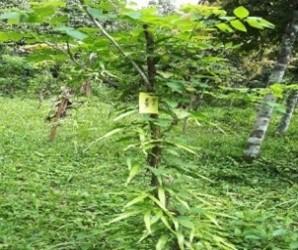
The research was conducted for 12 months, encompassing spore collection, breeding, seeding, planting, and growth measurement until the 10th month in the field (Figure 1). The research area conditions align well with the natural Ketak habitat [23, 33, 36].
(1)
(2)
(3)
(4)
Figure 1. Ketak planting performance with climbing tree (1) Bamboo (bamboo poles), (2) Dadap (E. variegata), (3) Gamal (G. sepium), and (4) Kelicung (D. malabarica)
The study was conducted in KHDTK Rarung, situated at 116°15' – 116°16' East Longitude and 08°30’00” – 08°30’36” South Latitude, with an elevation of 300–500 m above sea level (Figure 2). Located in Pringgarata District, Central Lombok Regency, NTB Province, Indonesia, the area features predominantly gentle topography (slope < 30%), with some locations having undulating to steep topography (slope 30 – 45%, slope > 45%). The prevailing soil type is regosol. Climatically, KHDTK Rarung experiences a tropical rainy climate, characterized by a prolonged dry season. The region averages 125 annual rainy days with rainfall exceeding 2,000 mm/year [37]. The minimum temperature is 27 ± 2.70℃, maximum 30.06 ± 3.55℃, and the average humidity is 57.5% ± 11.1%. Based on the Schemit and Ferguson classification, the Rarung Research Forest is classified as climate type C (moderately wet).
Figure 2. Research location
2.2 The experimental design and research procedure
The study used a completely randomized block design in a factorial structure with fertilizer treatments and climbing tree species. Fertilizer treatments included a control (P0), goat dung (P1, 2 kg per hole), cow dung (P2, 2 kg per hole), and NPK (P3, 10 g per hole). Climbing tree treatments include gamal stands (T1), dadap stands (T2), bamboo canes (T3), and kelicung stands (T4). Sixteen fertilizer treatments and climbing tree species combinations were tested, with three block replications. Each block consisted of 10 ketak seedlings spaced 3 m × 2 m. The planting containers consisted of 15 × 20 cm polybags. Measurement tools included a meter, calipers, flux meter, hygrometer, thermometer, check counter, roll counter, and GPS.
The study consisted of three main stages: spore collection and propagation, planting, and growth measurement of ketak. Spores were collected from healthy, mature trees in Pusuk Forest, West Lombok. Breeding was carried out in a seed house using chopped fern stalk media. Plants were transplanted when the seedlings developed a leafy shoot with 3-5 buds. Seedlings were grown in polybags (15 × 20 cm) with a mixed medium of manure and soil (1:3 ratio) and 2 g NPK fertilizer. Planting was carried out with 480 ketak seedlings according to the established design. Plant dimension observations were conducted using a measuring tape and a hand counter to measure vine stem length, number of vines, number of leaves, and survival rate. Initial measurements were taken at planting and repeated every three months thereafter. The survival rate was calculated as the number of living plants divided by the total number of plants per experimental unit. Soil samples were collected at a depth of 0–30 cm at the end of the observation period, and each sample underwent comprehensive physical and chemical property analysis.
2.3 Data analysis
Data were analyzed using IBM SPSS Statistics 26 at a significance level of α = 0.05. Growth parameters—including tendril stem length (cm), number of tendrils per plant (shoot), leaf count (leaf blades), and survival rate (%)—were subjected to analysis of variance (ANOVA). When significant differences were found, treatments were further compared using Duncan’s Multiple Range Test (DMRT) at the 5% significance level [24, 38]. The experimental design was based on the following model:
$Y_{i j k}=\mu+\alpha_i+\beta_i+(\alpha \beta)_{i j}+\varepsilon_{i j k}$ (1)
where,
Yijk = Observation value of the i-th fertilizer treatment, the j-th climber, and k-th replicate;
µ = Mean value;
αi = Effect of i-th fertilizer treatment;
βj = Effect of j-th tree climbing species treatment;
(αβ)ij = Interaction effect of the i-th fertilizer treatment and the j-th climbing tree species;
εijk = Effect of error in the treatment of the i-th fertilizer, the j-th climbing tree on the k-th replication.
3.1 The site condition of the ketak plantation
The ketak plantation site had generally poor fertility, as indicated by soil analysis, which showed slightly acidic to acidic pH, moderate nitrogen, moderate organic carbon, loamy sand texture, and low to moderate cation exchange capacity (CEC). Macronutrients (P, K, Ca, Mg) ranged from very low to very high criteria, while Fe showed moderate to high levels, Mn was very low, and Zn was marginal or deficient (Table 1). The soil texture is clay loam, with the lowest and highest value of clay ranging from 47.6%–51.6%. Soil texture presents the soil mass's relative proportions of sand, silt, and clay fractions. Overall, there was an improvement in site quality after fertilizer application compared to the control condition without fertilizer application (Table 1).
Table 1. Chemical and physical soil characteristics in the research site
|
Parameters |
Method |
Control |
Criteria |
Goat |
Criteria |
Cow |
Criteria |
NPK |
Criteria |
|
Water content (%) |
Gravimetry |
21.17 |
- |
23.92 |
- |
23.54 |
- |
21.31 |
- |
|
pH-H2O |
pH-meter |
5.28 |
Slightly acid |
5.77 |
Slightly acid |
5.74 |
Slightly acid |
5.5 |
Acid |
|
N-Total (%) |
Kjeldahl |
0.34 |
Moderate |
0.40 |
Moderate |
0.42 |
Moderate |
0.36 |
Moderate |
|
C-organic (%) |
Walkey and Black |
2.26 |
Moderate |
2.55 |
Moderate |
2.57 |
Moderate |
2.30 |
Moderate |
|
Texture (%) |
Hydrometer |
Clay sand |
Rough |
Clay sand |
Rough |
Clay sand |
Rough |
Clay sand |
Rough |
|
CEC (cmol/kg) |
Pekolasi |
14.30 |
Low |
24.76 |
Moderate |
20.03 |
Moderate |
14.65 |
Low |
|
Available P (ppm) |
Morgan Wolf |
3.1 |
Moderate |
3.64 |
Moderate |
3.55 |
Moderate |
3.69 |
Moderate |
|
Available K (ppm) |
60.44 |
Very high |
71.56 |
Very high |
67.78 |
Very high |
69.82 |
Very high |
|
|
Available Ca (ppm) |
63.6 |
Very low |
69.8 |
Very low |
68.5 |
Very low |
69.9 |
Very low |
|
|
Available Mg (ppm) |
30.33 |
High |
29.62 |
High |
30.23 |
High |
30.40 |
High |
|
|
Available S (ppm) |
30.88 |
Slightly low |
52.90 |
Slightly low |
39.28 |
Low |
60.87 |
Slightly low |
|
|
Available Fe (ppm) |
12.34 |
Slightly high |
12.55 |
Slightly high |
15.62 |
Slightly high |
14.67 |
Slightly high |
|
|
Available Mn (ppm) |
0.72 |
Very low |
0.95 |
Very low |
0.85 |
Very low |
0.88 |
Very low |
|
|
Available Cu (ppm) |
0.53 |
Sufficient |
0.20 |
Sufficient |
0.55 |
Sufficient |
1.16 |
Sufficient |
|
|
Available Zn (ppm) |
1.32 |
Marginal |
0.88 |
Marginal |
0.84 |
Marginal |
0.92 |
Marginal |
3.2 Plant growth
Harvesting of ketak is usually done by cutting the tendrils, which can grow up to 10 m in length in their natural habitat [21]. Therefore, observations were made on the length and number of tendrils, as well as the number of leaves produced as a result of the treatments applied. Ketak plantation observations extended up to 10 months in the field. The productivity of young plants continued to increase due to the favorable site conditions and environmental support in their natural habitat. Across four measurements, the average tendril length, number of tendrils per shoot, and number of leaves generally increased, with exceptions noted in plants associated with kelicung as the climbing tree (Table 2).
Table 2. The growth of ketak
|
Treatment Combination
|
Number of Tendrils
|
Length of Tendril (cm)
|
Number of Leaves
(Sheet/a Pair of Leaves)
|
|||||||||
|
1
Month
|
4 Month
|
7 Month
|
10 Month
|
1 Month
|
4 Month
|
7 Month
|
10 Month
|
1 Month
|
4 Month
|
7 Month
|
10 Month
|
|
|
P0T1
|
3 ± 1
|
3 ± 1
|
4 ± 1
|
4 ± 2
|
12.6 ± 4.2
|
17.7 ± 8.8
|
25.2 ± 11.8
|
36.3 ± 17.4
|
6 ± 3
|
8 ± 3
|
11 ± 6
|
14 ± 8
|
|
P0T2
|
2 ± 1
|
3 ± 2
|
3 ± 2
|
4 ± 2
|
7.2 ± 3.1
|
8.7 ± 2.2
|
17.1 ± 11.4
|
21.1 ± 14.9
|
5 ± 2
|
6 ± 3
|
9 ± 5
|
9 ± 6
|
|
P0T3
|
2 ± 1
|
3 ± 2
|
4 ± 2
|
4 ± 2
|
7.7 ± 1.2
|
9.0 ± 3.8
|
20.9 ± 11.3
|
28.2 ± 21.7
|
4 ± 2
|
6 ± 3
|
7 ± 4
|
10 ± 7
|
|
P0T4
|
2 ± 1
|
2 ± 0
|
1± 1
|
1.± 1
|
6.2 ± 2.1
|
6.8 ± 2.7
|
8.2 ± 3.6
|
9.2 ± 3.4
|
3 ± 1
|
3 ± 1
|
3 ± 1
|
3 ± 1
|
|
P1T1
|
4 ± 2
|
4 ± 2
|
5 ± 3
|
6 ± 3
|
11.0 ± 6.7
|
17.6 ± 11.6
|
38.6 ± 15.5
|
64.5 ± 20.6
|
6 ± 3
|
9 ± 4
|
17 ± 8
|
23 ±16
|
|
P1T2
|
3 ± 2
|
4 ± 2
|
4 ± 3
|
5 ± 3
|
7.0 ± 2.3
|
13.6 ± 5.8
|
30.2 ± 24.5
|
55.9 ± 30.2
|
5 ± 3
|
8 ± 5
|
15 ± 8
|
18 ±13
|
|
P1T3
|
2.± 2
|
3 ± 2
|
3 ± 2
|
4 ± 2
|
6.1 ± 2.2
|
12.8 ± 8.4
|
30.8 ±2 0.8
|
64.6 ± 25.1
|
5 ± 3
|
10 ± 4
|
18 ± 6
|
21 ± 9
|
|
P1T4
|
3 ± 1
|
3 ± 1
|
2 ± 1
|
1 ± 1
|
10.2 ± 4.7
|
10.3 ± 4.7
|
10.4 ± 3.9
|
10.4 ± 3.9
|
6 ± 2
|
6 ± 2
|
6 ± 2
|
6 ± 2
|
|
P2T1
|
3 ± 2
|
3 ± 2
|
3 ± 2
|
3 ± 2
|
8.7 ± 3.9
|
12.7 ± 8.1
|
22.4 ± 15.3
|
36.3 ± 30.6
|
5 ± 2
|
5 ± 3
|
11 ± 6
|
14 ± 8
|
|
P2T2
|
2 ± 1
|
2 ± 1
|
3 ± 1
|
3 ± 1
|
6.5 ± 3.5
|
16.6 ± 13.1
|
30.6 ± 27.4
|
34.7 ± 28.4
|
5 ± 2
|
9 ± 6
|
9 ± 6
|
10 ± 6
|
|
P2T3
|
2 ± 1
|
2 ± 1
|
2 ± 1
|
2 ± 1
|
6.8 ± 3.9
|
9.2 ± 6.3
|
23.3 ± 18.5
|
33.3 ± 22.0
|
4 ± 2
|
4 ± 2
|
8 ± 2
|
12 ± 3
|
|
P2T4
|
3 ± 0
|
3 ± 0
|
3 ± 2
|
3 ± 2
|
9.2 ± 0.0
|
11.5 ± 0
|
11.5 ± 4.5
|
13.7 ± 5.0
|
6 ± 0
|
6 ± 0
|
6 ± 3
|
6 ± 4
|
|
P3T1
|
3 ± 1
|
4 ± 1
|
4 ± 2
|
4 ± 2
|
12.1 ± 5.5
|
13.1 ± 5.3
|
23.6 ± 18.4
|
44.5 ± 20.2
|
6 ± 2
|
7 ± 3
|
8 ± 5
|
11 ± 8
|
|
P3T2
|
3 ± 2
|
3 ± 3
|
4 ± 2
|
4 ± 3
|
8.6 ± 3.7
|
11.5 ± 6.5
|
15.5 ± 9.5
|
32.3 ± 11.0
|
6 ± 4
|
7 ± 4
|
8 ± 5
|
11 ± 5
|
|
P3T3
|
2 ± 1
|
3 ± 1
|
4 ± 2
|
4 ± 2
|
7.0 ± 3.1
|
8.1 ± 3.0
|
15.3 ± 12.5
|
23.4 ± 13.1
|
5 ± 2
|
9 ± 7
|
10 ± 8
|
11 ± 6
|
|
P3T4
|
2 ± 1
|
2 ± 1
|
2 ± 1
|
2 ± 0
|
7.5 ± 4.6
|
10.7 ± 4.5
|
7.2 ± 3.5
|
7.2 ± 3.0
|
5 ± 3
|
4 ± 2
|
4 ± 2
|
3 ± 1
|
In this study, the tendril length growth of the ketak plant appears relatively low compared to observations in other locations, such as L. microphyllum in Florida, USA [39], Pusuk forest [40], Kalimantan [20], and KHDTK Rarung [24]. Likewise, this ketak plant's survival percentage can reach 76.0%, lower than the survival percentage of the previous research, which is 85.5% [24]. This low ketak growth and survival rate is generally due to the influence of the lack of stock of quality seeds that were ready for planting at that time.
Due to time constraints during nursery preparation and planting, a seedling quality assessment conducted before planting showed that 77.4% of the seedlings were less than 10 cm in height, while 22.6% exceeded 10 cm. According to study [24], ideal seedlings for planting should have tendrils at least 30 cm in height, a minimum of 3 shoots, and at least 10 leaves. Overall, the survival rate of seedlings with a height above 10 cm was higher at 69.6%, compared to seedlings below 10 cm at 53.5%. Correlation analysis results revealed that seedling quality, especially tendrils above 10 cm, significantly impacted plant success, accounting for almost 85%, while seedlings below 10 cm had a lesser impact, approximately 65%.
ANOVA revealed significant effects of fertilizer treatment on all observed parameters except the number of tendrils. Similarly, climbing tree species significantly influenced all observed parameters. However, the interaction between the treatments did not yield significant effects on any parameter (Table 3).
Table 3. Results of analysis of variance (ANOVA)
|
No.
|
Parameters
|
Types of Fertilizer
|
Species of Climbing Tree
|
Fertilizer × Climbing Tree
|
|
1
|
Tendril’s length
|
s
|
s
|
ns
|
|
2
|
Number of tendrils
|
ns
|
s
|
ns
|
|
3
|
Number of leaves
|
s
|
s
|
ns
|
|
4
|
Survival
|
s
|
s
|
ns
|
3.3 The effect of fertilizer on ketak growth parameters
The application of goat manure to the control treatment (without NPK fertilizer) significantly improved plant survival, tendril length, and number of leaves, as evidenced by the findings in Table 4. When applied to naturally regenerating ketak (without planting from spores) in its natural habitat, goat manure demonstrated significantly better results than chemical fertilizers [24]. It is believed that goat manure creates a more favorable and relatively natural environment that aligns with ketak’s native habitat, unlike chemical fertilizers, which may have contrasting or disruptive effects. However, for mature ketak plants to produce new stem shoots, additional fertilization is needed—either 10 grams of NPK per plant [24] or 300 mg of urea per plant [22]. Interestingly, no significant difference was observed among the various types of fertilizers. Specifically, the growth of tendril length exhibited a noteworthy increase with the application of goat manure, indicating a 40.3 cm length augmentation. In contrast, other fertilizer types did not yield a significant difference (Table 4).
Table 4. Single effect of fertilizer on the ketak’s growth parameters
|
Fertilizer Type
|
Length of Tendrils
|
Survival Rate
|
Number of Leaves
|
|
cm
|
%
|
sheets
|
|
|
No fertilizer
|
14.97 a
|
49.03 a
|
3.5 a
|
|
NPK fertilizer
|
23.48 a
|
51.03 ab
|
5.2 ab
|
|
Cow manure
|
23.95 a
|
52.12 ab
|
7.9 ab
|
|
Goat manure
|
40.27 b
|
67.06 b
|
11.1 b
|
The analysis of soil samples from three fertilizer treatments revealed minimal differences in soil fertility criteria (Table 1). Notably, the elemental content of NPK fertilizer was sometimes higher than cow manure, specifically in sulfur (S), phosphorus (P), potassium (K), and calcium (Ca). Surprisingly, the site treated with goat manure exhibited relatively higher fertility, characterized by increased nutrient content and availability compared to other sites. However, the growth parameters responded similarly to cow manure and NPK chemical fertilizer applications, with no significant differences. Only in CEC (cation exchange capacity) were there variations in criteria between manure treatment (medium criteria) and NPK fertilizers and controls (low criteria).
The application of goat manure notably enhanced leaf number growth, averaging 11 leaves, while other fertilizer types showed no significant differences. Among the climbing tree species, kelicung had the lowest leaf number, while other species maintained a relatively constant number, with gamal reaching the highest with 10 leaves. Regarding survival, goat manure resulted in the highest survival percentage at 67.1%, significantly different from the control treatment, while other fertilizers showed no significant differences. Among the climbing tree species, gamal showed the highest survival rate of ketak at 76.0%, while bamboo and kelicung trees showed lower rates of 56.35% and 22.94%, respectively (Table 4).
Fertilizer application provides essential nutrients for optimal plant growth. Moreover, fertilizer application, especially with organic options, induces suitable soil moisture for seedlings' growth. This leads to optimal growth in parameters such as tendril length, number of leaves, and plant survival [41-43]. Organic fertilizers, like goat and cow manure, offer higher nutrient availability for plant use than chemical fertilizers such as NPK [42, 44]. Therefore, organic fertilizers, particularly goat manure, enhance soil structure, improve CEC, and increase porosity, air volume, and soil density. The mechanism of soil improvement with goat manure (dynamic process of increasing CEC and releasing nutrients) is shown in Figure 3.
As an organic fertiliser, goat manure contains a variety of nutrients, including macro-nutrients such as C, N, P, and K, as well as micro-nutrients Ca, Mg, Fe, and Mn (Figure 3(a)). Some positive charge ions, such as K+ or Ca2+, can also improve the soil pH in acidic soil by replacing the Al3+ or H+ in soil colloids. Improving the pH to become neutral can improve [45-47] soil CEC and also provide optimum life for microorganisms. The main composition of goat manure is organic matter, through the decomposition process, breaks down into humus and slowly releases the nutrients (Figure 3(b)). The humus contains the negative charge colloids, which are an important site to attract the positive charge (K+, Ca2+, etc.). Because it's a colloid, humus can also directly increase the soil CEC [48]. The other content of goat manure is microorganisms that can decompose the organic matter in it (Figure 3(c)). Because of the decomposition activity, the soil provides a better living habitat for microorganisms (pH and soil structure), so they can decompose other organic matter that is also deposited in the soil. It will provide the sustainability of soil fertility to plants [49].
A notable distinction in fertilizer analysis lies in the elevated CEC observed in soils treated with goat manure. A higher CEC value corresponds to an increased nutrient capacity in the soil for plant use [50]. The organic matter in the soil plays a crucial role in shaping soil structure and contributes to the rise in soil CEC, thereby enhancing soil fertility [51]. In some studies, goat manure acts as a soil ameliorant, where goat manure helps increase soil microbial activity, increase the concentration of nutrient bioavailability, and increase water holding capacity [52-55]. Consequently, soil treated with goat manure demonstrated an enhanced nutrient supply available for absorption by ketak roots, resulting in a remarkable 67.1% survival rate, the highest average tendril length of 40.3 cm, and the highest average leaf count of 11 pairs.
Nutrients play a crucial role in supporting plant growth, and a plant thrives when all the necessary elements are present in a form suitable for absorption [56, 57]. Research [57-59] indicated that goat manure contains high levels of phosphorus (P) and potassium (K). These elements are essential for plant growth, aiding in metabolism, disease prevention, and yield enhancement, especially in addition to nitrogen (N) [59, 60]. Additionally, study [61] found that Lygodium mycrophyllum exhibits better leaf area, biomass, photosynthesis rate, and growth at pH levels of 5.5–6.5. Previous study [24] demonstrated that fertilizer treatments significantly increased the growth parameters of ketak seedlings. Furthermore, study [55] suggested that a combination of goat manure and chemical fertilizer is recommended for enhanced plant growth.
Figure 3. Diagram of soil improvement by the addition of goat manure (CEC enhancement and nutrient release)
Figure 4. Diagram of the relationship between Gliricidia plants and Lygodium growth
3.4 The effect of climbing trees on ketak growth
The use of various species of climbing trees significantly increased all parameters observed in the treatment (Table 5). Moreover, the growth of tendril length exhibited significant disparities between the kelicung climbing tree and other climbing trees, with the gamal climbing tree species demonstrating the highest growth at 34.3 cm (Table 5). Regarding the increase in tendrils, both the gamal and dadap climbing tree species had a significant effect compared to the bamboo and kelicung climbing trees, with the highest observed result attributed to the gamal climbing tree (1.6 tendrils). Under the kelicung stand, the condition of the lush canopy and the age of the stand were more than 25 years, with a spacing of 3 m × 6 m, in which the canopy was relatively dense and thick (Table 5).
Leguminosae species used as climbing trees in ketak cultivation can influence the abundance of Rhizobium bacteria in the soil. Gamal (Gliricidia sepium), as a member of the Leguminosae family, is capable of forming a mutualistic symbiosis with Rhizobium bacteria. Leguminous plants are unique in agricultural systems due to their ability to establish symbiotic relationships with soil bacteria collectively known as rhizobia [62]. The presence of Gamal plays a significant role in enhancing Rhizobium abundance. These bacteria infect plant roots, forming nodules that serve as sites for biological nitrogen fixation [63]. In leguminous climbing tree systems, soil conditions influence the density of microorganisms, including Rhizobium bacteria, and the amount of litter produced [64-66]. In addition, litter from legumes is of high quality due to its low C/N and C/P ratios [66]. High-quality litter increases soil microbial activity [67]. Microbial communities play an important biological and ecological role in improving soil quality and health [68]. For more details, the symbiosis model between gamal plants and ketak plants is shown in Figure 4.
Rhizobium, the symbiosis bacteria of the Leguminosae, catch nitrogen from the air and convert it to ammonia, which is then converted to ammonium in an absorbable form for the plant (Figure 4(a)). This process is held in the root nodules [69, 70]. Ammonium, the available nitrogen form, was transported from the root nodules to all parts of the Gliricidia trees (Figure 4(b)). This ion was needed by plants to convert into the amino acid that is an important part of photosynthesis and growth [71]. Old Gliricidia leaves fall to the ground and become soil litter (Figure 4(c)). Because it has a lower C/N ratio, this litter decomposes easily and contains more nutrients. Lygodium planted around Gliricidia will absorb soil nutrients more quickly [72].
Table 5. Single effect of climbing tree species on the ketak’s growth parameter
|
Climbing Tree Species
|
Length of Tendrils
|
Number of Tendrils
|
Survival Rate
|
Number of Leaves
|
|
cm
|
shoots
|
%
|
sheets
|
|
|
Kelicung
|
5.81 a
|
0.1 a
|
22.94 a
|
0.2 a
|
|
Dadap
|
30.83 b
|
0.8 a
|
56.35 b
|
7.9 b
|
|
Bamboo
|
31.70 b
|
1.3 b
|
71.05 c
|
9.5 b
|
|
Gamal
|
34.31 b
|
1.6 b
|
76.04 c
|
10.1 b
|
Climbing ferns such as ketak exhibit enhanced growth when positioned near appropriate climbing trees for support [24, 34]. According to study [35], the characteristics of suitable host tree species can support the growth of climbing plants such as Lygodium species. Dadap and Gamal belong to the Leguminosae family, renowned for their nitrogen-fixing abilities. However, the contribution of the dadap species to ketak climbing tree support was not as significant as that of the gamal climbing tree. This discrepancy arises from the suboptimal adaptability of the dadap species at the research site, where more than 50% of the plants withered or showed weak growth. Similar findings were reported concerning the condition of climbing trees of gamal and dadap species in a ketak study involving uprooted seedlings at KHDTK Rarung, Central Lombok [24].
Gamal is a member of the Fabaceae family that is able to form a symbiosis with the bacteria Rhizobium. Rhizobia, root nodule bacteria, are nitrogen-fixing soil bacteria that can induce root nodules and/or stems on legume plants. It has been proven that planting leguminous plants can increase soil nutrition [73, 74], the growth of companion plants [11], and crop yields [75]. Rhizobia and the process of biological nitrogen fixation play a critical role in supporting the interaction between main crops and climbing trees. Through the process of root exudation and leaf decomposition, gamal roots and leaves stimulate the rhizosphere microbiome, including phosphate-solubilizing bacteria, nitrogen-fixing bacteria, and mycorrhizae, thereby increasing the availability of nutrients (macro and micro). These nutrients are absorbed by the ketak plants to enhance their growth [76]. Therefore, the use of Gamal as a climbing tree is recommended to support the sustainability of ketak cultivation and contribute to land rehabilitation efforts.
Gamal belongs to the semi-deciduous plant category, contributing to soil organic matter through leaf litter decomposition, thereby enhancing CEC, rehabilitating soil P content, and nitrogen [57, 77-79]. As a living support plant, Gamal forms root nodules that engage in a mutually beneficial symbiosis with the supported vine [80, 81]. Research [61] showed that nitrogen concentration increases the growth of Lygodium. Gamal is planted using 1.5 m-2.0 m stem cuttings, simultaneously planted with ketak. This guarantees that as ketak grows, its tendrils have ready-to-attach branches to provide optimal support. Furthermore, the Gamal canopy's quick growth provides adequate climbing space while efficiently mitigating temperature increases from direct sunshine, boosting humidity levels surrounding the plant, and mimicking circumstances in its native habitat. Temperature and humidity play pivotal roles in plant growth, influencing the development of tendrils [33]. Therefore, for these reasons, ketak performed better growth in the gamal treatment as the supporting plants. The use of gamal (Gliricidia sepium) as a climbing tree for naturally regenerating ketak, without spore planting, gave the best results [24].
Development is inhibited in plant growth under kelicung stands, and some plants withered. This may be attributed to various active compounds within the Diospyros genus, including tannin, triterpenoids, and naphthoquinones [82]. Particularly in kelicung, each part contains tannin, notably in its fruit, which harbors condensed tannin and terpenoids [83-85]. Tannin in leaf litter has been found to impede the composting process and hinder microbial activity in the soil [86]. Tannin present in the soil additionally retards the absorption of nutrients by plants. Naphthoquinone is an allelopathic chemical that is commonly present in higher plants [87, 88]. Naphthoquinone has been found to disrupt plant metabolism through enzyme inhibition, interference with metabolite transport and storage processes, and damage to plant cellular structures [89, 90]. Allelopathic compounds from kelicung, particularly naphthoquinones such as plumbagin, function as natural chemical weapons to inhibit nearby competitors. The mechanism involves disruption of the basic metabolism of other plants through oxidative stress and inhibition of key enzymatic pathways [91].
Furthermore, study [92] found that the triterpenoid content in A. scholaris plants influences the growth of surrounding vegetation by inhibiting radicle growth, seed germination, and the functioning of photosystem II. Thus, the presence of these active compounds in kelicung plants can impede the development of neighbouring vegetation.
Other considerations for providing an optimal environment for ketak involve assessing light availability. Sunlight influences the position of chloroplasts, gathering them at both the nearest and furthest cell walls from the radiation source [93]. The average light intensity under kelicung stands is 1156 lux, while gamal tree climbing species experience 377 lux. This significant difference may hinder the proper development of young shoots under kelicung stands due to the relatively poor and heavily shaded lighting. Conversely, light intensity has antagonistic interactions with auxin, as noted by studies [94, 95], in which the light could inhibit the auxin signaling in plants.
Moreover, findings of study [96] in ketak indicate that shade treatment significantly affects the diameter growth of ketak, with light shade treatment being notably better than moderate shade treatment. Study [97] emphasized that diameter growth, influenced by photosynthesis, is sensitive to environmental conditions, particularly water source availability. Root responses to temperature variations impact water and mineral absorption. The correlation of light intensity received at the forest floor influences tree photosynthesis. Higher light intensity benefits root growth, enabling deeper water absorption and optimal photosynthesis. Optimal light intensity accelerates transpiration and stomata opening, influencing overall plant development [98]. Moreover, crown closure opening is crucial for regeneration success, with 87% light proving more effective than full light [99].
3.5 Implication for sustainable forest management
As the world faces challenges such as biodiversity loss, climate change, and deforestation, integrating sustainable practices into environmental management is essential for the well-being of current and future generations [74, 100]. One often overlooked aspect of sustainable forest management is the role of specific plant species in maintaining ecosystem balance. Ferns, particularly Lygodium circinnatum (commonly known as ketak or paku ata), play an important role in this context. Although it may lack direct biological benefits, the understory fern ketak contributes significantly to the ecological integrity of tropical forests by covering the forest floor to minimize surface runoff, prevent erosion, and maintain soil health [15, 16]. Also referred to as the climbing fern, ketak is valued not only for its ecological functions but also for its economic significance [20]. It provides income for rural and marginalized communities [1, 2, 4] and serves as an economic buffer during times of hardship [3].
Sustainable forest management is crucial to addressing the increasing environmental challenges faced globally. In this context, striking a balance between environmental sustainability and economic viability is especially important when dealing with non-timber forest products. However, the natural availability of ketak is severely limited, making its cultivation essential for maintaining ecological balance and ensuring the long-term sustainability of this valuable resource. By prioritizing the cultivation of ketak, both environmental conservation and local livelihoods can be supported, fostering a more sustainable future. The use of organic fertilizers and the selection of appropriate climbing tree species are essential to the successful domestication of ketak. Utilizing native vegetation is particularly important when cultivating climbing fern species, as it supports robust branch and canopy development. Additionally, the application of fertilizer enriches the soil with vital nutrients, enhancing fertility and overall plant health. Successful ketak cultivation is critical not only for its continued economic use but also for preserving wild populations of the species. Effective sustainable management practices ensure the conservation of natural resources, maintain biodiversity, and support the livelihoods of communities that depend on these ecosystems [101].
The productivity of young plants will always increase if the site conditions and the environment support their development. Besides these factors, it is crucial to consider the technical availability of ready-to-plant seedlings for the success of a ketak plantation. These seedlings should meet specific criteria: a minimum height of 30 cm, at least 10 leaves, and 3 tendrils. When preparing ready-to-plant seedlings through spore propagation, attention must be given to the timing and duration between seed preparation and planting. This process typically takes over six months, from spore collection and propagation to seeding and planting. Therefore, to succeed in planting ketak in the field, it is recommended to prepare for the first year of nursery and carry out planting in the second year. In the cultivation of ketak (L. circinnatum) plantation, to increase the success and the area of the ketak plantation according to the needs in the field, it is necessary to research the propagation/breeding of spores related to the fulfillment of ready-to-plant seedlings. Spore propagation generally takes a long time (about 6 months), and spore germination is relatively low and susceptible to failure if there are disturbances related to temperature and humidity.
The application of fertilizer and the selection of appropriate climbing tree species are crucial factors that significantly support the growth of ketak plants in the field. Specifically, using goat manure at a weight of 2 kg per plant, combined with the climbing tree gamal species (G. sepium), has shown a notable positive impact. This combination enhances the growth and success of young ketak plants more effectively than several other treatments. When selecting the type of manure and climbing tree species, it is essential to consider the availability of these materials at the intended planting site. The accessibility of these inputs ensures that the chosen materials can be used consistently and sustainably. For planting climbing fern species, it is important to use living plants or stems to ensure robust growth of branches and crowns. This healthy development is vital as it provides the necessary structural support for the ketak fern tendrils, allowing them to thrive. Moreover, the interaction between the manure and the climbing tree species is synergistic. Goat manure enriches the soil with essential nutrients, enhancing its fertility and promoting the overall health of the plants. Meanwhile, the gamal species, known for its rapid growth and sturdy structure, offers excellent support for the ketak fern tendrils. This support is crucial as it helps the ferns to climb and spread effectively, ensuring optimal light exposure and air circulation, which are critical for their growth. In conclusion, the successful cultivation of the ketak plant is crucial for ensuring the sustainability of the ketak fern. The ketak fern's ecological and economic significance can be preserved for future generations by ensuring its health and proliferation through optimising farming procedures.
The experiment was conducted in KHDTK Rarung, Nusa Tenggara Barat, Indonesia, by the team from the Ministry of Environment and Forestry of the Republic of Indonesia (KLHK). The experiment was funded by the Ministry of Environment and Forestry of the Republic of Indonesia (KLHK) with the financial Number: 03/BPTHHBK/DIPA/2018.
|
Yijk |
Observation value for the i-th fertilizer, j-th climber, and k-th replicate |
|
pH |
Soil acidity (dimensionless) |
|
CEC |
Cation exchange capacity (cmol/kg) |
|
ppm |
Parts per million |
|
cm |
Centimeter (unit of length) |
|
% |
Percentage (dimensionless) |
|
g |
Gram (unit of weight) |
|
kg |
Kilogram (unit of weight) |
|
Greek symbols |
|
|
μ |
Mean value |
|
αi |
Effect of i-th fertilizer treatment |
|
βj |
Effect of j-th climbing species treatment |
|
(αβ)ij |
Interaction effect of the i-th fertilizer treatment and the j-th climbing tree species |
|
εijk |
Effect of error in the treatment of the i-th fertilizer, the j-th climbing tree on the k-th replication |
|
Subscripts |
|
|
i |
Fertilizer treatment |
|
j |
Climbing tree species |
|
k |
Replication number |
[1] Sacande, M., Parfondry, M. (2018). Non-Timber Forest Products: From Restoration to Income Generation. Rome: FAO. https://openknowledge.fao.org/items/039b4d7f-e866-4e61-8d17-f55db8ebb115.
[2] Suleiman, M.S., Wasonga, V.O., Mbau, J.S., Suleiman, A., Elhadi, Y.A. (2017). Non-timber forest products and their contribution to households income around Falgore Game Reserve in Kano, Nigeria. Ecological Processes, 6(1): 23. https://doi.org/10.1186/s13717-017-0090-8
[3] Arnold, J.M., Pérez, M.R. (2001). Can non-timber forest products match tropical forest conservation and development objectives? Ecological Economics, 39(3): 437-447. https://doi.org/10.1016/S0921-8009(01)00236-1
[4] Hasalkar, S., Jadhav, V. (2004). Role of women in the use of non-timber forest produce: A review. Journal of Social Sciences, 8(3): 203-206. https://share.google/O9I3wkF1PpObjNN87
[5] Cocks, M., López, C., Dold, T. (2011). Cultural importance of non-timber forest products: Opportunities they pose for bio-cultural diversity in dynamic societies. In Non-Timber Forest Products in the Global Context, pp. 107-128. https://doi.org/10.1007/978-3-642-17983-9_5
[6] Harbi, J., Erbaugh, J.T., Sidiq, M., Haasler, B., Nurrochmat, D.R. (2018). Making a bridge between livelihoods and forest conservation: Lessons from non timber forest products' utilization in South Sumatera, Indonesia. Forest Policy and Economics, 94: 1-10. https://doi.org/10.1016/J.FORPOL.2018.05.011
[7] Illukpitiya, P., Yanagida, J.F. (2010). Farming vs forests: Trade-off between agriculture and the extraction of non-timber forest products. Ecological Economics, 69(10): 1952-1963. https://doi.org/10.1016/J.ECOLECON.2010.05.007
[8] Utomo, M., Pieter, L., Siagian, C.M. (2021). Value chain structure analysis as a starting point for bamboo enterprise development: Lessons from Gunungkidul, Indonesia. Forest and Society, 5(2): 405-420. https://doi.org/10.24259/FS.V5I2.13293
[9] Utomo, M.M., Levina, A.G.P. (2018). Analysis of wild honey development policy for local people livelihoods improvement in the Sumbawa District. Jurnal Penelitian Kehutanan Wallacea, 7(1): 13-23. https://doi.org/10.18330/JWALLACEA.2018.VOL7ISS1PP13-23
[10] Widiyanto, A., Suhartono, S., Utomo, M., Ruhimat, I.S., Widyaningsih, T.S., Palmolina, M., Fauziyah, E., Sanudin, S. (2021). The bamboo business in Tasikmalaya, Indonesia, during the COVID-19 pandemic. Forest and Society, 5(2): 245-260. https://doi.org/10.24259/FS.V5I2.13704
[11] Kumar, A., Prasad, S., Singh, S. (2013). Climbers and lianas distribution in Jharkhand Forests. Indian Forester, 139(12): 1121-1125. https://indianforester.co.in/index.php/indianforester/article/view/44441?articlesBySameAuthorPage=4.
[12] Schnitzer, S.A., Carson, W.P. (2001). Treefall gaps and the maintenance of species diversity in a tropical forest. Ecology, 82(4): 913-919. https://doi.org/10.1890/0012-9658(2001)082[0913:TGATMO]2.0.CO;2
[13] Cicuzza, D. (2021). Lygodium circinnatum (Burm.f.) Sw. Lygodiaceae. In Ethnobotany of the Mountain Regions of Southeast Asia, pp. 633-638. https://doi.org/10.1007/978-3-030-38389-3_64
[14] Prameswari, D., Susila, I.W.W., Mindawati, N. (2022). Topography and planting distance’s impact on Lygodium circinnatum seedlings’ growth at Pasir Hantap, West Java. IOP Conference Series: Earth and Environmental Science, 959(1): 012066. https://doi.org/10.1088/1755-1315/959/1/012066
[15] Lu, Y., Lyu, M., Xiong, X., Deng, C., Jiang, Y., Zeng, M., Xie, J. (2023). Understory ferns promote the restoration of soil microbial diversity and function in previously degraded lands. Science of the Total Environment, 870: 161934. https://doi.org/10.1016/j.scitotenv.2023.161934
[16] Chau, N.L., Chu, L.M. (2017). Fern cover and the importance of plant traits in reducing erosion on steep soil slopes. Catena, 151: 98-106. https://doi.org/10.1016/j.catena.2016.12.016
[17] Alfitri, B. (2024). Empowerment of women in the rattan and ketak handicraft industry in Lombok. Mandalika Journal of Economics and Business, 1(3): 84-89. https://e-journal.icmandalika.or.id/index.php/EPBI/article/view/31/32.
[18] Utomo, M., Sudomo, A., Pieter, L.A.G., Maharani D., Swestiani D., Siagian C.M., Fambayun R.A., Perdana A., Roshetko, J.M. (2022). COVID-19 Pandemic: Impacts, craftsmen’s living strategies, and economic recovery of bamboo handicraft enterprise in Gunungkidul, Indonesia. Forest and Society, 6(2): 620-638. http://doi.org/10.24259/fs.v6i2.20599
[19] Kuswantoro, D.P., Widyaningsih, T.S., Handayani, W. (2015). Peluang dan Tantangan Pengembangan Paku Ketak (Lygodium circinnatum (Burm.f.) Sw.) di Pulau Lombok. In Seminar Nasional Sewindu Balai Penelitian Teknologi Hasil Hutan Bukan Kayu, Mataram, pp. 653-658. https://www.researchgate.net/publication/362177949_Peluang_dan_Tantangan_Pengembangan_Paku_Ketak_Lygodium_circinnatum_Burmf_Sw_di_Pulau_Lombok.
[20] Cunningham, A.B., Brinckmann, J.A. (2023). Smoke and mirrors: The global trade in fern (Lygodium circinnatum) fiber basketry. Economic Botany, 77(3): 243-266. https://doi.org/10.1007/S12231-023-09576-9
[21] Rahayu, M., Kuncari, E.S., Mahdawia, Setiawan M.C. (2020). Short communication: Ethnobotanical study of Lygodium circinnatum and its utilization in crafts weaving in Indonesia. Biodiversitas, 21(2): 617-621. https://doi.org/10.13057/biodiv/d210225
[22] Dwiyani, R. (2012). Response of the sporophyte of the ata fern (Lygodium circinnatum (Burn. F.) Swartz) to the application of urea fertilizer. Jurnal Agrotrop, 2(1): 63-66. https://repositori.unud.ac.id/protected/storage/upload/similiarity/245699eb7d552ff680fe633e164227fd.pdf.
[23] Susila, I.W.W., Setiawan, O., Hidayatullah, M. (2019). Potency and growth habitat of Lygodium circinnatum (Burn. F.) Swartz) in Lombok. Jurnal Penelitian Hutan Tanaman, 16(2): 103-114. https://ejournal.aptklhi.org/index.php/JPHT/article/download/825/366.
[24] Susila, W.W., Nandini, R., Setyayudi, A. (2021). The growth of Lygodium circinnatum (Burn. F.) Swartz) plants with fertilization and different types of vines poles in the research forest area of Rarung, Central Lombok. Jurnal Penelitian Sosial dan Ekonomi Kehutanan, 9(1): 1-14. https://doi.org/10.20886/BPTPTH.2021.9.1.1-14
[25] Prameswari, D., Susila I.W.W., Manurung, G.E.S. (2018). Trial of Rumput Ketak (Lygodium circinnatum [Burn. F] Swartz) utilization at Candle Nut (Aleurites moluccana Willd) community forest at Batudulang Village, Sumbawa. In Prosiding Seminar Hasil Penelitian Kanoppi "Optimalisasi Pengelolaan Hutan Berbasis Agroforestri untuk Mendukung Peningkatan Produktivitas Kayu dan HHBK, serta Pendapatan Petani", Bogor, pp. 29-43. https://www.researchgate.net/publication/398225210_Trial_of_Rumput_Ketak_Lygodium_circinnatum_Burn_F_Swartz_Utilization_at_Candle_Nut_Aleurites_moluccana_Willd_Community_Forest_at_Batudulang_Village_Sumbawa.
[26] Baligar, V.C., Duncan, R.R. (1990). Crops as Enhancers of Nutrient Use. Academic Press, Inc. https://api.pageplace.de/preview/DT0400.9780323145169_A23647810/preview-9780323145169_A23647810.pdf.
[27] Wahyuningsih, E., Faridah, E., Budiadi, B., Syahbudin, A. (2019). Vegetation association of host plants as climbing plant of Ketak (Lygodium circinatum (Burm.) Sw.) in KPHL Rinjani Barat, Lombok Island, West Nusa Tenggara. Jurnal Penelitian Sosial dan Ekonomi Kehutanan, 13(2): 85-94. https://doi.org/10.20886/jpth.2019.13.2.85-94
[28] Cunningham, A.B., Ingram, W., Kadati, W., Maduarta, I.M. (2017). Opportunities, barriers and support needs: Micro-enterprise and small enterprise development based on non-timber products in eastern Indonesia. Australian Forestry, 80(3): 161-177. https://doi.org/10.1080/00049158.2017.1329614
[29] Dwiyani, R. (2016). In vitro and ex vitro propagation of a wild-extinct fern Lygodium circinnatum (Burn.F) Sw. grown in Bali. Bumi Lestari, 16(2): 131-138. https://doi.org/10.24843/blje.2016.v16.i02.p06
[30] Siregar, H.M., Suendra, I.P., Siregar, M. (2005). Rosa x odorata “viridiflora” (green rose) in Bali Botanical Garden: Biological phenology and its propagation. Biodiversitas Journal of Biological Diversity, 6(3): 181-184. https://doi.org/10.13057/biodiv/d060309
[31] Siregar, M., Ardaka, I.M., Siregar, H.M. (2014). The Influence of Media and Atonik on Spore Germination and Sporophyte Formation of Lygodium circinnatum (Burm.f.) Sw. (Schizaeaceae). Buletin Kebun Raya, 17(1): 15-24.
[32] Lott, M.S., Volin, J.C., Pemberton, R.W., Austin, D.F. (2003). The reproductive biology of the invasive ferns Lygodium microphyllum and L. japonicum (Schizaeaceae): Implications for invasive potential. American Journal of Botany, 90(8): 1144-1152. https://doi.org/10.3732/AJB.90.8.1144
[33] Wahyuningsih, E., Faridah, E., Budiadi, B., Syahbudin, A. (2019). Composition and diversity of plant in the habitat of ketak (Lygodium circinatum (Burm.(Sw.) on Lombok Island, West Nusa Tenggara. Jurnal Hutan Tropis, 7(1): 92-105. https://doi.org/10.20527/jht.v7i1.7285
[34] Wahyuningsih, E., Faridah, E., Budiadi. (2017). Types of creeper plants for the growth of ketak (Lygodium circinatum (Burm.) Sw) in the natural forests of Lombok, NTB. Jurnal Sangkareang Mataram, 3(2): 16-19. https://www.sangkareang.org/index.php/SANGKAREANG/article/view/229.
[35] Gianoli, E. (2015). The behavioural ecology of climbing plants. AoB Plants, 7: plv013. https://doi.org/10.1093/aobpla/plv013
[36] Wahyuningsih, E., Faridah, E., Budiadi, Syahbudin, A. (2020). Anatomy adaptation of Ketak (Lygodium circinatum (Burm.) Sw) to relative light intensity in agroforestry systems, on Senaru Education Forest, West Nusa Tenggara. IOP Conference Series: Earth and Environmental Science, 449: 012003. https://doi.org/10.1088/1755-1315/449/1/012003
[37] BPS-Statistics of Lombok Tengah Regency. (2018). Pringgarata District in Figures 2018. https://lomboktengahkab.bps.go.id/id/publication/2018/09/26/f09a2bf5167043a433d453d8/kecamatan-pringgarata-dalam-angka-2018.html.
[38] King, B.M. (2009). Analysis of variance. International Encyclopedia of Education, 32-36. https://doi.org/10.1016/B978-0-08-044894-7.01306-3
[39] Volin, J.C., Lott, M.S., Muss, J.D., Owen, D. (2004). Predicting rapid invasion of the Florida Everglades by old world climbing fern (Lygodium microphyllum). Diversity and Distributions, 10(5): 439-446. https://www.jstor.org/stable/3246747.
[40] Susila, I.W.W., Setyayudi, A. (2017). Increasing natural regeneration growth of ketak (Lygodium Circinnatum (Burn. F.) Sw.) in the Pusuk Forest area, West Rinjani Protected Forest Management Unit. In Rumusan Seminar Nasional Perhutanan Sosial “Perhutanan Sosial Dalam Mendukung Kesejahteraan Masyarakat Dan Ketahanan Pangan”, Makassar, pp. 359-365. https://www.researchgate.net/publication/380901176_Peningkatan_Pertumbuhan_Permudaan_Alam_Ketak_Lygodium_Circinnatum_Burn_F_Sw_Di_Kawasan_Hutan_PusukKesatuan_Pengelolaan_Hutan_Lindung_Rinjani_Barat.
[41] Gupta, S.K., Naresh, R.K., Chandra, M.S., Chand, S.W., Kumar, B.N., Chandana, P. (2020). Influence of organic and synthetic fertilizers on soil carbon pool, soil aggregation and associated carbon fractions in conservation agriculture ecosystem: A review. Journal of Pharmacognosy and Phytochemistry, 9(2): 1038-1046.
[42] Pasang, Y.H., Jayadi, M., Neswati, R. (2019). Increasing phosphorus nutrients in ultisol soil through the application of manure, compost, and pellets. Jurnal Ecosolum, 8(2): 86-96. https://doi.org/10.20956/ecosolum.v8i2.7872
[43] Yuningsih, L., Khotimah, K. (2018). Increasing soil fertility through vegetative conservation techniques with the addition of manure. Sylva Jurnal Ilmu-ilmu Kehutanan, 7(1): 9-13. https://doi.org/10.32502/sylva.v7i1.1079
[44] Prasetyo, L., Widyastuti, Y., Yunus, A. (2018). The growth response of Artemisia annua L. to organic fertilizer type in lowland. IOP Conference Series: Earth and Environmental Science, 142(1): 012019. https://doi.org/10.1088/1755-1315/142/1/012019
[45] de Souza Mendes, A.K., do Perpetuo Socorro Progene Vilhena, M., Silva, M.V.O., Berrêdo, J.F., da Costa, M.L., de Sousa Trindade, M.J. (2023). Solid bio-compost as a nutrient source for family farming. Journal of Agriculture and Food Research, 12: 100575. https://doi.org/10.1016/J.JAFR.2023.100575
[46] Abdulraheem, M.I., Lawal, S.A. (2021). Combined application of ammonium nitrate and goat manure: Effects on soil nutrients availability, Okra performance and sustainable food security. Journal of Life Sciences, 1: 021-028. https://doi.org/10.53022/OARJLS.2021.1.1.0108
[47] Zhang, Y., Yang, S., Fu, M., Cai, J., Zhang, Y., Wang, R., Bai, Y., Jiang, Y. (2015). Sheep manure application increases soil exchangeable base cations in a semi-arid steppe of Inner Mongolia. Journal of Arid Land, 7(3): 361-369. https://doi.org/10.1007/s40333-015-0004-5
[48] Nurdianto, R., Hanuf, A.A., Lutfi, M.W., Suntari, R., Soemarno, S. (2024). Analysis of soil base cations content after application of organic fertilizer on inceptisols at lemon-tree orchard. Agrotechnology Research Journal, 8(1): 1-10. https://doi.org/10.20961/agrotechresj.v8i1.73263
[49] Septiawan, M.N.F., Priyadarshini, R., Arifin, M. (2025). Impact of Goat Manure, Dolomite, Zeolite, and Decomposer Trichoderma sp. Amendments on the Chemical Characteristics of Inceptisol, Growth and Production of Shallot. Jurnal Teknik Pertanian Lampung (Journal of Agricultural Engineering), 14(2): 404-416. https://doi.org/10.23960/jtep-l.v14i2.404-416
[50] Ciric, V., Prekop, N., Šeremešić, S., Vojnov, B., Pejić, B., Radovanović, D., Marinković, D. (2023). The implication of cation exchange capacity (CEC) assessment for soil quality management and improvement. Agriculture and Forestry, 69(4): 113-133. https://doi.org/10.17707/AgricultForest.69.4.08
[51] Ramos, F.T., Dores, E.F.D.C., Weber, O.L.D.S., Beber, D.C., Campelo Jr, J.H., Maia, J.C.D.S. (2018). Soil organic matter doubles the cation exchange capacity of tropical soil under no-till farming in Brazil. Journal of the Science of Food and Agriculture, 98(9): 3595-3602. https://doi.org/10.1002/jsfa.8881
[52] Gichangi, E.M., Mnkeni, P.N., Brookes, P.C. (2010). Goat manure application improves phosphate fertilizer effectiveness through enhanced biological cycling of phosphorus. Soil Science and Plant Nutrition, 56(6): 853-860. https://doi.org/10.1111/j.1747-0765.2010.00515.x
[53] Mowa, E., Akundabweni, L., Chimwamurombe, P., Oku, E., Mupambwa, H.A. (2017). The influence of organic manure formulated from goat manure on growth and yield of tomato (Lycopersicum esculentum). African Journal of Agricultural Research, 12(41): 3061-3067. https://doi.org/10.5897/AJAR2017.12657
[54] Tennakoon, N.A. (2010). Goat manure as a soil ameliorant and yield “Stimulant” in coconut. COCOS, 8: 26-32. https://doi.org/10.4038/COCOS.V8I0.2120
[55] Uwah, D.F., Eyo, V.E. (2014). Effects of number and rate of goat manure application on soil properties, growth and yield of sweet maize (Zea mays L. saccharata Strut). Sustainable Agriculture Research, 3(4): 75-83. https://doi.org/10.5539/SAR.V3N4P75
[56] Sinha, D., Tandon, P.K. (2020). An overview of nitrogen, phosphorus and potassium: Key players of nutrition process in plants. In Sustainable Solutions for Elemental Deficiency and Excess in Crop Plants, pp. 85-117. https://doi.org/10.1007/978-981-15-8636-1_5
[57] Atmaja, I.M.D., Wirajaya, A.N.M., Kartini, L. (2019). Effect of goat and cow manure fertilizer on the growth of shallot (Allium ascalonicum L). SEAS (Sustainable Environment Agricultural Science), 3(1): 19-23. https://doi.org/10.22225/seas.3.1.1336.19-23
[58] Sunaryo, Y., Purnomo, D., Darini, M.T., Cahyani, V.R. (2018). Nutrients content and quality of liquid fertilizer made from goat manure. Journal of Physics: Conference Series, 1022(1): 012053. https://doi.org/10.1088/1742-6596/1022/1/012053
[59] Jaiswal, D.K., Verma, J.P., Prakash, S., Meena, V.S., Meena, R.S. (2016). Potassium as an important plant nutrient in sustainable agriculture: A state of the art. In Potassium Solubilizing Microorganisms for Sustainable Agriculture, pp. 21-29. https://doi.org/10.1007/978-81-322-2776-2_2
[60] Kumar, S., Kumar, S., Mohapatra, T. (2021). Interaction between macro-and micro-nutrients in plants. Frontiers in Plant Science, 12: 665583. https://doi.org/10.3389/FPLS.2021.665583
[61] Soti, P., Purcell, M.F., Jayachandran, K. (2019). Data on foliar nutrient concentration of invasive plants in the recipient habitat and their native habitat. Data in Brief, 25: 104201. https://doi.org/10.1016/J.DIB.2019.104201
[62] Poole, P., Ramachandran, V., Terpolilli, J. (2018). Rhizobia: From saprophytes to endosymbionts. Nature Reviews Microbiology, 16(5): 291-303. https://doi.org/10.1038/nrmicro.2017.171
[63] Luo, L., Lu, D. (2014). Immunosuppression during Rhizobium-legume symbiosis. Plant Signaling & Behavior, 9(3): e28197. https://doi.org/10.4161/PSB.28197
[64] Che, T., Xu, Y., Li, Y., Wei, Z., et al. (2022). Mixed planting reduces the shaping ability of legume cover crop on soil microbial community structure. Applied Soil Ecology, 178: 104581. https://doi.org/10.1016/J.APSOIL.2022.104581
[65] Chowdhury, A.A., Sharma, A.K., Naskar, C., Ganguly, S., et al. (2025). Land utilization pattern and effects on soil microbiome. In Microbiome Engineering, pp. 206-230.
[66] Siqueira, D.P., de Carvalho, G.C.M.W., de Souza Silva, J.G., Caldeira, M.V.W., Barroso, D.G. (2022). Litter decomposition and nutrient release for two tropical N-fixing species in Rio de Janeiro, Brazil. Journal of Forestry Research, 33(2): 487-496. https://doi.org/10.1007/S11676-021-01383-z
[67] Lin, X., Schneider, R.L., Morreale, S.J., Wang, H., Li, J., Li, Z. (2025). The impacts of shrub branch shelter and nitrogen addition on soil microbial activity and plant litter decomposition in a desert steppe. Applied Soil Ecology, 207: 105956. https://doi.org/10.1016/J.APSOIL.2025.105956
[68] Ran, Q., Yang, H.Y., Luo, Y.Y., Lu, G.H., Lin, Q.X., Yan, S., Wang, Y.Q. (2025). Evaluation of the effects of different cultivars of Falcataria falcata on soil quality. Forests, 16(3): 404. https://doi.org/10.3390/F16030404
[69] Poole, P., Allaway, D. (2000). Carbon and nitrogen metabolism in Rhizobium. Advances in Microbial Physiology, 43: 117-163. https://doi.org/10.1016/S0065-2911(00)43004-3
[70] Strodtman, K.N., Emerich, D.W. (2009). Nodule metabolism. Nitrogen Fixation in Crop Production, 52: 95-124. https://doi.org/10.2134/agronmonogr52.c5
[71] Krapp, A. (2015). Plant nitrogen assimilation and its regulation: A complex puzzle with missing pieces. Current Opinion in Plant Biology, 25: 115-122. https://doi.org/10.1016/J.PBI.2015.05.010
[72] Casanova-Lugo, F., Cetzal-Ix, W.R., Escobedo-Cabrera, A., Estrada-Medina, H., Aryal, D.R., Villanueva-López, G. (2024). Decomposition and nutrient release of leaves of tree legumes with agroforestry potential in the sub-humid tropic. Agroforestry Systems, 98(8): 3165-3177. https://doi.org/10.1007/s10457-024-01080-w
[73] Conchedda, M., Seu, V., Capra, S., Caredda, A., Pani, S.P., Lochi, P.G., Collu, C., Mura, A., Gabriele, F. (2012). Cystic echinococcosis in sheep in Sardinia. Changing pattern and present status. Acta Tropica, 122(1): 52-58. https://doi.org/10.1016/j.actatropica.2011.11.016
[74] Jhariya, M.K., Banerjee, A., Meena, R.S. (2022). Importance of natural resources conservation: Moving toward the sustainable world. In Natural Resources Conservation and Advances for Sustainability, pp. 3-27. https://doi.org/10.1016/B978-0-12-822976-7.00027-2
[75] Pule-Meulenberg, F., Dakota, F.D. (2009). Assessing the symbiotic dependency of grain and tree legumes on N2 fixation for their N nutrition in five agro-ecological zones of Botswana. Symbiosis, 48(1): 68-77. https://doi.org/10.1007/BF03179986
[76] Brisson, V.L., Richardy, J., Kosina, S.M., Northen, T.R., Vogel, J.P., Gaudin, A.C. (2022). Phosphate availability modulates root exudate composition and rhizosphere microbial community in a teosinte and a modern maize cultivar. Phytobiomes Journal, 6(1): 83-94. https://doi.org/10.1094/PBIOMES-06-21-0041-R
[77] Beedy, T.L., Snapp, S.S., Akinnifesi, F.K., Sileshi, G.W. (2010). Impact of Gliricidia sepium intercropping on soil organic matter fractions in a maize-based cropping system. Agriculture, Ecosystems & Environment, 138(3-4): 139-146. https://doi.org/10.1016/J.AGEE.2010.04.008
[78] Elevitch, C.R., Francis, J.K. (2006). Gliricidia sepium (gliricidia). Species profiles for Pacific Island Agroforestry. Permanent Agriculture Resources (PAR), Holualoa, Hawaii.
[79] Raveendra, S.A.S.T., Nissanka, S.P., Somasundaram, D., Atapattu, A.J., Mensah, S. (2021). Coconut-gliricidia mixed cropping systems improve soil nutrients in dry and wet regions of Sri Lanka. Agroforestry Systems, 95(2): 307-319. https://doi.org/10.1007/s10457-020-00587-2
[80] Dantas, R.C.R., Pinheiro, H.A., Brasil, E.C., de Lemos, O.F., Both, J.P.C.L., Botelho, S.M., de Lima Junior, J.A. (2023). Nitrogen effects on leaf gas exchange, vegetative growth and yield of black pepper plants using Gliricidia sepium as living support. African Journal of Agricultural Research, 19(2): 139-150. https://doi.org/10.5897/AJAR2022.16207
[81] Kaba, J.S., Zerbe, S., Agnolucci, M., Scandellari, F., Abunyewa, A.A., Giovannetti, M., Tagliavini, M. (2019). Atmospheric nitrogen fixation by gliricidia trees (Gliricidia sepium (Jacq.) Kunth ex Walp.) intercropped with cocoa (Theobroma cacao L.). Plant and Soil, 435(1): 323-336. https://doi.org/10.1007/S11104-018-3897-x
[82] Ribeiro, A., Serrano, R., da Silva, I.B.M., Gomes, E.T., Pinto, J.F., Silva, O. (2023). The genus Diospyros: A review of novel insights into the biological activity and species of Mozambican flora. Plants, 12(15): 2833. https://doi.org/10.3390/PLANTS12152833
[83] Nakatsubo, F., Enokita, K., Murakami, K., Yonemori, K., Sugiura, A., Utsunomiya, N., Subhadrabandhu, S. (2002). Chemical structures of the condensed tannins in the fruits of Diospyros species. Journal of Wood Science, 48(5): 414-418. https://doi.org/10.1007/BF00770702
[84] Rode, M.S., Kalaskar, M.G., Gond, N.Y., Surana, S.J. (2013). Evaluation of anti-diarrheal activity of Diospyros malabarica bark extract. Bangladesh journal of pharmacology, 8(1): 49-53. https://doi.org/10.3329/bjp.v8i1.13157
[85] Zreen, Z., Hameed, A., Kiran, S., Farooq, T., Zaroog, M. S. (2022). A comparative study of Diospyros malabarica (Gaub) extracts in various polarity-dependent solvents for evaluation of phytoconstituents and biological activities. BioMed Research International, 2022(1): 4746223. https://doi.org/10.1155/2022/4746223
[86] Zhang, J., Ying, Y., Li, X., Yao, X. (2020). Changes in tannin and saponin components during co-composting of Camellia oleifera Abel shell and seed cake. PLoS One, 15(3): e0230602. https://doi.org/10.1371/journal.pone.0230602
[87] Hook, I., Mills, C., Sheridan, H. (2014). Bioactive naphthoquinones from higher plants. Studies in natural Products Chemistry, 41: 119-160. https://doi.org/10.1016/B978-0-444-63294-4.00005-X
[88] Tabata, M. (1988). Naphthoquinones. In Phytochemicals in Plant Cell Cultures, pp. 99-111. https://doi.org/10.1016/B978-0-12-715005-5.50013-3
[89] Karcz, W., Burdach, Z., Rudnicka, M. (2023). The Effects of 1, 4-naphthoquinone (NQ) and naphthazarin (5, 8-dihydroxy-1, 4-naphthoquinone, DHNQ) individually and in combination on growth and oxidative stress in maize (Zea mays L.) seedlings. Plants, 12(4): 900. https://doi.org/10.3390/PLANTS12040900
[90] Meyer, G.W., Bahamon Naranjo, M.A., Widhalm, J.R. (2021). Convergent evolution of plant specialized 1, 4-naphthoquinones: Metabolism, trafficking, and resistance to their allelopathic effects. Journal of Experimental Botany, 72(2): 167-176. https://doi.org/10.1093/JXB/ERAA462
[91] Wang, Q., Wang, C.J., Wan, J.Z. (2022). Relationships between topographic variation and plant functional trait distribution across different biomes. Flora, 293: 152116. https://doi.org/10.1016/J.FLORA.2022.152116
[92] Kaiser, E., Correa Galvis, V., Armbruster, U. (2019). Efficient photosynthesis in dynamic light environments: A chloroplast's perspective. Biochemical Journal, 476(19): 2725-2741. https://doi.org/10.1042/BCJ20190134
[93] De Wit, M., Galvão, V.C., Fankhauser, C. (2016). Light-mediated hormonal regulation of plant growth and development. Annual Review of Plant Biology, 67(1): 513-537. https://doi.org/10.1146/annurev-arplant-043015-112252
[94] Xu, F., He, S., Zhang, J., Mao, Z., et al. (2018). Photoactivated CRY1 and phyB interact directly with AUX/IAA proteins to inhibit auxin signaling in Arabidopsis. Molecular Plant, 11(4): 523-541. https://doi.org/10.1016/j.molp.2017.12.003
[95] Yun, F., Liu, H., Deng, Y., Hou, X., Liao, W. (2023). The role of light-regulated auxin signaling in root development. International Journal of Molecular Sciences, 24(6): 5253. https://doi.org/10.3390/ijms24065253
[96] Kozlowski, T.T., Kramer, P.J., Pallardy, S.G. (2012). The Physiological Ecology of Woody Plants. Academic Press.
[97] Yang, X., Xu, H., Shao, L., Li, T., Wang, Y., Wang, R. (2018). Response of photosynthetic capacity of tomato leaves to different LED light wavelength. Environmental and Experimental Botany, 150: 161-171. https://doi.org/10.1016/J.ENVEXPBOT.2018.03.013
[98] Fanourakis, D., Hyldgaard, B., Giday, H., Aulik, I., Bouranis, D., Körner, O., Ottosen, C.O. (2019). Stomatal anatomy and closing ability is affected by supplementary light intensity in rose (Rosa hybrida L.). Horticultural Science, 46(2): 81-89. https://doi.org/10.17221/144/2017-HORTSCI
[99] Ahmad, F., Saeed, Q., Shah, S.M.U., Gondal, M.A., Mumtaz, S. (2022). Environmental sustainability: Challenges and approaches. Natural Resources Conservation and Advances for Sustainability, 243-270. https://doi.org/10.1016/B978-0-12-822976-7.00019-3
[100] Niesenbaum, R.A. (2019). The integration of conservation, biodiversity, and sustainability. Sustainability, 11(17): 4676. https://doi.org/10.3390/SU11174676
[101] Wali, A., Alvira, D., Tallman, P.S., Ravikumar, A., Macedo, M.O. (2017). A new approach to conservation: Using community empowerment for sustainable well-being. Ecology and Society, 22(4): 6. https://doi.org/10.5751/ES-09598-220406