Hikmah* | Paul Gabriel Tamelan | Selvius Umbu Pati | Tengku Ahmad Fauzansyah
© 2025 The authors. This article is published by IIETA and is licensed under the CC BY 4.0 license (http://creativecommons.org/licenses/by/4.0/).
OPEN ACCESS
This study proposes a model for a healthy home that emphasizes natural ventilation in Oesapa Village, Kupang City, East Nusa Tenggara. Utilizing a quantitative descriptive method, the research focuses on three different designs. Data were collected through field observations, documentation, interviews, and historical climatology data, such as air temperature, rainfall, and wind speed, from the Meteorology, Climatology, and Geophysics Agency. The findings indicate that natural ventilation principles, including cross ventilation, proper building orientation, suitable materials, and effective spatial planning, are essential for creating a healthy and comfortable home. The proposed home concept model integrates these elements while considering the surrounding community's social, economic, and cultural conditions. This design is specifically intended for a family of four and is based on a square-shaped land area of 280 m², and features a one-story permanent house. Among the three designs studied, Design I was found to be the most effective in optimizing natural ventilation for a healthy home. Furthermore, this study emphasizes the significance of furniture layout for airflow and health indicators, particularly in reducing CO2 concentrations. This highlights the importance of air circulation in designing healthy homes in tropical climates, serving as a reference for building healthy and sustainable homes in Oesapa Village.
healthy home, natural ventilation, tropical climate, roof design, cross ventilation, slope angle
The need for a healthy home is one of the basic or minimum requirements a family must meet. A good home must be able to modify an uncomfortable outdoor climate into a comfortable indoor climate for its occupants [1]. Therefore, home design is not limited to the form of a physical building. However, adjusting the climate conditions in a particular area is not just necessary but urgent, and this aspect should be considered in the planning concept to produce a safe and comfortable home [2]. East Nusa Tenggara (NTT) is one of the provinces in Indonesia, located astronomically at 8°-12° LS (south latitude) and 118°-125° LE (east longitude). The NTT region generally has a semi-arid climate due to its short rainy season and prolonged dry season each year [3]. Oesapa Village, located in Kupang City, is one of the villages in NTT Province that experiences low rainfall, which affects environmental conditions such as air temperature, solar radiation, wind, and humidity. This will undoubtedly affect the community's comfort with housing. Furthermore, the region's high humidity and heat, and its wealth of wind resources highlight how crucial natural ventilation is for structures. Natural ventilation potential (NVP) is an evaluation index that can effectively assist and optimize the design of natural ventilation in buildings [4].
Several studies have explored the principles of healthy home design and natural ventilation in tropical climates. The main emphasis is on passive design strategies that utilize natural conditions, including building orientation, shading, and natural ventilation techniques. Research conducted in Malaysia has specifically investigated how natural ventilation can be integrated into urban tropical home design, mainly through the stack effect [5]. The importance of natural ventilation in enhancing indoor air quality and thermal comfort in tropical homes has been widely discussed. By leveraging natural air movement, natural ventilation contributes to a healthier indoor environment while reducing reliance on mechanical air conditioning systems, leading to energy savings [6]. This airflow helps eliminate stale air, pollutants, and excess moisture from within the home, improving the air quality that occupants breathe [7].
On the other hand, natural ventilation in residential buildings refers to exchanging air inside these spaces through openings such as vents, windows, and doors that can be opened or closed. According to Zhao and Qin [8], the cooling effect of natural ventilation is more pronounced when both windows and doors are open, compared to situations where windows are open but doors are closed. The annual reduction in cooling load for rooms and buildings is estimated to be between 0.34% and 10.50%, with an average of 6.14%. Therefore, it is essential to design and regulate building openings to maximize the benefits of natural ventilation. This process is crucial for creating a thermally comfortable and energy-efficient indoor environment. Several studies have explored the potential of natural ventilation in residential buildings, including investigations into the combined effects of indoor and outdoor air pollution [9], the impact of thermal mass [10], and issues related to thermal comfort and indoor air quality [11]. Natural ventilation can generally be categorized into three types based on opening positions: (1) single-sided ventilation (SSV), where one or more vents are located on one side of the building; (2) cross-ventilation (CV), which allows air to flow through the building by placing windows on opposite sides; and (3) stack ventilation (SV), which takes advantage of temperature differences between the indoor and outdoor environments, with vents positioned at different heights [12]. Karava et al. [13] stated that cross-ventilation is more efficient than single-sided ventilation.
Researchers have recently collaborated to study the effects of different roof types and openings on natural ventilation in buildings [14]. Vaishnani et al. [15] conducted numerical simulations using the predicted mean vote (PMV) model to evaluate how roof slope angles influence cross ventilation in Delhi, India, during winter, summer, and monsoon seasons. Their findings revealed that an increased roof slope angle decreased the PMV value in winter but increased it in summer.
Building on this work, Peren et al. [16] examined the impact of roof geometry on cross ventilation in buildings with insulated leeward saw roofs. Meanwhile, Kosutova et al. [17] investigated the effects of louvres positioned at various fixed angles on natural ventilation in buildings with flat roofs. Expanding on this research, Tai et al. [18] studied how louvres affect air exchange efficiency in flat-roofed buildings at different positions and angles. This collaborative effort has significantly advanced our understanding of natural ventilation.
In various studies, researchers have explored how changes in the geometric design of semicircular curved roofs can enhance natural ventilation capacity [19]. Their findings indicate that the wind angle highly influences the ventilation performance of a curved roof; optimal performance occurs at 00, while performance is poorest between 75° and 90°. Additionally, Peren and colleagues [20] examined the relationship between the slope angle of a single-slope roof and the positioning of window openings. They discovered that the slope angle significantly affects ventilation airflow, whereas the vertical position of the outlet opening has minimal impact. In another 2015 study, Peren [21] utilized computational fluid dynamics (CFD) simulations and found that the maximum increase in internal air volume flow was achieved with a sloped windward roof compared to a building without a roof. Furthermore, Peren [16] investigated single-pitch roofs and various concave and convex roof designs. The results indicated that convex roofs could enhance negative pressure near building exhaust vents, thereby improving cross-ventilation within the building.
Furthermore, numerous studies on passive design have shown that these strategies can significantly reduce energy consumption in buildings [22-24]. Natural ventilation is an effective passive cooling strategy that can significantly lower indoor heat loads and reduce energy usage [25-28]. Additionally, natural ventilation helps to provide fresh air, supporting human metabolism and ensuring good indoor air quality [29]. According to Lapisa [30], there are several ways to enhance natural ventilation and reduce energy consumption in homes. For instance, a rectangular building is more conducive to adequate cross-ventilation. Additionally, planting shade trees in the yard can help lower outdoor temperatures. It is essential to have adequate openings for air to flow in, and these openings should be positioned neither too close nor directly opposite each other.
In this regard, the condition of residents' houses in Oesapa Village, Kupang City, is influenced by several factors that compromise natural lighting and ventilation systems. Many houses do not consider local climate conditions, such as the proper placement of openings about the sun's path and the arrangement of green open spaces. Additionally, construction practices often fail to meet established standards, including building height, roof slope, window sizes, ventilation, distance between houses, and environmentally unfriendly roofing materials. As a result, residents experience discomfort due to high indoor temperatures and insufficient natural light. This evaluation is based on the criteria established by the government regulations of the Republic of Indonesia at the national and Kupang City levels. At the national level, the Decree of the Minister of Health of the Republic of Indonesia Number 829/Menkes/SK/VII/1999 outlines various housing health requirements. These include the quality of building materials, the arrangement of components and rooms, lighting, air quality, ventilation, water quality, waste management, and residential density [31]. The Ministry of Public Works and Public Housing (PWPH) or PUPR (in Indonesia) has defined five indicators for habitable houses: adequate space, building durability, proper sanitation, easy access to drinking water, and sufficient ventilation and lighting. The principle of building reliability, which encompasses safety, health, comfort, and convenience, is also regulated under Government Regulation Number 16 of 2021 [32]. At the Kupang City level, Kupang Mayor Regulation Number 17 of 2019 concerning Community-Based Total Sanitation (CBTS) emphasizes the importance of promoting clean and healthy living practices and effective sanitation management at the community level.
In addition, Oesapa Village, located in Kupang City, faces significant challenges related to decent and healthy housing availability. Research indicates that most houses in Oesapa do not meet the necessary standards for healthy living [31]. The public's knowledge about the requirements for a healthy home is also relatively low. Furthermore, issues concerning waste management and sanitation are prevalent in this area. Many residents rely on dug wells for clean water, and there is a pressing need to improve sanitation facilities, such as toilets and liquid waste management systems [33]. Economic constraints and a lack of understanding about constructing healthy homes using simple materials contribute to these challenges. The arrangement of the housing environment, including the placement of trash bins and septic tanks, often fails to meet health standards [34]. The socio-economic conditions in Oesapa significantly influence the housing characteristics in the area. The interaction between the indigenous Timorese people and migrant traders from Bugis and Java creates complex economic dynamics, which can lead to disparities in wealth. Additionally, population growth and development in the coastal regions of Oesapa put pressure on land availability and infrastructure. Therefore, when designing healthy homes in Oesapa, it is essential to consider the community's economic situation to ensure that the proposed solutions are affordable and aligned with local needs.
This study proposes a healthy housing model incorporating natural ventilation appropriate for the climate in Oesapa Village. The benefits of this model include improved living conditions and a healthier environment. It is expected that this model will provide valuable input for stakeholders when developing policies and healthy living programs aimed at promoting the construction of healthy and environmentally friendly houses for the residents of Kupang City.
2.1 Overview of research location
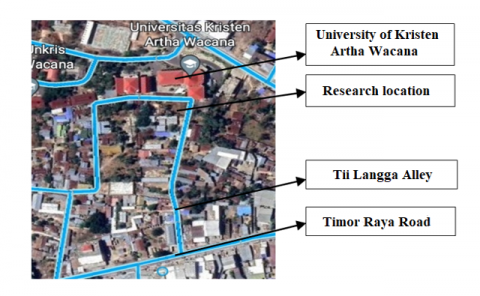
Figure 1 presents a map of the research location in Oesapa Village, Kupang City, NTT, Indonesia. The research was conducted over six months, from September 2022 to February 2023. Primary data was collected through field observations, documentation, interviews with local communities, and literature regarding healthy home standards and natural ventilation principles. Oesapa Village comprises 17 community units (CU) and 54 Neighborhood Units (NU), covering an administrative area of 4.37 km². The administrative boundaries of the area are as follows: (1) the northern part borders Kupang Bay; (2) the southern part borders Penfui Village and Liliba Village; (3) the eastern part borders Lasiana Village; and (4) the western part borders Kelapa Lima Village. The population of Oesapa Village consists of 14,482 men and 15,837 women, and the number of heads of families is 674, as reviewed from the type of gender and occupation/livelihood. Secondary data in the form of historical climatological data for Kupang City, such as monthly data on air temperature, rainfall, and wind speed, were obtained from the Meteorology, Climatology, and Geophysics Agency (MCGA) or BMKG (in Indonesia) from September 2022 to February 2023.
Figure 1. Research location
2.2 Research method
This paper employs a quantitative descriptive research method with a modeling design. The modeling research method involves using a model to represent a specific process or system. Table 1 presents the sources, types of data, and data collection instruments used in this study.
2.3 Data processing and analysis techniques
2.3.1 Planning data analysis
This section emphasizes the importance of reviewing field data to create a systematic, factual, and accurate representation of the research object. This involves using measurable and immeasurable descriptions, understandings, or explanations to convey the current state of the research.
2.3.2 Design analysis
The house is designed based on a comprehensive analysis considering the number of occupants, their characteristics, the sun's path, and wind direction. This analysis meets the requirements for constructing a house [35], adheres to healthy home standards [36], and follows technical guidelines for assessing healthy homes [37]. Additionally, it incorporates standards for technical ventilation from the Health Service of the Republic of Indonesia (RI) established in 2007 and the Technical Guidelines for Healthy Simple Homes from the Decree of the Minister of Kimpraswil No. 403/KPTS/M/2002. The design of the healthy home includes floor plans, front views, rear views, left-side views, and right-side views, all of which reflect the thoroughness of the analysis and were created using AutoCAD software. Furthermore, SketchUp software has been designed to create three-dimensional images with the same level of attention to detail.
2.3.3 Design requirements
The following requirements have been considered in the design of a healthy home that incorporates natural ventilation:
Table 1. Data collection sources and techniques
|
No. |
Data Types |
Data Collection Technique |
Data Source |
|
|
Instrument |
Tool |
|||
|
1. |
Primary Topographic data Landform and area Objects in the research location |
Observation Observation Observation |
Observation sheet Observation sheet Observation sheet |
Research location Research location Research location |
|
2. |
Secondary Population data Climatology data (wind district, wind direction, rainfall, temperature) |
Documentation Documentation |
Documentation format Documentation format |
Secretary of the Village Head BMKG or MCGA Kupang City Lasiana |
3.1 Existing condition of the Oesapa settlement
3.1.1 General description
Figure 2(a) illustrates the current state of housing in Oesapa Village. The settlement exhibits irregular and densely built conditions, with buildings situated very close to one another, often adjacent in crowded areas (Figure 2(b)). This proximity can negatively impact air circulation and the entry of natural light into the homes. A study conducted by Djati et al. [38] found 869 residential building units of various types and sizes in Oesapa Village. Among these, 465 units do not meet established standards. This includes 171 uninhabitable housing units, 123 that are irregular, and another 171 that fail to comply with technical requirements. These findings indicate that many homes do not satisfy health-related housing criteria, particularly regarding air circulation, essential for ensuring occupants receive adequate oxygen. Issues include a lack of ventilation, opaque windows, permanently closed windows that are rarely opened, accumulation of rubbish, and the absence of proper waste disposal facilities in the surrounding environment.
3.1.2 House plan form of the community
The predominant feature of the houses is the gable roof, which is triangular, or the shield roof, a variation that includes additional sloping planes on the short sides. Gable roofs are popular due to their simple construction and effectiveness in draining rainwater. The roof slope angle typically ranges from 15 to 30 degrees and is commonly covered with zinc (Figure 3). This slope is essential to ensure smooth rainwater flow and to prevent leaks, especially in regions with high rainfall.
Due to the density of the buildings, most houses primarily rely on windows at the front for ventilation, with only a limited number featuring side windows. Roof ventilation is generally not used because of the low angle of the roofs. In Oesapa, natural ventilation varies, primarily depending on light circulation from the front windows and doors. The size and positioning of the windows are crucial design elements that significantly influence the amount of light entering the house, underscoring their importance in architectural planning.
(a) (b)
Figure 2. Research location: (a) Existing condition of Oesapa settlement; (b) The condition of the houses (Sample)
Figure 3. House plan of the Oesapa community in Kupang City
3.2 Planning data
3.2.1 Topography
The planning area features flat land with rocky soil types. The slope of the terrain ranges from 0% to 15%. The topography of Kupang City exhibits a stepped formation at varying altitudes. The first step, located in the northern part of the city, has an elevation between 0 and 50 m above sea level (asl). The second step is found in the middle region, with an altitude ranging from 50 to 150 m (asl). The third step is situated in the southern part, with elevations reaching from 150 to 350 m (asl) [39].
3.2.2 Object data around the planning location
The designed house is in Tii Langga Alley, Oesapa Village, Kelapa Lima District, Kupang City (Figure 1). The land is rectangular, covering an area of 280 m². It is surrounded by other buildings: residential houses to the east, boarding houses to the north, and a three-story campus building to the south. On the south and west sides, a 4-meter-wide access road runs alongside the campus fence, providing significant potential for the project.
3.2.3 Climatology data
1) Wind
According to climatology data, the average wind speed in Kupang City ranges from 4 to 7 months, specifically from April to September, with an average speed exceeding 15.8 kph. The windiest month of the year in Kupang City is July, with an average wind speed of 20.8 kph, as shown in Figure 4. In terms of wind direction, the data indicates that the predominant wind flow in Kupang City comes from the east for 7 to 8 months, from March to November. Conversely, winds from the west occur for 3 to 5 months, from December to March each year, as shown in Figure 5.
2) Rainfall and temperature
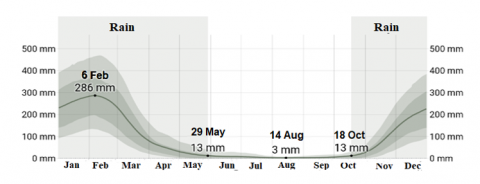
Kupang City experiences rainfall for approximately 4 to 7 months each year, from October to May. During this period, the lowest recorded rainfall is 13 mm, while February typically sees the highest average rainfall, reaching 286 mm, as illustrated in Figure 6. Additionally, data regarding air temperature in Kupang City from 2019 to 2021 indicates that the maximum temperature recorded in 2020 was 33.0℃, as shown in Figure 7.
Figure 4. Average hourly wind speed
Figure 5. Wind direction in Kupang City
Figure 6. Rainfall conditions in Kupang City
Figure 7. Temperature conditions in Kupang City
3.3 Proposed healthy home concept
3.3.1 Design model
This study proposes three alternative models for healthy home design. Each model undergoes a comprehensive feasibility assessment to ensure compliance with data architecture standards and other necessary technical requirements. The main components of the proposed designs, including the design space area and opening area, are detailed in Tables 2 to 5. Additionally, Table 6 shows the assessment of each design based on the data architecture reference.
Tables 3, 4, and 5 describe three models, with Model 1 developed from the initial design. Design 1 increases the ventilation area by 10% of the floor area compared to the initial design. The following design increases the ventilation area by 20% of the initial design area and incorporates door openings. This paper does not explicitly examine the percentage increase in ventilation; instead, it focuses on the feasibility of the designs based on the architectural indicators outlined in Table 6. The aim is to ensure that Model 1 meets the requirements for the design of the house components.
Based on the assessment results, the most suitable design for a house with natural ventilation is design 1. The evaluation thoroughly examined each design's capacity to promote natural airflow, regulate temperature, and ensure energy efficiency. Design 1 exceeded the requirements for the primary components necessary for natural ventilation, achieving a score of 20. In comparison, design 2 received a score of 13, and design 3 received a score of 18.
Furthermore, the supporting components of the house design consist of seven key indicators: building orientation, location of openings, building shape, placement of vegetation, arrangement of rooms, positioning of openings, and width of eaves. Table 7 presents the assessment indicators for these supporting components. The results indicate that design 1 achieved the highest score of 14, while design 2 scored 11 and design 3 scored 10.
The complete design model proposed in this study is illustrated in Figure 8. The house is designed with a land size of 20m × 15 m, consisting of 3 bedrooms, one guest room each, one family room, one kitchen, and two bathrooms/toilets. The roof height is about 12 meters, with a roof slope of 500. The roof height is made in such a way as to obtain more ventilation in a position where the houses are close together. At the peak of the roof gable, there is a window ventilation that allows air to enter through this ventilation.
Table 2. Design the space area
|
No. |
Type of Room |
Room Area (m2) |
|
1 |
Front terrace |
3 × 2 = 6.00 |
|
2 |
Side terrace |
3 × 2 = 6.00 |
|
3 |
Living room |
3 × 3 = 9.00 |
|
4 |
Family room + dining room |
6 × 3 = 18.00 |
|
5 |
Family bedroom + Bathroom 1 |
5 × 3 = 15.00 |
|
6 |
Boy's bedroom |
3 × 3 = 9.00 |
|
7 |
Girl's bedroom |
3 × 3 = 9.00 |
|
8 |
Laundry room |
1.5 × 3 = 4.50 |
|
9 |
Kitchen + Bathroom 2 |
3 × 3 = 9.00 |
|
10 |
Warehouse |
1.5 × 3 = 4.50 |
|
Amount |
90.00 |
|
Table 3. The ventilation opening area is 10% of the floor area
|
No. |
Type of Room |
Room Area (m2) |
Ventilation Area (m2) |
|
1 |
Living room |
9.00 |
0.90 |
|
2 |
Family room + dining room |
18.00 |
1.80 |
|
3 |
Family room + dining room |
15.00 |
1.50 |
|
4 |
Boy's bedroom |
9.00 |
0.90 |
|
5 |
Girl's bedroom |
9.00 |
0.90 |
|
6 |
Kitchen + Bathroom 2 |
9.00 |
0.90 |
|
Amount |
69.00 |
6.90 |
|
Table 4. The ventilation opening area is 20% of the floor area
|
No. |
Type of Room |
Room Area (m2) |
Ventilation Area (m2) |
|
1 |
Living room |
9.00 |
1.80 |
|
2 |
Family room + dining room |
18.00 |
3.60 |
|
3 |
Family room + dining room |
15.00 |
3.00 |
|
4 |
Boy's bedroom |
9.00 |
1.80 |
|
5 |
Girl's bedroom |
9.00 |
1.80 |
|
Amount |
60.00 |
12.00 |
|
Table 5. Door opening area
|
No. |
Door Type |
Size (m2) |
|
1 |
Main |
2.20 × 1.00 = 2.20 |
|
2 |
Bedroom |
1.90 × 0.80 = 1.52 |
|
3 |
Bathroom |
1.90 × 0.60 = 1.14 |
|
4 |
Warehouse |
1.90 × 0.90 = 1.71 |
|
Amount |
6.71 |
|
Table 6. Assessment of the main components of the house design
|
No. |
Indicator |
Category |
Value |
Assessment Result Score |
||
|
Design 1 |
Design 2 |
Design 3 |
||||
|
1 |
Ceiling height (m) < 4.00 = 4.00 > 4.00 |
Not fulfilled |
0 |
|
|
|
|
Fulfilled |
1 |
|
1 |
|
||
|
Very fulfilled |
2 |
2 |
|
2 |
||
|
2 |
Wall height (m) < 4.50 = 4.50 > 4.50 |
Not fulfilled |
0 |
|
|
|
|
Fulfilled |
1 |
|
|
|
||
|
Very fulfilled |
2 |
2 |
2 |
2 |
||
|
3 |
Bedroom window opening area < 20% of floor area = 20% of floor area > 20% of floor area |
Not fulfilled |
0 |
|
|
|
|
Fulfilled |
1 |
|
|
|
||
|
Very fulfilled |
2 |
2 |
2 |
2 |
||
|
4 |
Window opening area of living room/dining room < 20% of floor = 20% of floor > 20% of floor |
Not fulfilled |
0 |
|
|
|
|
Fulfilled |
1 |
|
1 |
|
||
|
Very fulfilled |
2 |
2 |
|
2 |
||
|
5 |
Ventilation opening area < 10% of floor area = 10% of floor area > 10% of floor area |
Not fulfilled |
0 |
|
|
|
|
Fulfilled |
1 |
|
1 |
|
||
|
Very fulfilled |
2 |
2 |
|
2 |
||
|
6 |
Kitchen smoke hole area < 10% of floor area = 10% of floor area > 10% of floor area |
Not fulfilled |
0 |
|
|
|
|
Fulfilled |
1 |
|
|
1 |
||
|
Very fulfilled |
2 |
2 |
2 |
|
||
|
7 |
Main door opening Area < 2.20 m × 1.00 m = 2.20 m × 1.00 m > 2.20 m × 1.00 m |
Not fulfilled |
0 |
|
|
|
|
Fulfilled |
1 |
|
1 |
|
||
|
Very fulfilled |
2 |
2 |
|
2 |
||
|
8 |
Bedroom door opening area < 1.90 m × 0.80 m = 1.90 m × 0.80 m > 1.90 m × 0.80 m |
Not fulfilled |
0 |
|
|
|
|
Fulfilled |
1 |
|
1 |
1 |
||
|
Very fulfilled |
2 |
2 |
|
|
||
|
9 |
Bathroom door opening area < 1.90 m × 0.60 m = 1.90 m × 0.60 m > 1.90 m × 0.0 m |
Not fulfilled |
0 |
|
|
|
|
Fulfilled |
1 |
|
|
|
||
|
Very fulfilled |
2 |
2 |
2 |
2 |
||
|
10 |
The width of the warehouse door opening < 1.90 m × 0.90 m = 1.90 m × 0.90 m > 1.90 m × 0.90 m |
Not fulfilled |
0 |
|
0 |
|
|
Fulfilled |
1 |
|
|
|
||
|
Very fulfilled |
2 |
2 |
|
2 |
||
|
Amount |
20 |
13 |
18 |
|||
Table 7. Assessment of supporting components for house design with natural ventilation
|
No. |
Indicator |
Category |
Value |
Assessment Result Score |
||
|
Design 1 |
Design 2 |
Design 3 |
||||
|
1 |
Building orientation
|
None appropriate |
0 |
|
|
|
|
Less Appropriate |
1 |
|
|
|
||
|
Appropriate |
2 |
2 |
2 |
2 |
||
|
2 |
Location of openings
|
None appropriate |
0 |
|
|
|
|
Less Appropriate |
1 |
|
|
1 |
||
|
Appropriate |
2 |
2 |
2 |
|
||
|
3. |
Building form
|
Less Appropriate |
1 |
|
1 |
|
|
Appropriate |
2 |
2 |
|
2 |
||
|
4 |
Vegetation placement
|
None appropriate |
0 |
|
|
|
|
Less Appropriate |
1 |
|
|
|
||
|
Appropriate |
2 |
2 |
2 |
2 |
||
|
5 |
Placement of bedroom and family room
|
None appropriate |
0 |
|
|
|
|
Less Appropriate |
1 |
|
|
1 |
||
|
Appropriate |
2 |
2 |
2 |
|
||
|
6 |
Placement of openings
|
None appropriate |
0 |
|
|
|
|
Less Appropriate |
1 |
|
|
1 |
||
|
Appropriate |
2 |
2 |
2 |
|
||
|
7 |
Eaves width
|
None appropriate |
0 |
|
|
|
|
Less Appropriate |
1 |
|
1 |
1 |
||
|
Appropriate |
2 |
2 |
|
|
||
|
Amount |
14 |
11 |
10 |
|||
(a) (b)
(c) (d) (e)
(f) (g)
Figure 8. Design model: (a) House plan; (b) Section A-A; (c) Front view; (d) Rear view; (e) Section B-B; (f) Left view; (g) Right view
3.3.2 Natural ventilation concept
1) Building orientation
The building's front is oriented to face the sun's path (from east to west). This alignment allows the building to maximize the use of sunlight as a source of natural lighting (Figure 9).
Figure 9. Orientation
2) Door, window, and ventilation openings
The window openings used in this building are glass-panel wooden windows, as shown in Figure 10. This model features a bottom-opening system that utilizes wind rights on both the left and right sides, allowing air to flow naturally from the sides and bottom of the window. This design ensures proper ventilation and connects the building's interior to its natural environment. The width of each window hole is detailed in Tables 3 and 4. Similarly, the ventilation openings are made of wood combined with lattices, with the width of each window hole adjusted to the details of the area. Wood panels are used for door closers and locks. The main door consists of two leaves, while each bedroom, bathroom, and storage room door uses one door leaf (Figure 11).
(a) (b)
Figure 10. Opening details: (a) Windows; (b) Ventilation
(a) (b) (c)
Figure 11. Door leaves: (a) Main; (b) Bedroom; (c) Warehouse
3) Ceiling
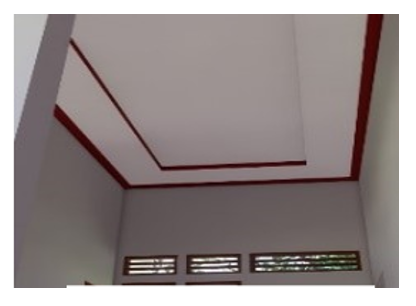
The ceiling is constructed with a light steel frame and covered with gypsum material. It features varying heights depending on the area of the room, ranging from 3.75 to 4.50 meters. This design allows free air circulation, creating a more comfortable room temperature (Figure 12).
Figure 12. Ceiling
4) Design of the roof shape of the house
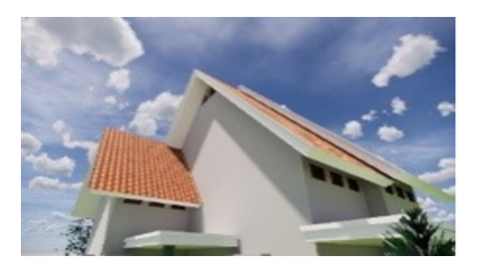
The house features a gable roof that stands 6.60 meters tall, with a slope of 50 degrees. It is designed with adequate ventilation holes to allow for free air circulation, creating a cooler environment in the space below (Figure 13).
Figure 13. Roof model
The housing environment is integral to daily life, as people spend approximately half their time at home. Poor housing conditions can facilitate the spread of diseases and health issues, including respiratory infections, skin infections, and illnesses linked to rodent and insect infestations [40]. Additionally, substandard housing can lead to accidents and conditions related to sick building syndrome (SBS), which includes symptoms such as dry cough, eye irritation, and dry, itchy skin [41]. Consequently, a home's quality significantly impacts its occupants' health [42]. Rana et al. [40] state that an unhealthy home environment can negatively impact health. In unhealthy homes, various health conditions may arise, influenced by lighting, ventilation, humidity, cleanliness, waste management, and wastewater disposal [43, 44].
This paper presents a model for a house designed with natural ventilation, tailored to the specific conditions of settlements in Oesapa Village. The study is based on data concerning family size, topography, the shape and area of the land, as well as information regarding objects in the vicinity of the proposed site. Additionally, the planning utilizes climatic data for the area, which indicates a maximum wind speed of 20.8 km/h. The prevailing wind comes mostly from the east for 7 to 8 months of the year, coinciding with a dry season that lasts for 8 to 9 months and features low rainfall for 3 to 4 of those months. This approach aligns with the findings of Madhumati and Sundarraja [45], who state that essential data for planning residential buildings includes wind direction, solar radiation, air temperature, humidity, rainfall, and air movement.
On the other hand, this study's building design concept focuses on natural ventilation and is based on the sun's path, specifically in the east-west direction. The design considers the need for fresh air per person per hour, implementing natural ventilation through strategically placed openings in the building. The design suggests that window openings should comprise 20% of the floor area. In addition, ventilation through ceiling height should account for 10% of the floor area, with recommended ceiling heights ranging from 3.75 to 4.5 meters. The design also incorporates a gable roof, which features ventilation openings at the bottom and the top to facilitate air circulation. Moreover, careful placement of trees for shade in the afternoon is considered. Natural ventilation allows for air exchange in a building through open elements, as mentioned by Soliman [46] and Qataya et al. [47]. Increased airflow can enhance the skin's surface evaporative cooling process, providing occupants with a more comfortable environment.
Furthermore, to create a healthy home, the community needs to know the components that a healthy home must have. Among them, a strong foundation to transfer the building load to the ground provides building stability and connects the building and the ground. Then, the floor is waterproof and not damp, with a minimum height of 10 cm from the yard and 25 cm from the road. The most important thing is that the house must have windows and doors that function as ventilation and sunlight, with a minimum area of 10% of the floor area. These windows and doors not only serve their practical purpose but also connect the inhabitants to the natural environment, fostering a sense of harmony and well-being. In addition, the house's walls are waterproof, which supports or supports the roof, withstands wind and rainwater, protects from heat and dust from outside, and maintains the confidentiality of its occupants. According to George et al. [48], indoor thermal discomfort is very challenging. It depends on one or more materials used, either as ceiling boards, stone used as wall material, the wood used in making doors, the wood used in making roof supports, the roof sheet itself, or a combination of all. Therefore, attention should be paid to the ceiling to withstand and absorb the sun's heat up to 30%, at least 2.4 m from the floor. It can be made of boards, woven bamboo, plywood, or gypsum. Finally, the roof of the house functions as a barrier to the heat of the sun's rays and protects against the entry of dust, wind, and rainwater. The slope of the roof angle must consider the topographic conditions in the residential environment. In this study, a model of the slope of the roof of a house of 50 degrees was created by the topographic conditions in the city of Kupang. As previously described, Kupang is a semi-cold climate area influenced by a very low rainy season compared to the prolonged dry season yearly [3].
Next, the furniture layout analysis reveals that the furniture arrangement can significantly impact airflow within a house. Large pieces placed in the middle of a room or front of windows and vents can obstruct the airflow path, diminishing the effectiveness of natural ventilation. It is advisable to position furniture to optimize airflow so that the space between openings, such as windows, doors, and vents, remains clear. Furniture should be arranged along the walls or in the room's corners, avoiding obstructing air movement from one side to another. In homes designed for cross ventilation, ensuring that furniture allows air to flow freely from the incoming to the outgoing windows is essential. Similarly, furniture placed around the atrium should not block the upward movement of air in a house with a central atrium.
Another aspect, indoor CO2 concentration, is a key indicator of air quality and ventilation effectiveness. Elevated CO2 levels can signal inadequate fresh air exchange, negatively impacting occupant health, leading to fatigue, headaches, and decreased concentration [49]. Adequate natural ventilation helps lower CO2 concentrations by introducing fresh air from the outside and expelling CO2-rich indoor air. The reduction of CO2 levels achieved through natural ventilation in these home models demonstrates the potential to create healthier indoor environments for residents. Maintaining low CO2 levels is associated with improved air quality and can enhance occupant health and well-being.
Climate has a clear impact on building design and planning. Energy-efficient and sustainable design practices must be able to integrate natural energy (e.g., solar and wind radiation) as part of their design features. Early consideration of climate, in street layout, building land allocation, building orientation, and daily building operations, helps maximize the use of natural energy to achieve comfortable conditions.
This study presents specific design and planning ideas for Oesapa Village that leverage natural energy to enhance comfort. Optimal comfort can be achieved with a gable roof house design that includes ventilation openings at both the bottom and top of the roof, alongside strategically arranged trees to provide shade. The roof slope model 50° is tailored to the topographic conditions of Kupang City, which is characterized as a semi-arid climate with a very short rainy season and an extended dry season each year.
This model is intended to serve as a recommendation for the Kupang City Government, encouraging the adoption and promotion of these healthy house designs as part of a sustainable housing development initiative.
|
ASL |
Above sea level |
|
CFD |
Computational fluid dynamics |
|
CU |
Community units |
|
CV |
Cross-ventilation |
|
CBTS |
Community-based total sanitation |
|
ES |
East longitude |
|
LS |
South latitude |
|
MCGA |
Meteorology, Climatology and Geophysics Agency |
|
NVP |
Natural ventilation potential |
|
PMV |
Predicted mean vote |
|
PWPH |
Public works and public housing |
|
SBS |
Sick building syndrome |
|
SSV |
Single-sided ventilation |
|
SV |
Stack ventilation |
[1] Yuliastuti, N., Fadjriyah, R. (2010). Neighborhood unit concept to maintain the quality of settlement’s environment in Perumahan Menara Kudus area planning for sustainability at various levels of geographical units. In International Conference on Regional Development (ICRD) 2010, Semarang.
[2] Thakur, N., Parashar, D., Chidambaram, C., Dharwal, M. (2021). Climate responsive strategy matrix for designing buildings in India. Nature Environment and Pollution Technology, 20(3): 1021-1031. https://doi.org/10.46488/NEPT.2021.V20I03.009
[3] Messakh, J.J., Sabar, A., Hadihardaja, I.K., Dupe, Z. (2019). Management strategy of water resources base on rainfall characteristics. International Journal of Scientific and Engineering Research, 6(8): 331-338.
[4] He, C., Zhang, Y. (2021). Study on natural ventilation potential of ordinary office buildings in Guangzhou based on architectural factors. IOP Conference Series: Earth and Environmental Science, 692(3): 1-12. https://doi.org/10.1088/1755-1315/692/3/032101
[5] Roslan, Q., Ibrahim, S.H., Affandi, R., Mohd Nawi, M. N., Baharun, A. (2020). Tropical sustainable architecture: Passive design strategies in green building. Journal Online Jaringan Pengajian Seni Bina (JOJAPS), 5(1): 126-133. https://doi.org/10.1016/J.FOAR.2015.10.002
[6] Tantasavasdi, C., Srebric, J., Chen, Q. (2001). Natural ventilation design for houses in Thailand. Energy and Buildings, 33(8): 815-824. https://doi.org/10.1016/S0378-7788(01)00073-1
[7] Wahab, I.A., Ismail, L.H. (2012). Natural ventilation approach in designing urban tropical house. In Proceeding International Conference Civil Environment Engineering Sustainable Bharu, pp. 1-11.
[8] Zhao, L., Qin, C. (2012). Research on the natural ventilation cooling effect of residential building based on the CFD and DeST simulation. Advanced Materials Research, 374-377: 685-689. https://doi.org/10.4028/www.scientific.net/AMR.374-377.685
[9] Lin, B., Xie, C., Chen, Y., Xu, X. (2024). Natural ventilation potential of residential buildings in China considering the combined effect of indoor and outdoor air pollution. Buildings, 14(2): 1-15. https://doi.org/10.3390/buildings14020363
[10] Sun, X., Zhou, J., Shen, W., Peng, C. Zhang, G., Zhang, L. (2010). Estimating natural-ventilation potential considering thermal mass. In Proceedings - 2010 International Conference on Digital Manufacturing and Automation, ICDMA 2010, pp. 666-669. https://doi.org/10.1109/ICDMA.2010.397
[11] Luo, Z., Zhao, J., Gao, J., He, L. (2007). Estimating natural-ventilation potential considering both thermal comfort and IAQ issues. Building and Environment, 42(6): 2289-2298. https://doi.org/10.1016/j.buildenv.2006.04.024
[12] Jiang, Z., Kobayashi, T., Yamanaka, T., Sandberg, M. (2023). A literature review of cross ventilation in buildings. Energy Buildings, 291: 1. https://doi.org/10.1016/j.enbuild.2023.113143
[13] Karava, P., Stathopoulos, T., Athienitis, A.K. (2011). Airflow assessment in cross-ventilated buildings with operable façade elements. Building and Environment, 46(1): 266-279. https://doi.org/10.1016/j.buildenv.2010.07.022
[14] Mavridou, T., Doulos, L.T. (2019). Evaluation of different roof types concerning daylight in industrial buildings during the initial design phase: Methodology and case study. Buildings, 9(7): 1-16. https://doi.org/10.3390/buildings9070170
[15] Vaishnani, Y., Fatima, S., Aditya, A., Dibakar, J., Fujen, R. (2020). Thermal performance analysis of a naturally ventilated system using PMV models for different roof inclinations in composite climatic conditions. Journal of the Brazilian Society of Mechanical Sciences and Engineering, 42: 124. https://doi.org/10.1007/s40430-020-2219-4
[16] Peren, J.I., van Hooff, T., Ramponi, R., Blocken, B., Leite, B.C.C. (2015). Impact of roof geometry of an isolated leeward sawtooth roof building on cross-ventilation: Straight, concave, hybrid or convex?. Journal of Wind Engineering and Industrial Aerodynamics, 145: 102-114. https://doi.org/10.1016/j.jweia.2015.05.014
[17] Kosutova, K., van Hooff, T., Vanderwel, C., Blocken, B., Hensen, J. (2019). Cross-ventilation in a generic isolated building equipped with louvers: Wind-tunnel experiments and CFD simulations. Building and Environment, 154: 263-280. https://doi.org/10.1016/j.buildenv.2019.03.019
[18] Tai, V.C., Kai-Seun, J.W., Mathew, P.R., Moey, L.K., Cheng, X., Baglee, D. (2022). Investigation of varying louver angles and positions on cross ventilation in a generic isolated building using CFD simulation. Journal of Wind Engineering and Industrial Aerodynamics, 229: 105172. https://doi.org/10.1016/j.jweia.2022.105172
[19] Esfeh, M.K., Sohankar, A., Shahsavari, A.R., Rastan, M. R.M., Ghodrat, Nili, M. (2021). Experimental and numerical evaluation of wind-driven natural ventilation of a curved roof for various wind angles. Building and Environment, 205: 108275. https://doi.org/10.1016/j.buildenv.2021.108275
[20] Peren, J.I., van Hooff, T., Leite, B.C.C., Blocken, B. (2015). CFD analysis of cross-ventilation of a generic isolated building with asymmetric opening positions: Impact of roof angle and opening location. Building and Environment, 85: 263-276. https://doi.org/10.1016/j.buildenv.2014.12.007
[21] Peren, J.I., van Hooff, T., Leite, B.C.C., Blocken, B. (2015). Impact of eaves on cross-ventilation of a generic isolated leeward sawtooth roof building: Windward eaves, leeward eaves and eaves inclination. Building and Environment, 92: 578-590. https://doi.org/10.1016/j.buildenv.2015.05.011
[22] Chen, X., Yang, H., Lu, L. (2015). A comprehensive review on passive design approaches in green building rating tools. Renewable and Sustainable Energy Reviews. 50: 1425-1436. https://doi.org/10.1016/j.rser.2015.06.003
[23] Tariq, R., Torres-Aguilar, C.E., Sheikh, N.A., Ahmad, T., Xamán, J., Bassam, A. (2022). Data engineering for digital twining and optimization of naturally ventilated solar façade with phase changing material under global projection scenarios. Renewable Energy, 187: 1184-1203. https://doi.org/10.1016/j.renene.2022.01.044
[24] Tariq, R., Torres- Aguilar, C.E., Xamán, J., Zavala-Guillén, I., Bassam, A., Ricalde. L.J., Carvente, O. (2022). Digital twin models for optimization and global projection of building-integrated solar chimney, Building and Environment, 213: 108807. https://doi.org/10.1016/j.buildenv.2022.108807
[25] Ben-David, T., Waring, M.S. (2016). Impact of natural versus mechanical ventilation on simulated indoor air quality and energy consumption in offices in fourteen U.S. cities. Building and Environment, 104: 320-336. https://doi.org/10.1016/j.buildenv.2016.05.007
[26] Shi, J., Zhao, C., Liu, Y. (2023). CFD analysis of building cross-ventilation with different angled gable roofs and opening locations. Buildings, 13(2716): 1-18. https://doi.org/10.3390/buildings13112716
[27] Ramponi, R., Gaetani, I., Angelotti, A. (2014). Influence of the urban environment on the effectiveness of natural night-ventilation of an office building. Energy and Buildings, 78: 25-34. https://doi.org/10.1016/j.enbuild.2014.04.001
[28] Zheng, Y., Miao, J., Yu, H., Liu, F., Cai, Q. (2023). Thermal analysis of air-cooled channels of different sizes in naturally ventilated photovoltaic wall panels. Buildings, 13(12): 3002. https://doi.org/10.3390/buildings13123002
[29] Sujatha, P., Mahalakshmi, D.V., Ramiz, A., Rao, P.V.N., Naidu, C.V. (2016). Ventilation coefficient and boundary layer height impact on urban air quality. Cogent Environmental Science, 2(1): 1125284. https://doi.org/10.1080/23311843.2015.1125284
[30] Lapisa, R. (2019). The effect of building geometric shape and orientation on its energy performance in various climate regions. International Journal of GEOMATE, 16(53): 113-119. https://doi.org/10.21660/2019.53.94984
[31] Adang, H., Erwin D., Asrial, Harijono, A. (2020). Analysis of feasibility of A home in Oesapa Village Adang. Jurnal Batakarang, 1(1).
[32] Depkimpraswil, R.I. (2002). Kepmenkimpraswil Nomor: 403/KPTS/M/2002 Tentang Pedoman Teknis Pembangunan Rumah Sederhana Sehat (Rs Sehat): 1999–2001. (In Indonesia)
[33] Suluh, D.G.R., Theodolfi, Agustina, Waangsir, F.W. (2023). Access of clean water and sanitation with the incidence of environmental-based diseases in the working area of the Oesapa sub-district. Jurnal Penelitian Pendidikan IPA, 9(10): 8274-8279. https://doi.org/10.29303/jppipa.v9i10.4966
[34] Kuswara, K.M., Oddang, H., Setiawaty, T., Asrial, Tamelan, P., Messakh, J.J., Edyan, R., Selan, M., Deku, A. (2022). Health, greening, and social action in settlements beach coastin Oesapa sub-districtcoconut Lima City of Kupang Nusa Tenggara Timur. Jurnal Pengabdian Kepada Masyarakat, 2(2): 1-8.
[35] Jeya Kumar, A.R., Balaji, M.K. (2020). Creating a Sustainable Home: A Handy manual for home builders. First edition: 2020. Technical support - Centre for Energy, Environment and Productivity, Chennai and Green Evolution, Chennai, 1-48.
[36] Hadimoeljono, M.B. (2016). Dasar-dasar rumah sehat (Healthy Home Basics). Bada Penelitian dan Pengembangan Kementerian Pekerjaan Umum dan Perumahan Rakyat Republik Indonesia (In Indonesia), Jakarta. litbang.pu.go.id.
[37] Diandra, N., Afla, M.N., Syahputra, M.O. (2020). Tinjauan pustaka syarat-syarat dan kriteria rumah sehat menurut regulasi pemerintah (In Indonesia). Jurnal Ilmiah Teknologi dan Desain Institut Sains dan Teknologi Pradita, 1(2): 45-54.
[38] Djati, A.A.A., Wulakada, H.H., Rahmawati, A. (2023). Penanganan pemukiman kumuh, kota Kupang (In Indonesia). Jurnal Geografi, 19(1): 10-24. https://doi.org/10.35508/jgeo.v19i1.11680
[39] Manafe, A.H. (2022). Nusa Tenggara Timur Province in Figures. BPS-Statistics of Nusa Tenggara Timur Province. Jakarta.
[40] Rana, K., Shrestha, V., Chimoriya, R. (2020). The effect of housing on health and challenges of demographic changes. Global Journal of Science Frontier Research: I Interdisciplinary, 20(5): 75-82. https://doi.org/10.6084/m9.figshare. 14128952.v1
[41] Nag, P.K. (2019). Sick building syndrome and other building-related illnesses, Design Science and Innovation, pp. 55-103. https://doi.org/10.1007/978-981-13-2577-9_3
[42] Zuber, M., Khosla, C., Javed, N.B. (2023). Housing conditions and their impact on health of residents. Engineering Proceedings, 56(1): 1-7. https://doi.org/10.3390/ASEC2023-15334
[43] Huang, L., Said, R., Goh, H.C., Cao, Y. (2023). The residential environment and health and well-being of Chinese migrant populations: A systematic review. International Journal of Environmental Research and Public Health, 20(4): 3-21. https://doi.org/10.3390/ijerph20042968
[44] van Kamp, I., van Loon, J., Droomers, M., de Hollander, A. (2004). Residential environment and health: A review of methodological and conceptual issues, Reviews on Environmental Health, 19(3-4): 381-401. https://doi.org/10.1515/reveh-2004-19-3-413
[45] Madhumati, A., Sundarraja, M.C. (2014). Understanding climate for sustainable building design – A case study in warm humid region in India. Journal of Applied Sciences Research, 10(2): 69-87.
[46] Soliman, M. (2023). Natural ventilation. Renewable Energy, 19(1-2): 17-37. https://doi.org/10.1016/S0960-1481(99)00012-9
[47] Qataya, R.S., Mohamed, M.A.A., Alshanwany, H., Sabbour, S. (2023). A framework for enhancing natural ventilation in hot-arid regions : A bioclimatic design approach. The Egyptian International Journal of Engineering Sciences and Technology, 46: 39-52. https://doi.org/10.21608/eijest.2023.209023.1225
[48] George, N.J., Obianwu, V.I., Akpabio, G.T., Obot, I.B. (2010). Comparison of thermal insulation efficiency of some select materials used as ceiling in building design. Archives of Applied Science Reseach, 2(3): 253-259.
[49] Kajjoba, D., Kasedde, H., Kirabira, J.B., Wesonga, R., Mugwanya, R., Lwanyaga, J.D., Olupot, P.W. (2024). Impact of natural ventilation and outdoor environment on indoor air quality and occupant health in low-income tropical housing. Energy Reports, 12: 4184-4194. https://doi.org/10.1016/j.egyr.2024.10.004