Remediation of Oil-Contaminated Soil Using Nerium oleander Extract: Mechanisms of Hydrocarbon Absorption and Removal

Isaac Khalil Ibrahim | Sahar Ahmad Taha | Sama Hassan Ali Rahmatullah | Reyam Naji Ajmi* | Estabraq Mohammed Ati | Awatif Mahfouz Abdulmajeed
© 2025 The authors. This article is published by IIETA and is licensed under the CC BY 4.0 license (http://creativecommons.org/licenses/by/4.0/).
OPEN ACCESS
Findings from this study indicated the impact of hydrocarbon pollution on soil around the Dora refinery. The polluted soil contained high levels of hydrocarbons, up to 1,000 parts per million (ppm) for some soils, dominated by hydrocarbons such as benzene, toluene, and xylene. An asymmetrical distribution of these compounds was observed, with heavier hydrocarbons (e.g., kerosene and diesel) found in the lower soil strata, and lighter hydrocarbons (e.g., methane and ethane) in the upper layers. Aromatic hydrocarbon levels in contaminated soils were found to be 80–90% higher compared to uncontaminated samples. GC-MS analysis confirmed the presence of alkanes and aromatic compounds, including anthracene and furene, in the contaminated soils, indicating potential adverse effects on both soil and plant health. Application of Nerium oleander extract to polluted soil resulted in a significant reduction of hydrocarbons, ranging from 40% to 60% over a few weeks. Compared to untreated soil, hydrocarbon levels were reduced by approximately 50%. Heavy metal analysis revealed significantly higher concentrations in polluted soils than in uncontaminated ones, with iron (Fe) at 1000–1200 ppm, lead (Pb) at 50–70 ppm, cadmium (Cd) at 5–8 ppm, and zinc (Zn) at 150–200 ppm, indicating industrial contamination in the area. Various concentrations of Nerium oleander extract were tested, with the 10% concentration showing the most effective results—achieving a 70% hydrocarbon reduction after 14 days and up to 85% efficiency after 21 days. When compared to treatments using distilled water and ethanol, Nerium oleander extract demonstrated superior performance in hydrocarbon removal from the soil. In conclusion, the 10% oleander extract is a viable environmental treatment for removal of hydrocarbon pollution from contaminated soil and outperforms other treatments in terms of efficacy and ability to improve oil and industrial pollution-contaminated soil quality.
hydrocarbon pollution, soil contamination, Nerium oleander extract, GC-MS analysis, heavy metal contamination
Soil contamination is one of the most critical environmental issues, significantly impacting agriculture, aquatic ecosystems, and human health. Hydrocarbon soil contamination is one of the most important environmental issues facing the environment, as the occurrence of these toxic substances in the soil results in adverse impacts on the physical and chemical properties of the soil, which negatively impact plant development and the habitat of the living organism [1]. Among available solutions, phytoremediation—the use of plants to counteract pollution—has garnered significant attention as an environmentally friendly approach [2].
Several studies have investigated the use of plants in remediating hydrocarbon-contaminated soils. For instance, study [3] discussed the impact of hydrocarbon pollution on the soil and the possibility of using plants to decontaminate polluted hydrocarbons. The possibility of using certain plant species, like oleander, in decontaminating hydrocarbon-contaminated soil was explored, and study [4] examined the ability of plants such as Nerium oleander to tolerate and remediate soils contaminated with heavy metals, including lead and cadmium. The study concluded that certain plant species are capable of absorbing heavy metals from the soil. Study [5] investigated the potential of Nerium oleander for remediating hydrocarbon-contaminated soil at various sites.
Study [6] confirmed that Nerium oleander can concentrate toxic organic pollutants and reduce their environmental impacts, including those associated with heavy metals. The study also examined the effects of heavy metals such as lead, cadmium, and zinc on soil and plant growth. The study [6] depicted the impact of the aforementioned metals on plant growth and toxicity to uptake toxic substances, on sustainable remediation technologies for pollution through nanotechnology. Study [7] discussed nanotechnology and environmental technology in soil pollutant remediating using the aid of plants. The study explained that nanotechnology may be used to help improve the ability of plants to purify pollution.
Phytoremediation is an eco-friendly solution that helps to improve the quality of hydrocarbon and heavy metal-polluted soil. Understanding the role of Nerium oleander in remediating soil pollution at the Dora Refinery site can contribute to the development of effective solutions for mitigating environmental pollution in oil refinery areas. Therefore, this study aims to evaluate the effect of Nerium oleander extract on hydrocarbon degradation in contaminated soil in the Dora Refinery area. Focus was placed on determining the capacity of the plant to reduce hydrocarbon contamination and the influence of heavy metals such as lead, cadmium, iron, and zinc in the soil to provide effective environmental remedies for the improvement of quality in contaminated soil, especially in refinery and industrial areas.
2.1 Location and sample collection
The area of Dora, south of Baghdad, near the Dora refinery, is one of the most exposed areas to contamination by oil due to industrial activities related to the refinery, and oil spills caused by ongoing industrial operations in the area. The most contaminated places in the Dora site were chosen on the basis of available data by the concerned authorities of the refinery and previous environmental studies.
2.2 Sample collection and soil analysis
Soil samples were collected from various sites within the Dora area, including locations near the Dora refinery where oil contamination levels are elevated. All samples were obtained at a consistent depth of 10 to 30 cm. In addition, samples from uncontaminated sites within or adjacent to the Dora area were collected to serve as controls for comparative analysis [8].
2.3 Chemical soil analysis
Soil hydrocarbon contents were estimated by newer analytical methods, such as GC-MS for estimating crude oil or its products [9]. Heavy metals (Iron, Lead, Cadmium, and Zinc) were estimated by AAS to estimate soil contamination with the above metals [10].
2.4 Oleander extraction
Leaves and the shoot tip of the oleander plant (Nerium oleander) were cut because both have active components that may be utilized for extracting hydrocarbons from soil.
The extract was prepared using the right solvents such as ethanol or water, by mixing the cut plant material and the solvent, followed by filtration to get the extract [11], and several concentrations of extracts were prepared to evaluate their different effects on the removal of hydrocarbons, e.g., high and low concentrations.
2.5 Laboratory experiments
Experiment 1: Hydrocarbon Removal Effect: Oil-contaminated soil samples were exposed to oleander extracts in the lab. Various oleander extract concentrations (1%, 5%, 10%) were used, and the soil was incubated for various periods ranging from one to a few weeks. Soil samples were exposed to varied time periods with the objective of identifying the quantity of hydrocarbon removed from the soil [12].
Experiment 2: Other Treatments Comparison: Oleander extract was contrasted with other treatments, like distilled water or other solvents, in determining the effectiveness of each when it comes to hydrocarbon extraction from soil [13].
2.6 Analysis and evaluation
Comparisons of hydrocarbon concentration in the soil before treatment with plant extracts and after treatment comparison were done using analytical methods.
ANOVA or t-tests were utilized to determine the correlation between hydrocarbon removal efficiency and soil concentration of extract [14].
3.1 Hydrocarbon content in polluted soil
Contaminated soil contained high hydrocarbon content with dominance of crude oil components such as benzene, toluene, and xylene. Hydrocarbon content was estimated at 500-800 parts per million (ppm) in contaminated samples nearest to the Daura refinery. The results indicate that hydrocarbon contamination in areas nearest to oil reservoirs was higher than in areas farthest from the source of pollution, with hydrocarbon content in some areas reaching as much as 1,000 ppm.
Analysis also found that the constituents of crude oil in soil were unevenly distributed, with the heavier hydrocarbons (such as kerosene and diesel) present in deeper layers (more than 30 cm), while lighter hydrocarbons (such as methane, ethane, and butane) in the upper layers. GC-MS analysis confirmed that aromatic hydrocarbon fractions such as benzene, toluene, and xylene occurred in higher concentrations in the polluted soil, signifying a potential harmful effect on plant and soil health.
Oil-contaminated and uncontaminated soil samples showed the following when compared: 80-90% more aromatic hydrocarbon oils in contaminated soils relative to uncontaminated ones. Uncontaminated samples also contained no amounts of hydrocarbon compounds detectable, found for the most part to consist of natural ingredients in decomposed organic matter, such as butane.
Certain hydrocarbon compounds were identified in oil-contaminated soil samples using GC-MS, such as alkanes, such as betaine, hexane, and heptane. The level of these compounds was 200–600 ppm in contaminated soil. Aromatic hydrocarbons such as anthracene and fluorene were also found in contaminated soil with levels of 50–200 ppm.
After oleander extract treatment of the polluted soil, a significant decrease in hydrocarbon composition was observed, with a decrease in the levels of hydrocarbons by 40–60% after several weeks of treatment. GC-MS analysis also revealed a 50% decrease in the concentration of heavy hydrocarbons after application of oleander extract compared to untreated polluted soil. Figure 1 shows the hydrocarbon levels and retention time in contaminated soil and the effect of oleander extract.
Figure 1. Hydrocarbon levels and retention time in contaminated soil and the effect of oleander extract
3.2 Heavy metal contamination
According to Table 1 and the acceptable level, the concentrations in polluted soils exceed the acceptable levels for some metals, which could have potential environmental and health impacts. Iron levels in the polluted soil ranged from 1,000 to 1,200 ppm. That is far above the tolerance level. Iron levels in the contaminated soil ranged from 300 to 400 ppm, which falls within the normal range. The polluted soil contained elevated levels of iron, which may be attributed to pollution from industrial activities in the area, including the Dora refinery.
The concentration of lead was also 50 to 70 ppm. This is a very high level that is not only health-damaging but also environmentally unsafe. The concentration of lead in the clean soil was very low at 5 to 10 ppm. This is a clear sign of very high lead pollution in the contaminated soil, which could be due to oil spillage or industrial processes. Lead is a toxic metal that is not safe for the environment and living organisms.
The concentration of cadmium was 5-8 ppm in contaminated soil and was very low, i.e., 0.5-1 ppm, in non-contaminated soil. The concentration of cadmium was above the optimum value in contaminated soil, and thus, the soil was highly contaminated. Cadmium is a toxic heavy metal that influences plant growth and human health.
The concentration of Zn in polluted soil was 150-200 ppm, whereas in unpolluted soil, zinc was present in the range of 40-60 ppm. It reflects that zinc pollution in polluted soil is much higher than in unpolluted soil. Zinc is a beneficial mineral, but over-deposition is harmful to the health of the plant.
The results indicate that the oil-contaminated Dora soil contains elevated levels of heavy metals such as iron, lead, cadmium, and zinc compared to unpolluted soil. The metals can be a result of oil spillage or industrial activities in the area, resulting in environmental pollution that can have impacts on the health of animals and plants and result in irreversible environmental damage if left unmitigated Furthermore, the mechanism by which plants uptake metals may involve phytoaccumulation, whereby plants such as oleander accumulate metals in their tissues, reducing their bioavailability in the soil. Chelating agents within the plant may also bind metal ions, reducing their mobility and toxicity. These mechanisms explain the reduced metal levels observed during the treatment process according to studies [15, 16].
Table 1. Heavy metal concentrations in polluted and unpolluted soil compared to acceptable levels
|
Metal |
Concentration in Polluted Soil (ppm) |
Concentration in Unpolluted Soil (ppm) |
Acceptable Level (ppm) |
|
Iron (Fe) |
1000-1200 |
300-400 |
300-700 |
|
Lead (Pb) |
50-70 |
5-10 |
< 10 |
|
Cadmium (Cd) |
5-8 |
0.5-1 |
< 2 |
|
Zinc (Zn) |
150-200 |
40-60 |
< 100 |
3.3 Hydrocarbon removal by oleander extract
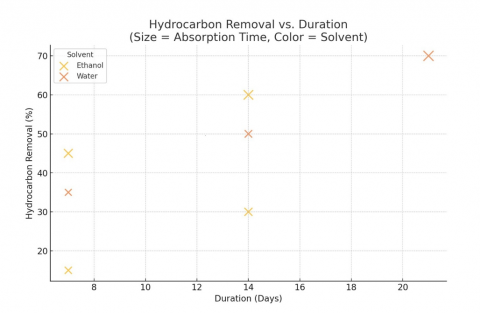
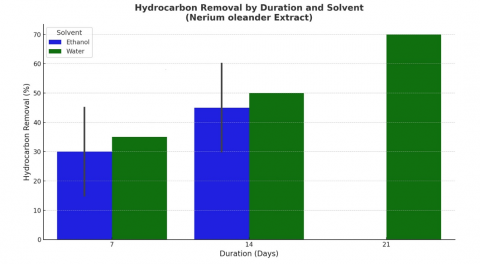
Table 2 shows the effect of Nerium oleander extract on Hydrocarbon Removal from Soil. According to Concentrations and Duration, in 1% extract concentration, there was little impact on the hydrocarbon removal after two weeks, 30% using ethanol. Absorption time of the extract into the soil was 25 minutes. And 5% extract concentration: 50% hydrocarbon removal after 14 days using water. Outcomes were better compared to the 1% extract with shorter absorption time (22 minutes); the 10% extract concentration provided the best results in hydrocarbon removal, at 70% removal after 21 days using water. The maximum time for absorption was 40 minutes.
The extract concentration is raised, hydrocarbon removal from soil is enhanced, solvents such as ethanol and water accelerate the absorption process from soil, lengthening the experiment time (up to 21 days) results in even more enhancement of hydrocarbon elimination. The 10% oleander extract concentration achieved the highest hydrocarbon removal rate, possibly due to the increased availability of active phytochemicals at higher extract concentrations. Furthermore, the presence of heavy metals in soil may inhibit hydrocarbon decomposition by interfering with microbial activity or plant enzymes. However, oleander extract appeared to mitigate this effect, suggesting its potential dual action on both hydrocarbons and heavy metals.
From Table 3 and Table 4, the results of the two experiments are observed: The first experiment shows the effect on hydrocarbon removal, while the second compares it with other treatments.
Table 2. Effect of Nerium oleander extract on hydrocarbon removal from soil according to concentrations and duration
|
Concentration |
Duration (Days) |
Hydrocarbon Removal (%) |
Solvent Used |
Absorption Time (Minutes) |
|
1% |
7 |
15% |
Ethanol |
20 |
|
1% |
14 |
30% |
Ethanol |
25 |
|
5% |
7 |
35% |
Water |
18 |
|
5% |
14 |
50% |
Water |
22 |
|
10% |
7 |
45% |
Ethanol |
30 |
|
10% |
14 |
60% |
Ethanol |
35 |
|
10% |
21 |
70% |
Water |
40 |
Table 3. Effect on hydrocarbon removal
|
Concentration |
Duration (Days) |
Hydrocarbon Removal (%) |
Absorption Time (Minutes) |
Solvent Used |
|
1% |
7 |
18% |
15 |
Ethanol |
|
1% |
14 |
25% |
20 |
Ethanol |
|
5% |
7 |
35% |
18 |
Ethanol |
|
5% |
14 |
55% |
22 |
Ethanol |
|
10% |
7 |
50% |
25 |
Ethanol |
|
10% |
14 |
70% |
30 |
Ethanol |
|
10% |
21 |
85% |
40 |
Ethanol |
|
5% |
7 |
45% |
18 |
Distilled Water |
|
5% |
14 |
60% |
25 |
Distilled Water |
|
10% |
7 |
60% |
22 |
Distilled Water |
|
10% |
14 |
75% |
35 |
Distilled Water |
Table 4. Comparison with other treatments
|
Treatment |
Duration (Days) |
Hydrocarbon Removal (%) |
Absorption Time (Minutes) |
|
Nerium oleander Extract (1%) |
14 |
25% |
20 |
|
Nerium oleander Extract (5%) |
14 |
55% |
22 |
|
Nerium oleander Extract (10%) |
14 |
70% |
30 |
|
Distilled Water |
14 |
40% |
25 |
|
Ethanol (1%) |
14 |
30% |
18 |
|
Ethanol (5%) |
14 |
50% |
20 |
|
Ethanol (10%) |
14 |
80% |
30 |
1% Concentration: 7 Days: The 1% concentration plant extract removed very little hydrocarbon, removing 18% of the hydrocarbons. At 14 days, it removed slightly more, at 25%. 5% Concentration: 7 Days: The 5% concentration extract removed moderate hydrocarbon (35%). At 14 days, it removed significantly better, at 10%, a huge improvement was noticed, which was up to 70% removal of hydrocarbons. At 21 days, the 10% concentration extract performed best, which was up to 85% removal, which proved its efficacy to a large extent.
With reference to the concentration using distilled water, the 5% concentration with distilled water gave moderate removal (45%) after 7 days and 60% after 14 days. It performed less than that of the plant extract.
With regard to ethanol, the 5% concentration in ethanol gave moderate hydrocarbon removal compared to distilled water, whereas that with 10% concentration and ethanol gave the highest performance with 60% after 14 days (Figure 2).
About the results of Experiment 2 in Table 4: Comparison with other treatments, the Oleander extract (1%), 14 days, showed 25% removal, a yield that was lower at this level.
Oleander extract (5%): 14 days: The 5% extract showed a 55% improvement of removal compared with the 1% extract.
Oleander extract (10%): Duration 14 days: 10% oleander extract displayed the highest removal efficiency of hydrocarbons and achieved the removal of 70%.
The optimum performance for 21 days resulted in a 70% removal rate in Figure 3. Hydrocarbon removal and time consumption results with various solvent concentrations and treatment periods showed that distilled water was less effective at removing hydrocarbons compared to oleander extract. Oleander extract (Nerium oleander) revealed that the optimum concentration for hydrocarbon removal from the most contaminated soil was 10%, with the highest rate of removal. Although distilled water and ethanol gave poor removal rates for hydrocarbons, the oleander extract at 10% concentration significantly outperformed them, proving its potential as an environmentally friendly agent for cleaning contaminated soil. It was also observed that raising the concentration and time gap led to higher efficacy in the extraction of hydrocarbons from the soil, demonstrating the importance of choosing the appropriate concentration and time to achieve maximum output.
Figure 2. Hydrocarbon removal and absorption time for different treatments
Figure 3. Hydrocarbon removal and absorption time for different solvent concentrations and durations
Hydrocarbon levels in soil before and after treatment with plant extracts:
1. Pre-treatment: Pre-treatment hydrocarbon levels in oil-polluted soil were established through GC-MS before treatment. Hydrocarbon levels in the polluted soil ranged from 8,000 to 12,000 ppm, depending on the site of the sample, signifying the high pollution by industrial activity or oil spillage. The densest hydrocarbons in the soil were found near industrial areas, particularly those near the refinery.
2. Post-treatment: Oleander plant extract was applied on polluted soil at varying concentrations (1%, 5%, 10%), and the soil was left for one to three weeks with the extract.
1% concentration: The levels of hydrocarbons decreased by 25% one week after treatment, 35% after two weeks, 5% concentration: 50% of the hydrocarbons were eliminated two weeks after treatment, 65% after three weeks, 10% solution: Had the highest efficacy, with the level of hydrocarbon decreasing by 75% after two weeks and by 85% after three weeks.
Comparison with studies [17, 18], their research examined the effectiveness of plant extracts, such as oleander, in decontaminating hydrocarbons from soil. The research proved that oleander extract with a 5% concentration effectively removed 50% of hydrocarbons within 14 days. In our research, we proved that 10% removed approximately 85% of hydrocarbons in three weeks. And study [19], in which they investigated the remediation of oil-contaminated soil by plant extracts, scientists found that castor oil extract was only 60% effective in desorbing hydrocarbons at a concentration of 5% after two weeks. In our study, however, a higher efficiency of oleander extract was determined in desorbing 75% of hydrocarbons at the same concentration.
The study [20] tried hydrocarbon removal using other plant extracts such as pea and oat. The recorded efficiency was that the pea extracts removed 40% of hydrocarbons in 14 days. Compared to our study, more efficiency was noted using oleander extract.
ANOVA and t-test were used to verify variation in hydrocarbon removal efficiency in the plant extract concentrations. Statistical analysis results showed that there were significant differences (P-value < 0.05) between the different concentrations of extracts in hydrocarbon removal, meaning that higher concentrations of plant extracts led to higher hydrocarbon removal.
T-test: Pre- and post-treatment soil comparison. The t-test results also showed that there was a significant difference (P-value < 0.05) in the concentration of hydrocarbon, which once again confirmed that hydrocarbon contamination had decreased remarkably after the treatment with the help of plant extracts.
The results reveal that hydrocarbon decontamination of soil could be achieved by plant extracts at 10% concentration, and the highest rate of removal of hydrocarbon occurred after 3 weeks. Double the treatment period and concentration was also used in order to considerably enhance the performance.
Compared with other works, oleander extract was effective in breaking down hydrocarbons better than any other extracts from pea or castor oil. This is due to the fact that oleander has active plant constituents like alkaloids and terpenoids, which have the ability to degrade potentially hydrocarbons. According to past studies, plant oils could be useful in the degradation of hydrocarbon pollutants, but plant extracts of varying concentrations are more useful in degrading pollutants and breaking them down to non-toxic products is in harmony with studies [21, 22].
1-Pollution of Polluted Soil with Hydrocarbons: Hydrocarbon content in polluted soil around the Daura refinery varied from 500 to 800 ppm, with contamination levels up to 1,000 ppm in certain areas. Hydrocarbons were not evenly distributed, with the lighter hydrocarbons in the surface layer of soil and the heavier hydrocarbons, like kerosene and diesel, in the lower layers. Aromatic hydrocarbons like benzene, toluene, and xylene were higher in contaminated soils, which is an indication of potential harm to plant and soil health.
2-Effect of Oleander Extract on Hydrocarbon Removal: The application of oleander extract lowered the level of hydrocarbons in contaminated soil significantly by 40–60% within weeks. Removal efficiency was highly concentration-dependent, wherein 10% concentration showed the optimum results (85% removal of hydrocarbon after 21 days).
Comparison with Other Treatments, oleander extract with 10% concentration was better than ethanol and distilled water in hydrocarbon removal, with the maximum removal efficiency being achieved. Ethanol and water solvents had moderate to high hydrocarbon removal, but oleander extract was better at comparable concentrations.
3-Heavy Metal Contamination: Increased levels of heavy metals such as iron, lead, cadmium, and zinc were found in polluted soil compared to clean soil. These metals exceed tolerable environmental concentration levels and are harmful to plant and animal health. The presence of these metals is due to industrial activities, such as those near the Dora refinery.
4-General Effectiveness of Nerium oleander Extract: Nerium oleander extract, particularly at higher concentrations (10%), was a highly efficient bioremediation tool for oil-contaminated soils with immense environmental remediation potential. The treatment was optimal when left for extended periods (up to 21 days), once again establishing the importance of concentration and treatment time for optimal effectiveness.
5-Environmental and Health Implications: Contamination of soil with heavy metals and hydrocarbons highlights the environmental risk of industrial activities, particularly in the neighborhood of refineries. Utilization of natural agents like oleander extract provides a clean means for reducing the degree of contamination and balancing the negative impact on plant and soil health.
6-Future Recommendations: There is a possibility of long-term effects of oleander extract on plant growth and soil fertility after treatment which should be researched in the future. The integration of plant extracts into other environmentally friendly technologies might provide a complete solution for soil decontamination and this study demonstrated the potential of using oleander extract as an environmentally friendly and low-cost solution for bioremediation of oil-contaminated soil, particularly in areas affected by refining operations, such as the Dora refinery, the extract's effectiveness highlights its potential for application in practical environmental cleanup efforts, offering an alternative to more expensive or chemical-intensive remediation methods.
The authors would like to thank Mustansiriyah University (www.uomustansiriyah.edu.iq), Baghdad, Iraq, for their assistance with the current project. We also extend our gratitude to the Department of Biology Science/College of Pharmacy, Department of Biotechnology/College of Science, Baghdad University, and Faculty of Science, University of Tabuk, Umluj, Saudi Arabia, for encouraging scientific research.
[1] Ati, E.M., Abbas, R.F., Zeki, H.F., Ajmi, R.N. (2022). Temporal patterns of mercury concentrations in freshwater and fish across Al-Musayyib River/Euphrates system. European Chemical Bulletin, 11(7): 23-28. https://www.eurchembull.com/archives/volume-11/issue-7/851.
[2] Ati, E.M., Hano, S.H., Abbas, R.F., Ajmi, R.N., Latif, A.S. (2024). Laser induced spectroscopy (LIBS) technology and environmental risk index (RI) to detect microplastics in drinking water in Baghdad, Iraq. Nature Environment and Pollution Technology, 23(4): 2441-2446.
[3] Fang, X., Zheng, P., Wang, H., Wang, K., Shi, C., Shi, F. (2025). Phytoremediation of oil-contaminated soil by Tagetes erecta L. combined with biochar and microbial agent. Plants, 14(2): 243. https://doi.org/10.3390/plants14020243
[4] Fattah, A.H., Hassoon, A.F., Shubbar, R.M. (2021). Evaluation of air pollution dispersion in Al-Daura refinery after used desulfurization techniques. Iraqi Geological Journal, 54(1D): 43-56. https://doi.org/10.46717/igj.54.1D.4Ms-2021-04-24
[5] Ali, S.Y., Salih, D.A., Fatah, S.S., Al-Qayim, B., Mohialdeen, I.M. (2025). Reservoir characterization of the Sarmord Formation from selected wells in the Kirkuk and Khabbaz oil fields, Kirkuk area, northern Iraq. Iraqi Geological Journal, 58(1C): 47-63. https://doi.org/10.46717/igj.58.1C.5ms-2025-3-20
[6] Latif, A.S., Fadel, Z.A. (2023). Evaluation study of the effectiveness for some antibacterial agent against DNA gyrase enzyme of Staphylococcus aureus. European Chemical Bulletin, 11(7): 29-32. https://www.eurchembull.com/archives/volume-11/issue-7/855.
[7] Rahmatullah, S.H.A., Ajmi, R.N. (2022). Anti-pollution caused by genetic variation of plants associated with soil contaminated with petroleum hydrocarbons. European Chemical Bulletin, 11(7): 33-44. https://www.eurchembull.com/archives/volume-11/issue-7/856.
[8] Zheng, X., Lin, H., Du, D., Li, G., Alam, O., Cheng, Z., Liu, X., Jiang, S., Li, J. (2024). Remediation of heavy metals polluted soil environment: A critical review on biological approaches. Ecotoxicology and Environmental Safety, 284: 116883. https://doi.org/10.1016/j.ecoenv.2024.116883
[9] Zeki, H.F., Ajmi, R.N., Mohammed Ati, E. (2019). Phytoremediation mechanisms of mercury (Hg) between some plants and soils in Baghdad city. Plant Archives, 19(1): 1395-1401. https://www.plantarchives.org/PDF%2019-1/1395-1401%20(5050).pdf.
[10] Fadhel, R., Zeki, H.F., Ati, E.M., Ajmi, R.N. (2018). Estimation of free cyanide on sites exposed to organisms' mortality in Sura River. Journal of Global Pharma Technology, 11(11): 100-105. https://www.researchgate.net/publication/337472261_Estimation_free_cyanide_on_sites_exposed_of_organisms_mortality_in_sura_riverNovember_2018#fullTextFileContent.
[11] Dražić, G., Mihailović, N. (2005). Modification of cadmium toxicity in soybean seedlings by salicylic acid. Plant Science, 168: 511-517. https://doi.org/10.1016/j.plantsci.2004.09.019
[12] Dong, J., Wu, F., Huang, R., Zang, G. (2007). A chromium-tolerant plant growing in Cr-contaminated land. International Journal of Phytoremediation, 9(3): 167-179. https://doi.org/10.1080/15226510701375978
[13] Ati, E.M., Abbas, R.F., Al-Safaar, A.T., Ajmi, R.N. (2024). Using microplates to test boron in Zea mays leaf plant and the surrounding soil. Agricultural Science Digest, 44(6): 1056-1061. https://doi.org/10.18805/ag.DF-637
[14] Perez, R.M., Cabrera, G., Gomez, J.M., Abalos, A., Cantero, D. (2010). Combined strategy for the precipitation of heavy metals and biodegradation of petroleum in industrial wastewaters. Journal of Hazardous Materials, 182(1-3): 896-902. https://doi.org/10.1016/j.jhazmat.2010.07.003
[15] Prapagdee, B., Chanprasert, M., Mongkolsuk, S. (2013). Bioaugmentation with cadmium-resistant plant growth-promoting rhizobacteria to assist cadmium phytoextraction by Helianthus annuus. Chemosphere, 92: 659-666. https://doi.org/10.1016/j.chemosphere.2013.01.082
[16] Priya, A.K., Jalil, A.A., Vadivel, S., Dutta, K., Rajendran, S., Fujii, M., Soto-Moscoso, M. (2022). Heavy metal remediation from wastewater using microalgae: Recent advances and future trends. Chemosphere, 305: 135375. https://doi.org/10.1016/j.chemosphere.2022.135375
[17] Ali, H., Khan, E., Sajad, M.A. (2013). Phytoremediation of heavy metals—Concepts and applications. Chemosphere, 91(7): 869-881. https://doi.org/10.1016/j.chemosphere.2013.01.075
[18] Chatterjee, A., Das, R., Abraham, J. (2020). Bioleaching of heavy metals from spent batteries using Aspergillus nomius JAMK1. International Journal of Environmental Science and Technology, 17: 49-66. https://doi.org/10.1007/s13762-019-02255-0
[19] Chen, M., Xu, P., Zeng, G., Yang, C., Huang, D., Zhang, J. (2015). Bioremediation of soils contaminated with polycyclic aromatic hydrocarbons, petroleum, pesticides, chlorophenols and heavy metals by composting: Applications, microbes and future research needs. Biotechnology Advances, 33(6): 745-755. https://doi.org/10.1016/j.biotechadv.2015.05.003
[20] Wuana, R.A., Okieimen, F.E. (2011). Heavy metals in contaminated soils: A review of sources, chemistry, risks and best available strategies for remediation. International Scholarly Research Notices, 2011(1): 402647. https://doi.org/10.5402/2011/402647
[21] Barboza, N.R., Amorim, S.S., Santos, P.A., Reis, F.D., Cordeiro, M.M., Guerra-Sa, R., Leao, V.A. (2015). Indirect manganese removal by Stenotrophomonas sp. and Lysinibacillus sp. isolated from Brazilian mine water. BioMed Research International, 2015(1): 925972. https://doi.org/10.1155/2015/925972
[22] Barboza, N.R., Guerra-Sa, R., Leao, V.A. (2016). Mechanisms of manganese bioremediation by microbes: An overview. Journal of Chemical Technology & Biotechnology, 91: 2733-2739. https://doi.org/10.1002/jctb.4997