Maman Suryaman* | Yaya Sunarya | Ida Hodiyah | Ade Sari Walijah
© 2025 The authors. This article is published by IIETA and is licensed under the CC BY 4.0 license (http://creativecommons.org/licenses/by/4.0/).
OPEN ACCESS
Dryness is among the limiting abiotic factors of plant productivity. Papaya skin extract contains phytochemical antioxidants, such as phenolic compounds, flavonoids, and vitamin C. The study aimed to analyze how papaya skin extract affects mungbean grown under drought stress conditions. The experiment was arranged in a factorial randomized block design. The first factor was drought stress consisting of 3 levels (100% Field Capacity (FC) = control, 70% FC = mild stress, and 40% FC = medium stress), the second factor was papaya skin extract consisting of 4 concentration levels (0%, 1%, 2%, and 3%), with 3 replicates. The results of the study showed a significant interaction effect of papaya skin extract and drought stress on pod size and the number of seeds (p = 0.05). Independently, the growth rate and the dry seed were influenced by drought stress. An increase in drought stress from 100% to 40% FC resulted in increased stunted growth, as reflected in the decrease in plant height and leaf area, as well as a decrease in seed yield to 28.3% compared to the control. In addition, the components of growth and yield were significantly affected (p = 0.05) by papaya skin extract. In comparison to the control, the use of papaya skin extract improved plant growth and potentially increased seed yields by 11.2%. These findings suggest that papaya skin extract has the potential to mitigate drought stress in mungbean cultivation.
abiotic factor, drought stress, mungbean, papaya skin extract
Mungbean, a member of the legume family, is an important grain crop widely cultivated in Asia and has a variety of market segments, including dry grains, sprouts, transparent noodles, and paste [1]. Mungbean is the third most important leguminous crop in Indonesia and the world, next to soybean and peanuts, with a productivity of 1.14 t ha⁻¹ in 2021 [2]. Mungbean contains a complete set of nutrients that are beneficial to health. In addition to protein, mungbean also contains carbohydrates, vitamins, minerals, and fats [3]. The protein content of mungbean ranges from 20.9% to 31.3%, which is higher than that of soybean. It also contains about 55% carbohydrates, along with various minerals and vitamins, and approximately 14.5% to 24.5% dietary fiber [3]. Flavonoids, phenolic acids, and other organic acids are bioactive compounds also present in mungbean [4, 5], which are beneficial for health as antioxidants, antidiabetic agents, anti-inflammatory agents, anti-obesity agents, and antimicrobials [3, 6], making mungbean a functional food [4]. The increasing demand for mungbean should be accompanied by a rise in its production. Increasing mungbean production can be done through intensification, extensification and increasing planting intensity [7]. As agricultural land continues to decrease due to land conversion, increasing plant intensity is one of alternative choices to increase production, accordingly however it needs more available water, moreover, global warming worsens water availability.
Recently, in tropical regions, especially in Indonesia, the initial growing season, especially in dryland areas is difficult to predict. The wet season is shortened and the dry season is prolonged due to climate change [8]. One of major obstacles that limits growth and productivity of plants is climate change [9]. Global warming, CO2 levels up, and dryness impact on food insecurity [10]. Global warming raises water loss through evaporation and worsens dryness conditions [11]. Water deficit limits plants to achieve maximum productivity. Drought and high-temperature stress can reduce plant yield by 50% [12, 13], especially for leguminous which is categorized as drought stress sensitive-plant [14]. Plants' growth, productivity and harvest quality are reduced in drought stress conditions [12, 14]. Soybean yields reach 3.6 t ha-1 in optimum environmental conditions, while in water deficit conditions the yield only reaches 2.0 t ha-1 [15]. Depending on the growth phase and level of drought, soybean yield losses vary by 46-71% [16].
The drought stress occurrence likely affects the plants cultivation on dry land. The plants’ morphology, physiology, and biochemistry are affected by drought stress [17] besides hampers plants growth, they can also cause harvest failure [12]. Legumes are plants that are sensitive to drought stress, whether stress in the vegetative or generative phase, which will disrupt growth and reduce the harvest quality and quantity [14]. Drought stress negatively impacts on reduced uptake of water and nutrients, causing stomata to close, and lowering the activity of Rubisco enzymes or inhibiting photosynthesis as well as oxidative damage [18-20]. The stress of drought also affects the metabolic processes of plants and causes reactive oxygen species (ROS) to increase production [19, 21], which is causing oxidative damage to the cells [22, 23]. ROS, as free radicals, have fragility and reactivity which may affect the components of cells like proteins, fats, carbohydrates, nucleated acids, and enzymes [21, 24, 25]. ROS breaks down DNA, oxidizes proteins, inhibits enzyme activity, causes fat peroxidation, and kills plant cells [24-27]. To protect from cell damage due to ROS (free radicals), plants respond through an antioxidant defense system, both enzyme antioxidants and non-enzyme antioxidants [21, 24, 25, 28], increase the synthesis and buildup of secondary metabolites, such as phenols, flavonoids, and vitamins [29]. Antioxidants can protect plant cells either directly or indirectly by counteracting the absorbances of ROS and increasing the number of other antioxidants [20, 24]. However, to compensate for the damaging effect of ROS, endogenous antioxidants produced by plants are often insufficient [26]. Therefore, an exogenous infusion of antioxidants is needed. Several techniques have been developed to reduce the negative impacts of drought on the growth and development of plants, including genetic engineering, biochar application, plant growth regulators, plant growth-promoting microbes, fertilizers, seed priming, and seaweed [30-32]. These approaches primarily work by reducing oxidative stress in plants through ROS scavenging, stimulating the production of enzymatic and non-enzymatic antioxidants such as total phenols, enhancing photosynthetic efficiency, promoting the accumulation of sugars and osmoregulators, and minimizing ionic imbalances as well as lipid peroxidation [32, 33]. Because seaweed is a source of food material, there will be competition in its use as a food source, so it is necessary to look for other non-food materials.
Papaya is a popular fruit that is widely consumed in Indonesia and contains nutrients that are good for health. Papaya is also rich in antioxidants, including phenolics, carotenoids, also vitamin C [34]. In 2021, papaya production reached 1.2 million tonnes [2]. Papaya skin, which is not edible, is often thrown away as waste to the environment. Papaya skin makes up about 12% of the fruit [35], so there were about 44,000 tons of papaya skin waste in Indonesia in 2021. Papaya skin contains different phytochemicals, such as phenols, flavonoids, and vitamin C with very potent antioxidant activity [35, 36]. Phenolics are produced in plants as defense compounds from biotic and abiotic stress including drought stress [37]. Phenolic compounds, as antioxidants, enable of acceptance or donation of electrons or hydrogen atoms, to stabilize free radicals and prevent oxidative stress [37]. The skin of papaya contains higher levels of phytochemicals and higher levels of antioxidants than that of fruit flesh [36, 38]. Papaya skin extract has the potential to alleviate drought-induced oxidative stress and enhance mungbean growth under water-deficient conditions. There are still few studies on the use of papaya skin, it is only used as a mixture for animal feed [35], and as an adsorbent for methylene blue removal [39]. However, research on the possible benefits of papaya skin for reducing drought stress in mungbean is not available. To mitigate the drought stress impact on mungbean, this research is aimed at studying papaya skin extract. The novelty of this study is papaya skin extract, which mitigates the impact of drought stress on mungbeans.
2.1 Location of study and source of material
The study was carried out in a field experiment at the Faculty of Agriculture Siliwangi University Tasikmalaya West Java Indonesia. Papaya fruit comes from the local market in Tasikmalaya, West Java, Indonesia. The papaya is already in the ripe category, while the mungbean seeds come from Balitkabi Malang, East Java, Indonesia.
2.2 Material preparation and applied treatments
Papaya skin extract is prepared through the maceration method [40] with modification: A total of 9.7 kg of wet papaya skin is washed under running water and then dried in the sun for 3 days. Next, the papaya skin is ground into powder, and 800 g is obtained. Then, the 800 g powder is dissolved in 8 L of ethanol (1:10 w/v), stirred, and filtered to get a filtrate. After heating the filtrate to 60℃ until a thick fluid is produced, yielding about 287.3 g. Then, concentrations of 1%, 2%, and 3% were applied as treatments. Before planting, mungbean seeds (Vima-2 variety) are first soaked in a solution of papaya skin extract (0, 1, 2, and 3%) for 12 hours, then rinsed with water and air-dried, and planted in polybags. Papaya skin extract was applied at 14, 21, and 28 days after planting. At the same time, the FC is determined by the gravimetric method based on the treatment, i.e., 100% FC, 70% FC, and 40% FC. The experiment was arranged in a factorial randomized block design. The first factor is drought stress consists of 3 levels (100% FC = control, 70% FC = mild stress, and 40% FC = medium stress), the second factor is papaya skin extract consists of 4 levels (0, 1, 2, and 3%), and is replicated 3 times. During the experiment, the plants were maintained by receiving NPK fertilizer 0.75 g polybag-1 (equivalent to 300 kg ha-1) and hand-weeding. Data collected included the height of the plant, area of leaves, yield of seed, and components of yield. The height of plants and area of leaves data were taken at 40 days after planting, while the yield of seed and component of yield data were taken at harvest. Leaf area data were taken using the Image-J application referred to Li et al. [41] consists of two stages, namely the first stage of taking leaf images, and the second stage of processing image data with Image-J software. The second stage consists of 4 stages, namely (1) importing leaf images into ImageJ software, (2) determining the boundaries of the image whose area will be calculated, (3) converting leaf images to binary and inverting, and (4) detecting leaf area [42]. The data were analyzed using ANOVA and continued with Duncan's multiple range test (p = 0.05).
3.1 Results
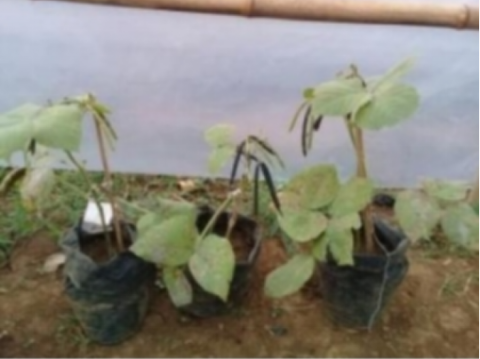
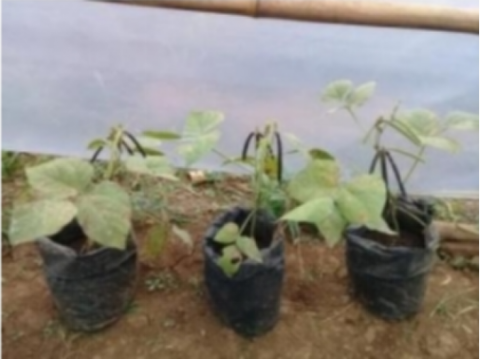
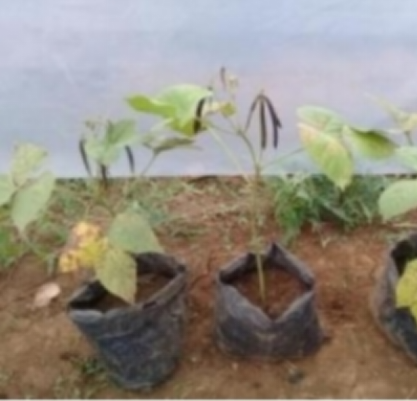
Mungbean plants under drought stress change their green leaves to yellow, which indicates that the plant is under severe drought stress (Figure 1). Drought stress experienced by plants results in the overproduction of free radicals, causing oxidative damage to cells, including chlorophyll [19], leading to chlorophyll degradation and yellowing. The color change from green to yellow is mainly caused by ROS action on carotenoids and chlorophyll [43]. Drought stress leads to leaf senescence, stomatal closure, and a decrease in the amount and activity of the Rubisco enzyme, thus inhibiting photosynthesis [44, 45]. This, in turn, limits CO2 fixation in the Calvin cycle and reduces the production of photo-assimilates [45]. In addition, drought stress reduces photosynthetic capacity, thereby reducing crop productivity. Statistical analysis indicated a significant interaction between papaya skin extract and drought stress on the number of pods and seeds per plant, while other variables showed no significant interaction effects.
(a)
(b)
(c)
Figure 1. The plant appearance at (a) 100% FC, (b) 70% FC, and (c) 40% FC
Table 1. Effect of papaya skin extract on mungbean plant height and leaf area under drought stress conditions
|
Treatments |
Plant Height (cm) |
Leaf Area (cm2) |
|
Papaya skin extract |
|
|
|
0% (Control) |
38.2 a |
455.9 a |
|
1% |
41.8 b |
512.2 a |
|
2% |
41.7 b |
512.6 a |
|
3% |
40.9 b |
494.6 a |
|
Drought stress |
|
|
|
100% FC |
49.3 c |
563.3 b |
|
70% FC (mild stress) |
47.1 b |
491.1 ab |
|
40% FC (medium stress) |
44.7 a |
426.9 a |
Note: Numbers followed by the same letter in the same column are not significantly different according to Duncan's test at a 5% significance level.
Table 1 indicates that papaya skin extract significantly affects the plant height, however, papaya skin extract insignificantly affects the leaf area. On the other hand, drought stress significantly affects both the height of plants and the leaf area. The administration of papaya skin extract increased the height of mungbean plants by 9.4% to 41.8 cm compared to control plants, which reached only 38.2 cm in height. Although statistically insignificant, the administration of papaya skin extract can expand the leaf area by 12.4% to 512.6 cm2 compared to the leaf area of the control, which reaches only 455.9 cm2.
The statistical test indicates a significant interaction between papaya skin extract and drought stress in influencing the number of pods per plant (Table 2). In general, increasing drought stress from 100% FC to 40% field capacity decreases the number of pods. The administration of 3% papaya skin extract at 70% field capacity prevents the reduction of the pod number.
Table 2. Effect of papaya skin extract on the number of pods per plant under drought stress conditions
|
Papaya Skin Extract |
Drought Stress |
||
|
100% FC |
70% FC (Mild Stress) |
40% FC (Medium Stress) |
|
|
(0% (Control) |
8.08 a A |
6.92 a A |
7.92 a A |
|
1% |
10.50 b B |
6.92 a A |
7.17 a A |
|
2% |
9.50 ab B |
6.58 a A |
6.25 a A |
|
3% |
8.42 a B |
9.33 b B |
6.25 a A |
Note: Numbers followed by the same lowercase letters in the vertical direction and the same capital letters in the horizontal direction are not significantly different according to Duncan's test at a 5% significance level. FC = Field capacity.
As with the pod number, the statistical test indicates that the number of seeds per plant was also significantly influenced by the interaction of drought stress and papaya skin extract (Table 3). Increasing the level of water availability from 100% FC to 40% FC the number of seeds per plant is reduced at all levels of papaya skin extract application. However, administering 3% papaya skin extract at 70% and 100% FC does not show a significant difference.
Table 3. Effect of papaya skin extract on the number of seeds per plant under drought stress conditions
|
Papaya Skin Extract |
Drought Stress |
||
|
100% FC |
70% FC (Mild Stress) |
40% FC (Medium Stress) |
|
|
0% (Control) |
68.33 a A |
54.75 a A |
56.25 a A |
|
1% |
88.58 b B |
59.92 ab A |
52.75 a A |
|
2% |
75.17 a B |
46.25 a A |
43.08 a A |
|
3% |
66.83 a B |
74.58 b B |
43.83 a A |
Note: Numbers followed by the same lowercase letters in the vertical direction and the same capital letters in the horizontal direction are not significantly different according to Duncan's test at a 5% significance level.
Table 4 shows that the papaya skin extract does not have a significant effect on the weight of 100 dry seeds and the seed yield per plant. Meanwhile, drought stress has a significant effect on seed yield but not significantly on the weight of 100 dry seeds.
Table 4. Effect of papaya skin extract on the weight of 100 dry seeds and dry seed yield of mung beans under drought stress conditions
|
Treatment |
Weight of 100 Dry Seeds (g) |
Seed Yield per Plant (g) |
|
Papaya skin extract |
|
|
|
0% (control) |
8.3 a |
4.5 a |
|
1% |
8.4 a |
5.0 a |
|
2% |
8.5 a |
4.8 a |
|
3% |
8.0 a |
4.9 a |
|
Drought stress |
|
|
|
100% FC |
8.2 a |
5.3 c |
|
70% FC (mild stress) |
8.4 a |
4.4 b |
|
40% FC (medium stress) |
8.3 a |
3.8 a |
Note: Numbers followed by the same letter in the same column are not significantly different according to Duncan's test at a 5% significance level.
3.2 Discussion
In general, the research results indicate that papaya skin extract stimulates the growth of mungbean. This is strongly suspected to be related to the content of phytochemical compounds contained in papaya skin extract which have a positive impact on plant growth. Papaya skin contains various minerals such as nitrogen, phosphorus, potassium, calcium, sodium, and magnesium [35], which increase the availability of nutrients to mungbean. In addition, papaya skin extract also contains phytochemical compounds that are antibacterial and antioxidant [40], which protect plant growth from potential disease and environmental factors [37]. Phytochemicals contained in papaya skin extract include phenolic compounds, flavonoids, and vitamin C [35, 36]. Phenolic compounds, including flavonoids, have a key role as compounds that protect cells from the impact of abiotic stress, with antioxidant properties that are more effective than ascorbic acid [46]. Phenolic compounds show antioxidant activity because they can accept or provide electrons or hydrogen atoms that can stabilize free radicals and prevent oxidative damage [37, 47]. In addition, phenolic compounds can also improve photosynthetic performance by increasing chlorophyll and carotenoid contents [47]. Meanwhile, ascorbic acid also has a significant role in eliminating ROS and allows plants to be more tolerant to oxidative stress [48]. Ascorbic acid contributes to improving the antioxidant defense system, increasing the stability of cell membranes, preventing damage to chlorophyll and carotenoids, increasing stress resistance, and improving plant growth [49]. Therefore, the growth rate of mungbean increases after being treated with papaya skin extract, as evidenced by increased plant height and leaf area. Conversely, plant development is generally hindered by drought stress. Reduced plant height and leaf area are signs of the mungbean plants' progressively curtailed growth as a result of the increased drought stress they are experiencing. In comparison to plants that were not stressed by drought, which reached a height of 49.3 cm, mungbeans that were subjected to drought stress saw a 9.3% reduction in plant height, to 44.7 cm. Similarly, compared to the leaf area of unstressed plants with a height of 563.3 cm2, leaves have been reduced by 24.2% to reach 426.9 cm2. Droughts cause limited water and nutrients for plants to absorb and decrease turgor pressure [19, 20], so the process of cell biosynthesis is hampered. In addition, drought stress causes changes in plant metabolic processes by producing more free radicals (ROS), which are destructive to cells. The main location of ROS production occurs in the chloroplast, so the chloroplast has the potential to experience early damage, followed by the closing of stomata, which subsequently decreases the photosynthetic capacity [43]. Drought stress also has a negative effect on the tricarboxylic acid cycle and ATP biosynthesis in the mitochondria, which results in a decreased respiration rate [45], so that the amount of energy available for growth becomes limited.) Besides that, by oxidizing proteins, peroxidation fats, and damaging DNA, ROS will attack and damage cell components [21, 24, 25], so it will inhibit the rate of vegetative growth of plants, such as reducing leaf area and plant height.
Drought stress on mungbean impacts both the vegetative and generative stages of growth. Plants under increasing drought stress will undergo several biochemical alterations, such as lipid peroxidation, damage to cell membranes, and an increase in ROS generation [20], which disrupt metabolic processes at the generative phase that affect pod formation and seed filling. The study's findings demonstrate that using papaya skin extract can potentially alleviate the adverse effects of drought stress. To prevent pod and seed reduction due to drought stress of 70% FC and even to produce a higher number of pod and seed compared to plants not suffering from drought stress of 100% FC, the use of 3% papaya skin extract was found to be effective. It is due to the role of various phytochemical compounds contained in papaya skin extract, including phenolic compounds, flavonoids, and vitamin C [35, 36]. Phenolic compounds help plants cope with drought stress through various mechanisms, including enzymatic and non-enzymatic antioxidant activity, detoxification of ROS, regulation of physiological and metabolic processes, and maintenance of cell integrity [50]. Additionally, phenols function as osmoprotectants, aiding in the balance of water and soil moisture within plants [50]. Flavonoids are widely recognized for their protective role, as they can inhibit ROS formation or detoxify ROS produced under stress conditions, thereby reducing oxidative damage [21, 51] and neutralizing free radicals [21]. Vitamin C helps to maintain cell homeostasis [21] and prevents DNA damage caused by free radicals [52]. Papaya skin also contains micronutrients such as Fe, Zn, and Cu as cofactors of antioxidant enzymes so that it can increase the performance of antioxidants in detoxifying free radicals (ROS) [35, 53]. Several antioxidant enzymes, such as superoxidase dismutase, glutathione peroxidase, and catalase, can detoxify free radicals, including hydrogen peroxide (H2O2), through a series of processes that ultimately convert them into water and oxygen [54]. Therefore, the addition of papaya skin extract increases antioxidant defenses against free radical attacks that result from drought stress [54] and prevents oxidative damage in the seed-filling phase. Meanwhile, in severe stress (40% FC), the addition of papaya skin extract was unable to prevent a decrease in the number of pods and seeds. It is suspected that the production and destructive power of ROS exceeds the ability of the phytochemical compounds of papaya skin extract to prevent free radicals at this level of severe stress, resulting in a decrease in pod and seed production. Similar research has been conducted by El Boukhari et al. [32] using seaweed extract on other legume plants (Faba bean), successfully overcoming the negative impacts of water deficit. The seaweed extract can improve plant biomass under deficit water conditions. From this study, it is also known that the improvement in plant growth is closely related to the accumulation of proline and soluble sugars as osmoprotectants and osmoregulators, improvement in relative water content in plant tissues, increased phenol levels, and reduction of lipid peroxidation.
In addition, an increase in drought stress from 100% FC to 40% FC resulted in a decrease in seed yield. The yield was reduced by 28.3% compared to non-stressed plants, which reached 5.3 g plant-1, while plants stressed by drought obtained a seed yield of 3.8 g plant-1. This condition shows that abiotic stress has a negative effect on plant performance. Drought stress limits plant growth, reduces net photosynthesis, reduces photosynthate translocation, affects seed formation [12, 14], and reduces seed yield. Meanwhile, seed size (the weight of 100 grains) is not affected by environmental conditions. The size of the seeds seems to be more influenced by genetic factors, as the characteristics of superior varieties in general are that those have superior genetic characteristics, including seed size. The mungbean (Vima-2 variety) used in this experiment is categorized as a superior variety (the weight of 1000 grains > 61g) [55]. Therefore, environmental influences will not be too significant.
Papaya skin extract has no significant effect on seed yields. However, the seed yield trend increased due to the addition of papaya skin extract. The potential increase in seed yield varies from 6.6% to 11.2% compared to that not given extract, which reached 4.5 g plant-1. This is due to the role of phytochemical compounds contained in papaya skin extracts, such as vitamin C, vitamin A, riboflavin, phenolic compounds, flavonoids, saponins, and tannins [35, 38]. In general, these phytochemical compounds, apart from being antioxidants, also function as antimicrobials [53]. These phytochemicals can counteract or detoxify ROS [37], therefore, oxidative damage in the generative phase can be inhibited or prevented and influence seed yield. The increase in seed yields is due to its potential protection against biotic disturbances.
Drought stress inhibits growth and reduces mungbean seed yield by 28.3%. Conversely, papaya skin extract application can mitigate the effects of water scarcity and increase mungbean growth and yield. Papaya skin extract can enhance seed yield by 11.2% compared with control plants. The research results can contribute to mitigating the negative impacts of global climate change.
[1] Nair, R., Schreinemachers, P. (2020). Global status and economic importance of mungbean. The Mungbean Genome, 4: 1-8. https://doi.org/10.1007/978-3-030-20008-4_1
[2] Ministry of Agriculture Republic of Indonesia. (2022). Agricultural statistics 2022. Center for Agricultural Data and Information System, Ministry of Agriculture Republic of Indonesia, Jakarta. https://satudata.pertanian.go.id/assets/docs/publikasi/BUKU_STATISTIK_PERTANIAN_2022_compressed.pdf.
[3] Mekkara Nikarthil Sudhakaran, S., Bukkan, D.S. (2021). A review on nutritional composition, antinutritional components and health benefits of green gram (Vigna radiata (L.) Wilczek). Journal of Food Biochemistry, 45(6): e13743. https://doi.org/10.1111/jfbc.13743
[4] Yi-Shen, Z., Shuai, S., FitzGerald, R. (2018). Mung bean proteins and peptides: Nutritional, functional and bioactive properties. Food & Nutrition Research, 62: 10-29219. https://doi.org/10.29219/fnr.v62.1290
[5] Ganesan, K., Xu, B. (2018). A critical review on phytochemical profile and health promoting effects of mung bean (Vigna radiata). Food Science and Human Wellness, 7(1): 11-33. https://doi.org/10.1016/j.fshw.2017.11.002
[6] Yusnawan, E., Sutrisno, K.A., Kristiono, A. (2019). Total phenolic content and antioxidant activity of mung bean seed cultivars from optimized extraction treatment. Buletin Palawija, 17(1): 1-9. https://doi.org/10.21082/bulpa.v17n1.2019.p1-9
[7] Suryaman, M., Sunarya, Y., Istarimila, I., Fudholi, A. (2021). Effect of salinity stress on the growth and yield of mungbean (Vigna radiata (L.) R. Wilczek) treated with mangosteen pericarp extract. Biocatalysis and Agricultural Biotechnology, 36: 102132. https://doi.org/10.1016/j.bcab.2021.102132
[8] Guo, J., Hu, S., Guan, Y. (2022). Regime shifts of the wet and dry seasons in the tropics under global warming. Environmental Research Letters, 17(10): 104028. https://doi.org/10.1088/1748-9326/ac9328
[9] Chaudhry, S., Sidhu, G.P.S. (2022). Climate change regulated abiotic stress mechanisms in plants: a comprehensive review. Plant Cell Reports, 41(1): 1-31. https://doi.org/10.1007/s00299-021-02759-5
[10] Dutta, P., Chakraborti, S., Chaudhuri, K.M., Mondal, S. (2020). Physiological responses and resilience of plants to climate change. New Frontiers in Stress Management for Durable Agriculture, 2020: 3-20. https://doi.org/10.1007/978-981-15-1322-0_1
[11] Berg, A., Sheffield, J. (2018). Climate change and drought:The soil moisture perspective. Current Climate Change Reports, 4: 180-191. https://doi.org/10.1007/s40641-018-0095-0
[12] Savita, Tomer, A., Singh, S.K. (2020). Drought stress tolerance in legume crops. Agronomic Crops: Stress Responses and Tolerance, 3: 149-155. https://doi.org/10.1007/978-981-15-0025-1_9
[13] Zia, R., Nawaz, M.S., Siddique, M.J., Hakim, S., Imran, A. (2021). Plant survival under drought stress: Implications, adaptive responses, and integrated rhizosphere management strategy for stress mitigation. Microbiological Research, 242: 126626. https://doi.org/10.1016/j.micres.2020.126626
[14] Ullah, A., Farooq, M. (2022). The challenge of drought stress for grain legumes and options for improvement. Archives of Agronomy and Soil Science, 68(11): 1601-1618. https://doi.org/10.1080/03650340.2021.1906413
[15] Dietz, K.J., Zörb, C., Geilfus, C.M. (2021). Drought and crop yield. Plant Biology, 23(6): 881-893. https://doi.org/10.1111/plb.13304
[16] Fahad, S., Bajwa, A.A., Nazir, U., Anjum, S.A., Farooq, A., Zohaib, A., Huang, J. (2017). Crop production under drought and heat stress: plant responses and management options. Frontiers in Plant Science, 8: 1147. https://doi.org/10.3389/fpls.2017.01147
[17] Kebede, A., Kang, M.S., Bekele, E. (2019). Advances in mechanisms of drought tolerance in crops, with emphasis on barley. Advances in Agronomy, 156: 265-314. https://doi.org/10.1016/bs.agron.2019.01.008
[18] Farooqi, Z.U.R., Ayub, M.A., ur Rehman, M.Z., Sohail, M.I., Usman, M., Khalid, H., Naz, K. (2020). Regulation of drought stress in plants. In Plant Life Under Changing Environment, USA, pp. 77-104. https://doi.org/10.1016/B978-0-12-818204-8.00004-7
[19] Ilyas, M., Nisar, M., Khan, N., Hazrat, A., Khan, A.H., Hayat, K., Ullah, A. (2021). Drought tolerance strategies in plants: A mechanistic approach. Journal of Plant Growth Regulation, 40: 926-944. https://doi.org/10.1007/s00344-020-10174-5
[20] Rai, A.C., Rai, K.K. (2020). Drought stress and its mitigation and management strategies in crop plants. Sustainable Agriculture in the Era of Climate Change, 2020: 143-168. https://doi.org/10.1007/978-3-030-45669-6_6
[21] Hussain, S., Rao, M.J., Anjum, M.A., Ejaz, S., Zakir, I., Ali, M.A., Ahmad, S. (2019). Oxidative stress and antioxidant defense in plants under drought conditions. Plant Abiotic Stress Tolerance, 2019: 207-219. https://doi.org/10.1007/978-3-030-06118-0_9
[22] Jothimani, K., Arulbalachandran, D. (2020). Physiological and biochemical studies of black gram (Vigna mungo (L.) Hepper) under polyethylene glycol induced drought stress. Biocatalysis and Agricultural Biotechnology, 29: 101777. https://doi.org/10.1016/j.bcab.2020.101777
[23] Mechri, B., Tekaya, M., Hammami, M., Chehab, H. (2020). Effects of drought stress on phenolic accumulation in greenhouse-grown olive trees (Olea europaea). Biochemical Systematics and Ecology, 92: 104112. https://doi.org/10.1016/j.bse.2020.104112
[24] Tiwari, S. (2017). Reactive oxygen species and antioxidants: A continuous scuffle within the cell. Reactive Oxygen Species in Plants: Boon or Bane-Revisiting the Role of ROS, 10: 187-203. https://doi.org/10.1002/9781119324928.ch10
[25] Liu, S., Yang, R. (2020). Regulations of reactive oxygen species in plants abiotic stress: An integrated overview. Plant Life Under Changing Environment, 14: 323-353. https://doi.org/10.1016/B978-0-12-818204-8.00017-5
[26] Stress, S. (2019). Systems in halophytes and glycophytes to overcome. Sabkha Ecosystems: Volume VI: Asia/Pacific, 49: 335-347.
[27] Choudhary, K.K., Chaudhary, N., Agrawal, S.B., Agrawal, M. (2017). Reactive oxygen species: generation, damage, and quenching in plants during stress. Reactive Oxygen Species in Plants: Boon or Bane-Revisiting the Role of ROS, 5: 89-115. https://doi.org/10.1002/9781119324928.ch5
[28] Denaxa, N.K., Damvakaris, T., Roussos, P.A. (2020). Antioxidant defense system in young olive plants against drought stress and mitigation of adverse effects through external application of alleviating products. Scientia Horticulturae, 259: 108812. https://doi.org/10.1016/j.scienta.2019.108812
[29] Yadav, B., Jogawat, A., Rahman, M.S., Narayan, O.P. (2021). Secondary metabolites in the drought stress tolerance of crop plants: A review. Gene Reports, 23: 101040. https://doi.org/10.1016/j.genrep.2021.101040
[30] Ali, F., Bano, A., Fazal, A. (2017). Recent methods of drought stress tolerance in plants. Plant Growth Regulation, 82: 363-375. https://doi.org/10.1007/s10725-017-0267-2
[31] Hussain, H.A., Hussain, S., Khaliq, A., Ashraf, U., Anjum, S.A., Men, S., Wang, L. (2018). Chilling and drought stresses in crop plants: Implications, cross talk, and potential management opportunities. Frontiers in Plant Science, 9: 393. https://doi.org/10.3389/fpls.2018.00393
[32] El Boukhari, M.E.M., Barakate, M., Drissi, B., Bouhia, Y., Lyamlouli, K. (2023). Seaweed extract biostimulants differentially act in mitigating drought stress on faba bean (Vicia faba L.). Journal of Plant Growth Regulation, 42(9): 5642-5652. https://doi.org/10.1007/s00344-023-10945-w
[33] El Boukhari, M.E.M., Barakate, M., Choumani, N. (2021). Ulva lactuca extract and fractions as seed priming agents mitigate salinity stress in tomato seedlings. Plants, 10(6): 1104. https://doi.org/10.3390/plants10061104
[34] Ovando-Martínez, M., González-Aguilar, G.A. (2020). Papaya. In Nutritional Composition and Antioxidant Properties of Fruits and Vegetables, Academic Press, USA, pp. 499-513. https://doi.org/10.1016/B978-0-12-812780-3.00031-3
[35] Pathak, P.D., Mandavgane, S.A., Kulkarni, B.D. (2019). Waste to wealth: A case study of papaya peel. Waste and Biomass Valorization, 10: 1755-1766. https://doi.org/10.1007/s12649-017-0181-x
[36] Insanu, M., Nayaka, N.M.D.M.W., Solihin, L., Wirasutisna, K.R., Pramastya, H., Fidrianny, I. (2022). Antioxidant activities and phytochemicals of polar, semi-polar, and nonpolar extracts of used and unused parts of Carica papaya fruit. Biocatalysis and Agricultural Biotechnology, 39: 102270. https://doi.org/10.1016/j.bcab.2021.102270
[37] Cabanillas-Bojórquez, L.A., Gutiérrez-Grijalva, E.P., Contreras-Angulo, L.A., Aviles-Gaxiola, S., Heredia, J.B. (2020). Biotechnology for extraction of plant phenolics. Plant Phenolics in Sustainable Agriculture, 1: 39-67. https://doi.org/10.1007/978-981-15-4890-1_2
[38] Zhou, Y., Cao, Y., Li, J., Agar, O.T., Barrow, C., Dunshea, F., Suleria, H.A. (2023). Screening and characterization of phenolic compounds by LC-ESI-QTOF-MS/MS and their antioxidant potentials in papaya fruit and their by-products activities. Food Bioscience, 52: 102480. https://doi.org/10.1016/j.fbio.2023.102480
[39] Hamid, N.A.A., Zulkifli, N.Z. (2021). Papaya peels as source of hydro char via hydrothermal carbonization. IOP Conference Series: Earth and Environmental Science, Malaysia, 765: 012001. https://doi.org/10.1088/1755-1315/765/1/012001
[40] Martial-Didier, A.K., Hubert, K.K., Parfait, K.E.J., Kablan, T. (2017). Phytochemical properties and proximate composition of papaya (Carica papaya L. var solo 8) peels. Turkish Journal of Agriculture-Food Science and Technology, 5(6): 676-680. https://doi.org/10.24925/turjaf.v5i6.676-680.1154
[41] Li, Z., Ji, C., Liu, J. (2008). Leaf area calculating based on digital image. In Computer and Computing Technologies in Agriculture, Volume II: First IFIP TC 12 International Conference on Computer and Computing Technologies in Agriculture (CCTA 2007), Wuyishan, China, pp. 1427-1433. https://doi.org/10.1007/978-0-387-77253-0_93
[42] Azeem, A., Javed, Q., Sun, J., Du, D. (2020). Artificial neural networking to estimate the leaf area for invasive plant Wedelia trilobata. Nordic Journal of Botany, 38(6): 2768. https://doi.org/10.1111/njb.02768
[43] Shivashankara, K.S., Pavithra, K.C., Geetha, G.A. (2016). Antioxidant protection mechanism during abiotic stresses. Abiotic Stress Physiology of Horticultural Crops, 3: 47-69. https://doi.org/10.1007/978-81-322-2725-0_3
[44] Iqbal, M.S., Singh, A.K., Ansari, M.I. (2020). Effect of drought stress on crop production. New Frontiers in Stress Management for Durable Agriculture, 3: 35-47. https://doi.org/10.1007/978-981-15-1322-0_3
[45] Salehi-Lisar, S.Y., Bakhshayeshan-Agdam, H. (2020). Agronomic crop responses and tolerance to drought stress. Agronomic Crops, 3: 63-91. https://doi.org/10.1007/978-981-15-0025-1_5
[46] Naikoo, M.I., Dar, M.I., Raghib, F., Jaleel, H., Ahmad, B., Raina, A., Naushin, F. (2019). Role and regulation of plants phenolics in abiotic stress tolerance: An overview. Plant Signaling Molecules, 9: 157-168. https://doi.org/10.1016/B978-0-12-816451-8.00009-5
[47] Parvin, K., Nahar, K., Mohsin, S.M., Al Mahmud, J., Fujita, M., Hasanuzzaman, M. (2022). Plant phenolic compounds for abiotic stress tolerance. Managing Plant Production Under Changing Environment, 8: 193-237. https://doi.org/10.1007/978-981-16-5059-8_8
[48] Khazaei, Z., Estaji, A. (2020). Effect of foliar application of ascorbic acid on sweet pepper (Capsicum annuum) plants under drought stress. Acta Physiologiae Plantarum, 42(7): 118. https://doi.org/10.1007/s11738-020-03106-z
[49] Khazaei, Z., Esmaielpour, B., Estaji, A. (2020). Ameliorative effects of ascorbic acid on tolerance to drought stress on pepper (Capsicum annuum L) plants. Physiology and Molecular Biology of Plants, 26: 1649-1662. https://doi.org/10.1007/s12298-020-00846-7
[50] Kumar, M., Tak, Y., Potkule, J., Choyal, P., Tomar, M., Meena, N.L., Kaur, C. (2020). Phenolics as plant protective companion against abiotic stress. Plant Phenolics in Sustainable Agriculture, 1: 277-308. https://doi.org/10.1007/978-981-15-4890-1_12
[51] Patil, J.R., Mhatre, K.J., Yadav, K., Yadav, L.S., Srivastava, S., Nikalje, G.C. (2024). Flavonoids in plant-environment interactions and stress responses. Discover Plants, 1(1): 1-19. https://doi.org/10.1007/s44372-024-00063-6
[52] Kumar, N., Singh, H., Sharma, S.K. (2020). Antioxidants: Responses and importance in plant defense system. Sustainable Agriculture in the Era of Climate Change, 11: 251-264. https://doi.org/10.1007/978-3-030-45669-6_11
[53] Siddique, S., Nawaz, S., Muhammad, F., Akhtar, B., Aslam, B. (2018). Phytochemical screening and in-vitro evaluation of pharmacological activities of peels of Musa sapientum and Carica papaya fruit. Natural Product Research, 32(11): 1333-1336. https://doi.org/10.1080/14786419.2017.1342089
[54] Mehla, N., Sindhi, V., Josula, D., Bisht, P., Wani, S.H. (2017). An introduction to antioxidants and their roles in plant stress tolerance. Reactive Oxygen Species and Antioxidant Systems in Plants: Role and Regulation Under Abiotic Stress, 1: 1-23. https://doi.org/10.1007/978-981-10-5254-5_1
[55] Hakim, L. (2008). Konservasi dan pemanfaatan sumber daya genetik kacang Hijau. Jurnal Litbang Pertanian, 27(1): 16-23.