Christine Wulandari* | Dian Iswandaru | Andita Minda Mora | Dera Anggraini | Aryen Dessy | Novriyanti
© 2025 The authors. This article is published by IIETA and is licensed under the CC BY 4.0 license (http://creativecommons.org/licenses/by/4.0/).
OPEN ACCESS
Communities living in and around forest areas have local wisdom regarding utilization of plants, particularly for medicinal purposes. They possess important knowledge about this, including the habitat, growth form, identification of plant species, parts used, methods of preparation, and their medicinal efficacy. This study was conducted from September to November 2021 and aims to analyze the diversity of medicinal plants and their utility values through field surveys and community interviews. This study was conducted in Tanjung Village and Seponjen Village, Kumpeh District, surrounding Orang Kayo Hitam (OKH) Forest Park, which is located on the border of Muaro Jambi Regency and East Tanjung Jabung, Jambi Province. The study found 66 medicinal plants from 42 families, among which turmeric has the highest utility value of 0.37. Several types of medicinal plants that are dominant come from the Zingiberaceae, Fabaceae, and Piperaceae families, with extensive benefits for treating common diseases such as digestive disorders, inflammation, and skin infections. Such knowledge and habits are passed down from generation to generation. The use of these medicinal plants reflects the community's dependence on the local ecosystem as a provider of natural resources that are important for health. This research serves as a foundation for the protection and sustainable utilization of medicinal plants.
ethnomedical, ethnobotany, peatlands, medicinal plants, traditional medicine, biodiversity conservation
Village communities have known and utilized medicinal plants since ancient times. Knowledge about the use of plants as medicine is passed down from generation to generation as local wisdom is rich in cultural value [1]. Medicinal plants play an important role in the ecosystem, both directly and indirectly. However, to this day, many medicinal plant species remain uncultivated and rely heavily on natural resources for survival. The diversity of medicinal plants is usually classified based on their habitus, family, and habitat type, reflecting the existing flora's richness [2].
Communities in and around forest areas possess local wisdom regarding the use of plants, particularly as medicine. They have significant knowledge about various aspects, including habitat, habitus, identification of plant species, the parts used, and methods for utilizing them medicinally along with their efficacy. This knowledge is passed down from generation to generation [2, 3]. However, a current challenge is that much traditional knowledge requires proper documentation.
Wangchuk and Tobgay [4] indicated that medicinal plants are directly linked to ecosystem services that support human well-being. Their team noted that ethnic background and generational age regarding the use of medicinal plants in their research area also enhance the sustainability of various biodiversity and traditional knowledge in Ecuador. Furthermore, Wangchuk and Tobgay [4] emphasized that medicinal plants play a significant role in Gross National Happiness and biodiscovery in Bhutan. Other experts from Bangladesh [5] and Ukraine [6] argued that medicinal plants can strengthen the community's economy by reducing medical expenses, which in turn preserves family income. Additionally, the sale of medicinal plants in Ukraine [6] and Bangladesh [5] further boosts family income. A research team cautioned that the trade of medicinal plants presents challenges in balancing conservation efforts with economic factors for the community, necessitating careful and effective management of their utilization and trade [7]. This conclusion was drawn from their research findings in Nigeria.
In preserving medicinal plants, researchers argue that monitoring must be implemented to prevent over-exploitation and that measures should be adopted to avoid monopolization in the trade of certain medicinal plant species [8]. This view is supported by Asigbaase et al. [9]. Based on their research in Southwestern Ghana, the sustainability of medicinal plant use must be protected from anthropogenic disturbances so that the community can reap both conservation and economic benefits. Research by Dsouza et al. [10] has garnered significant interest, as their team developed the Harnessing Controlled Ecosystem technology to enhance the production of medicinal plants. The OKH Forest Park, a buffer zone of Berbak-Sembilang National Park, is the only forest park in Indonesia with a peat ecosystem. This area possesses great potential in terms of biological wealth, including medicinal plants, yet comprehensive research related to the richness of biodiversity and local wisdom within the surrounding community remains limited. According to the report from the OKH Forest Park manager, various species of typical plants were identified, some of which hold the potential to be medicinal plants utilized by the local community [11].
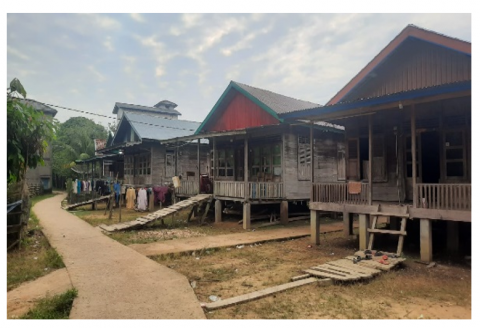
Peat forests are among the most biodiverse ecosystems, featuring plant species with significant potential for traditional medicine [12, 13]. For local communities (Figure 1), specific conditions that support a village near peatland areas (Figure 2) contribute to a cultural heritage rich in medicinal plants. These plants play a crucial role in their daily lives, particularly in traditional medical practices (ethnomedical practice). A study [14] indicated that most individuals prefer to use medication from doctors and access health facilities. However, further research is necessary to determine whether this trend applies to the OKH Forest Park peat ecosystem. The utilization pattern of medicinal plants can vary, with some communities increasingly relying on modern medicine. Previous research [10, 15] has identified the diversity of medicinal plant species in Seponjen Village, one of the buffer villages surrounding OKH Forest Park. However, this was still in the form of a rapid assessment. Therefore, more in-depth research is essential to explore the types and practices of utilization, as well as the significant value of these plant species for the communities surrounding the OKH Forest Park peat ecosystem.
Figure 1. Specific condition housing of village near peatland area
Ethnobotanical studies are an important approach to exploring local knowledge and community traditions related to the use of plants for various human needs, including medicinal purposes. This approach facilitates the investigation of medicinal plants and their utilization as integral components of a community's culture [15, 16]. The potential of medicinal plants in the OKH Forest Park’s peat ecosystem also contributes to efforts aimed at preserving biodiversity in the area. The presence of a unique, biodiverse peat ecosystem offers significant opportunities to explore the advantages of medicinal plants, both for health and for promoting ecosystem sustainability. However, peat ecosystems are threatened by human activities, such as land conversion and poor management practices. Therefore, it is essential to document and understand the community's use of medicinal plants to preserve local wisdom and support conservation efforts alongside the sustainable management of natural resources.
This study aims to identify the diversity of medicinal plant species utilized by the community in Seponjen Village and Tanjung Village, which are located in the OKH Forest Park area of Jambi Province. It is expected to provide scientific contributions by documenting the diversity of medicinal plants, enriching ethnobotanical knowledge, and encouraging the sustainable preservation of peat ecosystems.
Figure 2. The peatland area surrounding Orang Kayo Hitam Forest Park
This research was conducted in Tanjung Village and Seponjen Village, Kumpeh District, surrounding OKH Forest park and located on the border of Muaro Jambi Regency and East Tanjung Jabung, Jambi Province. These two villages were chosen because they are two of the seven buffer villages with easy accessibility to Tahura OKH.
The two research villages are low-lying and form a region with depressions that are consistently flooded each year. This area comprises peatland with a shallow water table ranging from 0.5 to 2.0 meters. The soil in these villages has an average pH of 6, while the pH of the water fluctuates between 5 and 6, indicating high acidity. Furthermore, the area receives monthly rainfall of 50 mm, maintains a humidity level of 40%, and has an average daily temperature of 26℃.
Tanjung and Seponjen villages showcase biodiversity through timber, medicinal plants, plantations, shrubs, bushes, and both protected and unprotected animals. The community typically cultivates a variety of medicinal plants that are effective in treating diseases such as fever, gout, allergies, and several other minor ailments. Plantation crops in these villages include oil palm, rubber, candlenut, areca nut, mango, rambutan, cocoa, durian, and lancome, all of which are highly productive. The animals found in the two villages and the bordering area adjacent to the OKH Forest Park include bears, macaques, root tigers, crocodiles, jungle cats, deer, and various species of birds.
2.1 Procedure
The research was conducted in two stages. The first stage, a pre-survey completed in September 2021, included a literature review to gather basic information on village conditions, local tribes and ethnicities, and forest areas. The second stage, conducted from October to November 2021, involved data collection through exploratory survey methods, interviews, and field surveys aimed at identifying medicinal plant species and their uses by the local community [14, 17].
This exploratory study sought to determine the level of community knowledge about various types of medicinal plants and their benefits, including those already known and those that are recognized but whose functions remain unclear. The study involved 30 respondents per village, totaling 60 participants. The minimum sample size of 30 individuals per site was selected to ensure statistical validity. Respondents were chosen from Tanjung and Seponjen villages and included individuals who utilize plants from their yards and those from within and around OKH Forest Park. In these two villages, some residents do not use plants for medicinal purposes, stating that purchasing medicine from stalls is easier and more affordable.
2.2 Data analysis
2.2.1 Use value of plant species (UVs)
Species utility values (UVs) are used to calculate the utility value of a plant used as medicine by the community around OKH Forest Park [15]. Here is the formula:
$U V s=\frac{\sum U V i s}{n i}$
where,
UVs: The utility value of plant types.
∑UVis: The number of uses mentioned for this one species.
ni: Total number of sources interviewed.
2.2.2 Plant part value
The calculation of the percentage of parts used (stems, leaves, roots, fruit, bark, wood, flowers) is conducted on plants utilized for medicinal purposes [15].
$P P V(\%)=\frac{\sum R U(\text { plantpart })}{\sum R U}$
where,
PPV: The value of using plant organs.
∑RU: The amount of use is quoted for each part of the plant.
3.1 Diversity of medicinal plant types
The residents of Tanjung Village and Seponjen Village, located in the Kumpeh District of Muaro Jambi Regency, utilize 50 medicinal plants species from 31 families (Table 1). Each of the village recognize 22 and 44 species, respectively, with some species found at both of the study locations. This usage demonstrates that traditional medicine remains a vital aspect of the community surrounding OKH Forest Park. Medicinal plants are sourced from various locations, including fields, forests, yards, roadsides, and cultivated areas. Tradition and experiences passed down through generations shape their methods of processing. This highlights the importance of the ecosystem surrounding OKH Forest Park as a provider of natural resources that support the health needs of local communities.
Table 1. List of diversity of types of medicinal plants utilized by the community in Tanjung village and Seponjen village, Kumpeh district and Surrounding OKH Forest Park
|
No. |
Family |
Scientific Name |
Local Name |
Common Name |
Tanjung Village |
Seponjen Village |
|
1. |
Acoraceae |
Acorus calamus |
Jeringau |
Sweet flag |
√ |
|
|
2. |
Amaryllidaceae |
Allium ascalonicum |
Bawang merah |
Shallot |
√ |
|
|
3. |
Amaryllidaceae |
Allium sativum |
Bawang putih |
Garlic |
√ |
|
|
4. |
Annonaceae |
Annona muricata |
Sirsak |
Soursop |
√ |
√ |
|
5. |
Apiaceae |
Apium graveolens |
Seledri |
Wild celery |
√ |
|
|
6. |
Apiaceae |
Centella asiatica |
Pegago/gotu kola |
Asiatic pennywort |
√ |
|
|
7. |
Apocynaceae |
Alstonia scholaris |
Pulai |
Blackboard tree |
√ |
|
|
8. |
Araceae |
Alocasia cuprea |
Keladi hitam, keladi tengkorak |
Elephant Ear |
√ |
|
|
9. |
Arecaceae |
Areca catechu |
Palem kuning |
Betel nut |
√ |
|
|
10. |
Arecaceae |
Cocos nucifera |
Kelapa |
Coconut |
√ |
|
|
11. |
Balsamaceae |
Impatiens balsam |
Pacar air |
Garden balsam |
√ |
|
|
12. |
Caricaceae |
Carica papaya |
Pepaya |
Papaya, pawpaw, melon tree, and betik |
√ |
√ |
|
13. |
Convolvulaceae |
Convolvulus batatas |
Ubi jalar |
Sweet Potato |
√ |
√ |
|
14. |
Cucurbitaceae |
Momordica balsamina |
Peria hutan or pare alas |
Balsam apple, African cucumber, and southern balsam pear |
√ |
|
|
15. |
Cucurbitaceae |
Momordica charantia |
Pare |
Bitter melon, bitter gourd, balsam pear, kugua, or karela |
√ |
|
|
16. |
Euphorbiaceae |
Jatropha multifida |
Jarak tintir, tanaman Betadine |
Coral plant |
√ |
√ |
|
17. |
Fabaceae |
Indigofera tinctoria |
Tarum |
True indigo |
√ |
|
|
18. |
Fabaceae |
Mimosa pudica |
Putri malu |
Sensitive plants, mimosa |
√ |
|
|
19. |
Fabaceae |
Senna alata |
Ketepeng/wood leaf |
Senna plant |
√ |
√ |
|
20. |
Guttiferae |
Garcinia mangostana |
Manggis |
Mangosteen, Manggis, Mesetor, Sementah, Semetah |
√ |
|
|
21. |
Lamiaceae |
Orthosiphon aristatus |
Kumis kucing |
Kidneys Tea Plant, Cat whiskers |
√ |
|
|
22. |
Malvaceae |
Ceiba pentandra |
Kapuk |
Silk-cotton tree, Java cotton, or Java kapok |
√ |
√ |
|
23. |
Malvaceae |
Hibiscus rosa-sinensis |
Kembang sepatu |
Chinese hibiscus |
√ |
|
|
24. |
Meliaceae |
Lansium domesticum |
Duku |
Lancome |
√ |
√ |
|
25. |
Menispermaceae |
Tinospora cordifolia |
Brotowali |
heart-leaved moonseed |
√ |
|
|
26. |
Muntingiaceae |
Muntingia calabura |
Buah seri |
Calabura, Jamaica cherry, Singapore cherry, Strawberry tree, Capulin, Panama berry, West Indian cherry, Malayan cherry |
√ |
√ |
|
27. |
Myrtaceae |
Psidium guajava |
Jambu biji |
Guava |
√ |
√ |
|
28. |
Myrtaceae |
Syzygium polyanthum |
Daun salam |
Bay leaves |
√ |
√ |
|
29. |
Nepenthaceae |
Nepenthes dubia |
Kantong semar |
Tropical pitcher plant |
√ |
|
|
30. |
Nyctaginaceae |
Bougainvillea glabra |
Bunga kertas |
Bougainvillea, lesser bougainvillea, and paperflower |
√ |
|
|
31. |
Phyllanthaceae |
Phyllanthus urinaria |
Meniran |
Chamber bitter, gripeweed, shatterstone, stonebreaker or leafflower |
√ |
|
|
32. |
Phyllanthaceae |
Sauropus androgynus |
Daun katuk |
Cactus |
√ |
|
|
33. |
Piperaceae |
Peperomia pellucida |
Ketumpangan air |
Pepper-elder |
√ |
|
|
34. |
Piperaceae |
Piper betle |
Sirih hijau |
Green betle |
√ |
√ |
|
35. |
Piperaceae |
Piper nigrum |
Lada hitam |
Black pepper |
√ |
|
|
36. |
Piperaceae |
Piper ornatum |
Red betle |
Celebes Pepper, Ornamental Pepper Vine, Red Betel |
√ |
|
|
37. |
Poaceae |
Cymbopogon citratus |
Sereh or serai |
Lemongrass, Oil grass, West Indian lemon grass, Fever grass |
√ |
|
|
38. |
Poaceae |
Imperata cylindrica |
Alang-alang |
Tendrils |
√ |
|
|
39. |
Rubiaceae |
Gardenia jasminoides |
Kacapiring wangi |
Cape jasmine |
√ |
|
|
40. |
Rubiaceae |
Morinda citrifolia |
Mengkudu |
Noni, Indian mulberry |
√ |
√ |
|
41. |
Rutaceae |
Citrus aurantifolia |
Jeruk nipis |
Keylime |
√ |
|
|
42. |
Sapotaceae |
Manilkara zapota |
Sawo manila |
Sapodilla |
√ |
|
|
43. |
Simaroubaceae |
Eurycoma longifolia |
Pasak bumi |
Longjack |
√ |
|
|
44. |
Verbenaceae |
Peronema canescens |
Sungkai |
Sungkai, False Elder, Kurus, Jati Sabrang, Sukai, Cherek |
√ |
√ |
|
45. |
Zingiberaceae |
Curcuma longa |
Kunyit |
Turmeric |
√ |
√ |
|
46. |
Zingiberaceae |
Curcuma xanthorrhiza |
Temulawak |
Javanese turmeric |
√ |
|
|
47. |
Zingiberaceae |
Kaempferia galanga |
Kencur |
Sand ginger, Aromatic ginger |
√ |
|
|
48. |
Zingiberaceae |
Zingiber cassumunar |
Bangle or bonglai |
Bangle, plai, and cassumunar ginger |
√ |
√ |
|
49. |
Zingiberaceae |
Zingiber officinale |
Jahe |
Ginger, Halia |
√ |
|
|
50. |
Zingiberaceae |
Zingiber spp. |
Temu-temuan |
Aromatic ginger |
√ |
√ |
|
Total species found |
22 |
44 |
||||
3.2 Use value of plant species (UVs)
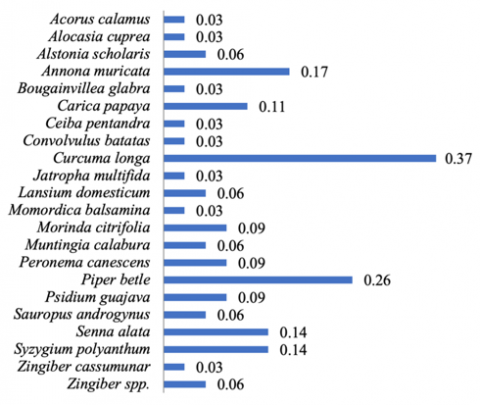
According to the analysis of the usage values of plant species (UVs) in Tanjung village (Figure 3), turmeric (Curcuma longa) has the highest UVs value at 0.37, followed by green betel (Piper betle) with a value of 0.26, and soursop (Annona muricata) at 0.17. Additionally, both ketepeng (Senna alata) and bay leaves (Syzygium polyanthum) have a UVs value of 0.14, while papaya (Carica papaya) has a value of 0.11.
Figure 3. The utility value of medicinal plant species used as medicine in Tanjung village
Figure 4. The utility value of medicinal plant species used as medicine in Seponjen village
Other plant species, including guava (Psidium guajava) and noni (Morinda citrifolia), exhibit lower values, specifically 0.09. Plants with even lower UV values, such as Lancome (Lansium domesticum), blackboard tree (Alstonia scholaris), and katuk leaves (Sauropus androgynus), each possess a value of 0.06. Additionally, several other species, including sweet flag (Acorus calamus) and Chinese hibiscus, only have a UV value of 0.03. These data indicate that turmeric is the plant most widely used by the people of Tanjung Village compared to other species.
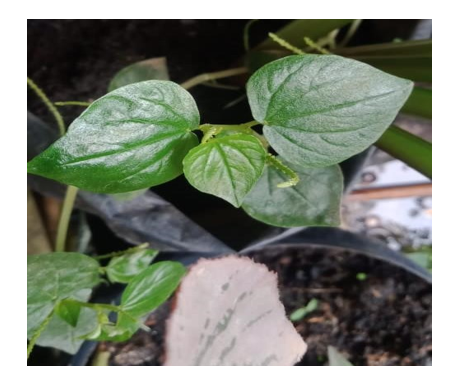
In Seponjen village, the analysis results showed that turmeric (C. longa) had the highest UVs value of 0.27 (Figure 4). Other plants with high UV values were ginger (Z. officinale) at 0.23, soursop (A. muricata) with a value of 0.20, and sand ginger (Kaempferia galanga) and lemongrass (Cymbopogon citratus) each at 0.17. In addition, several other species that had moderate UVs values included heart-leaved moonseed (Tinospora cordifolia), keylime (Citrus aurantifolia), papaya leaves (C. papaya), and pepper-elder (Peperomia pellucida) each of which had a value of 0.10 (Figure 5). Plants with lower UVs values, such as guava (P. guajava), ketepeng leaves (S. alata), and Kidneys tea plant (Orthosiphon aristatus), had a value of 0.07. In contrast, other species, such as Chinese hibiscus (Hibiscus rosa-sinensis) and ferns, only achieved UV values of 0.03.
Figure 5. Pepper-elder (Peperomia pellucida) whose leaves are used for medicine
Based on the results of the UV analysis, it is known that turmeric (C. longa) has the highest value in the two research villages, specifically 0.37 in Tanjung and 0.27 in Seponjen. This is understandable because turmeric contains antioxidants needed by humans [18]. Regular consumption of turmeric will help stabilize blood sugar levels [19]. Additionally, turmeric contains Staphylococcus aureus and Escherichia coli bacteria, which can offer an alternative for overcoming infections and reducing antibiotic resistance [20].
The second level of utility value for medicinal plants in Tanjung is P. betle (0.26), while in Seponjen, it is Z. officinale (0.23). A difference between the types of medicinal plants in Tanjung and Seponjen occurs only at the second level. This situation may arise from variations in preferences, favorites, or habits among the community members. In Tanjung village, P. battle ranks at the second level because many women there still chew betel, unlike the women in Seponjen. In Seponjen, Z. officinale holds the second position since the community tends to use this plant type when family members, including children, are sick with influenza, particularly when they have a cough. A. muricata is the third-level plant in both Tanjung and Seponjen. The community prefers A. muricata as a medicinal plant due to its fresh taste and fruit form, making it suitable for areas around peat, which has an average temperature of 26-27℃. Additionally, this fruit has anti-bacterial, anti-oxidant, and anti-inflammatory properties, helping to ward off cancer [19, 20].
3.3 Plant part value (PPV)
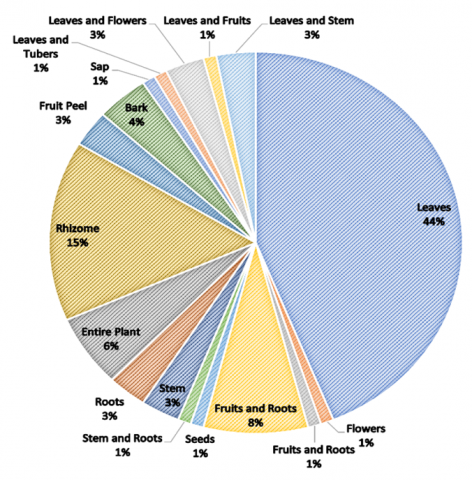
Based on the analysis of Figure 6, the community surrounding OKH Tahura utilizes various parts of plants for medicinal purposes. Below is a comprehensive breakdown of the percentage of each plant part used as medicine:
Leaves: 43% (for external and internal use)
Rhizome: 15% (for external and internal use)
Fruit: 8% (for internal use)
Whole Plant: 6% (for external and internal use)
Bark: 4% (for external use)
Fruit Peel: 3% (for internal use)
Root: 3% (for external and internal use)
Leaves and Stem: 3% (for external and internal use)
Leaves and Fruit: 3% (for internal use)
Leaves and Flowers: 3% (for external use)
Stem: 3% (for internal use)
Sap: 1% (for external use)
Leaves and Tuber: 1% (for internal use)
Flower: 1% (for external and internal use)
Seed: 1% (for internal use)
Stem and Root: 1% (for internal use)
Fruit and Roots: 1% (for internal use)
Figure 6. The value of using plant parts by the people of Seponjen village and Tanjung village
4.1 Diversity of medicinal plants
The diversity of medicinal plants utilized by the community in Tanjung Village and Seponjen Village, Kumpeh District, Muaro Jambi Regency, is very high, with 66 types of plants from 42 families recorded. This indicates that traditional plant-based medicine remains a vital aspect of the lives of the surrounding community. This situation is similar to that observed in Bangladesh, Bhutan, and Nigeria [4-6].
Some of the dominant plant families in Tanjung and Seponjen include Zingiberaceae and Fabaceae. The Zingiberaceae family, which includes turmeric (C. longa), ginger (Zingiber officinale), temulawak (Curcuma xanthorrhiza), and galangal (Alpinia galanga), are frequently used for their anti-inflammatory, antimicrobial, and pain-relieving properties. Meanwhile, Fabaceae plants like ketepeng (S. alata), saga (Adenanthera pavonina), and putri malu (Mimosa pudica) serve various purposes, ranging from treating skin diseases to managing diabetes.
These medicinal plants are sourced from various habitats, including yards, fields, and forests. Some examples of plants frequently cultivated in yards are shallots (Allium ascalonicum), lemongrass (C. citratus), and lime (C. aurantifolia). Plants like soursop (A. muricata), heart-leaved moonseed (T. cordifolia), and pasak bumi (Eurycoma longifolia) are commonly found in fields or forests, highlighting the community's reliance on natural ecosystems. Additionally, wild plants such as pegagan (Centella asiatica) and meniran (Phyllanthus urinaria) are often utilized for basic treatments due to their natural growth around settlements.
The community utilizes these medicinal plants for various purposes, addressing both general and specific diseases. For instance, turmeric, temulawak, and ginger are employed to boost immunity and combat inflammation, while ketepeng is frequently utilized to treat skin conditions. The knowledge regarding the processing of these plants is transmitted from generation to generation, highlighting tradition's significant role in maintaining local communities' health. Caballero-Serrano et al. [21] stated that the generational knowledge in the use of medicinal plants in Ecuador will ensure the preservation of existing medicinal wisdom
This aligns with research [22], various tribes in Indonesia utilize herbal medicine as part of their healing tradition, addressing both internal and external treatments, as is also the case in Bhutan [4] and Ecuador [21]. The herbal plants employed typically use various parts of the plants, including fruit, flowers, stems, and sap. The benefits of this herbal medicine include its abundant availability, relatively affordable costs compared to synthetic drugs, and minimal side effects. It not only reflects rich local wisdom but also highlights the important role of plants as environmentally friendly and economical health solutions in many countries, including Indonesia [23].
The OKH Forest Park ecosystem is crucial as a provider of natural resources, including medicinal plants. The variety of plant types demonstrates the richness of biodiversity that supports the needs of the local community. However, the utilization of wild plants, such as the Tropical pitcher plant (Nepenthes dubia), highlights the significance of conservation efforts to maintain the sustainability of this ecosystem. Therefore, protecting the OKH Forest Park ecosystem and empowering the community in the use of medicinal plants is essential. Conserving biodiversity is vital to support the sustainability of life on Earth [24, 25].
4.2 Use value of plant species (UVs)
The results of the analysis of the use value of plant species (UVs) in Tanjung Village indicate that turmeric (C. longa) stands out with the highest UVs value of 0.37, followed by green betel leaves (P. betle) with a value of 0.26. This reflects the high level of utilization of turmeric as both a traditional medicine and a primary spice. Soursop leaves (A. muricata), ketepeng leaves (S. alata), and bay leaves (S. polyanthum) also play significant roles, with UVs values of 0.17 and 0.14, respectively. These plants are frequently used in herbal medicine and various household needs.
Meanwhile, in Seponjen Village, turmeric (C. longa) again emerges as the species with the highest UVs value of 0.27, followed by ginger (Z. officinale), which holds a value of 0.23. These two species highlight the importance of spices in daily life, serving as both cooking ingredients and medicinal resources. Soursop leaves (A. muricata) have a UVs value of 0.20, while kencur (K. galanga) and lemongrass (C. citratus) each have values of 0.17, showcasing the diversification of plant use in this village.
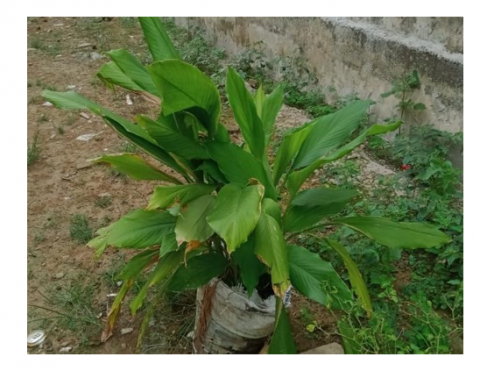
Turmeric (Figure 7) is the most commonly utilized plant for traditional medicine in both villages. Residents of Tanjung Village and Seponjen Village use turmeric to address a variety of ailments. Furthermore, turmeric is easy to cultivate, requiring neither extensive land nor complicated maintenance, making it readily available to the local community. The UVs of A. muricata ranks third in both Tanjung and Seponjen, reflecting its popularity among the community due to its accessibility and suitability for medicinal use. In Ecuador, A. muricata is also widely employed for medicinal purposes by numerous ethnic groups [21].
Figure 7. The highest value of plant species (UVs) is turmeric (Curcuma longa)
The use of medicinal plants to support women's reproductive health holds significant value in many traditional communities, including groups like the Orang Rimba. Piper spp. is a widely used medicinal plant for this purpose in Indonesia, Ecuador, Thailand, and Ukraine. A previous study noted that this community utilizes certain plant species to aid various aspects of women's reproduction, such as accelerating the labor process, alleviating postpartum pain, and preventing postpartum nausea [26]. Luvunga sarmentosa is prepared by boiling the leaves for mothers who are about to give birth. Other species, such as Xanthophyllum vitellinum, serve similar purposes. This tradition exemplifies the strong connection between plant usage and local cultural practices, such as celebrating the birth of a child with the sentubung tree.
The Tamambaloh Dayak tribe utilizes all parts of the plant- from roots and stems to leaves, flowers, fruits, and seeds- to meet their traditional health needs [27]. Similar research in Yunnan, China, also reported the use of various parts of the plant, including roots, rhizomes, stems, bark, leaves, flowers, and fruits in traditional medicine practices [28]. In Malaysia, people not only use leaves, flowers, roots, bark, fruits, and seeds as traditional medicine but also as cosmetic ingredients [29]. Meanwhile, residents of Ban Hua Kua Village in Kae Dam District, Maha Sarakham Province, Thailand, utilize roots, leaves, fruits, bark, young stems, flowers, and rhizomes for traditional medicine purposes [30]. This reflects the similarity in the patterns of plant use among various communities for health, demonstrating local wisdom and the importance of biodiversity in the Asian region.
4.3 Plant part value (PPV)
Analyzing other plant parts, such as bark, fruit skin, roots, and others, reveals a smaller percentage of use. The data indicates that leaves are the most widely utilized part of the plant at 43%, followed by rhizomes at 15%, and fruits at only 8%. The various uses of this plant reflect the local knowledge of communities in many countries, including India [31] and Iran [32]. It has also been found around OKH Forest Park, particularly regarding the use of natural resources for traditional medicine purposes. This information can be valuable for preserving traditional knowledge and furthering research on the potential of medicinal plants area.
Leaves are the part of the plant most often used as medicine because they serve as a site for collecting organic and therapeutic compounds produced through photosynthesis. In many countries worldwide, flowers and leaves are commonly utilized as medicine. Leaves contain a variety of substances, including essential oils, phenols, potassium compounds, and chlorophyll. Medically, chlorophyll is known to be effective in treating anemia. Additionally, leaves are also rich in flavonoids, which assist in the absorption of vitamin C, help prevent and treat allergies and viral infections, and aid in repairing cells damaged by free radicals [33].
The rhizome of the plant possesses various herbal qualities, such as anti-inflammatory, expectorant, carminative, laxative, blood purifying, and antidysenteric properties [34, 35]. For instance, lime exhibits antibacterial, antiviral, astringent, hemostatic, restorative, and tonic characteristics. The hemostatic properties of lime help halt bleeding, while its tonic properties serve to strengthen and enhance the body's resistance [10, 34]. In Ukraine, certain plants are valued in trade for their aromatic qualities [6].
Despite the rapid development of the pharmaceutical industry and easier access to pharmacies, the use of natural medicine and traditional knowledge persists in the community [13]. Traditional medicine is part of a rich culture, producing local knowledge and wisdom and maintaining cultural wealth and deep life values [36, 37].
Public acceptance of medicinal plants is quite strong, especially in countries with a cultural heritage of herbal medicine, such as Indonesia [38]. Despite the growing trend of using modern medicine, many individuals continue to prefer medicinal plants for economic reasons, local availability, and their belief in the natural benefits, which are considered to have fewer side effects [39]. Awareness of healthy lifestyles and a tendency to return to nature increasingly encourage younger generations to accept and even promote The Jamu as a health option. This belief continues to grow alongside improvements in the quality and standardization of herbal medicines and the publication of scientific research demonstrating their effectiveness, ensuring that the acceptance of herbal medicine in society reaches a balance between local wisdom and scientific validation [40, 41].
The popularity of medicinal plants is not confined to rural communities; it is increasingly widespread in urban areas, where lifestyle changes and health awareness are driving a growing interest in herbal medicine [35, 42]. In large cities, Jamu has modernized with more practical presentations and packaging, appealing to younger generations and busy professionals. However, in rural areas, Jamu remains closely tied to tradition and is still often made directly from fresh ingredients [41-44]. This positive trend shows that herbal medicine is effectively bridging the gap between tradition and modernity, ensuring its significance in a diverse society [38]. The online availability and promotion through social media further enhance the reach of jamu, reinforcing its status as a vibrant and adaptable cultural heritage capable of thriving in the era of globalization [45].
4.4 Herbal medicine policy in Indonesia
Several policies have been implemented to support the existence of traditional medicine in Indonesia. This is highlighted by the issuance of various regulations, including the herbal medical service standards outlined in the Decree of the Minister of Health of the Republic of Indonesia No. 121 / Menkes / SK / II / 2008, followed by the Decree of the Minister of Health of the Republic of Indonesia No. 261/Menkes/SK/IV/2009 regarding the Indonesian Herbal Pharmacopoeia, first edition
According to Nugroho [32], in Indonesia there is not only a policy to use traditional medicine in financing the National Health Insurance. This is stated in the Regulation of the Minister of Health of the Republic of Indonesia No. 6 of 2022 concerning the Use of Services and Support for Health Service Operational Costs in the Utilization of Capitation Funds for National Health Insurance. Other policies also support the use of herbal medicine, namely at First Level Health Facilities Owned by Local Governments (Permenkes RI No. 6 of 2022) and Regulation of the Minister of Health of the Republic of Indonesia No. 82 of 2015 concerning Technical Guidelines for the Use of Special Allocation Funds for the Health Sector, as well as Facilities and Infrastructure Supporting the Health Infrastructure Subfield for the 2016 Budget Year. This policy allows the use of other medicines, including traditional medicines, standardized herbal medicines, and phytopreparations according to medical indications [42].
This study shows that the people of Tanjung Village and Seponjen Village in Kumpeh District, Muaro Jambi Regency, utilize a diverse range of medicinal plants, specifically 66 species from 42 families. The use of medicinal plants remains an important aspect of the local community's traditional medicine system, with the primary sources of these plants coming from fields, forests, yards, and wild plants surrounding the OKH Forest Park area. The process of processing these plants is carried out traditionally, based on knowledge passed down through generations.
Several dominant types of medicinal plants belong to the Zingiberaceae, Fabaceae, and Piperaceae families, offering extensive benefits for treating common ailments such as digestive disorders, inflammation, and skin infections. The use of these medicinal plants reflects the community's reliance on local ecosystems as providers of natural resources essential for health.
As suggested by experts, a unique protection system is necessary to safeguard the sustainability of medicinal plants. This protection could take the form of regulations to prevent overexploitation of medicinal plants and avoid monopolizing the trade of any one type of medicinal plant. These measures are crucial to ensure that individuals who depend on herbal medicine can continue to access it as needed, particularly because it is affordable and readily available.
[1] Shedayi, A.A., Xu, M., Hussain, F., Sadia, S., Naseer, I., Bano, S. (2016). Threatened plant resources: distribution and ecosystem services in the world’s high elevation park of the Karakoram ranges. Pakistan Journal of Botany, 48(3): 999-1012.
[2] Hapid, A., Ariyanti, A., Erniwati, E., Suena, N.M.D.S., Adrianta, K.A., Yuniarti, K., Muthmainnah, M. (2023). Diversity of types of medicinal plants and local wisdom of the kaili tribe in processing medicinal plants around the forest areas of Central Sulawesi, Indonesia. Pharmacognosy Journal, 15(4): 535-540.
[3] Cakilcioglu, U., Khatun, S., Turkoglu, I., Hayta, S. (2011). Ethnopharmacological survey of medicinal plants in Maden (Elazig-Turkey). Journal of Ethnopharmacology, 137(1): 469-486. https://doi.org/10.1016/j.jep.2011.05.046
[4] Wangchuk, P., Tobgay, T. (2015). Contributions of medicinal plants to the Gross National Happiness and Biodiscovery in Bhutan. Journal of Ethnobiology and Ethnomedicine, 11: 48. https://doi.org/10.1186/s13002-015-0035-1
[5] Bari, M.R., Miah, M.A.A.M.G., Rishad, M., Uddin, A.M.J. (2017). Medicinal plants and their contribution in socio-economic condition of the household in Haluaghat upazila, Mymensingh. International Journal of Business, Management and Social Research, 4(1): 215-228. https://doi.org/10.18801/ijbmsr.040117.25
[6] Mirzoieva, T., Heraimovych, V., Humeniuk, I., Tomashevska, O., Cherednichenko, O. (2020). Economical assessment of medicinal plants market concentration and monopolization level in Ukraine. E3S Web of Conferences, 164: 09025. https://doi.org/10.1051/e3sconf/202016409025
[7] Abisoye, R.T., Oyerinde, V.O., Atanda, A.T., Adekungbe, A.O., Adigun, H. (2021). Evaluation of medicinal plant trade contribution, and challenges affecting its conservation in the urban livelihood of Ibadan and Ogbomoso Metropolis, Nigeria. Journal of Applied Sciences and Environmental Management, 25(12): 2065-2070. https://doi.org/10.4314/jasem.v25i12.11
[8] Volenzo, T., Odiyo, J. (2020). Integrating endemic medicinal plants into the global value chains: The ecological degradation challenges and opportunities. Heliyon, 6(9): e04970. https://doi.org/10.1016/j.heliyon.2020.e04970
[9] Asigbaase, M., Adusu, D., Anaba, L., Abugre, S., et al. (2023). Conservation and economic benefits of medicinal plants: Insights from forest-fringe communities of Southwestern Ghana. Trees, Forests and People, 14: 100462. https://doi.org/10.1016/j.tfp.2023.100462
[10] Dsouza, A., Dixon, M., Shukla, M., Graham, T. (2025). Harnessing controlled-environment systems for enhanced production of medicinal plants. Journal of Experimental Botany, 76(1): 76-93. https://doi.org/10.1093/jxb/erae248
[11] Wulandari, C., Novriyanti, N., Iswandaru, D. (2021). Integrating ecological, social and policy aspects to develop peatland restoration strategies in Orang Kayo Hitam Forest Park, Jambi, Indonesia. Biodiversitas Journal of Biological Diversity, 22(10): 4158-4168. https://doi.org/10.13057/biodiv/d221005
[12] Sucholas, J., Molnár, Z., Łuczaj, Ł., Poschlod, P. (2022). Local traditional ecological knowledge about hay management practices in wetlands of the Biebrza Valley, Poland. Journal of Ethnobiology and Ethnomedicine, 18(1): 9. https://doi.org/10.1186/s13002-022-00509-9
[13] Pranskuniene, Z., Dauliute, R., Pranskunas, A., Bernatoniene, J. (2018). Ethnopharmaceutical knowledge in Samogitia region of Lithuania: Where old traditions overlap with modern medicine. Journal of Ethnobiology and Ethnomedicine, 14: 70. https://doi.org/10.1186/s13002-018-0268-x
[14] Novriyanti, N., Nursanti, N., Wulan, C. (2021). Do women have a piece of traditional knowledge on medicinal plants? A case study around Jambi urban forest, Indonesia. Asian Journal of Ethnobiology, 4(2): 115-119.
[15] Eldeen, I.M., Effendy, M.A., Tengku-Muhammad, T.S. (2016). Ethnobotany: Challenges and future perspectives. Research Journal of Medicinal Plants, 10(6-7): 382-387. https://doi.org/10.3923/rjmp.2016.382.387
[16] Elfrida, E., Tarigan, N.S., Suwardi, A.B. (2021). Ethnobotanical study of medicinal plants used by community in Jambur Labu Village, East Aceh, Indonesia. Biodiversitas Journal of Biological Diversity, 22(7): 2893-2900. https://doi.org/10.13057/biodiv/d220741
[17] Hakim, L. (2014). Ethnobotany and Home Garden Management: Food Security, Health and Agro-Tourism. Selaras, Malang.
[18] Suprihatin, T., Rahayu, S., Rifa'i, M., Widyarti, S. (2020). Senyawa pada serbuk rimpang kunyit (Curcuma longa L.) yang berpotensi sebagai antioksidan. Buletin Anatomi dan Fisiologi, 5(1): 35-42. https://doi.org/10.14710/baf.5.1.2020.35-42
[19] Prabowo, H., Cahya, I.A.P.D., Arisanti, C.I.S., Samirana, P.O. (2019). Standardisasi Spesifik dan Non-Spesifik Simplisia dan Ekstrak Etanol 96% Rimpang Kunyit (Curcuma domestica Val.). Jurnal Farmasi Udayana, 8(1): 29-35. https://doi.org/10.24843/JFU.2019.v08.i01.p05
[20] Afriyana, R., Junando, M., Nurmasuri, N. (2023). Potensial ekstrak herbal kunyit (Curcuma Longa) sebagai anti bakteri dan anti Inflamasi. Jurnal Kesehatan dan Agromedicine, 10(1): 128-132.
[21] Caballero-Serrano, V., McLaren, B., Carrasco, J.C., Alday, J.G., et al. (2019). Traditional ecological knowledge and medicinal plant diversity in Ecuadorian Amazon home gardens. Global Ecology and Conservation, 17: e00524. https://doi.org/10.1016/j.gecco.2019.e00524
[22] Ulya, N.A., Martin, E., Rahmat, M., Premono, B.T., et al. (2022). Enabling factors of NTFP business development for ecosystem restoration: The case of tamanu oil in Indonesian degraded peatland. Sustainability, 14(17): 10681. https://doi.org/10.3390/su141710681
[23] Mosihuzzaman, M. (2012). Herbal medicine in healthcare-an overview. Natural Product Communications, 7(6): 1934578X1200700628. https://doi.org/10.1177/1934578X1200700628
[24] Chotimah, H.E., Kresnatita, S., Miranda, Y. (2013). Ethnobotanical study and nutrient content of local vegetables consumed in Central Kalimantan, Indonesia. Biodiversitas Journal of Biological Diversity, 14(2): 106-111. https://doi.org/10.13057/biodiv/d140209
[25] Kadir, A., Suharno, S., Reawaruw, Y., Komari, K., Mahuze, A. (2022). Ethnobotanical knowledge of Marind-Anim tribe in utilizing sago (Metroxylon Sagu) in Merauke, Papua, Indonesia. Biodiversitas Journal of Biological Diversity, 23(1): 264-272. https://doi.org/10.13057/biodiv/d230132
[26] Sari, Y.M., Novriyanti, N. (2023). Menstrual health problems of women indigenous peoples around protected forest area in Sumatra, Indonesia, and Plants’ Usefulness to Treat It. Journal of Mother and Child, 27(1): 1-9. https://doi.org/10.34763/jmotherandchild.20222601.d-22-00064
[27] Syafruddin, D., Supiandi, M. I., Gandasari, A., Mahanal, S., Zubaidah, S. (2022). Potential of medicinal plants against cancer and tumors: Ethnobotanical study of the Dayak Tamambaloh Tribe, Indonesia. Journal of Pharmaceutical Negative Results, 13(4): 1514-1520. https://doi.org/10.47750/pnr.2022.13.04.213
[28] Xiong, Y., Sui, X., Ahmed, S., Wang, Z., Long, C. (2020). Ethnobotany and diversity of medicinal plants used by the Buyi in eastern Yunnan, China. Plant Diversity, 42(6): 401-414. https://doi.org/10.1016/j.pld.2020.09.004
[29] Ibrahim, N.D., Seow, L.J., Sekar, M., Rani, N.N.I.M., Lum, P.T. (2022). Ten commonly available medicinal plants in Malaysia with potential sun protection factor and antioxidant properties–A review. Pharmacognosy Journal, 14(2): 444-455. https://doi.org/10.5530/pj.2022.14.57
[30] Numpulsuksant, W., Saensouk, S., Saensouk, P. (2021). Diversity and ethnobotanical study of medicinal plants in Ban Hua Kua, Kae Dam District, Thailand. Biodiversitas Journal of Biological Diversity, 22(10): 4349-4357. https://doi.org/10.13057/biodiv/d221027
[31] Lal, M., Chandraker, S.K., Shukla, R. (2023). Quantitative ethnobotanical study of therapeutic plants of Amarkantak hills in Achanakmar-Amarkantak Biosphere Reserve, Central India. Acta Ecologica Sinica, 43(1): 139-153. https://doi.org/10.1016/j.chnaes.2022.03.002
[32] Nugroho, A.P. (2022). Kebijakan afirmatif untuk obat tradisional di Indonesia. Kajian, 27(1): 57-70. https://doi.org/10.22212/kajian.v27i1.3590
[33] Mansur, M., Rode-Margono, E.J., Esseen, P.J., Brearley, F.Q., Jakalalana, S., Rachmat, F., Haqet, R.J.N. (2020). Diversity, abundance and ethnobotany of nepenthes in Mandor nature reserve, West Kalimantan, Indonesia. Planta Carnivora Journal, 41(1): 12-26.
[34] Mulyani, H., Widyastuti, S. H., Ekowati, V. I. (2016). Herbal plants as traditional herbal medicine for treating diseases in the Javanese primbon jampi fiber volume I. Journal of Humanities Research, 21(2): 73-91.
[35] Fatmawati, I., Wijaya, N.Q. (2021). Strategi pengembangan jamu ramuan Madura di Kabupaten Sumenep. Jurnal Pertanian Cemara, 18(1): 50-63. https://doi.org/10.24929/fp.v18i1.1365
[36] Soekarba, S.R. (2018). The idea of pluralism in Indonesian society: A case study of Cirebon city as a cultural melting pot. Journal of Strategic and Global Studies, 1(1): 5. https://doi.org/10.7454/jsgs.v1i1.1004
[37] Touwe, S. (2020). Local wisdom values of maritime community in preserving marine resources in Indonesia. Journal of Maritime Studies and National Integration, 4(2): 84-94. https://doi.org/10.14710/jmsni.v4i2.4812
[38] A., Murdiono, J., Mulyanti, R. (2023). Improving local wisdom and local culture in the 5.0 era. Dinasti Information and Technology, 1(2): 44-49. https://doi.org/10.38035/dit.v1i2.296
[39] Pesurnay, A.J. (2018). Local wisdom in a new paradigm: Applying system theory to the study of local culture in Indonesia. IOP Conference Series: Earth and Environmental Science, 175(1): 12037. https://doi.org/10.1088/1755-1315/175/1/012037
[40] Gitawati, R., Widowati, L. (2015). Penggunaan jamu pada pasien hiperlipidemia berdasarkan data rekam medik, di beberapa fasilitas pelayanan Kesehatan di Indonesia. Jurnal Kefarmasian Indonesia, 5(1): 41-48.
[41] Andriati, A., Wahjudi, R.T. (2016). Tingkat penerimaan penggunaan jamu sebagai alternatif penggunaan obat modern pada masyarakat ekonomi rendah-menengah dan atas. Masyarakat, Kebudayaan dan Politik, 29(3): 133-145.
[42] Ghorbani, A. (2005). Studies on pharmaceutical ethnobotany in the region of Turkmen Sahra, north of Iran:(Part 1): General results. Journal of Ethnopharmacology, 102(1): 58-68. https://doi.org/10.1016/j.jep.2005.05.035
[43] Wulandari, C., Fadli, N.A., Erdian, Z., Budiono, P., Puspasari, E., Novriyanti., Rizaldi, A., Apriliani, A.P., Sari, F.Y. (2024). Ethnobotanical knowledge based on index of cultural significance in preserving the function of way betung watershed. African Journal of Biological Sciences, 6(13): 1650-1661. https://doi.org/10.33472/AFJBS.6.13.2024.1650-1661
[44] Arum, G.P.F., Amin, R., Andin, I. (2012). Ethnobotany of medicinal plants of the Keseneng Village community, Sumowono District, Semarang Regency, Central Java. Unnes Journal of Life Science, 1(2): 126-132. https://journal.unnes.ac.id/sju/UnnesJLifeSci/article/view/996.
[45] Cebrián-Piqueras, M.A., Filyushkina, A., Johnson, D.N., Lo, V.B., et al. (2020). Scientific and local ecological knowledge, shaping perceptions towards protected areas and related ecosystem services. Landscape Ecology, 35(11): 2549-2567. https://doi.org/10.1007/s10980-020-01107-4