Self-Nanoemulsifying Drug Delivery System (SNEDDS) for Antidiabetic Formulation from Mahogany Seeds (Swietenia Mahagoni Jacq) and Moringa oleifera

Hartati Hartati* | Hartono Hartono | Hilda Karim | Suriati Eka Putri | Sahribulan Sahribulan | Kusdianawati Kusdianawati | Satria Putra Jaya Negara
© 2025 The authors. This article is published by IIETA and is licensed under the CC BY 4.0 license (http://creativecommons.org/licenses/by/4.0/).
OPEN ACCESS
This study aims to produce a Self-Nanoemulsifying Drug Delivery System (SNEDDS) formulation of containing a combination of mahogany seed and moringa leaf extracts with antidiabetic activity. The research was conducted by extracting mahogany seeds via Soxhlet extraction and moringa leaves via maceration. SNEDDS was prepared by mixing mahogany seed and moringa leaf extracts with surfactant (Tween 80) and cosurfactant (PEG 400), followed by characterization using a Particle Size Analyzer (PSA). Furthermore, the antidiabetic activity test of SNEDDS formulation of mahogany seed extract and moringa leaf was conducted in vivo using male mice. The antidiabetic activity test in mice was conducted by administering the SNEDDS formulation via the oral route. Thirty-five male mice (Mus musculus L.) were induced with hyperglycemia using alloxan and served as the study's experimental animals. All mice were divided into 7 groups, namely positive control group, negative control group, mahogany seed extract SNEDDS group (SM), moringa leaf SNEDDS (SO). The results show the SNEDDS formula group of mahogany seed extract and moringa leaf which has the best characterisation of the test results. The SNEDDS formulation treatment had an average percentage of decrease in blood sugar levels which was quite high in the SM and SO formula with a ratio of 1:1 of 33.36±7.14, this formula was slightly higher than the ratio of 1:2 of 32.26±6.95. ANOVA test results show a significance value of 0.01 (p<0.05) which means there is a difference in influence between treatments. These findings suggest that the SNEDDS formulation containing mahogany seed and moringa leaf extracts demonstrates significant antidiabetic potential.
SNEDDS, moringa, mahogany, antidiabetic
Medicinal plants are a major source of natural medicine that is still widely used by the Indonesian people because they have fewer side effects compared to synthetic drugs. Herbal medicines are generally packaged in oral dosage forms. This is because oral administration is the safest, most convenient, and most cost-effective method [1]. However, the low solubility and poor oral bioavailability of medicinal plant extracts reduce their effectiveness in the body. Therefore, it is necessary to develop a drug formulation based on the form of nanoemulsions which are expected to increase the oral bioavailability and solubility of drugs from herbal plant extracts. One of the innovations that is currently being developed is the Self-nanoemulsifying Drug-Delivery System (SNEDDS) [2, 3].
SNEDDS is a formulation consisting of an isotropic mixture of oil, surfactants, cosurfactants, and bioactive drug substances that can form oil-in-water nanoemulsions spontaneously in the gastrointestinal tract. The size of SNEDDS is in nanometers when dispersed in liquid media [4]. The advantages of SNEDDS are that it can maximize absorption, transport, modulate biodistribution, drug disposition, and allow drug delivery according to target so that it can reduce drug side effects. SNEDDS formulations tend to be more physically and chemically stable for long-term storage compared to other nanoemulsion systems [5, 6].
Furthermore, SNEDDS is able to boost the bioavailability of poorly soluble medicine [7]. Previous studies have shown that SNEDDS formulation of curcumin, quercetin, Ganoderma lucidum extract powder and probiotics can be used for the effective treatment of type 2 diabetes mellitus in streptozotocin-induced rats [7]. Furthermore, SNEDDS has also been developed for pancreatic cancer by several previous researchers [8]. All research results show that the SNEDDS technique has overcome various challenges, such as low bioavailability, unwanted toxicity, poor absorption, and solubility issues in chemotherapy drug applications [8]. Previous researchers believe that SNEDDS technology will provide new hope and certainty to patients with diabetes and pancreatic cancer in their ability to receive treatment in the future.
Mahogany (Swietenia mahagoni) has several benefits in Indonesia, including its seeds, which have been widely used in traditional medicine for hypertension, diabetes, malaria, and wound healing. In addition, mahogany seeds have active ingredients which have the potential as antimicrobial, anti-inflammatory, hepatoprotective, antidiarrheal, neuropharmacological, anti-diabetic, anti-HIV, immunomodulatory, analgesic, antifungal, antioxidant, platelet aggregation inhibitor, antimutagenic, and anticancer activities [9, 10]. Mahogany seed extract in the form of oil is very good for development in the form of nanoemulsions [11]. Based on the previous research by Taiyeb et al. [12], the formulation of nanoemulsion mahogany seed extract can reduce blood glucose levels in hyperglycemic mice (Mus musculus L.). Furthermore, molecular docking analysis shows that glycidyl oleate and glycidyl palmitoleate from mahogany can bind to the catalytic site of alpha-glucosidase through hydrogen bonds and hydrophobic and stable interactions. This suggests that the main component of mahogany seeds may be a potential alpha-glucosidase inhibitor to treat diabetes. The best characteristics of mahogany seed SNEDDS formulation are transmittance percentage of 84.7% and particle size of 12.21 nm.
Moringa (Moringa oleifera) is one of the most popular plants in Indonesia. WHO has designated it as a superfood, because of its very high nutritional value [13]. Moringa oleifera belongs to the Moringaceae family, and exhibits antiviral, antimicrobial, antimalarial, antidiabetic, anti-inflammatory activities [14]. Based on previous study, SNEDDS of moringa leaf extract using corn oil as the oil phase, tween 80 as a surfactant, and propylene glycol as a co-surfactant provides nanoemulsions with good characteristics [15]. In this formulation, the particle size was 10.7 nm, the polydispersity index (PDI) was 0.012, and the zeta potential was -5.0 mV. However, in the study of Kazi et al. [15], the best SNEDDS formula of moringa leaf extract was at a dose of 125 mg/3mL to be developed as a complementary therapy from natural ingredients. Characterization of the SNEDDS formulation of moringa leaf extract with PDI 0.20, particle size 86.48 nm, zeta potential -32.6 mV. Several previous studies that discussed SNEDDS from mahogany seed extract and moringa leaves proved that the extract of these medicinal plants has the potential to be used as SNEDDS.
SNEDDS from several plant extracts have been previously reported to have antidiabetic activity. SNEDDS from ripe Momordica Charantia fruit with a size of 31.89 nm has promising antidiabetic potential based on biochemical, hematological, and histopathological results in streptozotocin-induced diabetic rats [16]. In addition, the SNEDDS formula has a better therapeutic effect on diabetes mellitus when combined with curcumin extract [17]. These findings suggest that antidiabetic activity can be enhanced by combining two types of plant extracts in the SNEDDS formula.
To the best authors’ knowledge, no previous study discusses the combination of mahogany seeds extract and moringa leaves extract in SNEDDS formulations for antidiabetic treatment. Therefore, this study aims to synthesize a formulation of mahogany seed extract and moringa leaf extract that can be developed as a raw material for antidiabetic SNEDDS.
2.1 Materials
The materials used in this research were mahogany seeds, Moringa leaves, ethyl acetate, ethanol 96%, Tween 80, PEG 400, aquabidest, distilled water, filter paper, alloxan, glibenclamide, aluminum foil, male mice (Mus musculus L.), Na-CMC, and 5% glucose solution, glucose stripe.
2.2 Sample preparation and extraction of mahogany seeds and moringa leaves
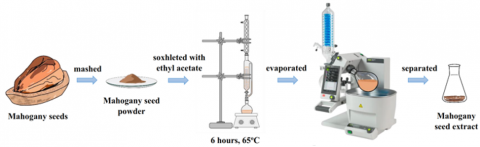
The sample of this study used two types of plants, namely mahogany seeds and moringa leaves. Sample preparation and extraction of mahogany seeds were carried out using the Soxhlet method and moringa leaves were carried out using the maceration method. Mahogany seed samples were separated from the skin and cleaned, then cut into pieces, dried, then ground into powder. Furthermore, the extraction process was carried out using the Soxhlet method using ethyl acetate solvent. A sample of 50 g of mahogany seed powder was inserted into a 25 mm × 100 mm chamber, then 500 mL of ethyl acetate solvent was placed at the bottom. The extraction process was 6 hours (temperature 65℃), the filtrate was evaporated with a rotary evaporator until a thick extract was obtained and stored until used. The extraction of mahogany seeds was illustrated in Figure 1.
Figure 1. Illustration of preparation and extraction of mahogany seeds
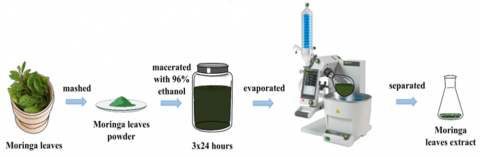
Extraction of moringa leaves using the maceration method. The sample in powder form was weighed 100 g then macerated with 1 L of 96% ethanol for 3 × 24 hours. Stirring is done every day for 30 minutes. Then the filtrate is evaporated using a rotary evaporator, a thick extract will be obtained. The ethanol extract is labeled Moringa Leaf Extract (SO). The sample preparation and extraction moringa leaves was illustrated in Figure 2.
Figure 2. Illustration of preparation and extraction of moringa leaves
The results of the mahogany seed and moringa leaf extracts are then calculated for yield using the formula at Eq. (1).
$\%$ yield $=\frac{\text { Extract weight }}{\text { Dry weight of simplicia }} \times 100 \%$ (1)
2.3 Preparation of SNEDDS formulation from mahogany seed extract and moringa leaves extract
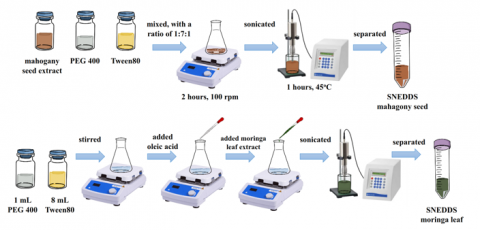
The preparation of SNEDDS based on our previous study [12]. Firstly, nanoemulsion begins with the preparation of materials, namely mahogany seed extract, Surfactant (Tween80) and Cosurfactant (PEG 400). The SNEDDS formula of mahogany seed extract is made with a ratio of 1:7:1 = mahogany seed extract: Surfactant (Tween80): Cosurfactant (PEG 400). The formulation results are then homogenized using a magnetic stirrer for 2 hours at 100 rpm using a sonication tool for 1 hour at a temperature of 45℃ for the synthesis of the extract into nano size. Furthermore, for SNEDDS of moringa leaves, moringa leaf extract (EDK), oleic acid, Tween 80 and polyethylene glycol 400 are prepared. Made in three different formulations (SO 75 mg, SO 100 mg, and SO 125 mg). First, 8 mL of Tween 80 is mixed with 1 mL of PEG 400 in a beaker. This mixture was stirred evenly until a homogeneous solution was formed, which functions as a surfactant and co-surfactant to stabilize the emulsion. After that, 1 mL of oleic acid was added to the mixture of Tween 80 and PEG 400. Furthermore, the previously prepared moringa leaf extract was added to the mixture of surfactants, co-surfactants, and oleic acid gradually. Then the solution mixture was homogenized with a hotplate magnetic stirrer at a temperature of 400℃ for 30 minutes, then it was sonicated for 15 minutes at a temperature of 400℃. The SNEDDS preparation was illustrated in Figure 3. SNEDDS formulation mahogany seeds and Moringa leaves made with various comparisons was presented in Table 1.
Figure 3. Illustration of SNEDDS preparation from mahogany seed extract and moringa leaves
Table 1. The SNEDDS formula composition of mahogany seeds and moringa leaves
|
Samples |
SNEDDS S. Mahagony (mL) |
SNEDDS M. Olivera (mL) |
Aquabides (mL) |
|
A1 |
1 |
1 |
8 |
|
A1 |
1 |
2 |
7 |
|
A3 |
2 |
1 |
7 |
|
B1 |
1 |
1 |
8 |
|
B2 |
1 |
2 |
7 |
|
B3 |
2 |
1 |
7 |
|
C1 |
1 |
1 |
8 |
|
C2 |
1 |
2 |
7 |
|
C3 |
2 |
1 |
7 |
2.4 Determination of particle size and zeta potential
Determination of particle size and zeta potential was carried out by diluting SNEDDS formulation of mahogany seed extract and moringa leaves into water with a ratio of 1:25 magnetically until a nanoemulsion was formed. Then measured using a particle size analyzer (PSA) after being placed in a cuvette. Using an electrophoretic light scattering model (Desa Nano C Particle Analyner, Becman Coulter), determine the particle size after being dispersed in 5 mL of aquadest.
2.5 Stability test
There are three stability tests: Heating Stability test, Freeze-Thaw test, Centrifugation test. Heating Stability test using an oven (temperature 60 - 100℃) for 5 hours. Freeze-Thaw test by storing the preparation at a temperature of 4℃ for 24 hours, then transferred to a temperature of 40℃ for 24 hours (1 cycle). Testing is carried out 3 cycles. Centrifugation test by putting 2 mL of the preparation into a centrifugation Eppendorf tube at a speed of 10,000 rpm for 30 minutes, then observing physical characterization including organoleptic observations.
2.6 Preparation of test solution
Antidiabetic activity testing was carried out in vivo using mice as test animals. Before testing, preparation of test animals and preparation of test solutions were carried out. The test solutions prepared were 1% of sodium carboxymethyl cellulose (SCMC) solution was used as a sample solvent and negative control, this solution was made by preparing 1 g of SCMC and adding it little by little into 25 mL of distilled water while stirring until homogeneous. Furthermore, glibenclamide solution was used as a positive control, this solution was made by preparing 1 mg of glibenclamide dissolved in 1% Na-CMC solution up to 25 mL. Alloxan solution was used as a solution to damage the pancreas of mice, this solution was made by preparing 1 gram of alloxan dissolved in 1% SCMC solution up to 100 mL.
2.7 Antidiabetic activity testing in mice (Mus musculus)
Antidiabetic activity tests on mice were carried out using provide SNEDDS formula from Mahogany Seed Extract and Moringa Leaf Extract by oral route. The study focused on male Swiss albino mice (Mus musculus L.) weighing 22-30 g used for in vivo research. Female mice were excluded due to the estrus cycle, which can cause significant variations in blood glucose and biochemical parameters within the group. These mice were given regular food and water as much as they wanted at the Animal Breeding and Experimental Facility of Biology Department, Universitas Negeri Makassar. These mice were kept in propylene cages, and experienced a light-dark cycle of 12 hours each at a constant room temperature 22-26℃. Before the start of the study, the animals were left for one week to adapt and become accustomed to the laboratory surroundings. All animal procedures with the Hasanuddin University Animal Ethics Commission (0058/KKEH/RSHUH/EC/2023) have been approved by the departmental animal ethical committee and were conducted in accordance with the Animal Scientific Procedure.
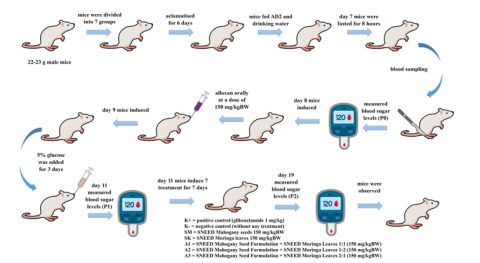
Thirty-five male mice that had been made hyperglycemic by alloxan served as the experimental animals in this investigation. Every mouse was split up into seven groups, namely the positive control group, the negative control group, the mahogany seed extract SNEDDS group (SM), the moringa leaf SNEDDS group (SO), and the mahogany seed and moringa leaf extract SNEDDS formula group that had the best characterization from the test results. The mice were acclimated for six days prior to testing. The mice received AD2 meal and unrestricted access to drinking water throughout the acclimation and testing phases. On the seventh day following acclimatization, the mice were fasted for eight hours prior to the initial blood glucose levels (P0) being measured. Blood sampling was done by cutting the lateral tail vein of mice using a Glucometer (Nesco). On the 8th day, mice were induced with alloxan orally at a dose of 150 mg/kgBW. Furthermore, mice were given a 5% glucose solution at a dose of 150 mg/kgBW for 3 days to accelerate the hyperglycemic state. On the 11th day, blood glucose levels of mice were measured after administration of alloxan (P1). After that, the hyperglycemic mice were split up into seven groups, each of which had five mice. The first group was given no treatment, the second group was given glibenclamide 1 mg/kgBW orally, the third group was given SNEDDS mahogany seed extract 150 mg/kgBW orally, the fourth group was given SNEDDS preparation of moringa seed extract 150 mg/kgBW orally, and the third group was given SNEDDS formula preparation of mahogany seed and moringa leaf extract 150 mg/kgBW orally. The treatment for the five groups was carried out for seven days.
The mice's ultimate blood glucose levels (P2) were assessed on the nineteenth day. The antidiabetic test on test animals was illustrated in Figure 4. The percentage decrease in blood glucose levels was calculated using the following formula Eq. (2).
% DBG = P1 –P2 × 100% P1 (2)
where, DBG is blood glucose decreased, P1 is the average blood glucose level before treatment, and P2 is the average blood glucose levels after treatment.
Figure 4. Illustration of the antidiabetic test on test animals
2.8 Data analysis
Data analysis using SPSS26 Software with ANOVA (α= 0.05) method to test the quality of the optimization model. All percentage decreases in blood sugar level parameter values were represented by the mean ± S.E.M. (standard error mean). Two groups were compared using the student's t-test, and more than two groups were compared using a one-way ANOVA and Dunnett's posthoc multiple comparison test. Group differences were considered significant at p < 0.05.
3.1 Extract yield of mahogany seeds and moringa leaves
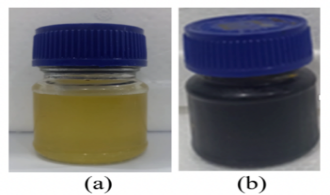
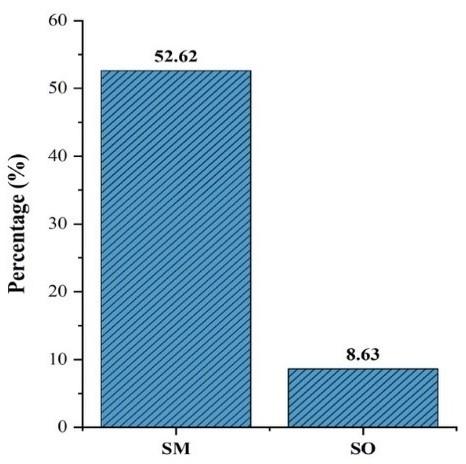
The results of extracting mahogany seed samples using ethyl acetate solvent successfully obtained an extract of 26.304 g with a yield of 52.62% and moringa leaves using 96% ethanol solvent successfully obtained an extract weighing 17.27 g with a yield of 8.63% (Figure 5 and Figure 6).
Figure 5. The physical appearance of (a) Mahogany seeds (SM) and (b) Moringa leaves extract (SO) extracted
Figure 6. The yield percentage of SM and SO
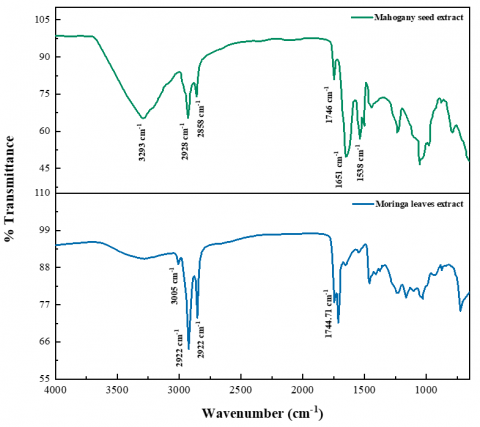
Figure 7. FTIR spectrum of SM and SO extract
Based on Figure 5, the results of mahogany seed extraction appear yellow while the extraction of moringa leaves is dark green. Based on the functional group analysis using FTIR in Figure 7, there is a very sharp absorption peak at wave number 3293 cm-1 indicating O-H stretching in SM extract while this absorption does not appear in the SO extract. This is related to the amount of yield obtained in the SM extract which is greater than the SO extract. Furthermore, the absorption peak at 2928 cm-1 and 2858 cm-1 of SM extract indicating the C-H stretching of alkyne while alkane and alkyl [18]. Absorption at wave number 1746 cm-1 shows the C=O stretching of ester, at 1651 cm-1 and 1538 cm-1 shows the C=O and N-H stretching of amide. These functional groups show the characteristics of secondary metabolite compounds of flavonoids and steroids in the SM extract. It is supported from the previous study, which reported that S. mahagony has phytochemical content, namely flavonoids, alkaloids, phenols, phospholipids, anthraquinones, saponins, terpenoids, essential oils, cardiac glycosides and long-chain unsaturated acids [9, 19].
The content of active components in the SO extract is also proven by the presence of absorption at wave number 3005 cm-1 which indicates the presence of aromatic rings in flavonoids. This is reinforced by the presence of absorption at 2922 cm-1 indicating C-H stretching and 2852 cm-1 indicating the presence of aliphatic groups. The absorption peak at 1741.71 cm-1 in the flavonoid structure corresponds to the stretching of the carbonyl group (C=O). It is supported by the previous study, which reported Moringa oleifera leaf extract contains compounds flavonoid, saponin, gum, glycoside, tannin, phenol, starch, and carbohydrate reduction in plant extract activity due to the presence of phytoconstituents [20]. It is also supported from our previous research, based on GC-MS analysis, S. mahagony contain glycidyl oleat, glycidyl palmitoleate, and glycidyl heptadecanoate [12].
3.2 Extract yield of mahogany seeds and moringa leaves preparation of SNEDDS formulation from mahogany seed extract and moringa leaf extract
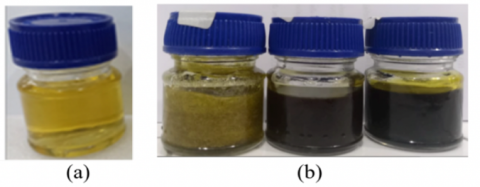
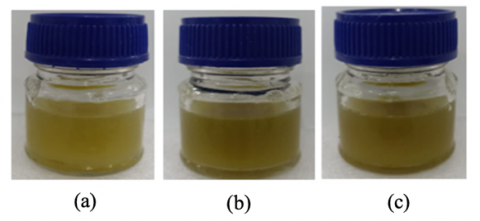
Self-nanoemulsifying Drug-Delivery System (SNEDDS) is a formulation consisting of an isotropic mixture of oil, surfactants, cosurfactants and bioactive drug substances that can form oil-in-water nanoemulsions spontaneously in the gastrointestinal tract by producing nanometer-sized droplets when dispersed in liquid media [4]. The results of the SNEDDS formulation using mahogany seed extract and moringa leaf extract were obtained as shown in Figure 8. Meanwhile, the SNEDDS formulation consisting of a combination of mahogany seed extract and moringa leaf extract can be seen in Figure 9.
Figure 8. Formulation of SNEDDS with (a) Mahogany seeds and (b) Moringa leaves
Based on Figure 8, the SNEDDS formulation of mahogany seed extract and SNEDDS of moringa leaf extract were successfully obtained. Each of these formulations was synthesized where SNEDDS consisted of extract, surfactant solution, and cosurfactant. SNEDDS of mahogany seed extract was made with a ratio of 1:1:1 mahogany seed extract, surfactants (Tween 80), and cosurfactant (PEG 400) using a sonicator. Meanwhile, SNEDDS of moringa leaves were obtained in three concentrations, namely SO (75 mg), SO2 (100 mg) and SO3 (125 mg). These three formulas were then formulated with SNEDDS of mahogany seeds shown in Figure 9, namely formulations A, formulations B, and formulations C.
Figure 9. SNEDDS formulation of mixture of mahogany seed extract with moringa leaf extract (a) Fomulations A (1:1); (b) Formulations B (1:2); (c) Formulations C (2:1)
Based on Figure 9, the results of the SNEDDS formulation of mahogany seed extract mixed with moringa leaf extract were obtained, which produced 3 formulations with different concentrations (formulations A, formulations B, and formulation C). Then the three concentrations were diluted with each comparison of 1:1, 1:2, and 2:1. The purpose of the dilution was to obtain the level of the SNEDDS formula of mahogany seed extract with moringa leaf extract which would be characterized as a nanoemulsion and used as the right formula level for testing glucose levels in mice test animals.
3.3 Characterization of SNEDDS formula of mahogany seed extract with moringa leaf extract
Characterization of the SNEDDS formula was carried out to determine the particle size (PSA), zeta potential, polydispersity index (PDI), transmittance value, and pH of the SNEDDS mixture of mahogany seed extract and moringa leaves. The PSA value in nanoemulsions generally ranges from 20 to 200 nanometers (nm). The zeta potential value in nanoemulsions can be classified as high if the zeta of a particle is very positive (> +30 mV) or very negative (< -30 mV). While the zeta potential is low if the zeta approaches zero (between -10 mV to +10 mV) so that the repulsive force becomes weak. The PDI value in nanoemulsions is used to describe the distribution of particle sizes in a sample, especially in the context of polymers or nanoparticles. A PDI value > 0 indicates a variation in particle size (polydisperse). The higher PDI value, the greater the variation in particle size in the sample. The characterization results of the SNEDDS formula of mahogany seed extract with moringa leaf extract was shown in Table 2. Based on Table 2, the particle size sample decrease after being formulated. All the samples formulated met the nanoemulsion size in the range of 1-100 nm, except for the sample C2. This is thought to be due to the C2 formula, where the volume of Olivera is greater than that of Mahogany with the same amount of surfactant in each formula, so that the desired spread of the formulation by forming small oil droplets in water (o/w) is difficult to occur [10].
SNEDDS formula for mahogany seed extract with the most optimal moringa extract is A1, A2, and A3. Based on previous research the 3 SNEDDS formulas of moringa leaves, the best formula was found in F3 where the average particle size was 86.48 nm, the polydispersity index was 0.2, and the zeta potential was -32.6 mV [4]. Although F3 has the largest average particle size of 86.48 nm, F3 has the highest concentration of moringa leaf extract, namely 125 mg/3 mL with the best PDI. Based on research by Taiyeb et al. [12], the nonoemulsion formula of mahogany seed extract has characteristics with a particle size of 12.21 nm and a transmission percentage of 84.7%.
Table 2. Characterization of SNEDDS formula of mahogany seeds extract and Moringa leaves extract
|
Sample |
PSA (nm) |
Zeta Potential (mV) |
PDI |
Transmittance (%) |
pH |
|
SM |
11.47 |
37.63 |
0.25 |
56.10 |
4 |
|
SO |
134.7 |
0.2 |
0.44 |
90.60 |
6.7 |
|
A1 |
9.85 |
7.5 |
0.67 |
29.70 |
4.7 |
|
A2 |
9.72 |
0.53 |
0.20 |
14.70 |
5.2 |
|
A3 |
10.24 |
10.33 |
0.52 |
42.70 |
5.4 |
|
B1 |
10.22 |
0.53 |
0.59 |
13.50 |
5.1 |
|
B2 |
10.27 |
4.16 |
0.25 |
3.80 |
5.6 |
|
B3 |
10.08 |
4.56 |
2.24 |
28.20 |
5 |
|
C1 |
10.24 |
4.16 |
1.70 |
14.10 |
5.7 |
|
C2 |
25.23 |
0.5 |
0.23 |
4.50 |
5.5 |
|
C3 |
10.52 |
0.2 |
3.07 |
30.50 |
5.3 |
In the past, many attempts have been made for prepare SNEDDS from several plant extracts. The previous studies that formulated SNEDDS from curcumin extract, Kumar et al. reported the average size of 113.14 nm with a zeta potential of -13.2 mV [21] and Shukla et al. also reported an average droplet size of 83.27 nm with a zeta potential of -16 mV for its anticancer activity [22]. Other study have also reported an average droplet size in SNEDDS formulated from piperine in the range of 51-701 nm with a zeta potential between -10.6 mV to -36.4 mV [23]. Another study reported SNEDDS from ripe Momordica Charantia fruit with a size of 31.89 nm with a zeta potential of -15.65 mV has promising antidiabetic potential based on biochemical, hematological, and histopathological results in streptozotocin-induced diabetic rats [16].
In the present study, the average droplet size values of SNEDDS ranged between 9.72 and 25.23 nm indicating relatively lower average droplet size. The zeta potential of SNEDDS was found to be -0.53 to -10.33 mV, indicating better adsorption and oxidative stability of the formulation as compared to previously reported SNEDDS. Furthermore, in general, the zeta potential in this study indicating an increase in the electrostatic repulsion between Nanoemulsion droplets prevents droplet merging. Conversely, a decrease in the electrostatic repulsion will cause phase separation. The PI value (polydispersity index) indicates the homogeneity of the nanoemulsion particles. The PI value ranges from 0.20 to 3.07; a value of 0.20 indicates that the particles are more homogeneous. It shows the efficacy of SNEDDS in its use as drug release and absorption.
3.4 Antidiabetic activity test of SNEDDS on test animals mice (Mus musculus)
SNEDDS antidiabetic test of mahogany seed extract mixed with moringa leaf extract to see the potentialnanoemulsion in lowering blood glucose from mice. The results of the SNEDDS antidiabetic activity test was shown Table 3.
Table 3. Antidiabetic activity test in mice
|
Treatment |
Blood Sugar (mg/dL) |
Level of Blood Sugar Decrease After Treatment (mg/dL) (P1-P2) |
Percentage of Decrease in Blood Sugar Levels (%) |
||
|
P0 (Initial Sugar Level) |
P1 (Alloxan) |
P2 (After Treatment) |
|||
|
K+ |
131.67 |
160.00 |
100.33 |
59.67 |
35.97±9.13b |
|
K- |
126.67 |
178.33 |
170 |
8.33 |
4.83±6.44a |
|
SM |
113 |
123.67 |
90.33 |
33.33 |
27.29±5.02b |
|
SO |
117 |
155.33 |
110.67 |
44.67 |
28.92±5.52b |
|
A1 |
102.33 |
154.33 |
102.33 |
52 |
33.36±7.14b |
|
A2 |
120.67 |
154.67 |
104 |
50.67 |
32.26±6.95b |
|
A3 |
142.67 |
151 |
113 |
38 |
24.01±10.26ab |
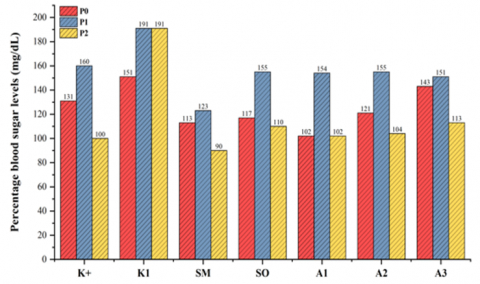
Figure 10. Decreased blood sugar levels
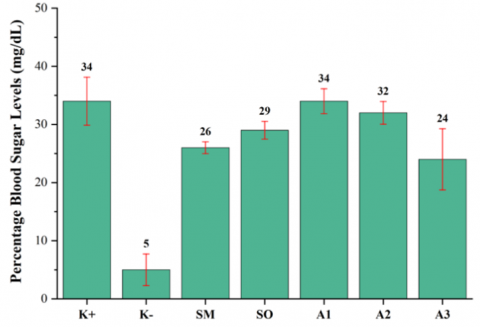
Based on Table 3 and Figure 10, the results of testing the SNEDDS formulation of mahogany seed extract with moringa leaves show that there was a decrease in blood sugar levels in mice after administering the formulation at a dose of 150 mg/kgBW. The treatment with the SNEDDS A1 formulation had the highest average percentage reduction in blood sugar levels, namely 33.36±7.14% (Figure 11 and Table 3). One-Way ANOVA test results indicate a significance value of less than 0.01 (p < 0.05). It indicates that giving mice extracts and nanoemulsion formulations made from moringa leaves and mahogany seed extract considerably lowers their blood glucose levels, albeit the results vary depending on the therapy [24].
The average percentage decrease in blood glucose levels of mice in the negative control treatment group was significantly different from that of the positive control treatment group and the treatment groups (SM, SO, A1, A2, and A3) that received extracts and nanoemulsion formulations from moringa leaves and mahogany seed extract, according to the Post Hoc Tukey test results. Mahogany seed extract contains phytochemical compounds including flavonoids, saponins, and tannins in addition to having high antioxidant content. The content is proven to have activity as an antioxidant, hypoglycemic, and antidiabetic [25]. Because flavanoids affect β-cells in a variety of ways, they can be used as antidiabetic agents. In this regard, flavonoids' roles can be categorized as preventing β-cell damage, promoting β-cell proliferation, and maintaining insulin signaling through enhanced. In addition, flavonoids as antioxidants can provide protection that can ward off free radicals, activate antioxidant enzymes and inhibit xanthine oxidase and protein kinase enzymes in the formation of ROS [26].
Figure 11. The percentage reduction in blood sugar levels of SNEDDS mahogany seeds and moringa leaves reactor
The administration of ethanol extract of mahogany seeds has been proven to reduce blood glucose levels in diabetic white rats (Rattus norvegicus) with an average of 151.83 ± 11.07 mg/dL that have been induced by alloxan and then given mahogany seed extract therapy of 500 mg/KgBW [24]. The results of the study of oral administration of methanol extract of mahogany seeds at doses of 25 and 50 mg/kg body weight resulted in a significant decrease in blood glucose levels (p <0.001) in diabetic rats [27]. In this study, phycomiamia was also analyzed that one type of polyphenol which is a natural antioxidant whose nature can donate electrons to inhibit and stop the free radical chain. So that mahogany seed extract has the potential as a therapy for diabetes mellitus that is not dependent on insulin [27]. The ability of mahogany seeds as an antidiabetic is better than methicillin at a dose of 500 mg/kg so that mahogany seeds have the potential for diabetes mellitus therapy [28].
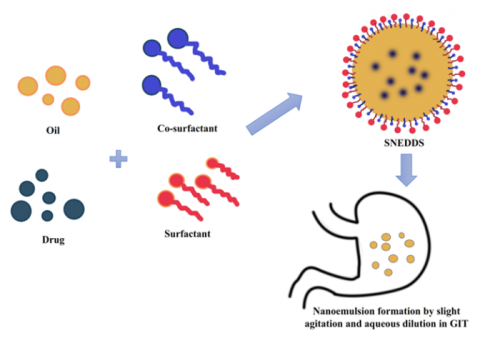
The specific mechanism of SNEDDS occurs when entering the gastrointestinal tract (GIT) as shown in Figure 12. The three successive processes that the SNEDDS formulation goes through are digestion, absorption, and blood circulation. During digestion, a coarse emulsion is formed by SNEDDS, which undergoes enzymatic hydrolysis at the oil-water interface and is thus prepared for the absorption phase. Once the mixed micelles are formed, due to the interaction of fatty acids with bile, the digestion process is stopped. The stage of medication absorption then starts. The enterocyte membrane allows for the passive diffusion or active transport of small emulsion droplets. Chylomicrons are another way that some medications might enter the lymphatic system and be absorbed. Following the drug's release from the chylomicrons and the body's use of the residual lipids, the next stage is blood circulation [7].
Figure 12. The illustration of SNEDDS mechanism as drug release and absorption
The results of this study indicate that the Self-Nanoemulsifying Drug Delivery System (SNEDDS) formulation of mahogany seed extract with moringa extract has potential as an antidiabetic therapy. The characterization results of SNEDDS of mahogany seed extract with moringa extract show an average particle size of 9.72 and 25.23 nm indicating relatively lower average droplet size with the zeta potential to be -0.53 to -10.33 mV, indicating better adsorption and oxidative stability of the formulation, and the PI value of 0.20 indicating the homogeneous the particles. Antidiabetic activity testing on hyperglycemic mice in vivo showed that the most optimal treatment of the three treatments A1, A2, A3 was the A1 formulation, which decreased blood sugar levels by 33.36%. This study has several limitations, the results obtained still require preclinical testing using more experimental animals followed by toxicity assessment.
We would like to express our gratitude for the financial support provided by the Directorate General of Higher Education, Research, and Technology through research grant No.: 2866/UN36.11/LP2M/2024.
[1] Cherniakov, I., Domb, A.J., Hoffman, A. (2015). Self-nano-emulsifying drug delivery systems: An update of the biopharmaceutical aspects. Expert Opinion on Drug Delivery, 12(7): 1121-1133. https://doi.org/10.1517/17425247.2015.999038
[2] Knaub, K., Sartorius, T., Dharsono, T., Wacker, R., Wilhelm, M., Schön, C. (2019). A novel self-emulsifying drug delivery system (SEDDS) based on VESIsorb® formulation technology improving the oral bioavailability of cannabidiol in healthy subjects. Molecules, 24(16): 2967. https://doi.org/10.3390/molecules24162967
[3] Kumar, M., Bishnoi, R.S., Shukla, A.K., Jain, C.P. (2019). Techniques for formulation of nanoemulsion drug delivery system: A review. Preventive Nutrition and Food Science, 24(3): 225. https://doi.org/10.3746/pnf.2019.24.3.225
[4] Alwadei, M., Kazi, M., Alanazi, F.K. (2019). Novel oral dosage regimen based on self-nanoemulsifying drug delivery systems for codelivery of phytochemicals–Curcumin and thymoquinone. Saudi Pharmaceutical Journal, 27(6): 866-876. https://doi.org/10.1016/j.jsps.2019.05.008
[5] Vithani, K., Jannin, V., Pouton, C.W., Boyd, B.J. (2019). Colloidal aspects of dispersion and digestion of self-dispersing lipid-based formulations for poorly water-soluble drugs. Advanced Drug Delivery Reviews, 142: 16-34. https://doi.org/10.1016/j.addr.2019.01.008
[6] Suryani, S., Zubaydah, W.O.S., Sahumena, M.H., Adawia, S., Wahyuni, R., Adjeng, A.N.T., Nisa, M., Kasmawati, H., Ihsan, S., Ruslin, Aswan, M. (2019). Preparation and characterization of self-nanoemulsifying drug delivery system (SNEDDS) from Moringa oleifera L. and Cassia alata L. leaves extracts. AIP Conference Proceedings, 2199(1): 070011. https://doi.org/10.1063/1.5141325
[7] Khursheed, R., Singh, S.K., Kumar, B., Wadhwa, S., Gulati, M., Anupriya, A., Awasthi, A., Vishwas, S., Kaur, J., Corrie, L., Arya, K.R., Kumar, R., Jha, N.K., Gupta, P.K., Zacconi, F., Dua, K., Chitranshi, N., Mustafa, G., Kumar, A. (2022). Self-nanoemulsifying composition containing curcumin, quercetin, Ganoderma lucidum extract powder and probiotics for effective treatment of type 2 diabetes mellitus in streptozotocin induced rats. International Journal of Pharmaceutics, 612: 121306. https://doi.org/10.1016/j.ijpharm.2021.121306
[8] Parveen, N., Sheikh, A., Abourehab, M.A., Karwasra, R., Singh, S., Kesharwani, P. (2023). Self-nanoemulsifying drug delivery system for pancreatic cancer. European Polymer Journal, 190: 111993. https://doi.org/10.1016/j.eurpolymj.2023.111993
[9] Sukardiman, Ervina, M. (2020). The recent use of Swietenia mahagoni (L.) Jacq. as antidiabetes type 2 phytomedicine: A systematic review. Heliyon, 6(3): e03536. https://doi.org/10.1016/j.heliyon.2020.e03536
[10] Salawi, A. (2022). Self-emulsifying drug delivery systems: A novel approach to deliver drugs. Drug Delivery, 29(1): 1811-1823. https://doi.org/10.1080/10717544.2022.2083724
[11] Dinesh-Kumar, A., Srimaan, E., Chellappandian, M., Vasantha-Srinivasan, P., Karthi, S., Thanigaivel, A., Ponsankar, A., Chanthini, K.M., Shyam-Sundar, N., Annamalai, M., Kalaivani, K., Hunter, W.B., Senthil-Nathan, S. (2018). Target and non-target response of Swietenia Mahagoni Jacq. chemical constituents against tobacco cutworm Spodoptera litura Fab. and earthworm, Eudrilus eugeniae Kinb. Chemosphere, 199: 35-43. https://doi.org/10.1016/j.chemosphere.2018.01.130
[12] Taiyeb, M., Hartati, H., Arwansyah, A., Muis, A., Mu'nisa, A., Arif, A.R., Salleh, L.M. (2024). Self-nanoemulsifying drug delivery system (SNEDDS) formulation and molecular docking of mahogany seed extract (Swietenia mahagoni) as anti-hyperglycemic. Informatics in Medicine Unlocked, 47: 101517. https://doi.org/10.1016/j.imu.2024.101517
[13] Daghaghele, S., Kiasat, A.R., Safieddin Ardebili, S.M., Mirzajani, R. (2021). Intensification of extraction of antioxidant compounds from Moringa oleifera leaves using ultrasound-assisted approach: BBD-RSM design. International Journal of Fruit Science, 21(1): 693-705. https://doi.org/10.1080/15538362.2021.1926396
[14] Srivastava, G., Ganjewala, D. (2024). An update on the emerging neuroprotective potential of Moringa oleifera and its prospects in complimentary neurotherapy. Phytomedicine Plus, 4(2): 100532. https://doi.org/10.1016/j.phyplu.2024.100532
[15] Kazi, M., Almarri, F., Shahba, A.A.W., Ahmad, A., Albraiki, S., Alanazi, F.K. (2024). Nutraceutically-enhanced oral delivery of vitamin D3 via Bio-SNEDDS: Demonstrating in vivo superiority over pediatric formulations. Biochemical and Biophysical Research Communications, 709: 149852. https://doi.org/10.1016/j.bbrc.2024.149852
[16] Garg, V., Kaur, P., Singh, S.K., Kumar, B., Bawa, P., Gulati, M., Yadav, A.K. (2017). Solid self-nanoemulsifying drug delivery systems for oral delivery of polypeptide-k: Formulation, optimization, in-vitro and in-vivo antidiabetic evaluation. European Journal of Pharmaceutical Sciences, 109: 297-315. https://doi.org/10.1016/j.ejps.2017.08.022
[17] Garg, V., Kaur, P., Gulati, M., Singh, S.K., Kumar, B., Pandey, N.K., Yadav, A.K., Kumar, R., Kuppusamy, G., De, A., Puttappa, N., Wadhwa, S. (2019). Coadministration of polypeptide-k and curcumin through solid self-nanoemulsifying drug delivery system for better therapeutic effect against diabetes mellitus: formulation, optimization, biopharmaceutical characterization, and pharmacodynamic assessment. Assay and Drug Development Technologies, 17(4): 201-221. https://doi.org/10.1089/adt.2018.902
[18] Mursiti, S., Rahayu, E.F., Rosanti, Y.M., Nurjaya, I. (2019). Mahogany seeds oil: Isolation and characterizations. IOP Conference Series: Materials Science and Engineering, 509(1): 012137. https://doi.org/10.1088/1757-899X/509/1/012137
[19] Chaves, J.O., De Souza, M.C., Da Silva, L.C., Lachos-Perez, D., Torres-Mayanga, P.C., Machado, A.P.D.F., Forster-Carneiro, T., Vázquez-Espinosa, M., González-de-Peredo, A.V., Barbero, G.F., Rostagno, M. A. (2020). Extraction of flavonoids from natural sources using modern techniques. Frontiers in Chemistry, 8: 507887. https://doi.org/10.3389/fchem.2020.507887
[20] Chigurupati, S., Al-Murikhy, A., Almahmoud, S. A., Almoshari, Y., Ahmed, A.S., Vijayabalan, S., Felemban, S.G., Palanimuthu, V.R. (2022). Molecular docking of phenolic compounds and screening of antioxidant and antidiabetic potential of Moringa oleifera ethanolic leaves extract from Qassim region, Saudi Arabia. Saudi Journal of Biological Sciences, 29(2): 854-859. https://doi.org/10.1016/j.sjbs.2021.10.021
[21] Kumar, B., Garg, V., Singh, S., Pandey, N.K., Bhatia, A., Prakash, T., Gulati, M., Singh, S.K. (2018). Impact of spray drying over conventional surface adsorption technique for improvement in micromeritic and biopharmaceutical characteristics of self-nanoemulsifying powder loaded with two lipophilic as well as gastrointestinal labile drugs. Powder Technology, 326: 425-442. https://doi.org/10.1016/j.powtec.2017.12.005
[22] Shukla, M., Jaiswal, S., Sharma, A., Srivastava, P.K., Arya, A., Dwivedi, A.K., Lal, J. (2017). A combination of complexation and self-nanoemulsifying drug delivery system for enhancing oral bioavailability and anticancer efficacy of curcumin. Drug Development and Industrial Pharmacy, 43(5): 847-861. https://doi.org/10.1080/03639045.2016.1239732
[23] Kazi, M., Shahba, A.A., Alrashoud, S., Alwadei, M., Sherif, A.Y., Alanazi, F.K. (2020). Bioactive self-nanoemulsifying drug delivery systems (Bio-SNEDDS) for combined oral delivery of curcumin and piperine. Molecules, 25(7): 1703. https://doi.org/10.3390/molecules25071703
[24] Fiorenza, M.P., Maslachah, L., Meles, D.K., Widiyatno, T.V., Yuliani, G.A., Ntoruru, J.M., Luqman, E.M. (2022). Effect of mahogany (Swietenia mahagoni Jacq.) extract on the islet cells' number and blood glucose levels of alloxan-induced diabetic rat. International Journal of Drug Delivery Technology, 12(3): 1004-1008. http://repository.unair.ac.id/id/eprint/121086.
[25] Bouchez, J. (2015). Free radicals in biology and machines. Oxford University.
[26] Chen, J., Mangelinckx, S., Adams, A., Wang, Z.T., Li, W.L., De Kimpe, N. (2015). Natural flavonoids as potential herbal medication for the treatment of diabetes mellitus and its complications. Natural Product Communications, 10(1): 1934578X1501000140. https://doi.org/10.1177/1934578X1501000140
[27] Panda, S.P., Haldar, P.K., Bera, S., Adhikary, S., Kandar, C.C. (2010). Antidiabetic and antioxidant activity of Swietenia mahagoni in streptozotocin-induced diabetic rats. Pharmaceutical Biology, 48(9): 974-979. https://doi.org/10.3109/13880200903390051
[28] Cruze, L.R.M.D., Shanta, A.A., Mostaq, M.S., Mostafa, A., Hasan, M.K., Rashid, F., Afrin, S., Ahsan, J., Khondoker, S., Hossain, M.B. (2020). An in vivo evaluation of antidiabetic and depressant action of bark of swietenia mahagoni on alloxan-induced diabetic rat model. Asian Journal of Research and Reports in Endocrinology, 3(1): 71-79.